





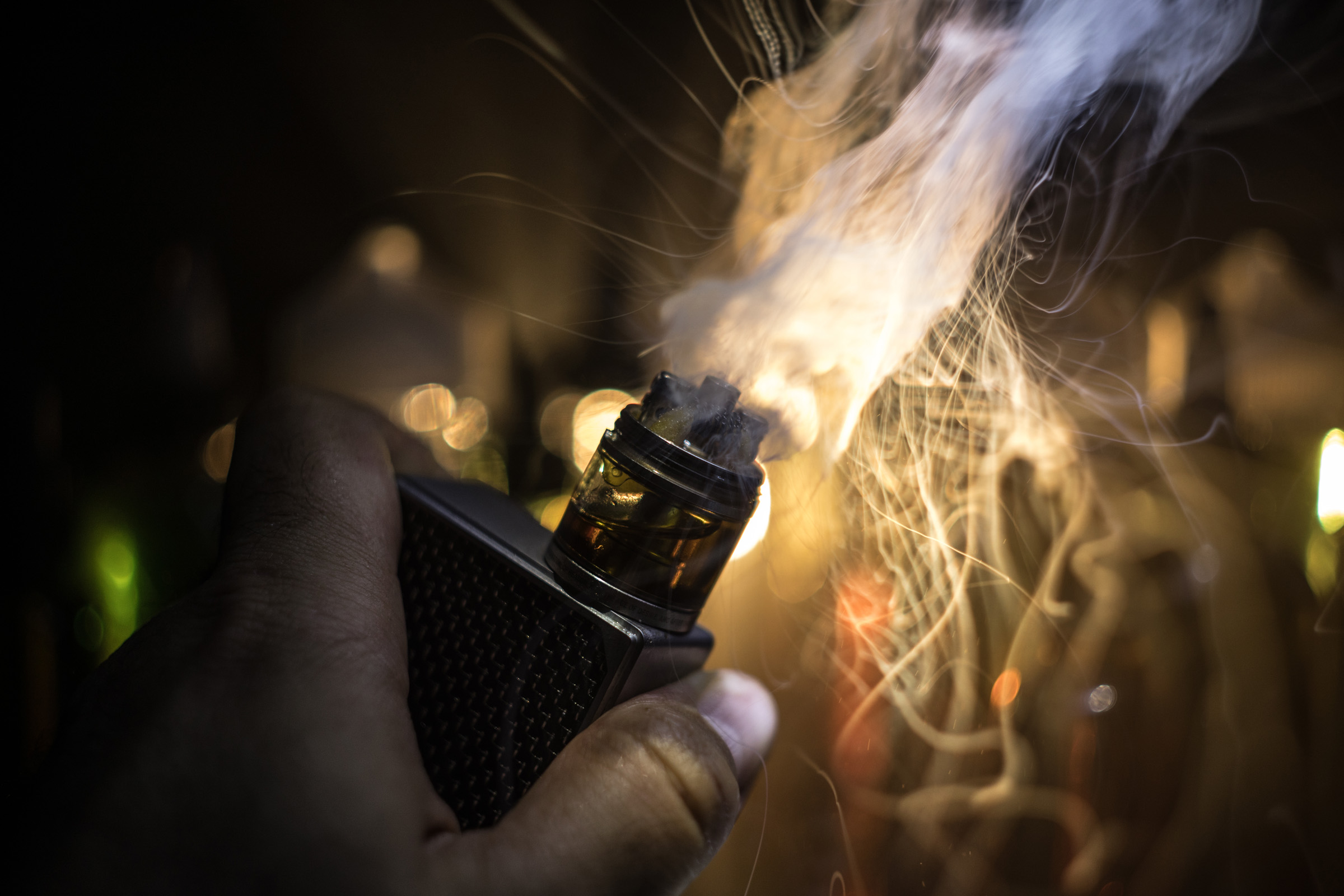
A Wisconsin wildland firefighter is building a rural collection service for discarded vaping devices, arguing that schools, smoke shops and law enforcement agencies need a more practical way to handle products that combine lithium-ion batteries with nicotine residue.
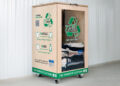
Raymond Tucker, who works for the Wisconsin Department of Natural Resources, began placing bins earlier this year at a handful of sites including smoke shops, a school and the Burnett County Sheriff’s Department. He then picks up the material himself and takes it to a processor in Pine City, Minnesota.
“I’m able to place small collection bins inside of smoke shops, schools and law enforcement buildings,” Tucker said. “Then after a time, I come back, pick them up and take them to the proper waste stream place in Minnesota to properly dispose of them.”
Tucker explained the effort differs from other programs that provide approved containers designed for shipping, where users are expected to mail the collected devices or otherwise manage disposal themselves. He said his initiative works as a direct pickup service, albeit still a small one and says early volumes showed how quickly discarded devices can add up.
“In the first week, I collected six pounds of vapes,” he added.
Tucker said his approach is shaped in part by fire prevention concerns, adding that he has seen vape-related fires in dumpsters and in the back of garbage trucks through his work in wildland firefighting and has also found discarded devices deep in wooded areas while doing trail work.
“There’s got to be a different solution for this,” he said.
The issue has drawn wider attention as lithium-ion battery fires continue to pressure the recycling and waste sector. Fire Rover, which tracks publicly reported fire incidents in US and Canadian waste and recycling facilities, reported 448 such fires in 2025, the highest annual total in the data it has compiled since 2016.
In January, Ryan Fogelman, Fire Rover’s vice president of fire protection, said batteries in products including disposable vapes are entering material streams “in unprecedented volumes,” often damaged, hidden and unstable.
A high-profile example came this month in Glasgow, where a large fire that began in a vape shop next to Glasgow Central Station spread through a historic building, forced major rail disruption and led to a painstaking demolition effort. Authorities are still investigating the incident, but it unquestionably added to broader scrutiny around how vape products are handled and discarded.
Tucker said he began exploring the issue after Wisconsin restricted many flavored vape products and local retailers were left with damaged, unsellable or returned items. He said some shops did not know how they would dispose of that material if it could not go back to a vendor. That sent him looking for other examples of vape-specific collection programs and he said he found little in Wisconsin beyond general guidance.
The program, called EcoVape Recovery, remains modest and largely self-funded and Tucker said he contacted roughly 120 potential partners, securing only a few collection sites so far. Some businesses were interested, he said, but others balked at paying for a service when tossing devices in the trash seemed a more convenient solution. “It’s just easier to just throw them away,” Tucker said. “And therein lies the problem.”
He is working with a local prevention coalition to reach schools and public health contacts, and he said he hopes to expand carefully rather than grow faster than he can manage. “I’m trying not to expand too fast so it doesn’t become unmanageable,” he said.
Tucker said the larger problem is that disposable vapes became widespread without much thought given to what happens after use. “I don’t even think they put that in their business plan, what we’re going to do with them in the end,” he said.