






Resource Recycling
  • The Latest
  • Analysis
    • All
    • Certification Scorecard
    • Industry Announcements
    • Opinion
    NJ’s PCR delay risks making its own excuse permanently true

    NJ’s PCR delay risks making its own excuse permanently true

    E-scrap magnet recycling company scales up

    Why only some rare-earth sources are economically viable

    e-Stewards to develop an ITAD-specific standard

    Certification scorecard — week of Sept. 21

    Who should pay for lithium-ion battery fire damage?

    America’s critical-materials buildout has a feedstock problem

    Certification scorecard – week of Sept. 14

  • Conferences
    • Resource Recycling Conference
    • Plastics Recycling Conference
    • E-Scrap: The Longevity Conference
    • Textiles Recovery Summit
  • Publications
    • E-Scrap News
    • Plastics Recycling Update
    • Policy Now
    • Resource Recycling
    • Other Topics
      • All Topics
      • Brand Owners
      • Critical Minerals
      • Glass
      • Grant Watch / RFPs
      • Markets
      • Organics
      • Packaging
      • Research
      • Technology
      • Textiles
Subscribe
No Result
View All Result
Resource Recycling
  • The Latest
  • Analysis
    • All
    • Certification Scorecard
    • Industry Announcements
    • Opinion
    NJ’s PCR delay risks making its own excuse permanently true

    NJ’s PCR delay risks making its own excuse permanently true

    E-scrap magnet recycling company scales up

    Why only some rare-earth sources are economically viable

    e-Stewards to develop an ITAD-specific standard

    Certification scorecard — week of Sept. 21

    Who should pay for lithium-ion battery fire damage?

    America’s critical-materials buildout has a feedstock problem

    Certification scorecard – week of Sept. 14

  • Conferences
    • Resource Recycling Conference
    • Plastics Recycling Conference
    • E-Scrap: The Longevity Conference
    • Textiles Recovery Summit
  • Publications
    • E-Scrap News
    • Plastics Recycling Update
    • Policy Now
    • Resource Recycling
    • Other Topics
      • All Topics
      • Brand Owners
      • Critical Minerals
      • Glass
      • Grant Watch / RFPs
      • Markets
      • Organics
      • Packaging
      • Research
      • Technology
      • Textiles
Subscribe
No Result
View All Result
Resource Recycling
No Result
View All Result
Home Plastics

Firm tests ‘game-changing’ idea for PET depolymerization

byJared Paben
March 1, 2016
in Plastics
Firm tests ‘game-changing’ idea for PET depolymerization

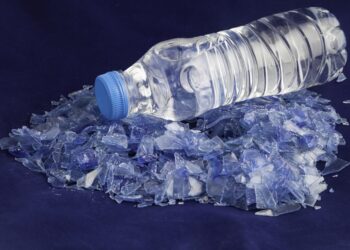
Without using heat or pressure, a small commercial-sized facility in Quebec is breaking down post-consumer PET into its component monomers so they can be recycled into new PET.

The recycling method employed by Loop Industries, which received a U.S. patent in January, is “definitely a game-changing technology in this industry,” Daniel Solomita, company founder, president and CEO, told Plastics Recycling Update: Technology Edition.

“This is the way of the future because we can keep costs low, and quality is unparalleled,” Solomita said. “There’s no traditional recyclers that can make a PET pellet or resin with the same quality.”

The publicly traded company’s 6,000-square-foot facility currently produces up to 5,000 pounds of purified terephthalic acid (PTA) and ethylene glycol (EG), the building blocks of PET, each day. The PET made from the monomers by Loop is suitable for food packaging, and would be exempt from U.S. Food and Drug Administration review, he said.

Ultimately, the company aims to sell the PTA and EG to plastics makers instead of making the plastic itself.

“You can bring it back to its base monomers and do anything you want with it,” he said. “I can take a carpet and turn it into food-grade plastic.”

The Loop Industries recycling process unfolds in the following way:

Mixed plastics are shredded before they are placed into a chamber, into which a unique solvent solution is poured before the mixture is agitated. After the solvents depolymerize the PET, the slurry is sent through traditional separation technologies, including centrifuges, vacuum filters and membrane filtration. These processes remove contaminants from the PTA and EG. Solomita also noted that 95 percent of the solvents can be recovered and reused in the reactor.

“Once the initial depolymerization happens in the first reactor, which breaks down the plastic, everything after that is just simple separation technologies,” he said.

The process takes place at room temperature and at atmospheric pressure, making the technology cheaper and more effective than other depolymerization approaches, he said. The three other industrial-scale approaches, hydrolysis, glycolysis and methanolysis, all use heat and pressure in the depolymerization of PET, adding to energy and equipment costs.

In addition, other depolymerization methods require cleaner feedstocks because their high temperatures melt different resins together, according to Solomita.

Loop Industries’ process allows for the recycling of PET in contaminated bales as well as PETG, PET thermoforms and fines. Because of their small size and added surface area, PET fines break down quickly and are ideal for the process, Solomita said. Loop Industries recently acquired around 2 million pounds of mixed PET-PVC fines from St. Louis-headquartered QRS Recycling, an operator of materials recovery facilities and plastics recovery facilities.

Loop Industries is in discussions with major PET producers, seeking to partner with them to provide the recycled PET to major brands, Solomita said. Even with low petroleum-derived PTA and EG prices, Loop Industries is competitive, he said.

“The quality is the same, the price is the same and you have the sustainability advantage that goes along with it,” Solomita said.

Loop Industries plans to upgrade its Montreal facility to boost its output capabilities. It’s also researching using the “no heat, no pressure” approach on resins beyond PET.

Tags: Hard-to-Recycle MaterialsPETTechnology
TweetShare
Jared Paben

Jared Paben

Related Posts

Analysis: Undersupply of PCR is ‘stifling’ brand goals

US lawmakers urge protection of domestic RPET

byAntoinette Smith
September 25, 2026

In a letter to the US Trade Representative, five representatives asked the USTR to consider trade remedies and support verification...

Cutting healthcare plastics could save $18B

Report provides path to reduce medical e-scrap

byPaul Lane
September 25, 2026

The European report found that circularity in medical devices is possible through several potential initiatives.

Recyclers reeling from NJ PCR extension

Recyclers reeling from NJ PCR extension

byAntoinette Smith
September 23, 2026

The recent three-year extension for exemptions to the state's PCR mandates elicited frustration and confusion among recyclers.

Textile EPR and the definition of recycling

Textile Exchange reports progress in production

byPaul Lane
September 22, 2026

The organization said the industry has made some sustainability progress, but there’s much room for improvement.

ALPLA’s holistic approach to packaging design

ALPLA’s holistic approach to packaging design

byAntoinette Smith
September 18, 2026

The packaging and recycling company's North American design lead explains why recyclability goals can't exist in isolation.

Study assesses environmental cost of excess data storage

BAN paper says AI e-scrap estimates are low

byPaul Lane
September 17, 2026

The advocacy group said current estimates on the scrap resulting from data centers don’t account for the full picture of...

Load More
Next Post

APR Showcase highlights HDPE-PP compatibilizer, advanced PET

2026 Buyers’ Guide

Equipment, services and technology suppliers serving the recycling industry.

Browse the Guide

More Posts

Recyclers reeling from NJ PCR extension

Recyclers reeling from NJ PCR extension

September 23, 2026
Oregon state capitol building with state flag and blue sky.

NAW appeals Oregon EPR ruling

September 25, 2026
Colorado’s EPR programs move from planning to practice

Colorado’s EPR programs move from planning to practice

September 17, 2026
Bin to Better gets students involved in reuse, recycling

Bin to Better gets students involved in reuse, recycling

September 24, 2026

Who should pay for lithium-ion battery fire damage?

September 21, 2026

SB 54 plan for cartons, film draws warning

September 15, 2026
Industry announcements for January 2026

Industry announcements for September 2026

August 31, 2026
Calif. Governor Gavin Newsom at podium.

Newsom signs battery EPR expansion, vetoes SB 54 fund bill

September 24, 2026
Bipartisan reps introduce bill on recycling claims

House passes bill to ease lithium-ion battery storage rules

September 24, 2026
US packaging is evolving. The recycling system isn’t ready

US packaging is evolving. The recycling system isn’t ready

September 16, 2026
Load More

About & Publications

About Us

Staff

Archive

Magazines

Work With Us

Advertise
Jobs
Contact
Terms and Privacy

Newsletters

Get the latest recycling news and analysis delivered to your inbox every week. Stay ahead on industry trends, policy updates, and insights from programs, processors, and innovators.

Subscribe

Welcome Back!

Login to your account below

Forgotten Password?

Retrieve your password

Please enter your username or email address to reset your password.

Log In

Add New Playlist

No Result
View All Result
  • The Latest
  • Analysis
  • Recycling
  • E-Scrap
  • Plastics
  • Policy Now
  • Conferences
    • E-Scrap Conference
    • Plastics Recycling Conference
    • Resource Recycling Conference
    • Textiles Recovery Summit
  • Magazines
  • About Us
  • Advertise
  • Archive
  • Jobs
  • Staff
Subscribe
This website uses cookies. By continuing to use this website you are giving consent to cookies being used. Visit our Privacy and Cookie Policy.