




Resource Recycling
  • The Latest
  • Analysis
    • All
    • Certification Scorecard
    • Industry Announcements
    • Opinion
    NJ’s PCR delay risks making its own excuse permanently true

    NJ’s PCR delay risks making its own excuse permanently true

    E-scrap magnet recycling company scales up

    Why only some rare-earth sources are economically viable

    e-Stewards to develop an ITAD-specific standard

    Certification scorecard — week of Sept. 21

    Who should pay for lithium-ion battery fire damage?

    America’s critical-materials buildout has a feedstock problem

    Certification scorecard – week of Sept. 14

  • Conferences
    • Resource Recycling Conference
    • Plastics Recycling Conference
    • E-Scrap: The Longevity Conference
    • Textiles Recovery Summit
  • Publications
    • E-Scrap News
    • Plastics Recycling Update
    • Policy Now
    • Resource Recycling
    • Other Topics
      • All Topics
      • Brand Owners
      • Critical Minerals
      • Glass
      • Grant Watch / RFPs
      • Markets
      • Organics
      • Packaging
      • Research
      • Technology
      • Textiles
Subscribe
No Result
View All Result
Resource Recycling
  • The Latest
  • Analysis
    • All
    • Certification Scorecard
    • Industry Announcements
    • Opinion
    NJ’s PCR delay risks making its own excuse permanently true

    NJ’s PCR delay risks making its own excuse permanently true

    E-scrap magnet recycling company scales up

    Why only some rare-earth sources are economically viable

    e-Stewards to develop an ITAD-specific standard

    Certification scorecard — week of Sept. 21

    Who should pay for lithium-ion battery fire damage?

    America’s critical-materials buildout has a feedstock problem

    Certification scorecard – week of Sept. 14

  • Conferences
    • Resource Recycling Conference
    • Plastics Recycling Conference
    • E-Scrap: The Longevity Conference
    • Textiles Recovery Summit
  • Publications
    • E-Scrap News
    • Plastics Recycling Update
    • Policy Now
    • Resource Recycling
    • Other Topics
      • All Topics
      • Brand Owners
      • Critical Minerals
      • Glass
      • Grant Watch / RFPs
      • Markets
      • Organics
      • Packaging
      • Research
      • Technology
      • Textiles
Subscribe
No Result
View All Result
Resource Recycling
No Result
View All Result
Home Analysis

America’s critical-materials buildout has a feedstock problem

byDavid Daoud
September 18, 2026
in Analysis, E-Scrap

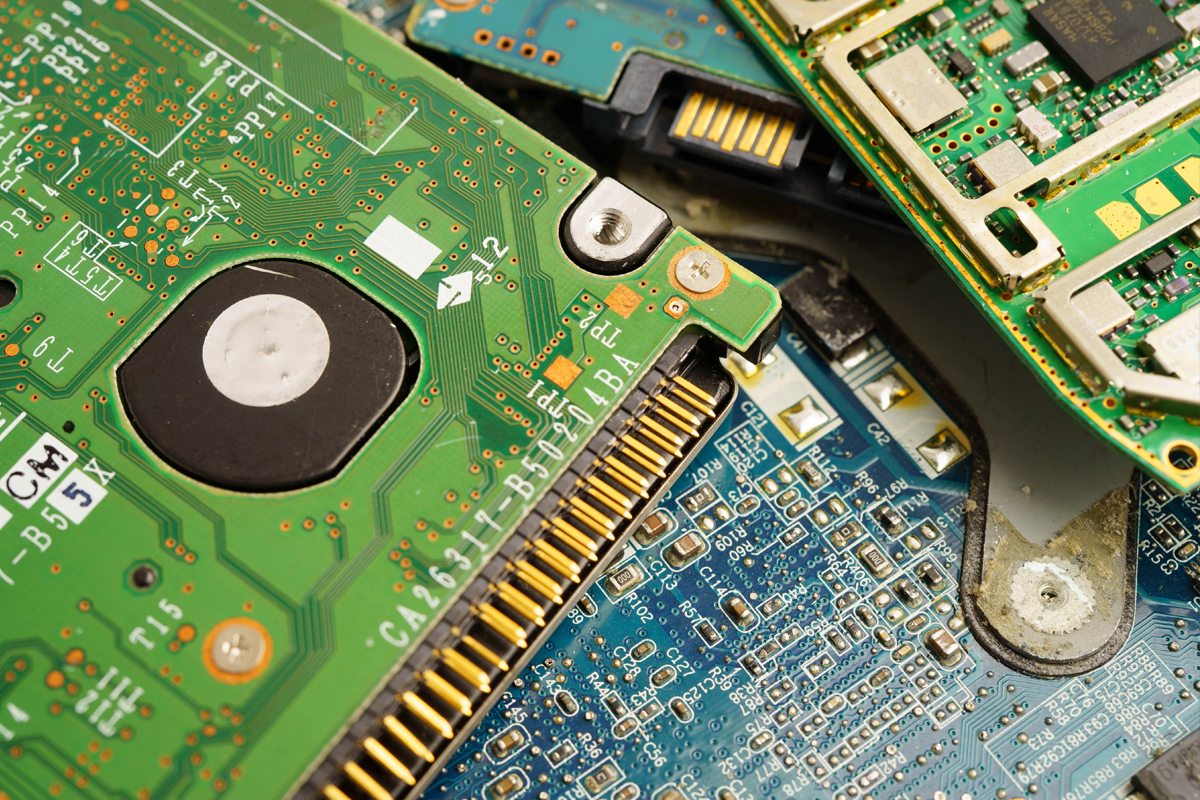
Circuit board components contain critical minerals targeted for recovery from end-of-life electronics | Superbeststock/Shutterstock

Editor’s note: Critical minerals and electronics recycling will be featured in sessions at the 2026 E-Scrap: The Longevity Conference in New Orleans October 26-28.

The United States is investing heavily in critical-minerals capacity, driven by concern that batteries, semiconductors and advanced weapons depend on supply chains concentrated abroad. Building plants, however, does not guarantee that those facilities will have enough material to process.

A July 2026 Government Accountability Office assessment examined whether recycling and material substitution could reduce import dependence. Its findings were uneven. Semiconductor recovery remains technically difficult, but established battery-recycling technologies could reduce imports of copper, cobalt, lithium and nickel within two to three years. The limiting factors include inadequate domestic capacity and the continued loss of usable feedstock to landfills and overseas processors.

Federal capacity-building began several years ago. Since 2020, the Department of Defense has awarded approximately $439 million to rebuild domestic rare-earth supply chains. It also manages the National Defense Stockpile, which holds strategic and critical materials for national emergencies.

The effort widened in February 2026 with Project Vault, a proposed reserve serving government and commercial users independently of the Defense Logistics Agency stockpile. The initiative was announced with a planned $10 billion Export-Import Bank loan and $2 billion in private investment. Federal agencies have also been assessing potential purchases of materials such as scandium, tungsten, graphite, samarium, dysprosium and terbium.

The feedstock needed to support these investments can come from two broad sources: newly mined material and products or waste already circulating through the economy. Neither source offers a complete answer.

Domestic mining remains essential, but geology sets hard limits. Gallium illustrates the problem. It is generally recovered as a byproduct of processing bauxite into alumina, yet the United States lacks large bauxite deposits. A domestic gallium plant could therefore reduce dependence on foreign processing while remaining dependent on imported feedstock from countries such as Jamaica or Brazil.

Recycling offers a faster route for some battery minerals.

Manufacturing scrap, end-of-life batteries, obsolete electronics and retired rare-earth magnets already contain materials that domestic processors need. GAO nevertheless found that discarded electronics have low concentrations of certain critical minerals and are difficult to separate. Battery recycling is further advanced, although collection, storage and transportation remain expensive.

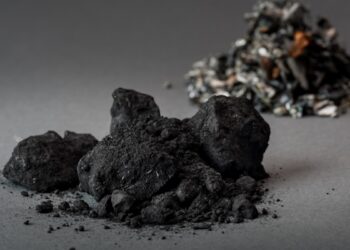
The federal government has now moved to keep more of that material onshore. On July 30, 2026, President Donald Trump issued a determination under the Defense Production Act authorizing the commerce secretary to establish export controls covering “recoverable critical minerals and materials.” The definition includes battery black mass, end-of-life rare-earth permanent magnets, swarf and other scrap containing critical materials. Copper scrap was excluded because it was addressed separately.

Commerce has since begun implementing that authority. In August, the Bureau of Industry and Security issued a temporary final rule covering black mass and tungsten waste and scrap. Beginning August 27, U.S. sellers of those materials must allocate 100 percent of their monthly sales to US persons unless they obtain an adjustment or exception from BIS. The rule therefore turns part of the July policy direction into an operating feedstock-retention requirement, although it does not yet apply to every recoverable critical material covered by the presidential determination.

For black mass and tungsten scrap, at least, material that previously could have been sold abroad for processing is now being explicitly directed toward the domestic market.

Keeping feedstock in the country will matter only if American plants can economically refine it. Resources for the Future identifies the midstream as a major weakness in the domestic value chain. The United States has minerals, manufacturing demand and new recycling projects, but still lacks sufficient refining, separation and component-manufacturing capacity.

Closing that gap is expensive. Individual rare-earth processing projects can require hundreds of millions of dollars, while Chinese producers can influence market prices through their scale and output policies. Rare-earth refining also consumes substantial water and can generate waste containing naturally occurring radioactive material. Cost escalation and wastewater problems at the planned Lynas refinery in Texas demonstrate how quickly a strategically attractive project can encounter local, technical and financial resistance.

The sequencing is awkward. Processing investments, defense offtakes and stockpiling programs were advancing years before the July 2026 feedstock-retention authority arrived. Meanwhile, GAO continues to find weak data and analytical tools for deciding which recovery technologies and infrastructure deserve priority.

America is beginning to build the receiving capacity. The open question is whether retained scrap and recovered minerals will arrive quickly enough, consistently enough and in the right volumes to keep those plants operating.


Tags: BatteriesCritical MineralsElectronics
TweetShare
David Daoud

David Daoud

David Daoud is a contributor to Resource Recycling and E-Scrap News, covering IT asset disposition, electronics recycling, and circular IT governance. He is the founder of and current Principal Analyst at Compliance Standards LLC, where he conducts independent research and advisory work on ITAD markets, sustainability and ESG compliance, data security, and lifecycle risk management. Daoud has analyzed enterprise IT trends since the late 1990s and was among the first analysts to examine ITAD as a distinct market segment during his time at IDC. He advises operators, OEMs, and investment teams on regulatory, technology, and market developments affecting the electronics lifecycle.

Related Posts

Cutting healthcare plastics could save $18B

Report provides path to reduce medical e-scrap

byPaul Lane
September 25, 2026

The European report found that circularity in medical devices is possible through several potential initiatives.

E-scrap magnet recycling company scales up

Why only some rare-earth sources are economically viable

byDavid Daoud
September 24, 2026

Rare-earth recycling economics depend on several factors, and there is no single price or date that makes the process pencil...

Bin to Better gets students involved in reuse, recycling

Bin to Better gets students involved in reuse, recycling

byPaul Lane
September 24, 2026

E-scrap among three focus areas for student-run, California-based environmental advocacy group.

Facility fires remain high across US, Canada in August

byPaul Lane
September 23, 2026

Despite high August numbers, the latest Fire Rover report indicated there may be overall progress in slowing the number of...

Bridge Green, Hartree partner on mineral processing deal

Bridge Green, Hartree partner on mineral processing deal

byPaul Lane
September 21, 2026

The agreement will see Bridge Green’s lithium carbonate sold to and marketed by Hartree.

Who should pay for lithium-ion battery fire damage?

byDavid Daoud
September 21, 2026

Fires continue to be a major threat to the recycling industry, even as states explore new policy solutions.

Load More
Next Post
ALPLA’s holistic approach to packaging design

ALPLA's holistic approach to packaging design

2026 Buyers’ Guide

Equipment, services and technology suppliers serving the recycling industry.

Browse the Guide

More Posts

Recyclers reeling from NJ PCR extension

Recyclers reeling from NJ PCR extension

September 23, 2026
Oregon state capitol building with state flag and blue sky.

NAW appeals Oregon EPR ruling

September 25, 2026
Colorado’s EPR programs move from planning to practice

Colorado’s EPR programs move from planning to practice

September 17, 2026
Bin to Better gets students involved in reuse, recycling

Bin to Better gets students involved in reuse, recycling

September 24, 2026

Who should pay for lithium-ion battery fire damage?

September 21, 2026

SB 54 plan for cartons, film draws warning

September 15, 2026
Industry announcements for January 2026

Industry announcements for September 2026

August 31, 2026
Calif. Governor Gavin Newsom at podium.

Newsom signs battery EPR expansion, vetoes SB 54 fund bill

September 24, 2026
Bipartisan reps introduce bill on recycling claims

House passes bill to ease lithium-ion battery storage rules

September 24, 2026
US packaging is evolving. The recycling system isn’t ready

US packaging is evolving. The recycling system isn’t ready

September 16, 2026
Load More

About & Publications

About Us

Staff

Archive

Magazines

Work With Us

Advertise
Jobs
Contact
Terms and Privacy

Newsletters

Get the latest recycling news and analysis delivered to your inbox every week. Stay ahead on industry trends, policy updates, and insights from programs, processors, and innovators.

Subscribe

Welcome Back!

Login to your account below

Forgotten Password?

Retrieve your password

Please enter your username or email address to reset your password.

Log In

Add New Playlist

No Result
View All Result
  • The Latest
  • Analysis
  • Recycling
  • E-Scrap
  • Plastics
  • Policy Now
  • Conferences
    • E-Scrap Conference
    • Plastics Recycling Conference
    • Resource Recycling Conference
    • Textiles Recovery Summit
  • Magazines
  • About Us
  • Advertise
  • Archive
  • Jobs
  • Staff
Subscribe
This website uses cookies. By continuing to use this website you are giving consent to cookies being used. Visit our Privacy and Cookie Policy.