




At a meeting of Oregon materials recovery stakeholders last week, two plastics recycling experts had a blunt message for attendees: Plastics recycling is in trouble.
“This really should be a heyday for plastics recyclers: The world is saying we need to do more of this, we want to move in this direction,” said Kate Bailey, chief policy officer at the Association of Plastic Recyclers. “And the market signals are actually going in the other direction, in some ways.”
APR owns Resource Recycling, Inc., which publishes Plastics Recycling Update.
Depending on who’s being asked, the problem lies either in not enough supply of material entering the recycling stream, meaning there’s not enough post-consumer resin to purchase in the end, or not enough end users buying post-consumer resin, meaning the recycling firms can’t be profitable.
Bailey joined Kate Eagles, program director at APR, to lay out how there is truth to both assertions during a session at the Association of Oregon Recyclers’ annual Sustainable Oregon meeting, held in Portland on June 18.
They also offered some optimism, drawing parallels between recycling and renewable energy. By following a similar roadmap, the speakers said, plastics recycling stakeholders can increase recycled resin use in the same way that solar, wind and other renewables sectors have scaled up.
Supply to receive a policy boost
On the supply side, one point came up again and again: EPR for packaging, including Oregon’s Recycling Modernization Act, will be a game-changer in increasing recycled plastic supply.
“We are really at the ground level of sweeping changes to the U.S. recycling system that’s really going to increase the amount of plastic we’re able to collect for recycling,” Bailey said.
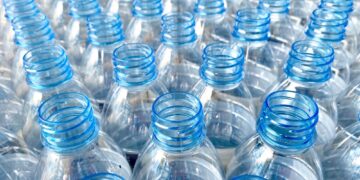
Numerous reclaimers across the country have the existing capacity and infrastructure to process a lot more than they can currently source. There’s enough capacity to double the U.S. plastic bottle recycling rate, for example, if reclaimers could get their hands on more bottles to process, Bailey said.
EPR will help on the supply front because of the “ambitious but achievable” recycling targets in the laws that have been passed in five U.S. states. These targets will prompt investment in improving collection as packaging producers work to come into compliance. Expanding collection to meet those targets will correspond with more tons coming into the system, Bailey explained.
The EPR-driven supply growth will take time to bear fruit, however.
“We’re still a few years out before we see more tons coming into the program, but we feel good that the foundation is there for success,” Bailey said.
The crucial question is, if the recycling sector solves the supply challenge, will end users actually buy the recycled resin? Despite numerous brand pledges and multiple emerging PCR mandates in U.S. states, the answer turns out to be surprisingly unclear.
Demand challenges due to virgin resin and imports
The key underlying factor hurting recycled resin demand is global overbuilding of virgin resin production capacity. This overcapacity has led to “lots of low-cost virgin and virgin equivalents,” such as chemical prime or off-spec resin, said Eagles.
The glut of inexpensive virgin resin entering the market comes into direct competition with recycled resin, at least when looking solely at price.
“Recycled materials offer an environmentally-preferred alternative, but they won’t always be the cheapest option,” Eagles said.
Recycled resin has long had to compete with virgin resin on price, and historically recycled has been on par with or slightly cheaper than virgin resin, providing end users with a price advantage to the recycled material. That dynamic has changed with the huge influx of virgin resin, Eagles said.
Adding to the negative pressures for the U.S. reclamation industry, competition is emerging from overseas. More post-consumer resin is being imported from abroad, from countries where the cost to produce it is lower – due to laxer regulations, for example – and it’s being sold for prices that U.S. reclaimers can’t meet, Eagles explained.
“This is undercutting markets,” she said, adding that the erosion of domestic PCR production is “not the direction we want to go.”
Demand trends to come
Although EPR offers positive signs for increasing collection volume, Bailey provided a less rosy outlook for the demand pressures. She presented figures from Chemical Market Analytics by OPIS, highlighting a global capacity surplus of 12.1 million metric tons – or 26.7 billion pounds – of virgin PE in 2022 and 2023. That was driven by new capacity vastly overshadowing what was still lagging demand following the height of the pandemic.
The figures indicate another projected surplus of 7 million metric tons – 15.4 billion pounds – in 2027 and 2028, because even though demand is flat in those years, the OPIS projections show significant new capacity coming online. That capacity is concentrated in China, the Middle East and North America.
“What we’re seeing is a big mismatch between the amount of plants that are being built and the amount of demand for virgin plastic,” Bailey said. “The short story is that there is a glut of virgin plastic on the market.”
That translates to plants needing to simply move a lot of material out the door, regardless of the price, so it turns into dumping cheap resin into the market that competes with PCR.
As long as recycled resin demand is tied to its price competition with virgin, Bailey said, the recycling sector will be impacted by the whole range of factors influencing global oil markets.
“We are really subject to what’s happening across the entire supply chain, decisions that China is making about when to build plants, decisions that OPEC makes about gasoline production and things like that,” Bailey said. “There are a lot of macroeconomic trends that show there is going to be a lot of virgin plastic on the market for several years to come, and it is going to be very cheap.”
Recycled content mandates and more
Bailey and Eagles said the current plastic dynamics are very similar to where the development of renewable energy as a major energy source was 10 or 20 years ago.
Renewable energy was a fraction of what was produced on the market, and electricity production was dominated by coal, oil and natural gas. Today, solar, wind and other renewables are coming to scale, and although fossil fuels are still dominant, the International Energy Agency has forecasts that show peak fossil fuel demand coming this decade and fossil fuels declining as a share of global energy supply. That’s in part due to the “phenomenal rise” of solar, wind, electric vehicles, heat pumps and other clean energy technologies.
“We finally hit that inflection point in the curve, and we need to do the same for plastics,” Bailey said.
She noted that the tools that boosted the renewables sector will benefit the recycling space.
Renewable energy received federal subsidies, which plastics recycling stakeholders are calling for in the recycling world. Regulations started requiring certain energy users to incorporate a certain percentage of renewable energy, much the same as a PCR mandate. Government procurement guidelines began to prefer renewable energy, and there is movement toward federal procurement guidelines that would support recycled-content products.
“The good news is, we have a playbook,” Bailey said.