




Resource Recycling
  • The Latest
  • Analysis
    • All
    • Certification Scorecard
    • Industry Announcements
    • Opinion
    Apple Watch on product box.

    Wearables are coming and ITAD isn’t ready

    Certification Scorecard — Week of April 13, 2026

    EV Battery Pack - Sergii Chernov-Shutterstock

    Redwood, Rivian deal fuels US infrastructure plans

    Bloom ESG and e-Stewards roll out critical metals metric

    Colorado regulators suggest mid-range EPR scenario

    Why collaboration on plastic waste still matters

    Battery recycler Ascend Elements files for bankruptcy

    Battery recycler Ascend Elements files for bankruptcy

    EPR fees are a market signal. Here’s what they’re telling you.

    EPR fees are a market signal. Here’s what they’re telling you.

    Wolframite ore, the primary ore of tungsten from Altai, Russia

    Tungsten scrap export controls draw industry attention

    Certification Scorecard — Week of April 6, 2026

  • Conferences
  • Publications

    Other Topics

    Textiles
    Organics
    Packaging
    Glass
    Brand Owners

    Metals
    Technology
    Research
    Markets
    Grant Watch

    All Topics

Subscribe
No Result
View All Result
Resource Recycling
  • The Latest
  • Analysis
    • All
    • Certification Scorecard
    • Industry Announcements
    • Opinion
    Apple Watch on product box.

    Wearables are coming and ITAD isn’t ready

    Certification Scorecard — Week of April 13, 2026

    EV Battery Pack - Sergii Chernov-Shutterstock

    Redwood, Rivian deal fuels US infrastructure plans

    Bloom ESG and e-Stewards roll out critical metals metric

    Colorado regulators suggest mid-range EPR scenario

    Why collaboration on plastic waste still matters

    Battery recycler Ascend Elements files for bankruptcy

    Battery recycler Ascend Elements files for bankruptcy

    EPR fees are a market signal. Here’s what they’re telling you.

    EPR fees are a market signal. Here’s what they’re telling you.

    Wolframite ore, the primary ore of tungsten from Altai, Russia

    Tungsten scrap export controls draw industry attention

    Certification Scorecard — Week of April 6, 2026

  • Conferences
  • Publications

    Other Topics

    Textiles
    Organics
    Packaging
    Glass
    Brand Owners

    Metals
    Technology
    Research
    Markets
    Grant Watch

    All Topics

Subscribe
No Result
View All Result
Resource Recycling
No Result
View All Result
Home E-Scrap

E-scrap generation on the decline, study finds

Colin StaubbyColin Staub
December 10, 2020
in E-Scrap
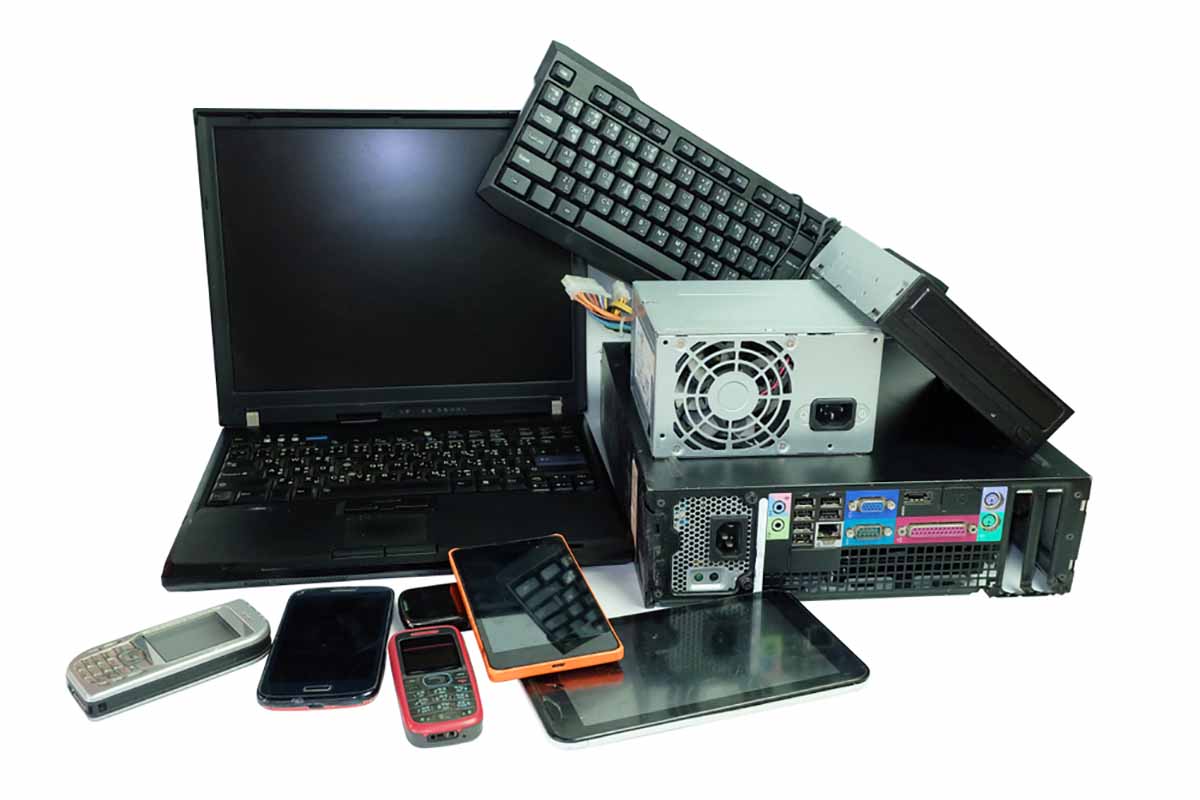
Various electronics gathered for recycling.
E-scrap generation, by weight, is down by almost 10% compared with its peak in 2015. | DAMRONG RATTANAPONG/Shutterstock

The weight of electronics entering the recycling stream has dropped consistently since hitting its peak in 2015, according to new research. The shift has implications for device processing and policy development.

Researchers at the Rochester Institute of Technology, the University of Hawaii at Manoa and Yale University recently published “The evolution of consumer electronic waste in the United States.” The study examined the end-of-life electronics stream, looking at overall weight and trends in device makeup. Callie Babbitt, a co-author of the study, previously studied the changing end-of-life device stream.

The results show fewer pounds being discarded and recycled in recent years, as well as fewer hazardous materials in the e-scrap stream. Both trends are largely connected to evolving TV technology, particularly the move away from CRTs and mercury-bearing LCDs.

“Over 95% of the lead in e‐waste was associated with CRT glass, and the declining presence in the waste stream is due to technological progress and natural substitution by newer products,” the researchers wrote.

E-scrap generation, by weight, is down by almost 10% compared with its peak in 2015, when U.S. consumers discarded roughly 1.8 million metric tons of electronics.

“The observed decline is attributed mainly to technological substitution of heavy CRT displays by lighter LCD and LED technologies, which results in approximately 75% mass reduction per product,” the report noted.

The declining weight has impacts for state e-scrap programs in the U.S., most of which set targets for OEM obligations based on the weight of products manufacturers sell per year. One of those is Wisconsin, which recently reported a continuing decline in the amount of material recycled under its program.

The study references the recently overhauled Illinois state program, which requires OEMs to fund collection sites based on population density. Such a system is less impacted by the shifting device stream than the current standard of weight-based programs, and other states have examined similar changes.

“While a mass‐based end‐of‐life product recovery mechanism can be effective in waste diversion, it is not responsive to the decreasing dominance of larger devices and increasing prevalence of lighter, multifunctional products containing critical metal content in the waste stream,” the researchers wrote.

Beyond the decline in weight and hazardous materials, the researchers found greater complexity in devices. As key examples, the study pointed to the increasing use of components such as lithium-ion batteries and flat panel glass.

“These complex components present barriers to sustainable materials management, particularly because recovering the valuable materials they contain is hindered by a lack of recycling infrastructure and commercial‐scale recovery technology,” according to the study.

The research was funded by the Consumer Technology Association, the National Science Foundation and the Staples Sustainable Innovation Lab at RIT.

 

Tags: Research
TweetShare
Colin Staub

Colin Staub

Colin Staub was a reporter and associate editor at Resource Recycling until August 2025.

Related Posts

Amazon, DOE partner on critical materials recovery

byScott Snowden
April 13, 2026

DOE and Amazon will study recovery of graphite from textiles and gallium from IT hardware, aiming to strengthen US supply...

Rice researchers use lemon juice to boost battery recycling

byScott Snowden
April 9, 2026

Rice researchers reported a battery recycling process that uses plasma and mild solvents to recover most metals from black mass...

Packaging sector sees shift from AI pilots to wider use

byScott Snowden
April 1, 2026

AI adoption is expanding across packaging operations as costs fall and use cases widen, though concerns around accountability, ROI and...

Report pegs fire losses at $2.5b in US and Canada recycling industry

byScott Snowden
March 27, 2026

A new fire report estimates $2.5b in damage across US and Canadian recycling facilities in 2025, with lithium-ion batteries still...

Australia battery recycling sector could reach A$6.9bn by 2050

Australia battery recycling sector could reach A$6.9bn by 2050

byScott Snowden
March 20, 2026

The country's battery recycling industry already contributes A$2.1 billion today, according to a new industry-funded report that calls for extended...

APR honors recycling leaders during PRC

APR honors recycling leaders during PRC

byScott Snowden
March 19, 2026

Conference awards honored researchers, companies and policymakers for advances in plastics recycling as speakers highlighted technical progress despite difficult market...

Load More
Next Post
View of Wisconsin and surrounding area on a map.

How COVID-19 affected one Midwest state's EPR program

Leading the Charge in Safe Battery Recycling
Sponsored

Leading the Charge in Safe Battery Recycling

byThe Battery Network
April 13, 2026

We’re connecting people, brands, and communities through one nationwide network built to make battery recycling safer, simpler, and more accessible...

Read moreDetails

More Posts

Battery recycler Ascend Elements files for bankruptcy

Battery recycler Ascend Elements files for bankruptcy

April 13, 2026

Recycling Partnership CEO stepping down

April 15, 2026

Bloom ESG and e-Stewards roll out critical metals metric

April 15, 2026
EPR fees are a market signal. Here’s what they’re telling you.

EPR fees are a market signal. Here’s what they’re telling you.

April 10, 2026
Apple Watch on product box.

Wearables are coming and ITAD isn’t ready

April 16, 2026
Industry group: Help us find the plastic bale volumes we need

PET bales sink further as other grades firm 

April 15, 2026
Aduro losses nearly double on year

Aduro losses nearly double on year

April 15, 2026
EV Battery Pack - Sergii Chernov-Shutterstock

Redwood, Rivian deal fuels US infrastructure plans

April 15, 2026

NERC launches hub to promote PCR demand 

April 15, 2026

AI surge, dealmaking reshape  ITAD industry 

April 16, 2026
Load More

About & Publications

About Us

Staff

Archive

Magazine

Work With Us

Advertise
Jobs
Contact
Terms and Privacy

Newsletter

Get the latest recycling news and analysis delivered to your inbox every week. Stay ahead on industry trends, policy updates, and insights from programs, processors, and innovators.

Subscribe

Welcome Back!

Login to your account below

Forgotten Password?

Retrieve your password

Please enter your username or email address to reset your password.

Log In

Add New Playlist

No Result
View All Result
  • The Latest
  • Analysis
  • Recycling
  • E-Scrap
  • Plastics
  • Policy Now
  • Conferences
    • E-Scrap Conference
    • Plastics Recycling Conference
    • Resource Recycling Conference
    • Textiles Recovery Summit
  • Magazine
  • About Us
  • Advertise
  • Archive
  • Jobs
  • Staff
Subscribe
This website uses cookies. By continuing to use this website you are giving consent to cookies being used. Visit our Privacy and Cookie Policy.