





Resource Recycling
  • The Latest
  • Analysis
    • All
    • Certification Scorecard
    • Industry Announcements
    • Opinion
    Rainforest

    Inside the Circle: What the rainforest can teach us about EPR

    Closeup of a printed circuitboard

    Hardware demand puts new focus on parts harvesting

    Rare look inside the world’s largest plastics recycler

    Mass balance matters: Why different rules can lead to different outcomes 

    Certification Scorecard — Week of June 1, 2026

    IT asset disposition and electronics recycling: Now and then

    $60 billion in AI servers will create an ITAD challenge

    The independent ITAD at a crossroads

    DMD acquires ITAD firm Lifespan, outlines acquisition strategy

  • Conferences
    • Resource Recycling Conference
    • Plastics Recycling Conference
    • E-Scrap: The Longevity Conference
    • Textiles Recovery Summit
  • Publications
    • E-Scrap News
    • Plastics Recycling Update
    • Policy Now
    • Resource Recycling
    • Other Topics
      • All Topics
      • Brand Owners
      • Critical Minerals
      • Glass
      • Grant Watch / RFPs
      • Markets
      • Organics
      • Packaging
      • Research
      • Technology
      • Textiles
Subscribe
No Result
View All Result
Resource Recycling
  • The Latest
  • Analysis
    • All
    • Certification Scorecard
    • Industry Announcements
    • Opinion
    Rainforest

    Inside the Circle: What the rainforest can teach us about EPR

    Closeup of a printed circuitboard

    Hardware demand puts new focus on parts harvesting

    Rare look inside the world’s largest plastics recycler

    Mass balance matters: Why different rules can lead to different outcomes 

    Certification Scorecard — Week of June 1, 2026

    IT asset disposition and electronics recycling: Now and then

    $60 billion in AI servers will create an ITAD challenge

    The independent ITAD at a crossroads

    DMD acquires ITAD firm Lifespan, outlines acquisition strategy

  • Conferences
    • Resource Recycling Conference
    • Plastics Recycling Conference
    • E-Scrap: The Longevity Conference
    • Textiles Recovery Summit
  • Publications
    • E-Scrap News
    • Plastics Recycling Update
    • Policy Now
    • Resource Recycling
    • Other Topics
      • All Topics
      • Brand Owners
      • Critical Minerals
      • Glass
      • Grant Watch / RFPs
      • Markets
      • Organics
      • Packaging
      • Research
      • Technology
      • Textiles
Subscribe
No Result
View All Result
Resource Recycling
No Result
View All Result
Home Plastics

Experts get technical on material innovations

Colin StaubbyColin Staub
May 3, 2019
in Plastics
Experts get technical on material innovations
Alan Barcon of PolyOne Corporation.

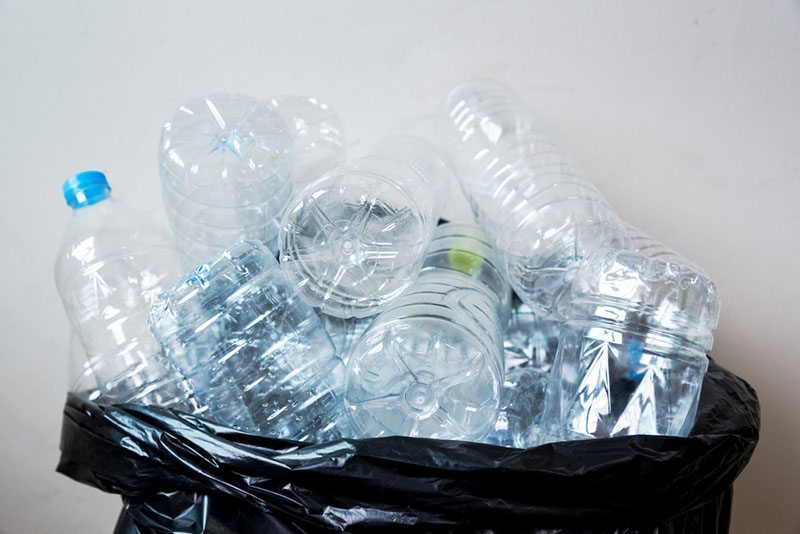
Processing technology can be used to overcome shortcomings in both PET and mixed plastics, according to two plastics recycling professionals.

During the 2019 Plastics Recycling Conference and Trade Show, experts took to the stage to share various recycled plastic material insights. Alan Barcon of PolyOne Corporation and Alfredo Faubel of Athyron LLC presented during a session titled “Getting Technical Across Materials.”

They talked about optimizing the use of RPET by mitigating the polymer’s shortcomings, as well as creating a desirable product from generally undesirable scrap plastics.

Modifying a standard plastic for desired traits

Barcon, associate director of marketing and technology for additive manufacturer PolyOne, explored strategies for mitigating certain failings of PET without inhibiting its recyclability.

Barcon praised PET as a “fantastic plastic,” but he noted that it “does have some inherent shortcomings,” depending on the use.

For example, oxygen can penetrate the wall of a PET package, he explained. This isn’t a major issue if the PET is used in a water bottle, but if it is holding a dairy product or fruit, it is “definitely a problem,” because those products contain oxidizable nutrients.

Additionally, PET allows light to reach its contents, and it can degrade during the processing phase. Also, using high levels of RPET in manufacturing can be challenging.

Pairing PET with other materials or introducing additives can overcome shortcomings, he said.

“In order to really maximize its potential you really have to pair it up with the right additive depending on what your application is,” he said.

The oxygen permeability issue can be tackled by pairing PET with an oxidizable nylon or other similar polymer, Barcon said. The materials can be paired using a cobalt catalyst. “As the oxygen permeates the container wall, it’s scavenged by that oxidizable polymer,” he said.

To determine which oxidizable polymer is right, the functionality should be considered. A product that needs a 30-day shelf life can get by with using very different materials than something that needs to last for a year or longer. “That has an impact on the amount of oxidizable additive that you’re going to put into the PET,” Barcon said.

Container size and shape also play into these decisions, as will the presence of other additives. Even small amounts of certain colorants “can actually interfere with the oxidation reaction between oxygen and that oxidizable polymer,” Barcon said.

To tackle the light-penetration problem, Barcon again noted that it really depends on the application of the package. If it’s a juice containing vitamin C, for example, the juice can degrade when hit with UV light, and so the plastic should include a light-protection agent.

“You really have to consider, ‘Well, how much light do I need to block?'” Barcon explained. That requires some chemistry and testing.

Barcon’s company, PolyOne, produces several light-blocking options, including an organic-based low-level UV barrier that does not impact recyclability. Last year, it announced an additive for milk-product containers that blocks the damaging effects of UV and visible light. That additive, called Lactra SX, allows “design-friendly, single-layer PET containers to perform on par with multi-layer bottles and laminate paperboard cartons, requiring less material and reducing production waste for increased sustainability,” according to a press release.

Additionally, the Association of Plastic Recyclers (APR) recently recognized PolyOne for its Smartheat RHC additive, which allows for a higher post-consumer resin content in containers and opens opportunities for greater lightweighting.

For stronger light-blocking needs, manufacturers sometimes use pigments in the plastic, Barcon noted during his presentation.

“They are effective, but the issue is then, what do you do with that PET bottle? You don’t want it to go straight into your transparent PET recycle stream, because it will contaminate it, so that’s an issue,” Barcon said.

A more desirable option from a recyclability standpoint is to use clear PET bottles with a full-body sleeve label. Barcon said sleeve technology has improved significantly, allowing them to be more easily removed.

Fiber-reinforced wood replacement

Texas-based Athyron sells a product called Miura Board, which has been manufactured for over 12 years. It’s a durable wood replacement, produced using 100 percent recycled materials.

The product came out of Athyron’s mission to create value from waste, said Faubel, CEO of Athyron.

Alfredo Faubel of Athyron on stage at the 2019 Plastics Recycling Conference and Trade Show.
Alfredo Faubel of Athyron.

“Essentially when most people see plastic waste we actually see wasted plastic,” Faubel said.

Miura Board is made from a fiber-reinforced composite. The company takes in commingled plastics and combines them with carpet fibers. Athyron then uses a patented process to blend those thermoplastics with non-melting fibers, which can be drawn from a variety of sources. In February, Plastics Recycling Update wrote about the technology and commercialization efforts.

“The beauty of this technology is that it’s very agnostic in terms of the kinds of feedstocks you can use,” Faubel said during his presentation. That allows the company to use mixed plastics, excepting PVC.

Polymers that melt at higher temperatures, such as nylon or polyester, or glass fiber are added, and the company creates a durable product with “very interesting properties.”

“You can cut it, drill it, nail it, screw it, route it, sand it, but it doesn’t split, it doesn’t crack, it doesn’t swell like wood,” Faubel said.

The material is also paintable or weldable, he said. It can be laminated with wood or other finishes, and it can also be used as a laminate on wood surfaces. It’s also UV-resistant and solvent-resistant, meaning it can be dipped in chlorocarbon solvents, acetone and other substances and it won’t dissolve.

Miura Board is, itself, recyclable at end-of-life. One key feature of the material is that it can be melted, pelletized and used in injection molding. The material can be molded at lower temperatures, Faubel said, which shortens the cooling cycle, allowing greater throughput.

One factor limiting its end market usage is its shifting appearance.

“Whatever comes out today, that’s the color,” Faubel said, noting that this precludes some retailers from carrying the product, as customers demand consistent colors and a wide variety. “It doesn’t mean we cannot pigment it, but then it wouldn’t be 100% recycled. Now, you’re buying an ingredient, basically.”

Photo credit: Brian Adams Photo/Plastics Recycling Conference

To receive the latest news and analysis about plastics recycling technologies, sign up now for our free monthly Plastics Recycling Update: Technology Edition e-newsletter.

 

Tags: Technology
TweetShare
Colin Staub

Colin Staub

Colin Staub was a reporter and associate editor at Resource Recycling until August 2025.

Related Posts

GP Recycling offers on-ramp for smaller recyclers

GP Recycling offers on-ramp for smaller recyclers

byAntoinette Smith
June 9, 2026

The company's hubbIT platform is a way for smaller generators to sell plastic, glass and metal bottles to the brokerage,...

DOE commits federal funds toward critical minerals

ABTC wins DOE appeal for Tonopah Flats lithium refinery project

byStefanie Valentic
June 8, 2026

ABTC has won back a DOE grant that was among hundreds terminated last fall.

Closeup of a printed circuitboard

Hardware demand puts new focus on parts harvesting

byDavid Daoud
June 5, 2026

Several key electronics parts are seeing tight supplies, potentially making for opportunities for the ITAD sector.

IT asset disposition and electronics recycling: Now and then

$60 billion in AI servers will create an ITAD challenge

byDavid Daoud
June 3, 2026

An AI growth boom suggests that a large number of devices will reach end-of-life around 2029-2031.

The independent ITAD at a crossroads

DMD acquires ITAD firm Lifespan, outlines acquisition strategy

byDavid Daoud
June 2, 2026

DMD Systems Recovery is expanding through acquisitions, starting with a business bought from Bluum Technology.

Emerging technology holds the key to rare earth recovery

Emerging technology holds the key to rare earth recovery

byDan Wang, Toyoshima Green Tech
June 1, 2026

Toyoshima has developed a process that recovers critical materials at high purity in an efficient way.

Load More
Next Post

Community Spotlight: Customer interaction bolsters program performance

More Posts

Recycling industry addresses Beyond Plastics report

Recycling industry addresses Beyond Plastics report

May 26, 2026
Fire at an EMR recycling facility in Camden, New Jersey May 29, 2026.

EMR faces shutdown calls after numerous fires

June 2, 2026
House resolution aims to make recyclability central to product design

NY EPR bill fails to advance after third try

June 8, 2026
IT asset disposition and electronics recycling: Now and then

$60 billion in AI servers will create an ITAD challenge

June 3, 2026
CalRecycle withdraws proposed regs for SB 54

Oceana, NRDC, CAW sue CalRecycle over SB 54 regs

June 5, 2026
The independent ITAD at a crossroads

DMD acquires ITAD firm Lifespan, outlines acquisition strategy

June 2, 2026
Our top stories from June 2021

Colorado advances EV battery EPR law

June 3, 2026
In My Opinion: Comparing the nation’s first packaging EPR laws

What Maine’s vape EPR law means for recyclers

June 4, 2026
Circular Materials to supply PlasCred chem recycling plant

Circular Materials to supply PlasCred chem recycling plant

June 4, 2026
Rare look inside the world’s largest plastics recycler

Mass balance matters: Why different rules can lead to different outcomes 

June 5, 2026
Load More

About & Publications

About Us

Staff

Archive

Magazine

Work With Us

Advertise
Jobs
Contact
Terms and Privacy

Newsletter

Get the latest recycling news and analysis delivered to your inbox every week. Stay ahead on industry trends, policy updates, and insights from programs, processors, and innovators.

Subscribe

Welcome Back!

Login to your account below

Forgotten Password?

Retrieve your password

Please enter your username or email address to reset your password.

Log In

Add New Playlist

No Result
View All Result
  • The Latest
  • Analysis
  • Recycling
  • E-Scrap
  • Plastics
  • Policy Now
  • Conferences
    • E-Scrap Conference
    • Plastics Recycling Conference
    • Resource Recycling Conference
    • Textiles Recovery Summit
  • Magazine
  • About Us
  • Advertise
  • Archive
  • Jobs
  • Staff
Subscribe
This website uses cookies. By continuing to use this website you are giving consent to cookies being used. Visit our Privacy and Cookie Policy.