



Resource Recycling
  • The Latest
  • Analysis
    • All
    • Certification Scorecard
    • Industry Announcements
    • Opinion
    SERI works to restore faith in certifications

    Building a defensible E-scrap evidence file

    tires

    The most important decision in tire recycling happens before the shredder

    Intel sign outside of company building.

    Intel’s CapEx tops $20B on server demand while PC volume shrinks

    Google sign on company building with blue sky and clouds above.

    Inside Alphabet’s Q2 results: More capital spending and cloud backlog

    Alpek closing Pennsylvania RPET plant

    Alpek seizing on war-related opportunity 

    Our top stories from March 2023

    Iron Mountain’s data center report: Strong on power, quiet on hardware

  • Conferences
    • Resource Recycling Conference
    • Plastics Recycling Conference
    • E-Scrap: The Longevity Conference
    • Textiles Recovery Summit
  • Publications
    • E-Scrap News
    • Plastics Recycling Update
    • Policy Now
    • Resource Recycling
    • Other Topics
      • All Topics
      • Brand Owners
      • Critical Minerals
      • Glass
      • Grant Watch / RFPs
      • Markets
      • Organics
      • Packaging
      • Research
      • Technology
      • Textiles
Subscribe
No Result
View All Result
Resource Recycling
  • The Latest
  • Analysis
    • All
    • Certification Scorecard
    • Industry Announcements
    • Opinion
    SERI works to restore faith in certifications

    Building a defensible E-scrap evidence file

    tires

    The most important decision in tire recycling happens before the shredder

    Intel sign outside of company building.

    Intel’s CapEx tops $20B on server demand while PC volume shrinks

    Google sign on company building with blue sky and clouds above.

    Inside Alphabet’s Q2 results: More capital spending and cloud backlog

    Alpek closing Pennsylvania RPET plant

    Alpek seizing on war-related opportunity 

    Our top stories from March 2023

    Iron Mountain’s data center report: Strong on power, quiet on hardware

  • Conferences
    • Resource Recycling Conference
    • Plastics Recycling Conference
    • E-Scrap: The Longevity Conference
    • Textiles Recovery Summit
  • Publications
    • E-Scrap News
    • Plastics Recycling Update
    • Policy Now
    • Resource Recycling
    • Other Topics
      • All Topics
      • Brand Owners
      • Critical Minerals
      • Glass
      • Grant Watch / RFPs
      • Markets
      • Organics
      • Packaging
      • Research
      • Technology
      • Textiles
Subscribe
No Result
View All Result
Resource Recycling
No Result
View All Result
Home Plastics

EU authority gives nod to PET recycling technologies

byJared Paben
December 2, 2019
in Plastics
EU authority gives nod to PET recycling technologies
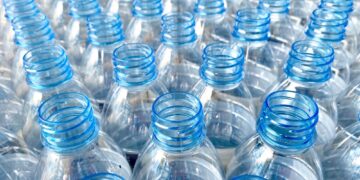
A number of technologies were recently approved for recycling plastic for use in food and drink packaging. | monticello/Shutterstock

A panel determined that recycling technologies from Bandera, Erema, Poly Recycling and Starlinger produce RPET that’s safe for use in food and drink packaging.

The Panel on Food Contact Materials, Enzymes and Processing Aids (CEP), which is part of the European Food Safety Authority (EFSA), issued 16 opinions in recent months. In each case, the group said the recycling process successfully removes contaminants and the resulting RPET can be used in food and drink packaging at up to 100% recycled content.

In the European Union, recycled plastics and additives can only be used in food and beverage packaging if they’re first reviewed by EFSA for safety. Recycling companies submit applications to individual countries, which apply to the EFSA on their behalf.

The following is a semi-annual roundup of recent opinions from CEP. Plastics Recycling Update published its previous EFSA roundup in June. Note: For all applications below, the input is hot caustic washed and dried PET flakes.

Bandera technology

In Bandera’s process, flakes are continuously preheated. Next, two batch reactors operated under vacuum and high temperature are alternately used. While de-contamination occurs in one reactor, preheated material is loaded into the second, resulting in a semi-continuous process.

Next, the flakes are fed into a twin-screw extruder with two degassing zones, with one kept at ambient pressure and the other under vacuum. A melt filter removes solid particles before sheets are produced.

The CEP on July 3 issued a favorable opinion on Bandera’s technology. The application was submitted by the Italian Ministry of Health on behalf of AMB of Italy.

Three Erema processes

In a July 3, 2019 opinion, the CEP approved the use of a Erema Basic technology, which involves feeding flakes into a continuous reactor equipped with a bottom-mounted rotating mixing device. There, they’re exposed to a vacuum and high temperatures. This removes contaminants and crystallized the flakes. Next, the flakes go into the extruder, where they’re melted at atmospheric pressure. Solid particles are filtered out before the plastic is converted into sheets. For this opinion, the Food Safety Authority of Ireland applied on behalf of Irish company Quinn Packaging.

In another Erema process called MPR B2B, flakes are introduced into a continuous multi-purpose reactor (MPR) reactor equipped with a bottom-mounted rotating mixing device. There, a vacuum and high temperatures remove contaminants and crystallize the flakes. The Italian Ministry of Health applied on behalf of Alimpet of Italy. In response to the application, CEP provided a favorable opinion on April 2, 2019.

Finally, in the Erema Advanced Technology process, flakes are introduced into a continuous reactor, which has a bottom-mounted mixing device, and are heated. Then, they’re fed into a second continuous reactor with a bottom-mounted mixing device, where they’re exposed to a vacuum and high temperatures, removing contaminants and crystallizing the flakes. Lastly, the flakes are melted in an extruder at atmospheric pressure, particles are removed with a melt filter and pellets are produced. On April 2, 2019, CEP adopted its opinion. The Germany Federal Office for Consumer Protection and Food Safety had applied on behalf of German reclaimer Texplast.

Poly Recycling PET Direct IV+

Swiss reclaimer Poly Recycling applied for a CEP opinion on its technology, which involves sending flakes into an extruder, where they’re heated and melted at atmospheric pressure. The extruded pellets are then crystallized at high temperature in a continuous reactor under inert gas at atmospheric pressure. Finally, they’re further heated and sent into a solid-state polycondensation (SSP) reactor, which is semi-continuously running under vacuum, and exposed to high temperatures.

The CEP adopted its favorable opinion on Sept. 19, 2019. The German Federal Office for Consumer Protection and Food Safety applied on Poly Recycling’s behalf.

Starlinger Decon technology

The CEP issued favorable opinions to eight companies that are using Starlinger Decon technology. In this process, flakes are first pre-heated in a batch reactor with a flow of hot gas (several pre-heaters can be used, depending on the amount of material to be recycled). Then, they are sent to the SSP reactor, where they’re in a vacuum while gas flow is periodically applied to remove contaminants. This step increases the intrinsic viscosity of the PET and further decontaminates it.

All eight of the applications were submitted by Germany’s Federal Office for Consumer Protection and Food Safety, and the CEP adopted its favorable opinion for all on Sept. 17, 2019.

The applications were submitted on behalf of the following plastics reclaimers: Italian company Ferrarelle, Polish company Marcato, Austrian company PETman, Spanish company Pinaform, Greek company Reco-Kavala, U.K. company Sharpak Bridgewater, Bulgarian company V&T Trade and Spanish company Veripack Embalajes.

Starlinger IV+ Technology

With this technology, flakes are dried and crystallized at high temperature in a reactor under airflow in a continuous process. Then, they are melted in an extruder in a vacuum. Next, extruded pellets are crystallized at high temperature in a reactor under atmospheric pressure. Lastly, the pellets are continuously preheated in a reactor before going to the SSP reactor, where they’re under a vacuum and high temperatures.

CEP issued both of its favorable opinions on July 3, 2019. The applications were submitted by the German Federal Office for Consumer Protection and Food Safety on behalf of German reclaimer Texplast and Swiss reclaimer Poly Recycling.

Starlinger’s RecoSTAR PET FG

Poly Recycling also applied seeking an opinion on the RecoSTAR PET FG technology.

This process involves feeding flakes into a continuous reactor with high inert gas flow and temperatures. This vaporizes possible contaminants and crystallizes the flakes. Then, the flakes are continuously fed into a second reactor with preheated inert gas flow and high temperatures. Lastly, the flakes are melted in an extruder and the molten plastic is either pelletized or fed to in-line production of thermoforming sheet or injection molded articles.

CEP published its opinion on Sept. 18, 2019. The German Federal Office for Consumer Protection and Food Safety had applied on Poly Recycling’s behalf.

To receive the latest news and analysis about plastics recycling technologies, sign up now for our free monthly Plastics Recycling Update: Technology Edition e-newsletter.
 

2020 Plastics Recycling Conference and Trade Show

Tags: EuropePETTechnology
TweetShare
Jared Paben

Jared Paben

Related Posts

Intel sign outside of company building.

Intel’s CapEx tops $20B on server demand while PC volume shrinks

byDavid Daoud
July 29, 2026

As a result ITAD firms should plan for two separate asset cycles.

Arca stresses investment amid headwinds

Arca stresses investment amid headwinds

byAntoinette Smith
July 29, 2026

As the second-biggest Coca-Cola bottler in Latin America, Arca Continental is taking the long view during challenging conditions.

Greyparrot positions waste intel as key to effective EPR

Greyparrot secures $27m for growing AI waste data

byAntoinette Smith
July 28, 2026

The AI waste intelligence firm has now raised a total of $60 million to help expand its Analyzer network and...

Google sign on company building with blue sky and clouds above.

Inside Alphabet’s Q2 results: More capital spending and cloud backlog

byDavid Daoud
July 28, 2026

The tech giant spent $44.9 billion in a single quarter building AI infrastructure, with major implications for the ITAD space.

Alpek closing Pennsylvania RPET plant

Alpek seizing on war-related opportunity 

byAntoinette Smith
July 27, 2026

The world's largest PET producer saw a big increase in spot volumes during Q2 thanks to supply chain disruptions, and...

Our top stories from March 2023

Iron Mountain’s data center report: Strong on power, quiet on hardware

byDavid Daoud
July 24, 2026

The company’s 2025 Sustainability Overview tells a story both in the data it presents and in the data it omits.

Load More
Next Post

First Person Perspective: What’s in your wallet? More and more, it may be recycled content

2026 Buyers’ Guide

Equipment, services and technology suppliers serving the recycling industry.

Browse the Guide

More Posts

Innovation. Partnership. Circular value.

Innovation. Partnership. Circular value.

August 1, 2026
Apple accused of hampering battery replacement

Apple’s MacBook Neo: iFixit’s best MacBook score in 14 years, but the residual value ceiling is real

March 17, 2026
Tech giant pens detailed ‘plastic-free packaging’ guide

What Google’s latest report means for ITAD

July 8, 2026
Amazon cutting out more flexible packaging

Amazon’s AWS hardware reuse is measured

July 7, 2026
Tiger Group offers OCC pulp mill equipment sale

Tiger Group offers OCC pulp mill equipment sale

July 1, 2026
Battery fire risk isn’t going away. Insurance is responding

Battery fire risk isn’t going away. Insurance is responding

February 24, 2026
Smelters provide insight into e-scrap use

Smelters provide insight into e-scrap use

February 22, 2023

EPR reporting deadlines are coming fast

January 3, 2024

Our top stories from October 2021

November 3, 2021
SERI works to restore faith in certifications

Building a defensible E-scrap evidence file

August 6, 2026
Load More

About & Publications

About Us

Staff

Archive

Magazine

Work With Us

Advertise
Jobs
Contact
Terms and Privacy

Newsletter

Get the latest recycling news and analysis delivered to your inbox every week. Stay ahead on industry trends, policy updates, and insights from programs, processors, and innovators.

Subscribe

Welcome Back!

Login to your account below

Forgotten Password?

Retrieve your password

Please enter your username or email address to reset your password.

Log In

Add New Playlist

No Result
View All Result
  • The Latest
  • Analysis
  • Recycling
  • E-Scrap
  • Plastics
  • Policy Now
  • Conferences
    • E-Scrap Conference
    • Plastics Recycling Conference
    • Resource Recycling Conference
    • Textiles Recovery Summit
  • Magazine
  • About Us
  • Advertise
  • Archive
  • Jobs
  • Staff
Subscribe
This website uses cookies. By continuing to use this website you are giving consent to cookies being used. Visit our Privacy and Cookie Policy.