






Resource Recycling
  • The Latest
  • Analysis
    • All
    • Certification Scorecard
    • Industry Announcements
    • Opinion
    Intel sign outside of company building.

    Intel’s CapEx tops $20B on server demand while PC volume shrinks

    Google sign on company building with blue sky and clouds above.

    Inside Alphabet’s Q2 results: More capital spending and cloud backlog

    Alpek closing Pennsylvania RPET plant

    Alpek seizing on war-related opportunity 

    Our top stories from March 2023

    Iron Mountain’s data center report: Strong on power, quiet on hardware

    Dow touts US PE advantage amid Iran war

    Dow bullish on August PE pricing

    Certification Scorecard — Week of July 20, 2026

  • Conferences
    • Resource Recycling Conference
    • Plastics Recycling Conference
    • E-Scrap: The Longevity Conference
    • Textiles Recovery Summit
  • Publications
    • E-Scrap News
    • Plastics Recycling Update
    • Policy Now
    • Resource Recycling
    • Other Topics
      • All Topics
      • Brand Owners
      • Critical Minerals
      • Glass
      • Grant Watch / RFPs
      • Markets
      • Organics
      • Packaging
      • Research
      • Technology
      • Textiles
Subscribe
No Result
View All Result
Resource Recycling
  • The Latest
  • Analysis
    • All
    • Certification Scorecard
    • Industry Announcements
    • Opinion
    Intel sign outside of company building.

    Intel’s CapEx tops $20B on server demand while PC volume shrinks

    Google sign on company building with blue sky and clouds above.

    Inside Alphabet’s Q2 results: More capital spending and cloud backlog

    Alpek closing Pennsylvania RPET plant

    Alpek seizing on war-related opportunity 

    Our top stories from March 2023

    Iron Mountain’s data center report: Strong on power, quiet on hardware

    Dow touts US PE advantage amid Iran war

    Dow bullish on August PE pricing

    Certification Scorecard — Week of July 20, 2026

  • Conferences
    • Resource Recycling Conference
    • Plastics Recycling Conference
    • E-Scrap: The Longevity Conference
    • Textiles Recovery Summit
  • Publications
    • E-Scrap News
    • Plastics Recycling Update
    • Policy Now
    • Resource Recycling
    • Other Topics
      • All Topics
      • Brand Owners
      • Critical Minerals
      • Glass
      • Grant Watch / RFPs
      • Markets
      • Organics
      • Packaging
      • Research
      • Technology
      • Textiles
Subscribe
No Result
View All Result
Resource Recycling
No Result
View All Result
Home Plastics

Bottle cap design: No need to ‘reinvent the wheel’

Antoinette SmithbyAntoinette Smith
June 25, 2025
in Plastics
Bottle cap design: No need to ‘reinvent the wheel’
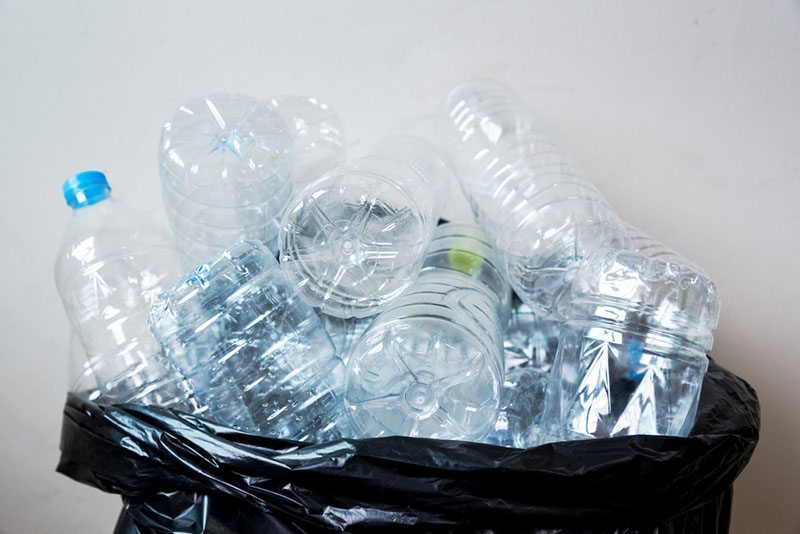
State-level initiatives have suggested PET closures and tethered caps, but these designs may introduce complications while attempting to provide a solution. | FotoDax/Shutterstock

Mono-material design often is the goal for packaging, but due to color and sortation nuances it may not be the best approach for beverage containers, according to a packaging design expert during a recent webinar. 

Well-meaning initiatives promote mono-material package design, such as the proposed SB 132 in Illinois, which would require a cap be made of the same material as the plastic beverage container by Jan. 1, 2029. The bill did not advance during the most recent legislative session. 

But brand owners, converters, cap manufacturers and the like should be mindful of several concerns when considering the use of PET caps, said Ruben Nance, program director for the Preferred Design Recognition program at the Association of Plastic Recyclers. APR owns Resource Recycling, Inc., publisher of Plastics Recycling Update.

“A major transition can have massive implications within the reclamation industry,” he said during a June 18 webinar on caps and closures, presented by Plastics News. PET closures “can absolutely be a good thing, but there needs to be some additional considerations around design before potentially looking at a mandate and/or implementing such a process.” 

For example, when colored to brand specifications, PET caps can introduce pigment and quality issues to otherwise clear or natural color bales, Nance said. 

In recent years, beverage giant Coca-Cola shifted to clear PET bottles for several of its beverage brands that had traditionally been bottled in green PET. This transition helped increase recyclability and add value to bottle bales. 

By adding colored material to the recycling stream, “inevitably you are decreasing the quality and/or yield of the natural blow-molded PET that’s commonly collected and segregated,” Nance said.

Origin Materials, which recently started producing PET caps, is “pretty staunchly in favor of colorless caps,” CEO John Bissell told Plastics Recycling Update. “We think there are other ways for brands to differentiate themselves with a PET closure.”

He added that in the medium to long term, Origin sees ways of introducing dyes that do not remain throughout the recycling process. Nevertheless, “that’s something we do a lot of work on with recyclers to make sure that we understand exactly how that color is performing.”

Besides color issues, the blow-molding grade of resin used in the bottle may differ from the injection-molded or thermoformed material used for a cap, Nance of APR said, not to mention additives used for PET caps that aren’t typically present in blow-molded resin can cause discoloration and yield loss in recycled plastics. 

Another potential issue is the thermoforming process. Thermoformed PET typically has an intrinsic viscosity of 0.74 dL/g or lower, Nance said, noting that the APR Design Guide places intrinsic viscosity of lower than 0.72 dL/g in the category of “detrimental to recycling.” A low intrinsic viscosity means the PET can be more brittle, which can cause resin loss during the granulation and washing processes, among other issues.

Although Origin Materials uses a thermoform process for its PET caps, Bissell said the company uses bottle-grade PET. “We know that some of the other PET cap programs that are out there are using modified resins, or specialty resins, things like that, but we are not doing it,” he said.

Using industrial scrap or regrind also can cause yellowing and additional deterioration of intrinsic viscosity, Nance added.

At present, bottle caps typically are made with HDPE or PP, and represent a viable side stream of revenue for reclaimers, Nance said, a point APR notes in its FAQ for bottle caps.

Edward Kosior, CEO and founder of UK-based recycling consultancy Nextek, told Plastics Today that ideally caps would be made from PP. Nextek is leading an effort in Europe and North America to accelerate adoption of food-grade recycled PP.

Reclaimer Paul Bahou, president at Global Plastics Recycling in California, told Plastics Recycling Update that the float-sink separation process easily separates PET flakes from HDPE cap or tether flakes, “so you can have a variety of colors and designs on HDPE caps without contaminating the clear bottle flake stream.” 

“PET caps will sink, meaning that unless all of these caps are uniformly clear, it’s going to be a disaster,” Bahou said, adding that “HDPE caps work great. I don’t know why they want to reinvent the wheel on this one.” 

Nance noted that “the last thing we want to see as an association is something new entering the market at a very high utilization that’s going to diminish the quality of the resin the reclaimers are able to produce.” 

Tethering provides more complication

Another commonly debated feature of beverage bottles is tethering, in which the cap is designed to stay with the main packaging to reduce the chance it is lost in the sorting process. As of summer 2024, Europe requires tethered caps, and in general, developments in Europe often make their way first to California and then gradually across the U.S., Nance said. 

Although there is no current legislation requiring tethered caps or closures on plastic packaging, Nance said, at least two state bills have proposed the concept. In California, SB 45 would require all beverage containers to have a tethered cap by Jan. 1, 2027, but would have a one-year grace period for bottles with a collection rate of 70% or higher. And in Illinois, SB 132 would require a tethered cap in addition to the mono-material requirement by Jan. 1, 2029. 

While APR supports tethered caps on beverage bottles, current design guidance does not require them.

Even tethered caps can break free during the reclamation process, and “consumers don’t always do due diligence,” so the cap isn’t guaranteed to stay with the bottle, Nance said. “But absolutely tethering can increase the amount of recycled material within the market and decrease the amount of plastic going to waste streams.”

Tags: PETRigid Plastics
TweetShare
Antoinette Smith

Antoinette Smith

Antoinette Smith has covered commodity plastics and supply chains for more than a decade, with a special focus on economic impacts and consumer behavior. She brings a balanced, thoughtful view to recycling stories, and isn't afraid to ask "why?" Contact Antoinette at antoinette@dev.resource-recycling.com.

Related Posts

Arca stresses investment amid headwinds

Arca stresses investment amid headwinds

byAntoinette Smith
July 29, 2026

As the second-biggest Coca-Cola bottler in Latin America, Arca Continental is taking the long view during challenging conditions.

Alpek closing Pennsylvania RPET plant

Alpek seizing on war-related opportunity 

byAntoinette Smith
July 27, 2026

The world's largest PET producer saw a big increase in spot volumes during Q2 thanks to supply chain disruptions, and...

RecyClass hits 500 EU recyclability evals

RecyClass hits 500 EU recyclability evals

byAntoinette Smith
July 21, 2026

The most recent evaluations include Avery Dennison's RFID tag for PET bottles, ahead of the first PPWR enforcement in mid-August.

APR adds PCR content verification to cert program

APR adds PCR content verification to cert program

byAntoinette Smith
July 9, 2026

The new producer standard is based on ISO chain-of-custody and traceability requirements, to provide third-party verification of PCR claims.

SB 54 draft rules generate debate on rates, review

California increases PET market payments

byAntoinette Smith
July 7, 2026

While the state extended the incentive program, the status of a separate bill with similar goals is uncertain.

Bottlers open recycling center on Mexican isle

Bottlers open recycling center on Mexican isle

byAntoinette Smith
June 26, 2026

The transfer center will separate and process recyclables on Isla Holbox, a pristine island off the northern coast of the...

Load More
Next Post

Q&A: With EPR incoming, end markets are crucial

2026 Buyers’ Guide

Equipment, services and technology suppliers serving the recycling industry.

Browse the Guide

More Posts

CarbonLite to open $60 million Pennsylvania plant

Federal judge blocks CA ‘Truth in Recycling’ (SB 343) law

July 15, 2026
Alpek closing Pennsylvania RPET plant

Alpek seizing on war-related opportunity 

July 27, 2026

MTA loses track of recycling, costing NYC Transit $800,000

July 23, 2026
California releases deposit system update draft rules

Groups move to intervene in SB 343 lawsuit

July 27, 2026
Women in Circularity: Christine Nikander

Women in Circularity: Christine Nikander

July 28, 2026
Ivan Rangel of Happen Ventures speaks at the PROP conference in Lancaster, PA July 24, 2026.

Making reuse as easy as possible

July 27, 2026
Industry announcements for January 2026

Industry announcements for July 2026

July 1, 2026
Greyparrot positions waste intel as key to effective EPR

Greyparrot secures $27m for growing AI waste data

July 28, 2026
Waste Connections company truck on an urban street.

Waste Connections sees Q2 lift on recycled commodity values

July 24, 2026
Dow touts US PE advantage amid Iran war

Dow bullish on August PE pricing

July 24, 2026
Load More

About & Publications

About Us

Staff

Archive

Magazine

Work With Us

Advertise
Jobs
Contact
Terms and Privacy

Newsletter

Get the latest recycling news and analysis delivered to your inbox every week. Stay ahead on industry trends, policy updates, and insights from programs, processors, and innovators.

Subscribe

Welcome Back!

Login to your account below

Forgotten Password?

Retrieve your password

Please enter your username or email address to reset your password.

Log In

Add New Playlist

No Result
View All Result
  • The Latest
  • Analysis
  • Recycling
  • E-Scrap
  • Plastics
  • Policy Now
  • Conferences
    • E-Scrap Conference
    • Plastics Recycling Conference
    • Resource Recycling Conference
    • Textiles Recovery Summit
  • Magazine
  • About Us
  • Advertise
  • Archive
  • Jobs
  • Staff
Subscribe
This website uses cookies. By continuing to use this website you are giving consent to cookies being used. Visit our Privacy and Cookie Policy.