




Resource Recycling
  • The Latest
  • Analysis
    • All
    • Certification Scorecard
    • Industry Announcements
    • Opinion

    Certification Scorecard — Week of April 6, 2026

    Closed Loop Partners acquires Sutter Metals, connecting electronics disposition to metals recovery

    Certification Scorecard — Week of March 30, 2026

    Industry announcements for January 2026

    Industry announcements for April 2026

    Certification scorecard – Week of March 23, 2026

    Certification Scorecard – Week of March 16, 2026

    Groups identify recovered plastics users in the Northeast

    Bale pricing for recycled plastics diverges

    Why global ITAD is stranded in the Gulf

    Why global ITAD is stranded in the Gulf

    Certification scorecard for the week of March 9, 2026

  • Conferences
  • Publications

    Other Topics

    Textiles
    Organics
    Packaging
    Glass
    Brand Owners

    Metals
    Technology
    Research
    Markets
    Grant Watch

    All Topics

Subscribe
No Result
View All Result
Resource Recycling
  • The Latest
  • Analysis
    • All
    • Certification Scorecard
    • Industry Announcements
    • Opinion

    Certification Scorecard — Week of April 6, 2026

    Closed Loop Partners acquires Sutter Metals, connecting electronics disposition to metals recovery

    Certification Scorecard — Week of March 30, 2026

    Industry announcements for January 2026

    Industry announcements for April 2026

    Certification scorecard – Week of March 23, 2026

    Certification Scorecard – Week of March 16, 2026

    Groups identify recovered plastics users in the Northeast

    Bale pricing for recycled plastics diverges

    Why global ITAD is stranded in the Gulf

    Why global ITAD is stranded in the Gulf

    Certification scorecard for the week of March 9, 2026

  • Conferences
  • Publications

    Other Topics

    Textiles
    Organics
    Packaging
    Glass
    Brand Owners

    Metals
    Technology
    Research
    Markets
    Grant Watch

    All Topics

Subscribe
No Result
View All Result
Resource Recycling
No Result
View All Result
Home Recycling

State group strategizes to lift lagging recycling rates

Colin StaubbyColin Staub
January 16, 2018
in Recycling

Colorado’s recycling advocates have taken on a new strategy aimed at boosting the state’s diversion rate. Over the past year, the Colorado Association for Recycling identified key goals and specific actions it will take to attain them, according to the group’s director.

Compared with many other states, Colorado ranks low in terms of recycling. It has a combined residential and commercial diversion rate of 12 percent, whereas the nation has a roughly 34 percent diversion rate.

“There’s nothing here but opportunity, but the challenges are immense,” said Laurie Johnson, executive director of the Colorado Association for Recycling (CAFR). Johnson marked her first year as executive director this month, and in an interview with Resource Recycling, she offered up her take on the state’s materials recovery trajectory.

To meet current challenges head-on, Johnson noted, CAFR over the past year convened businesses, cities, consultants, nonprofit groups and other stakeholders to develop a new way forward. Johnson also noted a strong and committed board  at CAFR has kept the organization moving forward despite some significant obstacles, including the sudden death of the group’s previous leader.

Colorado’s challenges

Johnson pointed to a lack of infrastructure holding back collection efforts, and a lack of end markets making it difficult to build support for increased collection.

Laurie Johnson
Laurie Johnson

“If everybody here were to divert their food waste and we would make compost, we would be really stuck, because we don’t have anywhere to sell it,” she said. “That’s a political issue, it’s an economic issue, and again, it’s that end-market issue.”

On the residential collection side, the hauling structure is also holding back increased diversion, Johnson added. A majority of the state’s recycling programs are set up under the open subscription model, rather than the single hauler or franchise zone system. That makes it particularly difficult to streamline messaging, among other challenges.

Politically, there is far less support and momentum for government mandates on recycling than in states such as California, for example. And geographically, the state doesn’t have easy access to ports to move material.

Planning for change

CAFR went through a four-month planning process over the past year to develop a new strategy. The goal was to come up with specific initiatives the group would work toward, with a simple criteria for choosing which would be included.

“My key tagline is, ‘If it’s not tangible, actionable and measurable, we don’t do it,'” Johnson said. “It has to meet those three criteria in order for us to even think about doing it.”

The strategic plan covers 2018 through 2020, and its overall purpose is to see Colorado hit 50 percent diversion and expand recycling access statewide. Work toward that goal is detailed in the annual operating plan, along with key performance indicators to track progress throughout the year. In 2018, for instance, the organization aims to lead projects to development material collection or processing infrastructure and end markets.

The organization has also pledged to create two new “regional councils,” a concept recently developed as one way to ensure CAFR represents the entire state.

“We convene roundtables out of which come action groups that work on one specific task for 12 months,” Johnson said. For example, CAFR’s first regional council was formed in Colorado Springs in July, and it has convened an action group that’s working toward a cardboard disposal ban in that city.

Organization in flux

The strategic plan is one of many changes the Colorado organization has undergone in recent years.

In late June 2016, the organization experienced a tragedy, when former Executive Director Cara Russell was shot and killed by her estranged husband in the CAFR office in Denver. She had taken on the role a few months earlier.

The board took on the volunteer roles of running the organization without an executive director, and continued its work while supporting Russell’s family. Johnson said board members really stepped up to keep things together while dealing with the traumatic event.

“It was recognizing it and not running from the hard conversations, and just moving forward with as much compassion as we possibly could,” Johnson said.

CAFR had been without an executive director for a period of time before Russell’s tenure, meaning this is the longest period the position has been filled in several years.

Johnson took on the role at the beginning of 2017. She previously worked as a vice president at Recyclebank, which she said allowed her to see recycling from a variety of perspectives. She got to know the hauler side, municipal side, business aspect, state association perspective and more. She was also a board member for the State of Texas Alliance for Recycling (STAR).

As for advice for other state recycling organizations looking to change direction or plan more concrete actions, Johnson said the groups shouldn’t be afraid to risk failure.

“It’ll pay off, because the community wants to see something that’s relevant and tangible,” Johnson said. “And if you fail, try again. That’s the nature of successful anything: Failure is simply a building block to success.”
 

NovoTecRotochopper

Tags: Local Programs
TweetShare
Colin Staub

Colin Staub

Colin Staub was a reporter and associate editor at Resource Recycling until August 2025.

Related Posts

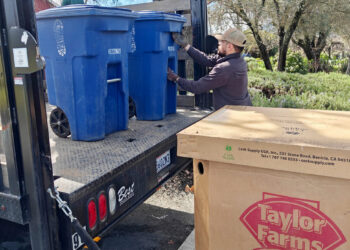
Wineries help create model for film recycling

Wineries help create model for film recycling

byAntoinette Smith
April 7, 2026

A collaboration between California wineries and the recycling value chain has provided a closed-loop model the partners aim to see...

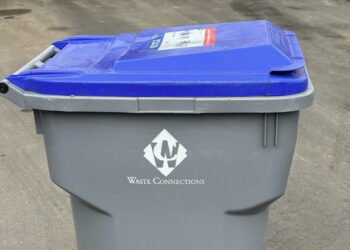
Waste Connection recycling cart in The Dalles, Oregon

First Oregon community expands curbside recycling with EPR funding

byBrian Clark Howard
April 1, 2026

The City of The Dalles in northern Oregon is now rolling out nearly 5,000 new 90-gallon recycling carts to customers...

Rural effort targets vapes as battery fire risk grows

byScott Snowden
March 24, 2026

A Wisconsin firefighter is building a rural vape collection service as discarded devices with lithium-ion batteries continue to raise fire...

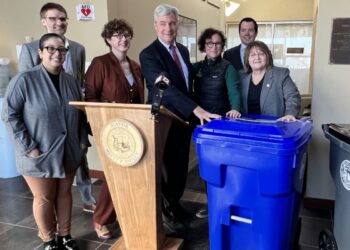
New Providence carts underpin recycling campaign

New Providence carts underpin recycling campaign

byBrian Clark Howard
March 23, 2026

With grant assistance, the Rhode Island capital is providing about 55,000 new collection carts to help boost its recycling rate,...

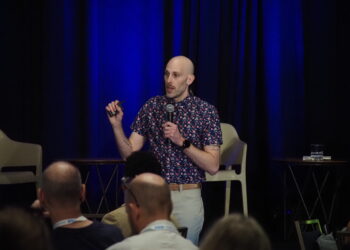
Recycling education needs consistency, simplicity 

byBrian Clark Howard
February 25, 2026

Several members of Circular Action Alliance team shared insights during a workshop at the 2026 Resource Recycling Conference in San...

Nebraska grant recipients include electronics, battery programs

byAntoinette Smith
February 19, 2026

The grants will help fund collection of used electronics in the state, which last year passed a battery EPR law.

Load More
Next Post

Where exports displaced from China are finding a home

More Posts

PCA closing Richmond plant

PCA closing Richmond plant

April 2, 2026
With RPET in crisis, focus turns to solutions

With RPET in crisis, focus turns to solutions

April 2, 2026
Wineries help create model for film recycling

Wineries help create model for film recycling

April 7, 2026
Oregon’s Recycling Modernization Act faces injunction

Why EPR’s biggest obstacle might not be legislation

April 6, 2026

Apparel retailer organization challenges SB 707 textile PRO selection

April 2, 2026
WM rolling out curbside acceptance of PP cups 

APR releases first semiannual Design Guide update

April 3, 2026
End markets, policy key to RPET viability

End markets, policy key to RPET viability

April 8, 2026

Independents complement primary PRO in state EPR

April 6, 2026
Minnesota State Capitol

Minnesota watches Oregon as EPR implementation advances

April 6, 2026
Waste Connection recycling cart in The Dalles, Oregon

First Oregon community expands curbside recycling with EPR funding

April 1, 2026
Load More

About & Publications

About Us

Staff

Archive

Magazine

Work With Us

Advertise
Jobs
Contact
Terms and Privacy

Newsletter

Get the latest recycling news and analysis delivered to your inbox every week. Stay ahead on industry trends, policy updates, and insights from programs, processors, and innovators.

Subscribe

Welcome Back!

Login to your account below

Forgotten Password?

Retrieve your password

Please enter your username or email address to reset your password.

Log In

Add New Playlist

No Result
View All Result
  • The Latest
  • Analysis
  • Recycling
  • E-Scrap
  • Plastics
  • Policy Now
  • Conferences
    • E-Scrap Conference
    • Plastics Recycling Conference
    • Resource Recycling Conference
    • Textiles Recovery Summit
  • Magazine
  • About Us
  • Advertise
  • Archive
  • Jobs
  • Staff
Subscribe
This website uses cookies. By continuing to use this website you are giving consent to cookies being used. Visit our Privacy and Cookie Policy.