




Resource Recycling
  • The Latest
  • Analysis
    • All
    • Certification Scorecard
    • Industry Announcements
    • Opinion

    ITAD is moving past its adolescent phase: beyond end-of-life

    Rainforest

    Inside the Circle: What the rainforest can teach us about EPR

    Closeup of a printed circuitboard

    Hardware demand puts new focus on parts harvesting

    Rare look inside the world’s largest plastics recycler

    Mass balance matters: Why different rules can lead to different outcomes 

    Certification Scorecard — Week of June 1, 2026

    IT asset disposition and electronics recycling: Now and then

    $60 billion in AI servers will create an ITAD challenge

  • Conferences
    • Resource Recycling Conference
    • Plastics Recycling Conference
    • E-Scrap: The Longevity Conference
    • Textiles Recovery Summit
  • Publications
    • E-Scrap News
    • Plastics Recycling Update
    • Policy Now
    • Resource Recycling
    • Other Topics
      • All Topics
      • Brand Owners
      • Critical Minerals
      • Glass
      • Grant Watch / RFPs
      • Markets
      • Organics
      • Packaging
      • Research
      • Technology
      • Textiles
Subscribe
No Result
View All Result
Resource Recycling
  • The Latest
  • Analysis
    • All
    • Certification Scorecard
    • Industry Announcements
    • Opinion

    ITAD is moving past its adolescent phase: beyond end-of-life

    Rainforest

    Inside the Circle: What the rainforest can teach us about EPR

    Closeup of a printed circuitboard

    Hardware demand puts new focus on parts harvesting

    Rare look inside the world’s largest plastics recycler

    Mass balance matters: Why different rules can lead to different outcomes 

    Certification Scorecard — Week of June 1, 2026

    IT asset disposition and electronics recycling: Now and then

    $60 billion in AI servers will create an ITAD challenge

  • Conferences
    • Resource Recycling Conference
    • Plastics Recycling Conference
    • E-Scrap: The Longevity Conference
    • Textiles Recovery Summit
  • Publications
    • E-Scrap News
    • Plastics Recycling Update
    • Policy Now
    • Resource Recycling
    • Other Topics
      • All Topics
      • Brand Owners
      • Critical Minerals
      • Glass
      • Grant Watch / RFPs
      • Markets
      • Organics
      • Packaging
      • Research
      • Technology
      • Textiles
Subscribe
No Result
View All Result
Resource Recycling
No Result
View All Result
Home Recycling

In My Opinion: The OCC rate is not up for debate

byHeidi Brock, American Forest & Paper Association
October 3, 2022
in Recycling
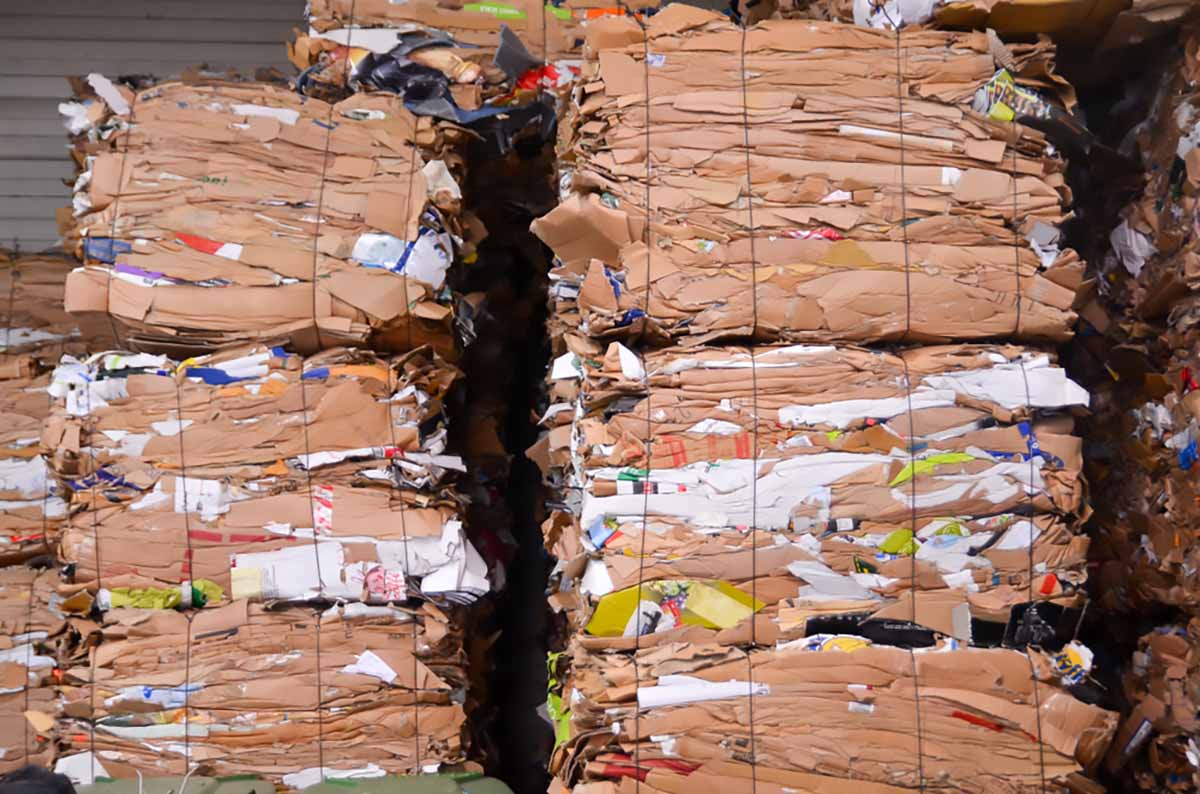
According to AF&PA CEO Heidi Brock, analysts left out key information about boxes used in exports. | Vitaliy Kyrychuk/Shutterstock

Paper recycling is an environmental success story. Facts and data matter, especially when it comes to measuring and tracking the paper recycling rate over time.

The American Forest & Paper Association (AF&PA) is a data-driven organization, and we rely on complete data to calculate the annual paper and cardboard recycling rates.

These are rates we have tracked for three decades, and they help inform our industry – which plays an active role in paper recycling’s success.

Therefore, it is imperative we supply the most accurate data on paper recycling – data that was recently called into question during a session at the 2022 Resource Recycling Conference, suggesting the OCC recycling rate is lower than reported.

Heidi Brock
Heidi Brock

However, the OCC statistics presented at the conference do not serve as a point of comparison to AF&PA’s national OCC recycling rate.

Missing from their calculation is an accounting for boxes used to export products from the United States. Their estimated rate also makes assumptions about imports of packaged products and the change in OCC collections in 2021.

To clear up confusion, let’s talk about the equation. AF&PA’s OCC recycling rate is based on a mathematical formula, calculated by dividing the U.S. recovery of OCC for recycling by the U.S. supply of containerboard over a given period, usually one year.

The statistics and methodology used to calculate the United States’ cardboard recycling rate are also consistent with those used by major U.S. trading partners, and the resulting rate is similar to the recycling rate published by the U.S. Environmental Protection Agency.

The AF&PA has published the annual U.S. OCC recycling rate since the introduction of the Corrugated Recycles symbol in 1993. The rate follows a steady trend upward from 54% in 1993 to the current rate of 91.4%. And the cardboard recycling rate has met or exceeded 82% since 2009.

What the Bloomberg Intelligence/Circular Ventures estimate attempts to do is fill in a gap in the data: how much OCC is available for recycling from the packaging on imported products. This gap in the data can fluctuate depending on the trade balance in any given year – making it a moving target. Corrugated packaging is distributed and collected across several channels, including industrial, commercial retail, commercial office and residential.

This is where the Bloomberg Intelligence/Circular Ventures estimate is incomplete. They relied on data on the number of shipping containers destined for U.S. retail outlets and an estimate for the number of corrugated boxes in each shipping container to factor in imported product packaging – boxes that arrive in the U.S. as packaging for products imported from other countries – and add it to the available U.S. supply of OCC that can be recovered. But this approach neglects to recognize U.S. exports of products in corrugated boxes – exaggerating available supply of OCC and artificially reducing the recycling rate.

While AF&PA stands by our method for calculating the OCC recycling rate, we feel it is important to share our method for calculating a statistically sound “effective” rate. AF&PA uses U.S. Census Bureau data on annual imports and exports of packaged goods and data from the Fibre Box Association on “box intensity” – the amount of corrugated packaging used for each type of product imported and exported to calculate our “effective” rate.

When factoring in estimates for both imports and exports of product packaging, AF&PA found an “effective” OCC recycling rate in the 79.2% to 84.7% range, or an average of 82.1% for 2021.

Keep in mind this is an estimated “effective” rate, not a precise number. But you’ll see our average of 82.1%, though not based on the more accurate and complete data used to calculate the OCC recycling rate, is significantly higher than the 69% presented by Bloomberg Intelligence/Circular Ventures.

Taken together, the data tell us – without question – the OCC recycling rate has remained consistently high.

Paper recycling is one of the best examples of how we, as a society, are working to protect our environment and contribute to a circular economy. Our industry is actively producing more sustainable products, investing in manufacturing infrastructure that will use recovered paper, increasing the availability of community recycling and educating people about the best ways to recycle paper and paper-based packaging products.

The AF&PA is committed to advancing a sustainable paper and packaging industry, through our team of experts with decades of industry experience and the highest quality data.


Heidi Brock is the President & CEO of the American Forest & Paper Association in Washington, DC.

The views and opinions expressed are those of the author and do not imply endorsement by Resource Recycling, Inc. If you have a subject you wish to cover in an op-ed, please send a short proposal to news@dev.resource-recycling.com for consideration.

 

Tags: DataPaper Fiber
TweetShare
Heidi Brock, American Forest & Paper Association

Heidi Brock, American Forest & Paper Association

Related Posts

GP Recycling offers on-ramp for smaller recyclers

GP Recycling offers on-ramp for smaller recyclers

byAntoinette Smith
June 9, 2026

The company's hubbIT platform is a way for smaller generators to sell plastic, glass and metal bottles to the brokerage,...

Paper mill scene.

Paper industry output falls in 2025, while packaging stays strong

byIsabella Burke
June 5, 2026

The American Forest & Paper Association released its 66th Annual Paper Industry Capacity and Fiber Consumption Survey last week.

Machinex

Longview mill tragedy raises broader questions for fiber, recycling sectors

byKeith Loria
May 29, 2026

A deadly explosion at Nippon Dynawave Packaging’s Longview, Washington plant prompts new questions for the pulp, paper and packaging industries.

CommanderAI launches searchable hauler database

Underwater data centers drive shift in ITAD models

byDavid Daoud
May 26, 2026

The new technology is grabbing headlines for saving energy, but are people looking at the complete lifecycle?

A map of Europe with various pinned locations.

EU growth slows for circular plastics

byAntoinette Smith
May 19, 2026

Just when Europe should be accelerating its transition to a circular economy, the sector is slowing dramatically, said the president...

PP bales rise, paper grades edge higher

byRecyclingMarkets.net Staff
May 11, 2026

The national average price of post-consumer PET beverage bottles and jars rose marginally in May, now averaging 2.24 cents per...

Load More
Next Post

California governor signs bottle bill expansion, other bills

More Posts

Industry announcements for January 2026

Industry announcements for June 2026

June 1, 2026
House resolution aims to make recyclability central to product design

NY EPR bill fails to advance after third try

June 8, 2026
California extends compostable labeling law

California bills crack down on false recycling, compostable claims

May 29, 2026
Illinois expands battery recycling as lithium-ion fire concerns mount

Illinois expands battery recycling as lithium-ion fire concerns mount

May 27, 2026

Three-bill package aims to revamp Michigan’s bottle return system

June 9, 2026
How electronics legislation fared this legislative season

NY sends repairability labeling bill to governor

June 8, 2026
War, not demand driving polymer pricing

War, not demand driving polymer pricing

June 2, 2026
Packaging policy is not one-size-fits-all

Packaging policy is not one-size-fits-all

June 1, 2026
Chemical recycling roundup: New plant, partnerships

Polystyrene’s circular future is already taking shape

May 29, 2026

Returns are a goldmine of information

May 27, 2026
Load More

About & Publications

About Us

Staff

Archive

Magazine

Work With Us

Advertise
Jobs
Contact
Terms and Privacy

Newsletter

Get the latest recycling news and analysis delivered to your inbox every week. Stay ahead on industry trends, policy updates, and insights from programs, processors, and innovators.

Subscribe

Welcome Back!

Login to your account below

Forgotten Password?

Retrieve your password

Please enter your username or email address to reset your password.

Log In

Add New Playlist

No Result
View All Result
  • The Latest
  • Analysis
  • Recycling
  • E-Scrap
  • Plastics
  • Policy Now
  • Conferences
    • E-Scrap Conference
    • Plastics Recycling Conference
    • Resource Recycling Conference
    • Textiles Recovery Summit
  • Magazine
  • About Us
  • Advertise
  • Archive
  • Jobs
  • Staff
Subscribe
This website uses cookies. By continuing to use this website you are giving consent to cookies being used. Visit our Privacy and Cookie Policy.