




Resource Recycling
  • The Latest
  • Analysis
    • All
    • Certification Scorecard
    • Industry Announcements
    • Opinion
    SERI works to restore faith in certifications

    Building a defensible E-scrap evidence file

    tires

    The most important decision in tire recycling happens before the shredder

    Intel sign outside of company building.

    Intel’s CapEx tops $20B on server demand while PC volume shrinks

    Google sign on company building with blue sky and clouds above.

    Inside Alphabet’s Q2 results: More capital spending and cloud backlog

    Alpek closing Pennsylvania RPET plant

    Alpek seizing on war-related opportunity 

    Our top stories from March 2023

    Iron Mountain’s data center report: Strong on power, quiet on hardware

  • Conferences
    • Resource Recycling Conference
    • Plastics Recycling Conference
    • E-Scrap: The Longevity Conference
    • Textiles Recovery Summit
  • Publications
    • E-Scrap News
    • Plastics Recycling Update
    • Policy Now
    • Resource Recycling
    • Other Topics
      • All Topics
      • Brand Owners
      • Critical Minerals
      • Glass
      • Grant Watch / RFPs
      • Markets
      • Organics
      • Packaging
      • Research
      • Technology
      • Textiles
Subscribe
No Result
View All Result
Resource Recycling
  • The Latest
  • Analysis
    • All
    • Certification Scorecard
    • Industry Announcements
    • Opinion
    SERI works to restore faith in certifications

    Building a defensible E-scrap evidence file

    tires

    The most important decision in tire recycling happens before the shredder

    Intel sign outside of company building.

    Intel’s CapEx tops $20B on server demand while PC volume shrinks

    Google sign on company building with blue sky and clouds above.

    Inside Alphabet’s Q2 results: More capital spending and cloud backlog

    Alpek closing Pennsylvania RPET plant

    Alpek seizing on war-related opportunity 

    Our top stories from March 2023

    Iron Mountain’s data center report: Strong on power, quiet on hardware

  • Conferences
    • Resource Recycling Conference
    • Plastics Recycling Conference
    • E-Scrap: The Longevity Conference
    • Textiles Recovery Summit
  • Publications
    • E-Scrap News
    • Plastics Recycling Update
    • Policy Now
    • Resource Recycling
    • Other Topics
      • All Topics
      • Brand Owners
      • Critical Minerals
      • Glass
      • Grant Watch / RFPs
      • Markets
      • Organics
      • Packaging
      • Research
      • Technology
      • Textiles
Subscribe
No Result
View All Result
Resource Recycling
No Result
View All Result
Home Plastics

Bottle bills erode MRF revenues but create municipal savings

Marissa HeffernanbyMarissa Heffernan
March 7, 2022
in Plastics
Committee issues food-contact recycling decisions
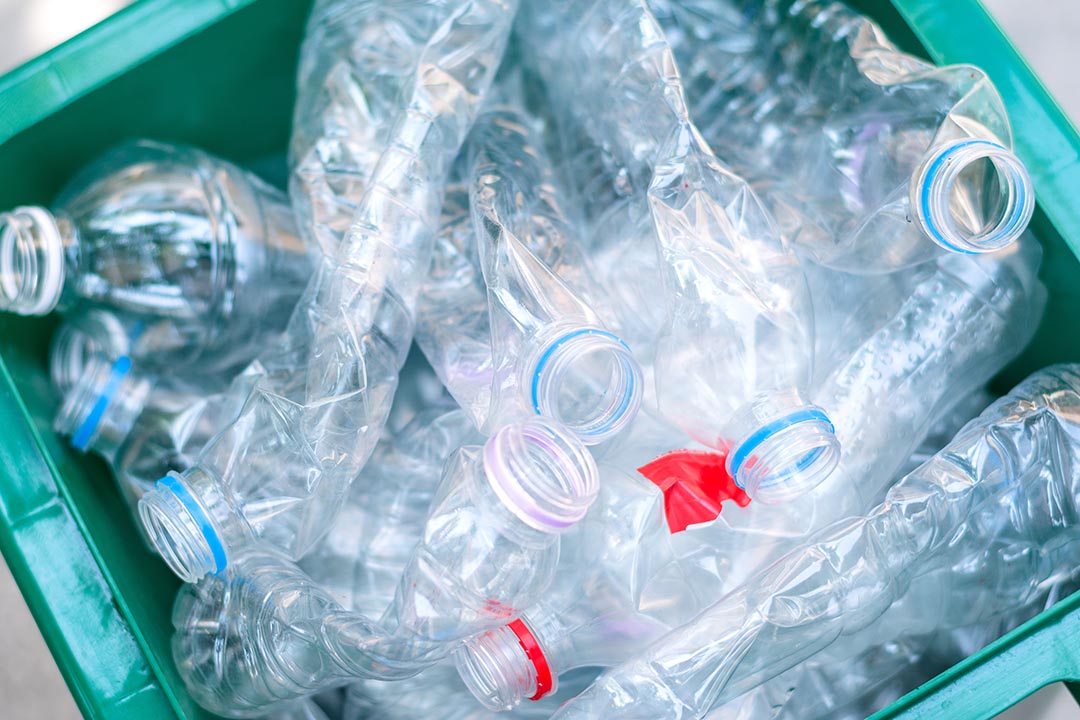
Container deposit systems have benefits for municipalities, but MRFs are likely to see revenues decline as valuable PET and aluminum are removed from their material stream. | Myibean/Shutterstock

Though container deposit systems typically help lift recovery rates for covered materials, the programs also usually reduce tonnages of high-quality PET and aluminum going to sorting facilities. A new study helps to quantify those potential impacts.

The National Waste & Recycling Association (NWRA) released the study evaluating the effect of beverage container deposit systems on MRF costs and revenues, as well as the effects on municipalities.

Prepared by Resource Recycling Systems (RRS), the research modeled six deposit scenarios with variations based on beverage type and deposit value. Each scenario is based on an average-sized MRF with 93,600 tons per year throughput serving a community of approximately 1.25 million people in 473,000 households.

Overall, the findings were that container deposits lead to higher costs and lower revenues because high-value materials move to the deposit system and out of the MRF. The fixed cost per ton is higher as the cost to run the same equipment is spread across fewer tons, the report said.

The research estimates that municipalities could see an annual MRF cost increase of $2.50 to $5 per household.

Resa Dimino, RRS managing principal, said in a NWRA press release the study provided useful data and “shows a need for balance between system and policy.”

“We need to ensure that municipalities and MRFs are kept whole as higher quality materials are collected and removed from our waste streams and waterways,” Dimino said.

The scenarios included three different beverage combinations at a 5-cent deposit and a 10-cent deposit. The combinations were beer and carbonated soft drinks; beer, carbonated soft drinks and water; and all beverages, excluding milk.

The modeling assumed that aluminum, glass and PET beverage containers are included and that a 5-cent deposit yields a 65% redemption rate while a 10-cent deposit yields a 85% redemption rate.

Recycling rates increased in all scenarios, with the highest rates for an all-beverage deposit of 10 cents (77% for PET, 83% for glass and 89% for aluminum, up from a baseline of 29%, 25% and 50%, respectively).

Overall, more glass and aluminum than PET would leave the MRF system under all scenarios, and the study suggested that between 10,770 and 17,630 tons per year would no longer make its way to MRF sort lines. That would result in a revenue loss for a typical MRF of between $11.90 and $23.50 per ton marketed, depending on which deposit scenario was in place.

However, communities could see disposal cost savings from bottle bills, the study said, as well as a reduction in litter and marine debris and related cleanup costs. Higher-value materials are also more likely to be circular, it noted.

The report said further study is needed to understand the effect on recycling collection costs and throughput due to changes in the density of the recyclables mix.

To help offset the negative effects of bottle bills on MRFs, the study suggested policies like that in California, where MRFs are able to redeem containers in bulk and collect the deposits.

“Policy can be structured to capture the benefits of beverage container deposits – high recycling rates for target materials and materials more suited for closed loop applications – while ensuring that municipal recycling programs are not harmed,” the report said.

Bottle bill advocate weighs in

Susan Collins, president of the nonprofit Container Recycling Institute, said in a recent op-ed that the NWRA, by projecting an annual increase per household in MRF processing costs, is creating the impression that bottle bills will raise overall waste management costs for municipalities.

“Nothing could be further from the truth,” Collins wrote. She noted that several studies in the past 15 years have shown that municipalities typically see savings in the form of reduced collection costs, lower landfill tipping fees, less litter to remove from the environment and more.

She added that while the study also found that bottle bills remove high-value materials from MRF streams, “the impact of bottle bills on MRFs will be manageable.”

“The data show the total value of a MRF ton (as of August 2021) at $156, and the value at $154 under a full deposit system scenario (with all beverage containers on a 10-cent deposit). That $2 per ton drop (a 1.3% decrease) pales in comparison to the normal cyclical swings in commodity prices, as the study also shows,” Collins wrote.
 

Tags: CollectionContainer DepositsLegislation & Enforcement
TweetShare
Marissa Heffernan

Marissa Heffernan

Marissa Heffernan worked at Resource Recycling from January 2022 through June 2025, first as staff reporter and then as associate editor. Marissa Heffernan started working for Resource Recycling in January 2022 after spending several years as a reporter at a daily newspaper in Southwest Washington. After developing a special focus on recycling policy, they were also the editor of the monthly newsletter Policy Now.

Related Posts

Spin-off lets Linca focus on battery mineral recovery

GAO: Policy, tech updates needed to bolster domestic mineral supply

byPaul Lane
July 30, 2026

Federal investigators say short- and long-term solutions are needed to decrease the nation’s reliance upon foreign-based minerals.

The State of Oregon seal at a park in Salem, Ore.

MRM bids to run Oregon EPR for second year 

byPaul Lane
July 28, 2026

The company won the competitive process for 2026, but was the only company to apply for the 2027 PRO post.

Wisconsin opens e-recycling grant process

byPaul Lane
July 28, 2026

Funds are available for collection programs as the state touts growth in electronic recycling in its latest annual report.

California releases deposit system update draft rules

Groups move to intervene in SB 343 lawsuit

byStefanie Valentic
July 27, 2026

Earth Island Institute and Californians Against Waste have filed to intervene in the federal lawsuit that halted enforcement of California's...

U.S. Capitol building in Washington, D.C.

House committees advance critical mineral bills

byPaul Lane
July 27, 2026

Congressional votes earlier this month advanced three bills that would expand the nation’s critical mineral recycling capabilities. A subcommittee within...

MTA loses track of recycling, costing NYC Transit $800,000

byStefanie Valentic
July 23, 2026

A new MTA inspector general report finds NYC Transit lost nearly $800,000 after years of mishandled recycling and the contractor...

Load More
Next Post
Braskem adds two PP grades made with PCR

Braskem adds two PP grades made with PCR

2026 Buyers’ Guide

Equipment, services and technology suppliers serving the recycling industry.

Browse the Guide

More Posts

State policy is redefining plastics recycling in the US

State policy is redefining plastics recycling in the US

February 19, 2026
Closeup of a printed circuitboard

Hardware demand puts new focus on parts harvesting

June 5, 2026
Apple store

Apple leads on inputs, faces questions on ITAD

May 1, 2026
Analysis: circular design still elusive in laptops

PC shipments grew in Q1, but questions remain

April 23, 2026

Recycled copper output climbs as market shows surplus

April 6, 2026

In other news: May 2, 2016

May 2, 2016

Umicore highlights strength in recycling, catalysis

February 20, 2026
California bill would set up EPR for batteries

California bill would set up EPR for batteries

May 12, 2022
Ten e-scrap projects receive federal prize funds

Recycling rates for rare earths could double by 2040

July 17, 2026

ITAD is moving past its adolescent phase: beyond end-of-life

June 10, 2026
Load More

About & Publications

About Us

Staff

Archive

Magazine

Work With Us

Advertise
Jobs
Contact
Terms and Privacy

Newsletter

Get the latest recycling news and analysis delivered to your inbox every week. Stay ahead on industry trends, policy updates, and insights from programs, processors, and innovators.

Subscribe

Welcome Back!

Login to your account below

Forgotten Password?

Retrieve your password

Please enter your username or email address to reset your password.

Log In

Add New Playlist

No Result
View All Result
  • The Latest
  • Analysis
  • Recycling
  • E-Scrap
  • Plastics
  • Policy Now
  • Conferences
    • E-Scrap Conference
    • Plastics Recycling Conference
    • Resource Recycling Conference
    • Textiles Recovery Summit
  • Magazine
  • About Us
  • Advertise
  • Archive
  • Jobs
  • Staff
Subscribe
This website uses cookies. By continuing to use this website you are giving consent to cookies being used. Visit our Privacy and Cookie Policy.