




Resource Recycling
  • The Latest
  • Analysis
    • All
    • Certification Scorecard
    • Industry Announcements
    • Opinion
    SERI works to restore faith in certifications

    Building a defensible E-scrap evidence file

    tires

    The most important decision in tire recycling happens before the shredder

    Intel sign outside of company building.

    Intel’s CapEx tops $20B on server demand while PC volume shrinks

    Google sign on company building with blue sky and clouds above.

    Inside Alphabet’s Q2 results: More capital spending and cloud backlog

    Alpek closing Pennsylvania RPET plant

    Alpek seizing on war-related opportunity 

    Our top stories from March 2023

    Iron Mountain’s data center report: Strong on power, quiet on hardware

  • Conferences
    • Resource Recycling Conference
    • Plastics Recycling Conference
    • E-Scrap: The Longevity Conference
    • Textiles Recovery Summit
  • Publications
    • E-Scrap News
    • Plastics Recycling Update
    • Policy Now
    • Resource Recycling
    • Other Topics
      • All Topics
      • Brand Owners
      • Critical Minerals
      • Glass
      • Grant Watch / RFPs
      • Markets
      • Organics
      • Packaging
      • Research
      • Technology
      • Textiles
Subscribe
No Result
View All Result
Resource Recycling
  • The Latest
  • Analysis
    • All
    • Certification Scorecard
    • Industry Announcements
    • Opinion
    SERI works to restore faith in certifications

    Building a defensible E-scrap evidence file

    tires

    The most important decision in tire recycling happens before the shredder

    Intel sign outside of company building.

    Intel’s CapEx tops $20B on server demand while PC volume shrinks

    Google sign on company building with blue sky and clouds above.

    Inside Alphabet’s Q2 results: More capital spending and cloud backlog

    Alpek closing Pennsylvania RPET plant

    Alpek seizing on war-related opportunity 

    Our top stories from March 2023

    Iron Mountain’s data center report: Strong on power, quiet on hardware

  • Conferences
    • Resource Recycling Conference
    • Plastics Recycling Conference
    • E-Scrap: The Longevity Conference
    • Textiles Recovery Summit
  • Publications
    • E-Scrap News
    • Plastics Recycling Update
    • Policy Now
    • Resource Recycling
    • Other Topics
      • All Topics
      • Brand Owners
      • Critical Minerals
      • Glass
      • Grant Watch / RFPs
      • Markets
      • Organics
      • Packaging
      • Research
      • Technology
      • Textiles
Subscribe
No Result
View All Result
Resource Recycling
No Result
View All Result
Home E-Scrap

What’s needed to recover e-plastics domestically?

Colin StaubbyColin Staub
May 9, 2019
in E-Scrap
Brian Riise at the Plastics Recycling Conference and Trade Show.

Brian Riise on stage at the 2019 Plastics Recycling Conference and Trade Show.

Brian Riise on stage at the 2019 Plastics Recycling Conference and Trade Show.

An expert recently explained why North American e-plastics processing could be a component of a wider effort to reduce energy use in U.S. manufacturing. And he outlined steps for progress.

The Remade Institute is a government-funded initiative researching avenues to reduce energy use in American manufacturing. One key way is through boosting recycling, specifically in the realms of plastics and electronics. Remade, which launched in 2017 and is funded with $70 million over five years, last summer issued funding to a handful of projects increasing recovery of hard-to-recycle plastics.

But the organization also has a particular interest in another hard-to-recycle plastic category, the e-plastics found in electronic devices. At the 2019 Plastics Recycling Conference and Trade Show in March, Brian Riise, a polymer expert with the Remade Institute, expanded on the barriers to greater e-plastics recovery and some of the potential solutions.

Export options hindered development

ReMade is interested in recovering plastic from e-scrap in part as a way of harnessing the embodied energy – the energy of the oil used as feedstock, plus the energy to convert the plastic into pellets. Riise noted e-plastics are more energy-intensive than many other common plastics in the marketplace, such as PET, so choosing those polymer to target for recovery can be a smart environmental move.

Between 25% and 30% of the end-of-life electronics stream is made up of plastics, Riise said, but historically most of the plastic that is recovered has been shipped overseas. Riise formerly worked at plastics recycling technology company MBA Polymers, and he said the company experimented with e-plastics recovery but “couldn’t compete with exporters.”

“But because those exports have gone away, or are at least very unstable, there could be an opportunity domestically,” he said, referencing the upheaval in global scrap plastic markets over the past two years, driven largely by China’s recycled-material import restrictions.

Meanwhile, recovered e-plastic demand has increased over the years as companies look to use more and more recycled material in manufacturing. The plastics are also comparatively valuable. Riise said ABS, HIPS and PC are significantly more expensive as virgin materials than typical polyolefins are, which means there is a strong economic case for recovering those materials.

In the past, e-plastic was shredded or baled, before being exported. E-scrap companies got very low prices for selling the material, but didn’t have to spend much on processing it. With some investment in processing operations, Riise noted, there is the potential for greater financial return on the material.

“As you maximize the value of the material by going from mixed plastics to flakes, purified flakes to pellets, you increase the value and you actually have the potential to improve profitability,” Riise said. (Riise and several colleagues wrote a feature story in E-Scrap News last year laying out that profitability structure.)

Technical considerations

Density sorting, electrostatic separation, optical sorting, X-ray transmission, near infrared and other tools are key to purifying recovered e-plastics and boosting the material’s value , Riise said.

After sorting, the plastic needs to be extruded and compounded. Here, different extruders yield different results, and there are tradeoffs. A twin-screw extruder, for example, can provide strong mixing and compounding, whereas other models carry higher throughput.

Melt filtration is also a critical component of e-plastics processing, because there are numerous contaminants that must be weeded out. And here, too, the equipment depends on the processing operation’s planned usage.

“I worked in this for 20 years, and I don’t think we ever had a consensus on what the ideal melt filtration system was,” Riise said. “It really depended on the details of the feed material and the contaminant.”

Riise said the economic opportunity for greater domestic e-plastics recovery is promising, noting the required technology has been developed.

He also listed some significant steps that need to take place to optimize recovery of the material. These include improving the ability to rapidly identify input composition due to the variety of plastics used in electronics, improving output pellet properties (such as their visual appearance to allow for higher-use end markets), and exploring chemical and solvent processing on e-plastics (either for recovering additional polymers or removing additives such as flame retardants).

Riise said Remade and its members “have the potential to look at some of these technical barriers, overcome them and really develop this technology.”

Photo credit: Brian Adams Photo/Resource Recycling, Inc.

 

Tags: E-PlasticsResearch
TweetShare
Colin Staub

Colin Staub

Colin Staub was a reporter and associate editor at Resource Recycling until August 2025.

Related Posts

Penn State professor Maryam Shahri speaks at the PROP conference in Lancaster, Pennsylvania July 23, 2026.

How to get more people to recycle

byBrian Clark Howard
July 24, 2026

Harness the power of behavioral marketing, panelists said at the PROP conference in Pennsylvania.

Federal funds boost critical mineral research efforts

Federal funds boost critical mineral research efforts

byPaul Lane
July 16, 2026

A Midwest consortium plans to use the money to build up domestic mineral recovery and processing efforts.

Recycling council emphasizes importance of supply

Sorted: Why recycling isn’t a ‘scam’

byBrian Clark Howard
June 15, 2026

The sector has taken a beating in the press and in public perception, but recycling has many benefits.

Chemical recycling roundup: New plant, partnerships

Polystyrene’s circular future is already taking shape

byJustin Riney, Polystyrene Recycling Alliance
May 29, 2026

Justin Riney of the Polystyrene Recycling Alliance explores a study conducted with the Resource Recycling Systems consultancy.

EU recyclers make case for solvent-based methods

The electronics recycling industry has a plastics problem

byKen Thomas
May 26, 2026

Pretending otherwise is no longer a viable option, argues the president of Universal Recycling Technologies.

CompuCycle brings e-plastic recycling upgrade online

Quantum expands e-plastics recovery

byDavid Daoud
May 7, 2026

Canada-based Quantum Lifecycle Partners has unveiled the new Advanced Plastics Recovery Line.

Load More
Next Post
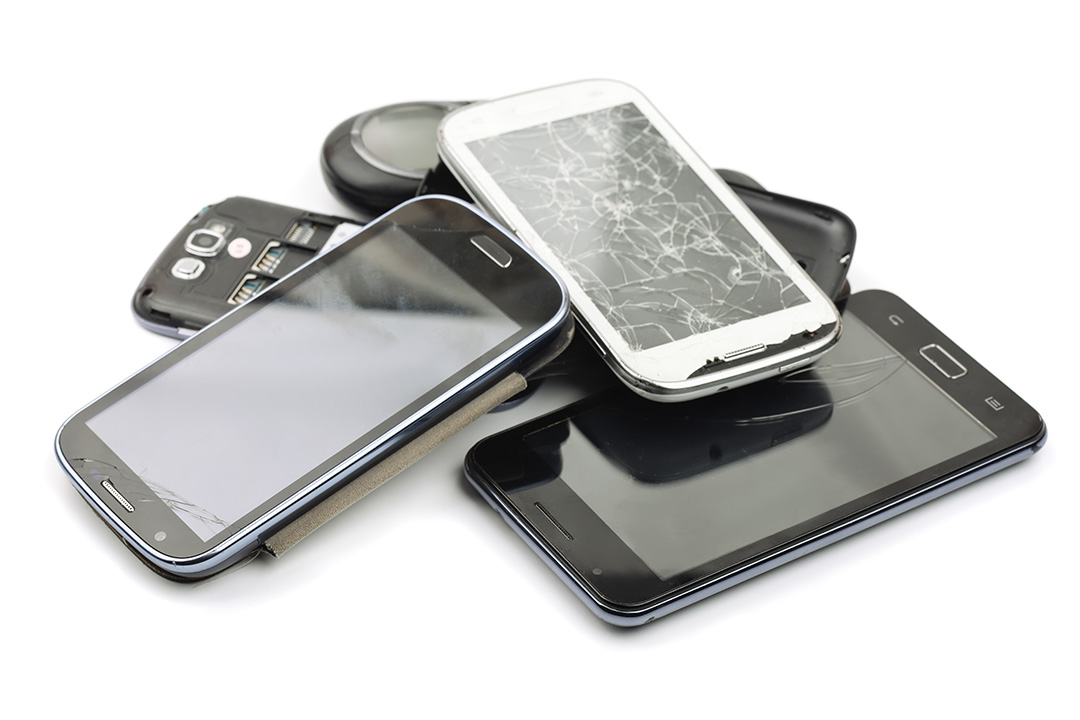
Pile of used smartphones.

Phone refurb specialist expands into e-scrap

2026 Buyers’ Guide

Equipment, services and technology suppliers serving the recycling industry.

Browse the Guide

More Posts

Low chip prices hurt processor’s resale revenues

Low chip prices hurt processor’s resale revenues

May 10, 2023

Certification Scorecard — Week of July 27, 2026

July 29, 2026
In Our Opinion: Coalitions: The EPR Differentiator

Inside NAW’s constitutional case against packaging EPR

July 6, 2026
RIT researchers develop AI-based textile recycling system

CA expects first textile EPR deadline

June 30, 2026

NERC forum explores textile reuse

June 30, 2026
Emerging technology holds the key to rare earth recovery

Emerging technology holds the key to rare earth recovery

June 1, 2026

PP cups now ‘widely recyclable’ with increased acceptance

February 3, 2026
Report: Battery ‘retirement tide’ nears

Report: Battery ‘retirement tide’ nears

March 13, 2025
Closeup of a lithium-ion battery.

Here are the rules on handling lithium-ion batteries

February 13, 2020
Our top stories from February 2025

Our top stories from February 2025

March 5, 2025
Load More

About & Publications

About Us

Staff

Archive

Magazine

Work With Us

Advertise
Jobs
Contact
Terms and Privacy

Newsletter

Get the latest recycling news and analysis delivered to your inbox every week. Stay ahead on industry trends, policy updates, and insights from programs, processors, and innovators.

Subscribe

Welcome Back!

Login to your account below

Forgotten Password?

Retrieve your password

Please enter your username or email address to reset your password.

Log In

Add New Playlist

No Result
View All Result
  • The Latest
  • Analysis
  • Recycling
  • E-Scrap
  • Plastics
  • Policy Now
  • Conferences
    • E-Scrap Conference
    • Plastics Recycling Conference
    • Resource Recycling Conference
    • Textiles Recovery Summit
  • Magazine
  • About Us
  • Advertise
  • Archive
  • Jobs
  • Staff
Subscribe
This website uses cookies. By continuing to use this website you are giving consent to cookies being used. Visit our Privacy and Cookie Policy.