




Resource Recycling
  • The Latest
  • Analysis
    • All
    • Certification Scorecard
    • Industry Announcements
    • Opinion
    NJ’s PCR delay risks making its own excuse permanently true

    NJ’s PCR delay risks making its own excuse permanently true

    E-scrap magnet recycling company scales up

    Why only some rare-earth sources are economically viable

    e-Stewards to develop an ITAD-specific standard

    Certification scorecard — week of Sept. 21

    Who should pay for lithium-ion battery fire damage?

    America’s critical-materials buildout has a feedstock problem

    Certification scorecard – week of Sept. 14

  • Conferences
    • Resource Recycling Conference
    • Plastics Recycling Conference
    • E-Scrap: The Longevity Conference
    • Textiles Recovery Summit
  • Publications
    • E-Scrap News
    • Plastics Recycling Update
    • Policy Now
    • Resource Recycling
    • Other Topics
      • All Topics
      • Brand Owners
      • Critical Minerals
      • Glass
      • Grant Watch / RFPs
      • Markets
      • Organics
      • Packaging
      • Research
      • Technology
      • Textiles
Subscribe
No Result
View All Result
Resource Recycling
No Result
View All Result
Home Sponsored

Emerging technology holds the key to rare earth recovery

byDan Wang, Toyoshima Green Tech
June 1, 2026
in E-Scrap, Recycling, Sponsored
Emerging technology holds the key to rare earth recovery

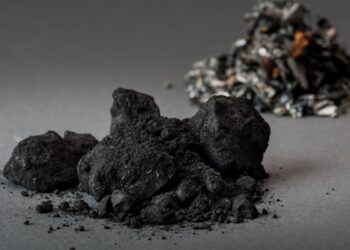
Courtesy Toyoshima GreenTech, Inc.

Rare earth elements are increasingly critical to modern electronics, but their unstable supply channels present sourcing challenges. Toyoshima has developed a process that recovers these critical materials at high purity in an efficient and practical way.

Rare earths are used in automobiles, computer hard drives, mobile phones, wind turbines, medical equipment, electric mobility devices, and many types of industrial equipment. They are also used heavily in military applications, including in air fighters and naval vessels. Each US Virginia-class nuclear submarine contains an estimated 4.6 tons of rare earths. The White House has described rare earths as “indispensable to almost every industry, including national defense programs and critical infrastructure.”

Despite their domestic importance, 71% of the rare earths used in the U.S. come from China, according to the U.S. Geological Survey.

For such a high-demand and difficult-to-source material, recycling has a promising value proposition. But it must be done right: These minerals are too valuable to lose through processing inefficiency.

Courtesy Dan Wang

That means avoiding shredding, a common but inefficient processing method (in the recycling industry, we joke that a processor spends $1 million to install a shredder, and $2 million to separate the shredded fractions again). Shredding also limits metal recovery, with gold yield often dropping by 10% once electronics are shredded.

Toyoshima advocates for dismantling devices and sorting components before extraction, rather than shredding a commingled stream. This ensures higher-value output. In recent years, Toyoshima has used artificial intelligence-driven robotics to disassemble and sort end-of-life devices.

Toyoshima is now applying that technology to rare earths, using AI-trained robots to disassemble hard drives. This produces high-purity aluminum, circuit boards ready for smelter processing, and high-purity magnets we process separately.

Hydrometallurgical leaching process efficiency is typically dragged down by trace elements that are byproducts of shredding. Our magnet processing technique instead uses an innovative graphene oxide aerogel (which is a lightweight, solid material with strong adsorption properties). We use this to extract the rare earth neodymium, typically yielding 25% to 30% recovery, based on a forthcoming paper. The aerogel remains effective in repeat use, demonstrating 86% of its initial capacity after five full extraction cycles.

Rare earth recovery also has data security implications. Hard drives, including those at data centers, are a major feedstock for magnets. Rather than moving these data-bearing drives to another location for processing, Toyoshima advocates for deploying on-site robotic disassembly systems at data centers. This protects data by ensuring intact devices are dismantled before leaving the premises.

This distributed or modular unit strategy deploys inexpensive equipment with a small footprint. That accessibility has the potential to scale up rare earth recovery.

Processors evaluating the costs of rare earth recovery should think about rare earths as byproducts generated during the primary material recovery process. In this way, the recovery cost allocated to rare earth elements is smaller. This mirrors how rare earths are considered in natural resource extraction, as byproducts generated while refining aluminum, tantalum or niobium. Considering the metals this way ensures costs are distributed across the full spectrum of reclaimed materials.

Selecting the correct processing technology is critical, but government intervention is another important driver of success.

Governments should support recovery through financial subsidies for installing dismantling equipment. Governments can also regulate, including limiting export of rare earth-bearing materials. Governments should also adopt producer responsibility programs, which incentivize manufacturers to create efficient return systems. This ensures materials move to a centralized location for the lowest cost, highest efficiency robot processing.


Tags: Critical MineralsElectronicsTechnology
TweetShare
Dan Wang, Toyoshima Green Tech

Dan Wang, Toyoshima Green Tech

Dan Wang is President of Toyoshima Green Tech, an R2-certified electronics recycling firm based in McKinney, Texas. He has worked in semiconductor refurbishment since 2008.

Related Posts

Cutting healthcare plastics could save $18B

Report provides path to reduce medical e-scrap

byPaul Lane
September 25, 2026

The European report found that circularity in medical devices is possible through several potential initiatives.

E-scrap magnet recycling company scales up

Why only some rare-earth sources are economically viable

byDavid Daoud
September 24, 2026

Rare-earth recycling economics depend on several factors, and there is no single price or date that makes the process pencil...

Bin to Better gets students involved in reuse, recycling

Bin to Better gets students involved in reuse, recycling

byPaul Lane
September 24, 2026

E-scrap among three focus areas for student-run, California-based environmental advocacy group.

Bridge Green, Hartree partner on mineral processing deal

Bridge Green, Hartree partner on mineral processing deal

byPaul Lane
September 21, 2026

The agreement will see Bridge Green’s lithium carbonate sold to and marketed by Hartree.

Who should pay for lithium-ion battery fire damage?

byDavid Daoud
September 21, 2026

Fires continue to be a major threat to the recycling industry, even as states explore new policy solutions.

America’s critical-materials buildout has a feedstock problem

byDavid Daoud
September 18, 2026

As the US invests in critical-minerals capacity will facilities have enough material to process?

Load More
Next Post
Q1 containerboard exports drop by 19%

What SB 54 looks like from the packaging floor

2026 Buyers’ Guide

Equipment, services and technology suppliers serving the recycling industry.

Browse the Guide

More Posts

Intel sign outside of company building.

Intel’s CapEx tops $20B on server demand while PC volume shrinks

July 29, 2026
Ten e-scrap projects receive federal prize funds

Recycling rates for rare earths could double by 2040

July 17, 2026
Feds to develop repairable computer donation program

The whitebox blind spot in PC recycling

April 24, 2026

In other news: May 2, 2016

May 2, 2016

America’s critical-materials buildout has a feedstock problem

September 18, 2026
Data erasure firm expands wearable device capabilities

Apple hits 30% recycled content, debuts new recovery tech

April 17, 2026
E-scrap magnet recycling company scales up

Why only some rare-earth sources are economically viable

September 24, 2026
Textile EPR and the definition of recycling

Textile Exchange reports progress in production

September 22, 2026

Microsoft confirms PC sales slump

August 4, 2026

AI and the changing economics of retired hardware

June 12, 2026
Load More

About & Publications

About Us

Staff

Archive

Magazines

Work With Us

Advertise
Jobs
Contact
Terms and Privacy

Newsletters

Get the latest recycling news and analysis delivered to your inbox every week. Stay ahead on industry trends, policy updates, and insights from programs, processors, and innovators.

Subscribe

Welcome Back!

Login to your account below

Forgotten Password?

Retrieve your password

Please enter your username or email address to reset your password.

Log In

Add New Playlist

No Result
View All Result
  • The Latest
  • Analysis
  • Recycling
  • E-Scrap
  • Plastics
  • Policy Now
  • Conferences
    • E-Scrap Conference
    • Plastics Recycling Conference
    • Resource Recycling Conference
    • Textiles Recovery Summit
  • Magazines
  • About Us
  • Advertise
  • Archive
  • Jobs
  • Staff
Subscribe
This website uses cookies. By continuing to use this website you are giving consent to cookies being used. Visit our Privacy and Cookie Policy.
-
00:00
00:00

Queue

Update Required Flash plugin
-
00:00
00:00