



Resource Recycling
  • The Latest
  • Analysis
    • All
    • Certification Scorecard
    • Industry Announcements
    • Opinion

    ITAD is moving past its adolescent phase: beyond end-of-life

    Rainforest

    Inside the Circle: What the rainforest can teach us about EPR

    Closeup of a printed circuitboard

    Hardware demand puts new focus on parts harvesting

    Rare look inside the world’s largest plastics recycler

    Mass balance matters: Why different rules can lead to different outcomes 

    Certification Scorecard — Week of June 1, 2026

    IT asset disposition and electronics recycling: Now and then

    $60 billion in AI servers will create an ITAD challenge

  • Conferences
    • Resource Recycling Conference
    • Plastics Recycling Conference
    • E-Scrap: The Longevity Conference
    • Textiles Recovery Summit
  • Publications
    • E-Scrap News
    • Plastics Recycling Update
    • Policy Now
    • Resource Recycling
    • Other Topics
      • All Topics
      • Brand Owners
      • Critical Minerals
      • Glass
      • Grant Watch / RFPs
      • Markets
      • Organics
      • Packaging
      • Research
      • Technology
      • Textiles
Subscribe
No Result
View All Result
Resource Recycling
  • The Latest
  • Analysis
    • All
    • Certification Scorecard
    • Industry Announcements
    • Opinion

    ITAD is moving past its adolescent phase: beyond end-of-life

    Rainforest

    Inside the Circle: What the rainforest can teach us about EPR

    Closeup of a printed circuitboard

    Hardware demand puts new focus on parts harvesting

    Rare look inside the world’s largest plastics recycler

    Mass balance matters: Why different rules can lead to different outcomes 

    Certification Scorecard — Week of June 1, 2026

    IT asset disposition and electronics recycling: Now and then

    $60 billion in AI servers will create an ITAD challenge

  • Conferences
    • Resource Recycling Conference
    • Plastics Recycling Conference
    • E-Scrap: The Longevity Conference
    • Textiles Recovery Summit
  • Publications
    • E-Scrap News
    • Plastics Recycling Update
    • Policy Now
    • Resource Recycling
    • Other Topics
      • All Topics
      • Brand Owners
      • Critical Minerals
      • Glass
      • Grant Watch / RFPs
      • Markets
      • Organics
      • Packaging
      • Research
      • Technology
      • Textiles
Subscribe
No Result
View All Result
Resource Recycling
No Result
View All Result
Home E-Scrap

Report: Battery ‘retirement tide’ nears

Colin StaubbyColin Staub
March 13, 2025
in E-Scrap
Report: Battery ‘retirement tide’ nears

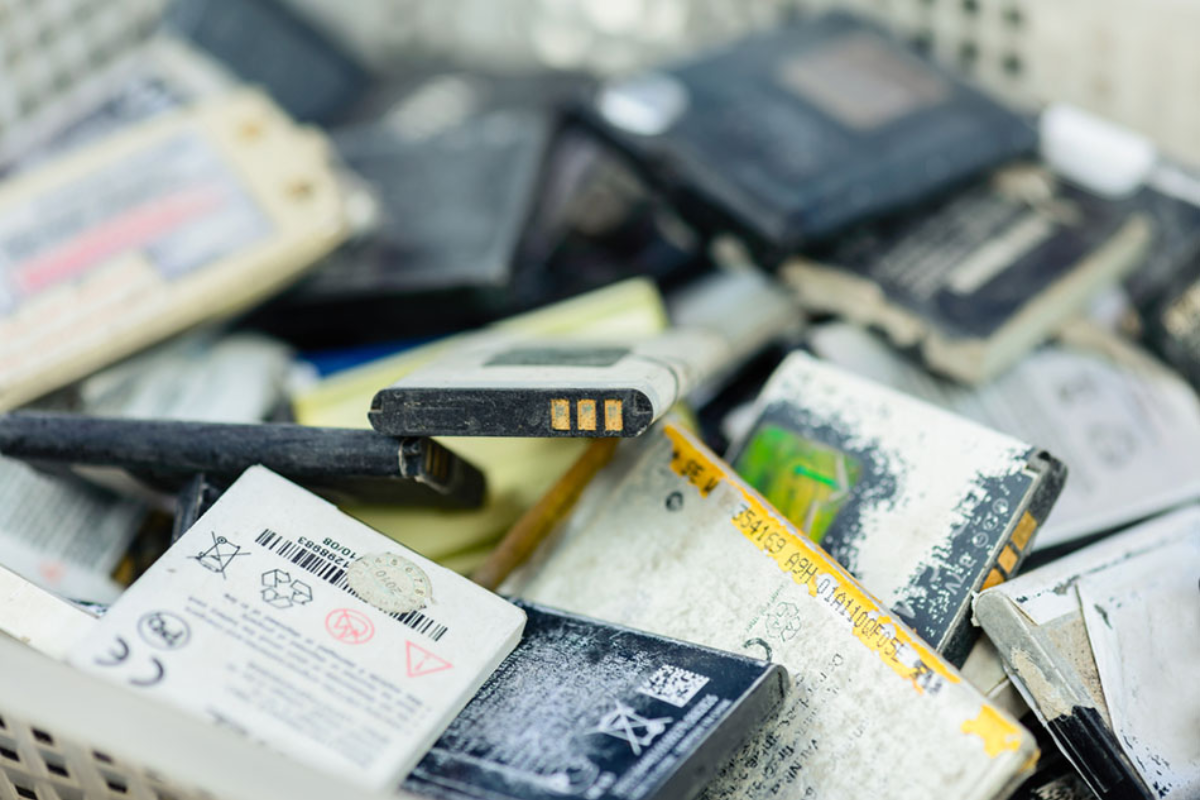
North America’s current capacity to process 144,000 tons per year of lithium-ion batteries is “quite insignificant” against the projected growth in new manufacturing, according to a recent overview of the global lithium-ion battery recycling landscape from consulting and research firm Deloitte and a division of the American Chemical Society.

However, the report found the U.S. “has initiatives underway to expand their current recycling capacity by more than 300,000 tons per year, involving both the improvement of existing facilities and the development of new ones.”

The report, titled “Lithium-ion battery recycling market and innovation: Trends for a green future,”  outlines which processing methods are most commonly used to recycle batteries found in consumer electronics. It comes as the authors project an upcoming spike in batteries entering the waste stream, driven by electric vehicles.

U.S. capacity is well below China’s 1.1 million tons per year, Deloitte found, and China has plans to expand that capacity by 1.2 million tons each year moving forward.

The report framed the need for battery processing capacity expansion with some urgency, given the timing of wider-spread electric vehicle adoption.

“Since the performance of the lithium battery will gradually deteriorate with the increase of use time, the average service life of EV batteries ranges from 5 to 8 years,” the authors wrote. “Therefore, the first batch of EV batteries put into the market are ushering in a ‘retirement tide.'”

The report offered some technical specifics about battery chemistries and their typical recycling methods. For consumer electronics, lithium cobalt oxide and lithium manganese oxide are the most common battery chemistries. These are most frequently processed through hydrometallurgy, which is a chemical leaching process, or through smelting or a combination of the two. 

A third method, which the report labeled “direct recycling,” involves mechanically dismantling batteries to recover the cathode without using acids or smelting. It’s less commonly used for consumer electronics batteries and lithium-ion battery applications despite having what the report identifies as the lowest environmental impact. In the U.S., emerging battery processor Princeton NuEnergy is an example of a company using this “cathode-to-cathode” technology.

Tracking government actions

The report, completed by the China office of Deloitte, found that China has also been particularly proactive on lithium-ion battery regulation. The country was engaged in lithium-ion battery end-of-life policymaking as far back as 2016, while U.S. EPA activity ramped up around 2021. China’s interest in promoting battery recycling was concurrent with wide-ranging solid waste reforms, which included a ban on imports of many recyclables and culminated in 2020.

There remains no U.S. federal policy covering lithium-ion battery waste management, but the EPA in a comprehensive 2021 report outlined the scale of battery-related fires in recycling facilities across the U.S., including in e-scrap facilities. In 2022, the U.S. government began funding battery recycling efforts across the country through the Inflation Reduction Act, legislation that established grants for clean energy and related projects.

In 2023, the EPA revisited the battery issue through a series of recommendations including that lithium-ion batteries be handled as hazardous waste, but did not go as far as changing regulations. And since then, the agency has convened a series of cross-industry working groups aimed at improving collection and labeling of lithium-ion batteries of all sizes. 
Tags: BatteriesCritical MineralsResearch
TweetShare
Colin Staub

Colin Staub

Colin Staub was a reporter and associate editor at Resource Recycling until August 2025.

Related Posts

Battery fires still a major risk to recyclers: report

byPaul Lane
June 9, 2026

The June fire report from Ryan Fogelman shows there were 40 incidents in May at facilities in the United States...

DOE commits federal funds toward critical minerals

ABTC wins DOE appeal for Tonopah Flats lithium refinery project

byStefanie Valentic
June 8, 2026

ABTC has won back a DOE grant that was among hundreds terminated last fall.

Rare earth processor lands $5.1M in Defense funds

IonicRE partnership supports recycled rare earth supply chain for defense magnets

byIsabella Burke
June 8, 2026

The Australian company is joining with Florida-based Advanced Magnet Lab in a new MOU.

Our top stories from June 2021

Colorado advances EV battery EPR law

byStefanie Valentic
June 3, 2026

Colorado, which passed its Battery Stewardship Act in 2025, is now looking to close the gap on large-format, EV batteries.

Fire at an EMR recycling facility in Camden, New Jersey May 29, 2026.

EMR faces shutdown calls after numerous fires

byBrian Clark Howard
June 2, 2026

A fire at a facility in Camden, New Jersey, has raised fresh questions on recycler safety and lithium ion batteries.

Emerging technology holds the key to rare earth recovery

Emerging technology holds the key to rare earth recovery

byDan Wang, Toyoshima Green Tech
June 1, 2026

Toyoshima has developed a process that recovers critical materials at high purity in an efficient way.

Load More
Next Post
Metal duties come into play, some tariffs suspended

Metal duties come into play, some tariffs suspended

More Posts

How electronics legislation fared this legislative season

NY sends repairability labeling bill to governor

June 8, 2026
House resolution aims to make recyclability central to product design

NY EPR bill fails to advance after third try

June 8, 2026
California extends compostable labeling law

California bills crack down on false recycling, compostable claims

May 29, 2026

Returns are a goldmine of information

May 27, 2026
Data to verify recycling for Indy 500

Data to verify recycling for Indy 500

May 22, 2026
Federal PACK Act aims to preempt ‘patchwork’ of state laws

House advances Recycling Infrastructure and Accessibility Act

May 21, 2026

WM, Circular Materials announce new Canadian facility

May 21, 2026

Battery fires still a major risk to recyclers: report

June 9, 2026
CalRecycle withdraws proposed regs for SB 54

Oceana, NRDC, CAW sue CalRecycle over SB 54 regs

June 5, 2026
Fire at an EMR recycling facility in Camden, New Jersey May 29, 2026.

EMR faces shutdown calls after numerous fires

June 2, 2026
Load More

About & Publications

About Us

Staff

Archive

Magazine

Work With Us

Advertise
Jobs
Contact
Terms and Privacy

Newsletter

Get the latest recycling news and analysis delivered to your inbox every week. Stay ahead on industry trends, policy updates, and insights from programs, processors, and innovators.

Subscribe

Welcome Back!

Login to your account below

Forgotten Password?

Retrieve your password

Please enter your username or email address to reset your password.

Log In

Add New Playlist

No Result
View All Result
  • The Latest
  • Analysis
  • Recycling
  • E-Scrap
  • Plastics
  • Policy Now
  • Conferences
    • E-Scrap Conference
    • Plastics Recycling Conference
    • Resource Recycling Conference
    • Textiles Recovery Summit
  • Magazine
  • About Us
  • Advertise
  • Archive
  • Jobs
  • Staff
Subscribe
This website uses cookies. By continuing to use this website you are giving consent to cookies being used. Visit our Privacy and Cookie Policy.