






Resource Recycling
  • The Latest
  • Analysis
    • All
    • Certification Scorecard
    • Industry Announcements
    • Opinion
    Intel sign outside of company building.

    Intel’s CapEx tops $20B on server demand while PC volume shrinks

    Google sign on company building with blue sky and clouds above.

    Inside Alphabet’s Q2 results: More capital spending and cloud backlog

    Alpek closing Pennsylvania RPET plant

    Alpek seizing on war-related opportunity 

    Our top stories from March 2023

    Iron Mountain’s data center report: Strong on power, quiet on hardware

    Dow touts US PE advantage amid Iran war

    Dow bullish on August PE pricing

    Certification Scorecard — Week of July 20, 2026

  • Conferences
    • Resource Recycling Conference
    • Plastics Recycling Conference
    • E-Scrap: The Longevity Conference
    • Textiles Recovery Summit
  • Publications
    • E-Scrap News
    • Plastics Recycling Update
    • Policy Now
    • Resource Recycling
    • Other Topics
      • All Topics
      • Brand Owners
      • Critical Minerals
      • Glass
      • Grant Watch / RFPs
      • Markets
      • Organics
      • Packaging
      • Research
      • Technology
      • Textiles
Subscribe
No Result
View All Result
Resource Recycling
  • The Latest
  • Analysis
    • All
    • Certification Scorecard
    • Industry Announcements
    • Opinion
    Intel sign outside of company building.

    Intel’s CapEx tops $20B on server demand while PC volume shrinks

    Google sign on company building with blue sky and clouds above.

    Inside Alphabet’s Q2 results: More capital spending and cloud backlog

    Alpek closing Pennsylvania RPET plant

    Alpek seizing on war-related opportunity 

    Our top stories from March 2023

    Iron Mountain’s data center report: Strong on power, quiet on hardware

    Dow touts US PE advantage amid Iran war

    Dow bullish on August PE pricing

    Certification Scorecard — Week of July 20, 2026

  • Conferences
    • Resource Recycling Conference
    • Plastics Recycling Conference
    • E-Scrap: The Longevity Conference
    • Textiles Recovery Summit
  • Publications
    • E-Scrap News
    • Plastics Recycling Update
    • Policy Now
    • Resource Recycling
    • Other Topics
      • All Topics
      • Brand Owners
      • Critical Minerals
      • Glass
      • Grant Watch / RFPs
      • Markets
      • Organics
      • Packaging
      • Research
      • Technology
      • Textiles
Subscribe
No Result
View All Result
Resource Recycling
No Result
View All Result
Home Analysis Opinion

Mass balance matters: Why different rules can lead to different outcomes 

Sarah EdwardsbySarah Edwards, Eunomia
June 5, 2026
in Analysis, Opinion, Plastics, Recycling
Mass balance matters: Why different rules can lead to different outcomes 

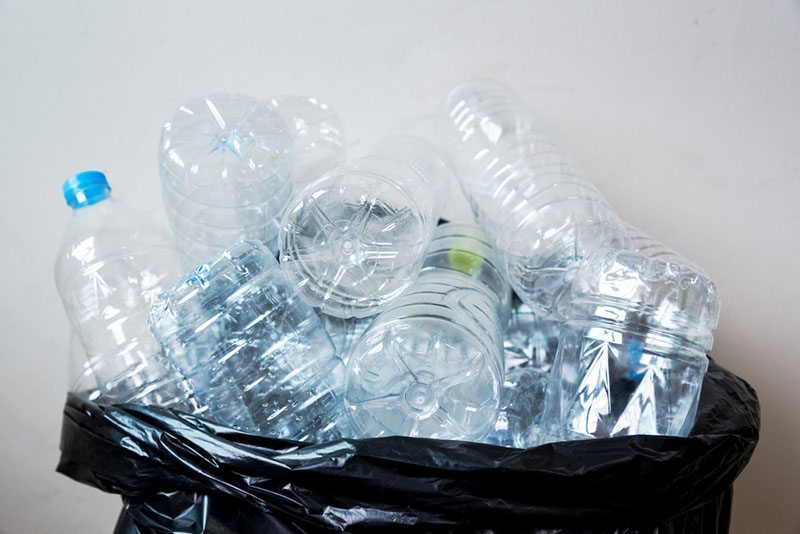
Mass balance is a critical piece of the recycling puzzle—and one that's important to get right. | oatawa / Shutterstock

In the race to scale post-consumer recycled content—particularly in plastics—“mass balance” has quickly become one of the most debated concepts in the circular economy. While it may sound technical, for recyclers, policymakers, and brands navigating Extended Producer Responsibility (EPR) laws and recycled content mandates, it’s becoming a critical issue that will define market credibility and investment confidence in the years ahead. 

Put simply, mass balance is an accounting approach used to allocate recycled content across outputs when materials are processed in complex, mixed systems—such as chemical recycling or integrated petrochemical production. Rather than tracking recycled feedstock molecule-by-molecule, it ensures that total inputs and outputs “balance” and allows recycled content to be assigned to specific products based on defined rules.  

In Europe, rules were defined when the EU’s implementing decision on recycled content under the Single-Use Plastics Directive (SUPD) was adopted, but not all bases have been covered. The “line in the sand” around how mass balance and chemical recycling are likely to be treated under future EU frameworks, particularly the Packaging and Packaging Waste Regulation (PPWR) marks the end of a debate, that has been running, in Europe in various forms, for many years. I was involved in early work for the European Commission on how recycled content under the SUPD should actually be quantified. 

But what about in the US? Are there any defined rules? And if not—what does this mean for recyclers, policymakers and brands? How brands choose to calculate mass balance cuts to the heart of how recycled content claims are made—and whether those claims will stand up to regulatory and public scrutiny. 

Why do mass balance rules matter now? 

Across the United States, policymakers are actively shaping the future of packaging and recycling systems. States like California, Oregon, Colorado and Maine are implementing or advancing EPR schemes, while minimum recycled content requirements—especially for plastics—are gaining traction. At the same time, many US brands are investing in chemical recycling technologies or purchasing recycled content from chemical recycling technologies to meet ambitious recycled content targets, particularly where mechanical recycling struggles to deliver suitable material quality or volume. 

Mass balance sits at the intersection of these developments. It is the primary mechanism enabling chemical recycling outputs to be counted as recycled content. But crucially, different approaches to allocation can produce dramatically different recycled content claims from the same underlying inputs. For example, a proportional approach allocates recycled content evenly across outputs, yielding lower but more conservative claims. By contrast, more flexible approaches allow recycled content to be concentrated into selected products, resulting in higher headline percentages.  

This trade-off—between credibility and commercial viability—is at the core of the debate now emerging in the US. 

A risk of inconsistent claims 

One of the key lessons emerging internationally is that inconsistent rules lead to inconsistent claims. In Europe, regulators have begun tightening how mass balance can be applied—placing limits on credit transfers and excluding certain uses (such as fuels) from counting toward recycled content in packaging.  

The result is that the same product may carry different recycled content claims depending on the system it is certified under. A product deemed “30% recycled” under one scheme may not qualify under stricter regulatory definitions, even if both rely on mass balance methodologies. For US stakeholders, this should serve as a cautionary tale. 

Without clear, harmonized rules, there is a real risk that recycled content claims become difficult to compare, harder to verify, and ultimately less trusted by regulators, investors and consumers. In a market already facing scrutiny over greenwashing, that’s a risk the industry cannot afford. 

Not “book and claim”  

Mass balance is sometimes compared to “book and claim” systems used in renewable energy markets—but the comparison is inaccurate. Under mass balance, recycled inputs must still physically enter the production system, and outputs are tied to actual material flows within defined boundaries.  

However, if those boundaries are too broad—for example, allowing credits to be transferred freely across multiple facilities—the system can begin to resemble a trading mechanism rather than a direct link between recycling and product manufacturing. At that point, the environmental integrity of claims becomes harder to defend. For US policymakers designing EPR frameworks or recycled content standards, this distinction will be crucial. 

Getting it right: A call to action 

The US has an opportunity to learn from international experience and build a system that balances scalability with credibility from the outset. 

Three priorities stand out: 

  • Define clear allocation rules: Regulators must determine how recycled inputs can be assigned to outputs—and ensure those rules are transparent and enforceable. 
  • Set appropriate system boundaries: Limiting how far recycled content credits can travel will help maintain the integrity of claims. 
  • Align with broader circularity goals: Recycled content should not be treated in isolation, but as part of a system that delivers measurable environmental benefits—including emissions reduction and resource efficiency. 

For brands buying post-consumer recycled content from chemical recycling technologies, the message is equally clear—now is the time to understand the mass balance approach being used by suppliers. Understand which mass balance model you are using, assess whether your claims would stand up under stricter scrutiny, and prepare for a more regulated future. 

The bottom line 

Mass balance is not a loophole—it is a necessary tool for scaling post-consumer recycled content in complex industrial systems. But its value depends entirely on how it is implemented. 

Get it right, and it can unlock investment, accelerate chemical recycling, and support a more circular plastics economy in the United States. 

Get it wrong, and it risks undermining the very credibility the industry is working to build. 

Tags: Chemical RecyclingEPR
TweetShare
Sarah Edwards, Eunomia

Sarah Edwards, Eunomia

Sarah Edwards, President Eunomia North America, has over 25 years’ experience advising governments, brands, and NGOs on ciruclar economy policy and strategy. She is an expert on North American resource management systems, extended producer responsibility (EPR), and the circular economy across many different product categories from packging to textiles. Sarah has recently been involved in packaging EPR implementation working with both states and the PRO on needs assessment and program plan development. Sarah also leads Eunomia team working directly with brands on EPR strategy focusinng on soure reduction and design for recyclability as well as PCR sourcing. Sarah is currently working on (or has recently completed) needs assessments in the following states: Colorado, Maryland, Oregon, Illinois, Minnesota and California.

Related Posts

The State of Oregon seal at a park in Salem, Ore.

MRM bids to run Oregon EPR for second year 

byPaul Lane
July 28, 2026

The company won the competitive process for 2026, but was the only company to apply for the 2027 PRO post.

A call to action: End markets and EPR

EPR faces several key questions

byBrian Clark Howard
July 23, 2026

Panelists discuss the promise and perils of EPR nationwide at the PROP conference in Pennsylvania.

RecyClass hits 500 EU recyclability evals

RecyClass hits 500 EU recyclability evals

byAntoinette Smith
July 21, 2026

The most recent evaluations include Avery Dennison's RFID tag for PET bottles, ahead of the first PPWR enforcement in mid-August.

CarbonLite to open $60 million Pennsylvania plant

Federal judge blocks CA ‘Truth in Recycling’ (SB 343) law

byStefanie Valentic
July 15, 2026

A federal judge has blocked California from enforcing SB 343's recyclability labeling restrictions, ruling the "Truth in Recycling" law is...

Two recycled-content bills gain approval in California

California agriculture seeks SB 54 repeal

byStefanie Valentic
July 7, 2026

A coalition of state agriculture stakeholders says the packaging law could add nearly $1,400 a year to household grocery costs...

In Our Opinion: Coalitions: The EPR Differentiator

Inside NAW’s constitutional case against packaging EPR

byStefanie Valentic
July 6, 2026

The National Association of Wholesaler-Distributors is fighting EPR in Oregon, and now in California too.

Load More
Next Post
Closeup of a printed circuitboard

Hardware demand puts new focus on parts harvesting

2026 Buyers’ Guide

Equipment, services and technology suppliers serving the recycling industry.

Browse the Guide

More Posts

CarbonLite to open $60 million Pennsylvania plant

Federal judge blocks CA ‘Truth in Recycling’ (SB 343) law

July 15, 2026
Alpek closing Pennsylvania RPET plant

Alpek seizing on war-related opportunity 

July 27, 2026

MTA loses track of recycling, costing NYC Transit $800,000

July 23, 2026
California releases deposit system update draft rules

Groups move to intervene in SB 343 lawsuit

July 27, 2026
Women in Circularity: Christine Nikander

Women in Circularity: Christine Nikander

July 28, 2026
Ivan Rangel of Happen Ventures speaks at the PROP conference in Lancaster, PA July 24, 2026.

Making reuse as easy as possible

July 27, 2026
Industry announcements for January 2026

Industry announcements for July 2026

July 1, 2026
Greyparrot positions waste intel as key to effective EPR

Greyparrot secures $27m for growing AI waste data

July 28, 2026
Waste Connections company truck on an urban street.

Waste Connections sees Q2 lift on recycled commodity values

July 24, 2026
Dow touts US PE advantage amid Iran war

Dow bullish on August PE pricing

July 24, 2026
Load More

About & Publications

About Us

Staff

Archive

Magazine

Work With Us

Advertise
Jobs
Contact
Terms and Privacy

Newsletter

Get the latest recycling news and analysis delivered to your inbox every week. Stay ahead on industry trends, policy updates, and insights from programs, processors, and innovators.

Subscribe

Welcome Back!

Login to your account below

Forgotten Password?

Retrieve your password

Please enter your username or email address to reset your password.

Log In

Add New Playlist

No Result
View All Result
  • The Latest
  • Analysis
  • Recycling
  • E-Scrap
  • Plastics
  • Policy Now
  • Conferences
    • E-Scrap Conference
    • Plastics Recycling Conference
    • Resource Recycling Conference
    • Textiles Recovery Summit
  • Magazine
  • About Us
  • Advertise
  • Archive
  • Jobs
  • Staff
Subscribe
This website uses cookies. By continuing to use this website you are giving consent to cookies being used. Visit our Privacy and Cookie Policy.