




Resource Recycling
  • The Latest
  • Analysis
    • All
    • Certification Scorecard
    • Industry Announcements
    • Opinion

    ITAD is moving past its adolescent phase: beyond end-of-life

    Rainforest

    Inside the Circle: What the rainforest can teach us about EPR

    Closeup of a printed circuitboard

    Hardware demand puts new focus on parts harvesting

    Rare look inside the world’s largest plastics recycler

    Mass balance matters: Why different rules can lead to different outcomes 

    Certification Scorecard — Week of June 1, 2026

    IT asset disposition and electronics recycling: Now and then

    $60 billion in AI servers will create an ITAD challenge

  • Conferences
    • Resource Recycling Conference
    • Plastics Recycling Conference
    • E-Scrap: The Longevity Conference
    • Textiles Recovery Summit
  • Publications
    • E-Scrap News
    • Plastics Recycling Update
    • Policy Now
    • Resource Recycling
    • Other Topics
      • All Topics
      • Brand Owners
      • Critical Minerals
      • Glass
      • Grant Watch / RFPs
      • Markets
      • Organics
      • Packaging
      • Research
      • Technology
      • Textiles
Subscribe
No Result
View All Result
Resource Recycling
  • The Latest
  • Analysis
    • All
    • Certification Scorecard
    • Industry Announcements
    • Opinion

    ITAD is moving past its adolescent phase: beyond end-of-life

    Rainforest

    Inside the Circle: What the rainforest can teach us about EPR

    Closeup of a printed circuitboard

    Hardware demand puts new focus on parts harvesting

    Rare look inside the world’s largest plastics recycler

    Mass balance matters: Why different rules can lead to different outcomes 

    Certification Scorecard — Week of June 1, 2026

    IT asset disposition and electronics recycling: Now and then

    $60 billion in AI servers will create an ITAD challenge

  • Conferences
    • Resource Recycling Conference
    • Plastics Recycling Conference
    • E-Scrap: The Longevity Conference
    • Textiles Recovery Summit
  • Publications
    • E-Scrap News
    • Plastics Recycling Update
    • Policy Now
    • Resource Recycling
    • Other Topics
      • All Topics
      • Brand Owners
      • Critical Minerals
      • Glass
      • Grant Watch / RFPs
      • Markets
      • Organics
      • Packaging
      • Research
      • Technology
      • Textiles
Subscribe
No Result
View All Result
Resource Recycling
No Result
View All Result
Home E-Scrap

California hikes payments for stressed e-scrap companies

byJared Paben
May 29, 2020
in E-Scrap
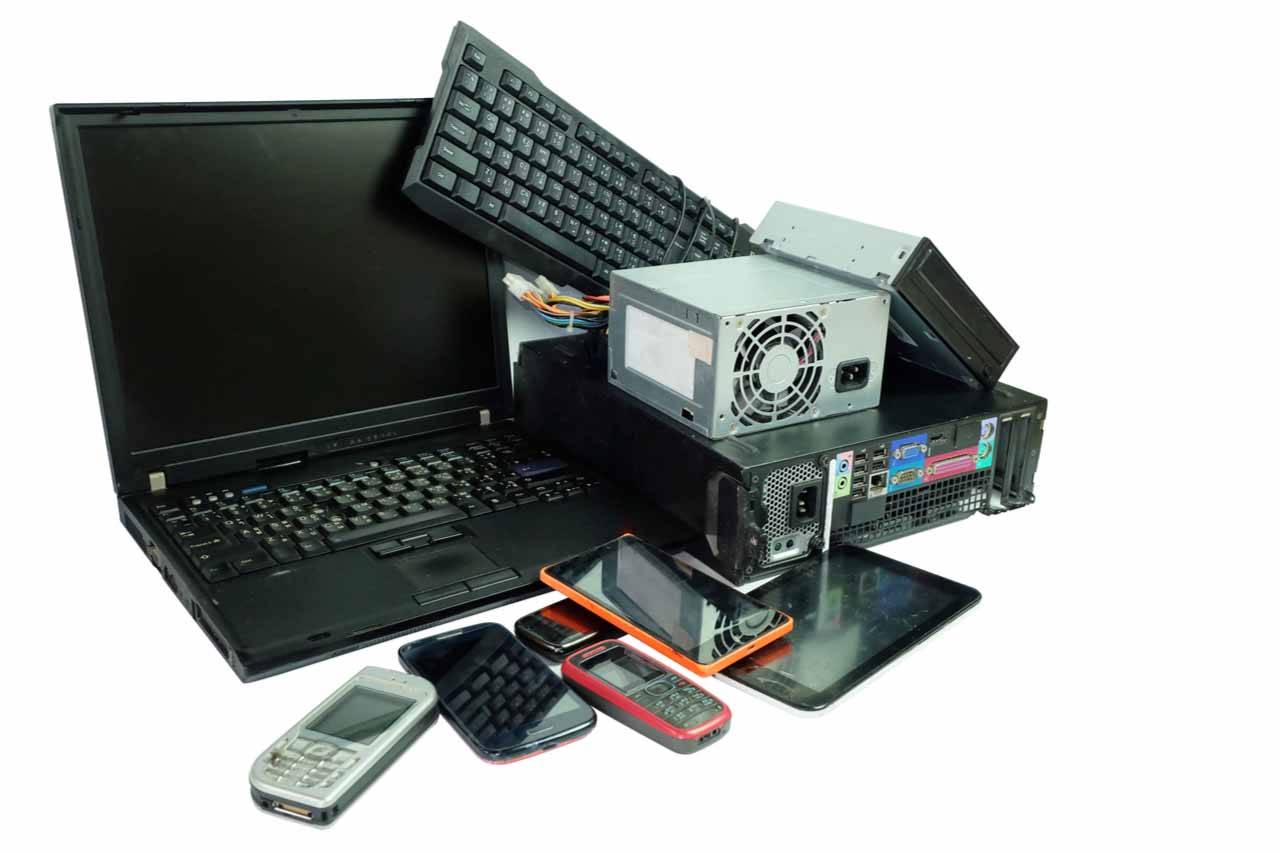
Electronics gathered for recycling.
CalRecycle staff said their recommendation to raise payment rates was based on updated cost data submitted by e-scrap collectors and processors, as well as other factors. | DAMRONG RATTANAPONG/Shutterstock

Citing difficult market conditions and rising costs for the industry, California officials will greatly increase the rates they pay e-scrap firms to collect and recycle electronics.

The California Department of Resources Recycling and Recovery (CalRecycle) will boost the combined e-scrap collection and processing rate from 49 cents to 66 cents per pound for CRTs  and from 60 cents to 87 cents per pound for non-CRT devices. The portion of those rates going to collectors will increase from 19 cents to 26 cents per pound. The new rates go into effect July 1.

Under California’s state program, which is the oldest in the country, consumers pay fees when they purchase new CRT TVs and monitors (this is not happening in today’s marketplace), LCD TVs and monitors, laptops and tablets with LCD screens, plasma TVs, and portable DVD players with LCD screens. Last year, CalRecycle set the fees at $4, $5 and $6, depending on the screen size.

The money is then paid to companies that collect and recycle covered electronic waste (CEW). The CEW payments are made to the processors/recyclers, who pay the “recovery” portion to the collectors that brought them material and keep the “recycling” portion. Under the new CRT rate, collectors will receive 26 cents and processors will keep 40 cents, and under the new non-CRT rate, collectors will receive 26 cents and processors will keep 61 cents.

State law requires CalRecycle to consider adjusting the payment rates every two years, if necessary, so that they cover the average net costs of collecting and processing.

CalRecycle staff requested the increase in documents presented at a May 19 CalRecycle public meeting. In the documents, staff said their recommendation to raise payment rates was based on updated cost data submitted by e-scrap collectors and processors, additional stakeholder input, staff analysis of industry trends, and more.

The department’s acting director, Ken DaRosa, approved the increases on May 21. The department still needs to file information with the Office of Administrative Law before the increases go into effect.

Multiple factors pressuring the industry

In a background document, CalRecycle touched on a number of major trends affecting both the program and the wider e-scrap industry.

Evolving end-of-life stream: In California, the weight of CEW recycled each year has been falling as legacy CRT devices are cleared out. CRTs still make up the majority of weight, but non-CRT devices are making up a larger percentage – they made up 1% of weight in 2011 and 31% of weight in 2019.

On the cost side, CalRecycle noted that non-CRT devices are more difficult to dismantle and require longer processing times. They contain materials that are hazardous waste or require special handling, such as plasma panels and fluorescent lamps. On the revenue side, they are lighter and have less material value because of miniaturization, such as circuit boards with fewer precious metals, according to CalRecycle.

For those reasons, CalRecycle in 2018 split what was previously one payment rate into separate rates for CRT and non-CRTs, the department said.

Constrained downstreams: CalRecycle also touched on the fact that processors participating in the program have few approved downstream CRT glass recycling outlets; as a result, most of the glass goes to disposal, CalRecycle noted. E-Scrap News in March took a closer look at the downstream disposition of CRT glass from the program.

The department also described how China’s National Sword campaign ultimately reduced export markets for e-plastics. China curtailed scrap plastic imports as of 2018, prompting a number of Chinese plastics reclaimers to set up shop in Southeast Asian countries. But they couldn’t replace the capacity lost when China closed the door; additionally, many of those Southeast Asian imposed import restrictions of their own after their ports became jammed with containers of scrap materials.

“The effect of this is considerably depressed plastics prices,” CalRecycle wrote. “In addition, metal commodity values have been going down since 2018, further reducing recycling revenues.”

Coronavirus impacts: Lastly, regulators touched on how the COVID-10 pandemic has affected the industry, as well as uncertainty going forward. They noted that the crisis has reduced the amount of CEW entering the system, driven down spot prices for metals, and further limited export options.

“It is unknown at this time how long this current crisis will last and what overall effect it will have on the costs of collecting and processing CEW,” according to the backgrounder.

Last month, Roy Dann of Cal Micro/GLS Group, which participates in California’s program, described to E-Scrap News the difficulty of low ferrous and nonferrous prices, coronavirus lockdowns in Asian countries that import e-plastics, and difficulties even getting containers to export material. His company, which mostly ships recovered commodities out of the Port of Long Beach, kept having its bookings cancelled, he said.

 

Tags: CaliforniaEPRMarketsPolicy Now
TweetShare
Jared Paben

Jared Paben

Related Posts

Three-bill package aims to revamp Michigan’s bottle return system

byStefanie Valentic
June 9, 2026

Michigan lawmakers introduced a bipartisan three-bill package aimed at strengthening consumer access to bottle deposit refunds and clarifying retailer obligations...

House resolution aims to make recyclability central to product design

NY EPR bill fails to advance after third try

byStefanie Valentic
June 8, 2026

This marks the third session in which the bill cleared the Senate only to stall in the Assembly.

Rainforest

Inside the Circle: What the rainforest can teach us about EPR

byBill Shireman
June 8, 2026

We have a lot to learn from jungles, particularly as we fight the thorny problem of plastic pollution.

CalRecycle withdraws proposed regs for SB 54

Oceana, NRDC, CAW sue CalRecycle over SB 54 regs

byStefanie Valentic
June 5, 2026

The groups allege that the new regulations have too many loopholes for packaging producers.

Rare look inside the world’s largest plastics recycler

Mass balance matters: Why different rules can lead to different outcomes 

bySarah Edwards, Eunomia
June 5, 2026

Mass balance is a critical piece of the recycling puzzle—and one that's important to get right.

Circular Materials to supply PlasCred chem recycling plant

Circular Materials to supply PlasCred chem recycling plant

byAntoinette Smith
June 4, 2026

The planned chemical recycling plant in Alberta, Canada, also has a five-year, fixed price offtake contract, ahead of reaching a...

Load More
Next Post

American Retroworks reaches settlement in Closed Loop case

More Posts

Industry announcements for January 2026

Industry announcements for June 2026

June 1, 2026
California extends compostable labeling law

California bills crack down on false recycling, compostable claims

May 29, 2026

Three-bill package aims to revamp Michigan’s bottle return system

June 9, 2026
House resolution aims to make recyclability central to product design

NY EPR bill fails to advance after third try

June 8, 2026
Illinois expands battery recycling as lithium-ion fire concerns mount

Illinois expands battery recycling as lithium-ion fire concerns mount

May 27, 2026
How electronics legislation fared this legislative season

NY sends repairability labeling bill to governor

June 8, 2026
War, not demand driving polymer pricing

War, not demand driving polymer pricing

June 2, 2026
Packaging policy is not one-size-fits-all

Packaging policy is not one-size-fits-all

June 1, 2026

Returns are a goldmine of information

May 27, 2026
Recycling industry addresses Beyond Plastics report

Recycling industry addresses Beyond Plastics report

May 26, 2026
Load More

About & Publications

About Us

Staff

Archive

Magazine

Work With Us

Advertise
Jobs
Contact
Terms and Privacy

Newsletter

Get the latest recycling news and analysis delivered to your inbox every week. Stay ahead on industry trends, policy updates, and insights from programs, processors, and innovators.

Subscribe

Welcome Back!

Login to your account below

Forgotten Password?

Retrieve your password

Please enter your username or email address to reset your password.

Log In

Add New Playlist

No Result
View All Result
  • The Latest
  • Analysis
  • Recycling
  • E-Scrap
  • Plastics
  • Policy Now
  • Conferences
    • E-Scrap Conference
    • Plastics Recycling Conference
    • Resource Recycling Conference
    • Textiles Recovery Summit
  • Magazine
  • About Us
  • Advertise
  • Archive
  • Jobs
  • Staff
Subscribe
This website uses cookies. By continuing to use this website you are giving consent to cookies being used. Visit our Privacy and Cookie Policy.