




Resource Recycling
  • The Latest
  • Analysis
    • All
    • Certification Scorecard
    • Industry Announcements
    • Opinion
    NJ’s PCR delay risks making its own excuse permanently true

    NJ’s PCR delay risks making its own excuse permanently true

    E-scrap magnet recycling company scales up

    Why only some rare-earth sources are economically viable

    e-Stewards to develop an ITAD-specific standard

    Certification scorecard — week of Sept. 21

    Who should pay for lithium-ion battery fire damage?

    America’s critical-materials buildout has a feedstock problem

    Certification scorecard – week of Sept. 14

  • Conferences
    • Resource Recycling Conference
    • Plastics Recycling Conference
    • E-Scrap: The Longevity Conference
    • Textiles Recovery Summit
  • Publications
    • E-Scrap News
    • Plastics Recycling Update
    • Policy Now
    • Resource Recycling
    • Other Topics
      • All Topics
      • Brand Owners
      • Critical Minerals
      • Glass
      • Grant Watch / RFPs
      • Markets
      • Organics
      • Packaging
      • Research
      • Technology
      • Textiles
Subscribe
No Result
View All Result
Resource Recycling
  • The Latest
  • Analysis
    • All
    • Certification Scorecard
    • Industry Announcements
    • Opinion
    NJ’s PCR delay risks making its own excuse permanently true

    NJ’s PCR delay risks making its own excuse permanently true

    E-scrap magnet recycling company scales up

    Why only some rare-earth sources are economically viable

    e-Stewards to develop an ITAD-specific standard

    Certification scorecard — week of Sept. 21

    Who should pay for lithium-ion battery fire damage?

    America’s critical-materials buildout has a feedstock problem

    Certification scorecard – week of Sept. 14

  • Conferences
    • Resource Recycling Conference
    • Plastics Recycling Conference
    • E-Scrap: The Longevity Conference
    • Textiles Recovery Summit
  • Publications
    • E-Scrap News
    • Plastics Recycling Update
    • Policy Now
    • Resource Recycling
    • Other Topics
      • All Topics
      • Brand Owners
      • Critical Minerals
      • Glass
      • Grant Watch / RFPs
      • Markets
      • Organics
      • Packaging
      • Research
      • Technology
      • Textiles
Subscribe
No Result
View All Result
Resource Recycling
No Result
View All Result
Home Recycling

Michigan’s bottle bill at a crossroads

byKeith Loria
November 10, 2025
in Recycling
Michigan’s bottle bill at a crossroads

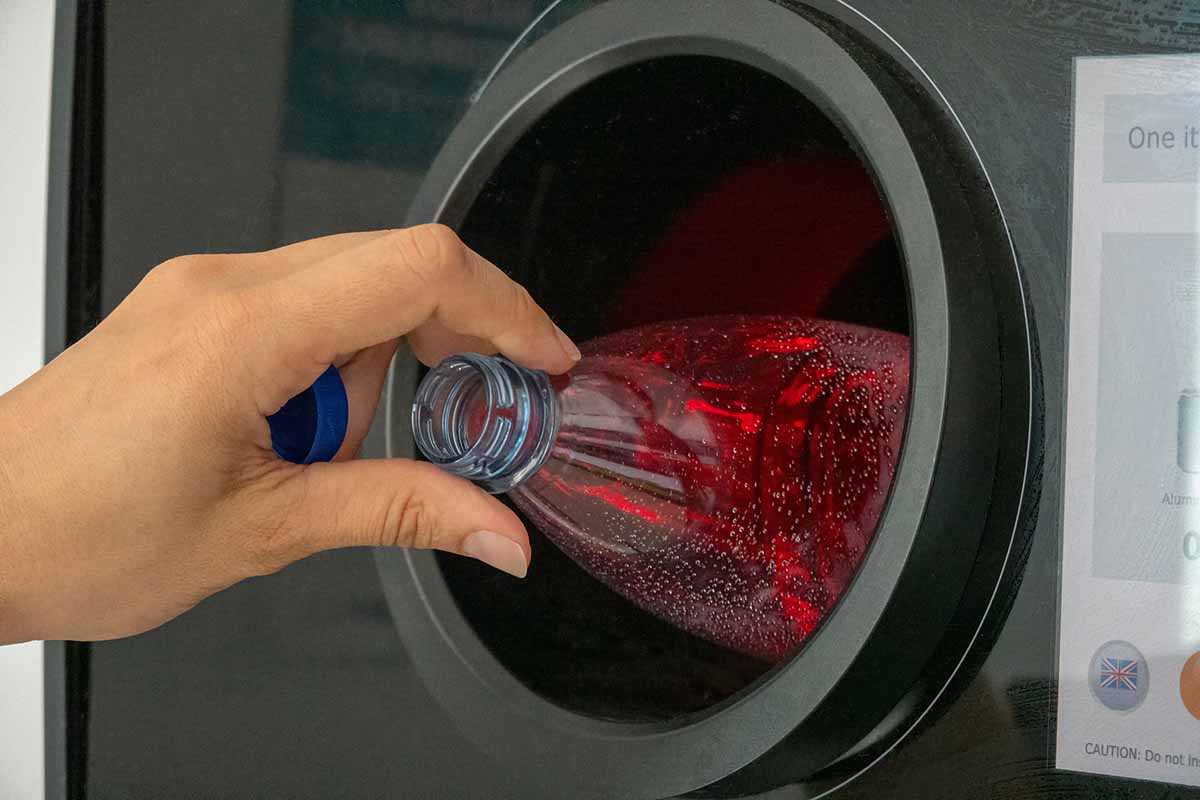
Veja / Shutterstock

The state’s program was once considered a national leader, achieving redemption rates topping 95%, but showed a significant drop by 2024, a recent report showed. | Veja / Shutterstock

A new report from the University of Michigan warns that the state’s signature 10-cent bottle deposit system is faltering, with redemption rates dropping to their lowest level in decades and structural gaps threatening the program’s ability to support Michigan’s recycling and climate goals.

Once considered a national leader, the state achieved redemption rates as high as 95%, but the report indicates the system has experienced a significant drop, declining to 70.4% in 2024.

Michigan first implemented its deposit law in 1978, becoming the first state to adopt a dime deposit. The law was initially intended to address pervasive roadside litter and reduce cleanup costs. Early evidence showed dramatic litter reduction, and a reliable stream of clean, high-value recycling materials followed. 

However, while many states have since updated their systems, Michigan’s structure has remained largely unchanged since the 1990s.

Under the current framework, distributors initiate the deposit, retailers handle container returns, consumers redeem the deposit at the store and distributors or third-party contractors collect the empties. Importantly, Michigan lacks redemption centers, which other bottle-bill states use to relieve burdens on retailers.

A major portion of the report focuses on unredeemed deposits, or escheats. Tamanna Sengupta, a research assistant at the UM Center for Sustainable Systems and one of the report authors, explained that as redemption rates fall, escheats rise, providing a growing funding pool. Michigan distributes the first $1 million each year to the Bottle Bill Enforcement Fund, then allocates 75% to Environment, Great Lakes and Energy’s (EGLE’s) Cleanup & Redevelopment Trust Fund and 25% to retailers based on the number of containers sold.

EGLE’s spending of escheats—obtained via a Freedom of Information Act request —reveals a steep rise in total expenditures, from $26 million in 2014 to more than $114 million in 2024. Nearly all is used for environmental cleanup; only 2-3% annually is directed toward recycling initiatives. 

Making a change

The report advocates for several changes that would push the numbers back to top levels.

“Based on our analysis, implementing universal redemption would likely have an immediate positive impact,” Sengupta said. “The main reason is consumer convenience and accessibility, which stakeholders agreed is central to driving high redemption rates.”

Currently, retailers are only legally required to accept containers for the specific brands they sell, leading to consumer confusion and frustration. While the law allows them to accept other brands, it’s not mandated.

“Since changing the law can be a slow process, our report recommends a voluntary, industry-led agreement on universal redemption,” Sengupta said. “This is a feasible, high-impact starting point that is legally possible now and would immediately improve the user experience.”

The report also found that the current escheat distribution creates a “backward incentive,” as stakeholders can benefit financially when the system performs poorly and redemption rates fall. 

“To align financial incentives with high performance, the primary recommendation is to reinvest the unredeemed deposits (escheats) back into the recycling system,” Sengupta said. “This proposal had broad stakeholder consensus.”

Specifically, the report recommends establishing a Statewide Bottle Deposit Modernization Fund. This fund could use escheats to provide grants for infrastructure upgrades and technology especially for small retailers and underserved areas, and ensure that unclaimed deposits are reinvested in the system.

Lawmakers are considering adding water bottles to Michigan’s deposit system, but researchers caution that any expansion must be designed to avoid placing new burdens on low-income and water-insecure residents.

“That’s a critical point in the report,” Sengupta said. “Stakeholders are rightly concerned that adding a deposit to water bottles could disproportionately affect low-income and water-insecure households if not planned well. The report is clear that any expansion must be paired with strong protective measures to safeguard these communities.”

This includes ensuring accessible and convenient redemption options, such as universal and bulk redemption, particularly in under-resourced areas, and rolling out public communication strategies so the system is easy to use.

Learning from others

The report shows Michigan can learn from other states’ playbooks, especially when it comes to funding and logistics.

“Oregon, for instance, has successful redemption centers funded by a cooperative of distributors and retailers, not a state-mandated handling fee,” Sengupta said. “They also provide a positive example of how a deposit system and a broader Extended Producer Responsibility (EPR) policy can coexist effectively.”

Then there’s Maine, which offers a commingling agreement, where a distributor co-op collects containers based on material type (like all aluminum) rather than by brand.

“This practice is also a form of universal redemption since the consumer can return their containers irrespective of whether they purchased them from a specific store,” Sengupta said. “The report sees this as a practical model for Michigan, especially since we already have a third-party pickup system.”

The report concludes that Michigan’s system has strong public support and a solid historical foundation, but requires modernization to remain effective, equitable and aligned with circular-economy aspirations.
Tags: Container Deposits
TweetShare
Keith Loria

Keith Loria

Related Posts

Summing up California container deposit changes

Connecticut’s container redemption rate soars 27%

byStefanie Valentic
August 5, 2026

Connecticut's redemption rate jumped 27% in a year, while most other deposit states remained flat.

ICIS monthly recycled plastics pulse: Most Oct resin prices stabilize for fall

CA advances PET payments bill, posts DRS recovery rates

byAntoinette Smith
June 18, 2026

The bill to increase payments for the state's PET reclaimers will now go before the Senate Appropriations Committee.

Deposit schemes garner support, despite ‘awareness gap’

Deposit schemes garner support, despite ‘awareness gap’

byAntoinette Smith
December 18, 2025

A new study commissioned by a global aluminum recycling initiative indicates that DRS programs can help bridge an "awareness gap"...

Austria’s DRS on track for 80% collection in first year

Austria’s DRS on track for 80% collection in first year

byAntoinette Smith
December 17, 2025

Austria was the 17th country in Europe to implement a deposit-return scheme for single-use beverage containers, and aims for a...

California bottle retailer’s circularity plan takes shape

California bottle retailer’s circularity plan takes shape

byPaul Lane
November 12, 2025

A California-based wholesale retailer has launched a sourcing program to support recycling and reusability across the supply chain.

California bottle retailer’s circularity plan rounds into form

California bottle retailer’s circularity plan rounds into form

byPaul Lane
November 10, 2025

A California-based wholesale retailer has launched a sourcing program to support recycling and reusability across the supply chain.

Load More
Next Post
California bottle retailer’s circularity plan rounds into form

California bottle retailer’s circularity plan rounds into form

2026 Buyers’ Guide

Equipment, services and technology suppliers serving the recycling industry.

Browse the Guide

More Posts

Oregon state capitol building with state flag and blue sky.

NAW appeals Oregon EPR ruling

September 25, 2026
Analysis: Undersupply of PCR is ‘stifling’ brand goals

US lawmakers urge protection of domestic RPET

September 25, 2026
Bin to Better gets students involved in reuse, recycling

Bin to Better gets students involved in reuse, recycling

September 24, 2026
Recyclers reeling from NJ PCR extension

Recyclers reeling from NJ PCR extension

September 23, 2026
Bipartisan reps introduce bill on recycling claims

House passes bill to ease lithium-ion battery storage rules

September 24, 2026
Calif. Governor Gavin Newsom at podium.

Newsom signs battery EPR expansion, vetoes SB 54 fund bill

September 24, 2026
Jeff Fielkow and the startup that’s building the US packaging EPR system

Jeff Fielkow and the startup that’s building the US packaging EPR system

September 10, 2026
New Jersey pushes back PCR mandate to 2030

New Jersey pushes back PCR mandate to 2030

September 10, 2026
Bale pricing mostly flat for September

Bale pricing mostly flat for September

September 9, 2026
Cutting healthcare plastics could save $18B

Report provides path to reduce medical e-scrap

September 25, 2026
Load More

About & Publications

About Us

Staff

Archive

Magazines

Work With Us

Advertise
Jobs
Contact
Terms and Privacy

Newsletters

Get the latest recycling news and analysis delivered to your inbox every week. Stay ahead on industry trends, policy updates, and insights from programs, processors, and innovators.

Subscribe

Welcome Back!

Login to your account below

Forgotten Password?

Retrieve your password

Please enter your username or email address to reset your password.

Log In

Add New Playlist

No Result
View All Result
  • The Latest
  • Analysis
  • Recycling
  • E-Scrap
  • Plastics
  • Policy Now
  • Conferences
    • E-Scrap Conference
    • Plastics Recycling Conference
    • Resource Recycling Conference
    • Textiles Recovery Summit
  • Magazines
  • About Us
  • Advertise
  • Archive
  • Jobs
  • Staff
Subscribe
This website uses cookies. By continuing to use this website you are giving consent to cookies being used. Visit our Privacy and Cookie Policy.