





Last year, Collins Dictionary named “single-use” its word of the year, and it’s not difficult to understand why. Efforts to reduce marine litter and eliminate plastic waste were some of the key themes of 2018. And in fact the European Union Parliament and Council ended the year with a provisional agreement to phase out problematic single-use plastic items by 2021.
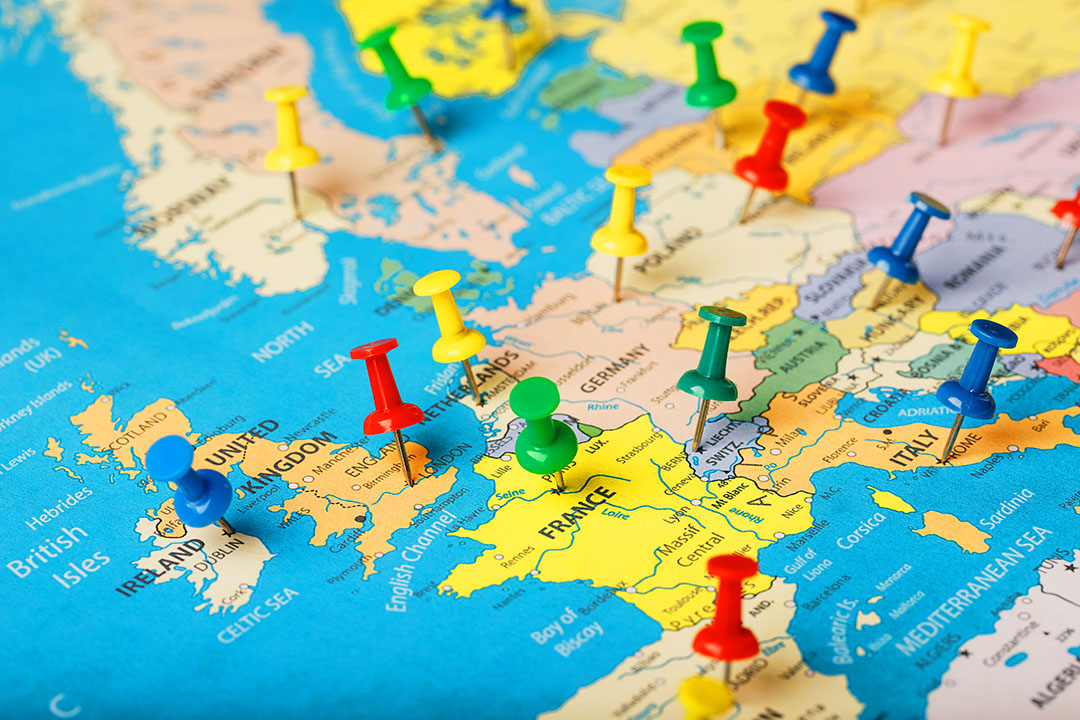
While growing environmental concerns have prompted a number of local, regional and national bans on various plastic packaging products over the last 20 years (in Kenya, Taiwan, Seattle and Zimbabwe, to name just a few), the new EU Directive on Single Use Plastic will be the most comprehensive piece of legislation yet at the global level to tackle plastic pollution.
The Directive will totally ban 10 single-use plastic products from the EU, including cotton bud sticks, plates, straws, stirrers, balloon sticks, oxo-degradable plastics and expanded polystyrene (EPS) food containers and cups.
Additionally, the new rules stipulate that EU Member States must take “the necessary measures to achieve a measureable quantitative reduction” in the consumption of other single-use plastics not covered by the ban, such as take-out containers and coffee cups and lids.
In many ways, this legislative push could very well accelerate another notable trend in Europe’s packaging sector: growth in systems and business models centered around reusable packaging.
New opportunities

According to a 2017 report by the Ellen MacArthur Foundation, reuse provides an economically attractive opportunity for at least 20% of plastic packaging (by weight), worth at least $9 billion.
A number of leading brands, retailers and packaging companies have already realized this and are capitalizing on it.
Take U.K.-based CupClub, for instance. The company describes itself as a “cups-as-a-service” startup that allows consumers to “rent” reusable cups for both hot and cold drinks. After finishing their drink, consumers drop off the cups at a designated collection point, and the cups are designed to be used 132 times before they are recycled. The company claims its service reduces use of single-use plastic packaging by up to 47%.
Another business that has tapped into the reuse market is ReCircle. Launched in 2016, ReCircle provides reusable lunchboxes to restaurants across Switzerland for take-out food, and it has created an accompanying deposit system. Since inception, ReCircle has distributed 70,000 of its “reBoxes” to a total of 412 restaurants.
Restaurants are driven to join ReCircle primarily for economic reasons. According to the company, single-use containers in Switzerland cost the equivalent of $0.20 each, and the cost for 20 reBoxes is $150. Do the math and you’ll find that a restaurant using 10 reBoxes a day would save about $520 per year by avoiding single-use containers, not to mention the potential savings from reduced waste management costs.
Meanwhile, other companies, such as Earth Food Love in the U.K., operate as bulk stores where nuts, grains, pastas and other food products are sold in dispensers. Customers take their own containers to fill up, weigh and label while shopping.
Most recently, we have a January 2019 announcement by TerraCycle, which has built its business by working with brands to offer take-back initiatives for hard-to-recycle products and packaging. This spring TerraCycle plans to launch a reuse-focused trial program called Loop.
The Loop effort will allow consumers in select markets to buy Unilever, Nestlé and Procter & Gamble products – ice cream, shampoo, toothbrushes, laundry detergent and more – in refillable metal and glass containers instead of single-use packaging. Consumers will be able to order goods online (from the Loop website or partner stores) and have them delivered. Once the containers are empty, TerraCycle will pick them up, clean them and deliver refilled containers back to consumers.
A call for standardization
However, while such initiatives deserve recognition for their commitment to cutting down on plastic waste, there is a lack of standardization that is boosting costs and limiting the efficiency of the burgeoning reuse market. In an ideal scenario, every brand taking part in a program like Loop would use the same type of reusable packaging.
Standardized containers, which are interchangeable and may be used by a number of brands, minimize the number needed by using a common stock to cover demand variations between companies. Standardized sizes and shapes also help make logistics more efficient, by maximizing storage and distribution space.
The efficiency of the logistics system can also be improved using a “shared pool system” rather than a strict one-for-one return. At their simplest, container-pooling systems entail the outsourcing of most of the inconvenient aspects of reusable containers to a third-party organization. In this model, the container-pooling operator is the owner of the packaging and helps ensure that barriers in the logistics process (containers needing repairs, for instance) do not interfere with supply chain operations.
To help drive toward more harmonization in reuse, this spring the Reloop Platform will launch its Reusable Packaging Platform, which will begin as an EU initiative but eventually hopes to expand to the U.S. as well. This is a network of reverse logistics companies and materials suppliers that make up the transport and primary packaging value chain for the reusable realm. We are building a coalition of all three reusable packaging sectors: consumer packaging (bottles, bags, cups, bowls), transport packaging (crates, totes, pallets) and industrial packaging (barrels and IBCs).
Reloop will be facilitating dialogue, strategic planning and lobbying on behalf of the shared interests of the platform.
Also important to note is the fact the Reusable Packaging Platform is set to be material-neutral, with participating stakeholders offering solutions in wood, plastic, metal, glass and fiber. The focus is on high-quality reusable packaging that both protects the product and remains in circulation. Importantly, the reusable items will also be recyclable when they do reach end of life.
Organizations interested in joining the platform should contact Reloop (see contact info at the end of this story).
EU has set the pace
With reusable alternatives available across countless product categories, it’s only a matter of time before other countries around the world follow in Europe’s footsteps. As more jurisdictions craft reuse-focused policy, they will be opening the doors to new opportunities for businesses to adapt to this changing environment and promote themselves as single-use-free.
Those that seize the opportunity now could benefit from a head start.
Clarissa Morawski is based in Barcelona and serves as the managing director of the Reloop Platform, which brings together industry, government, and nongovernmental organizations in Europe to form a network for advances in policy that create enabling system conditions for circularity across the European economy. She is also principal of Canada-based CM Consulting Inc. She can be contacted at clarissa@cmconsultinginc.com.
Samantha Millette is an environmental consultant specializing in the areas of waste management research, policy, and planning. She is the owner of SAMI Environmental and can be contacted at samantha.millette31@gmail.com.
The views and opinions expressed are those of the author and do not imply endorsement by Resource Recycling, Inc. If you have a subject you wish to cover in an op-ed, please send a short proposal to news@dev.resource-recycling.com for consideration.