



Resource Recycling
  • The Latest
  • Analysis
    • All
    • Certification Scorecard
    • Industry Announcements
    • Opinion

    ITAD is moving past its adolescent phase: beyond end-of-life

    Rainforest

    Inside the Circle: What the rainforest can teach us about EPR

    Closeup of a printed circuitboard

    Hardware demand puts new focus on parts harvesting

    Rare look inside the world’s largest plastics recycler

    Mass balance matters: Why different rules can lead to different outcomes 

    Certification Scorecard — Week of June 1, 2026

    IT asset disposition and electronics recycling: Now and then

    $60 billion in AI servers will create an ITAD challenge

  • Conferences
    • Resource Recycling Conference
    • Plastics Recycling Conference
    • E-Scrap: The Longevity Conference
    • Textiles Recovery Summit
  • Publications
    • E-Scrap News
    • Plastics Recycling Update
    • Policy Now
    • Resource Recycling
    • Other Topics
      • All Topics
      • Brand Owners
      • Critical Minerals
      • Glass
      • Grant Watch / RFPs
      • Markets
      • Organics
      • Packaging
      • Research
      • Technology
      • Textiles
Subscribe
No Result
View All Result
Resource Recycling
  • The Latest
  • Analysis
    • All
    • Certification Scorecard
    • Industry Announcements
    • Opinion

    ITAD is moving past its adolescent phase: beyond end-of-life

    Rainforest

    Inside the Circle: What the rainforest can teach us about EPR

    Closeup of a printed circuitboard

    Hardware demand puts new focus on parts harvesting

    Rare look inside the world’s largest plastics recycler

    Mass balance matters: Why different rules can lead to different outcomes 

    Certification Scorecard — Week of June 1, 2026

    IT asset disposition and electronics recycling: Now and then

    $60 billion in AI servers will create an ITAD challenge

  • Conferences
    • Resource Recycling Conference
    • Plastics Recycling Conference
    • E-Scrap: The Longevity Conference
    • Textiles Recovery Summit
  • Publications
    • E-Scrap News
    • Plastics Recycling Update
    • Policy Now
    • Resource Recycling
    • Other Topics
      • All Topics
      • Brand Owners
      • Critical Minerals
      • Glass
      • Grant Watch / RFPs
      • Markets
      • Organics
      • Packaging
      • Research
      • Technology
      • Textiles
Subscribe
No Result
View All Result
Resource Recycling
No Result
View All Result
Home E-Scrap

Researchers study toxics emitted by burning e-scrap

byJared Paben
March 2, 2017
in E-Scrap
epa testing equipment

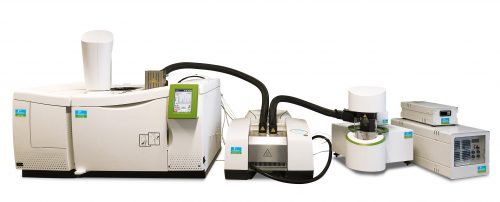
PerkinElmer used interconnected pieces of equipment to burn e-scrap and study the gases that were emitted.

It’s well understood that torching scrap electronics – either through crude processing or accidental warehouse fires – releases harmful toxics. But testing supported by the U.S. EPA has now helped identify exactly which substances are emitted, and it found some previously undetected by researchers.

Using equipment from PerkinElmer, a Waltham, Mass.-based company specializing in imaging and detection technologies, scientists burned components of e-scrap so they could study how fast they broke down when they caught fire and what gases were emitted.

“The goal of this study is laboratory simulation of open burning practices that often accompany undeveloped e-waste recycling operations, and to provide information and exposure risks to these emissions,” according to a recently released document from PerkinElmer. “The data will be used to understand better what exposures and releases occur in e-waste processing and how can they be mitigated.”

New findings

Researchers burned material from used cellphones and laptops, including plastic cellphone and laptop casings, glass from devices and printed circuit boards. The testing took place in mid-2016 at PerkinElmer’s Shelton, Conn. testing center.

Jun Wang, senior application scientist for PerkinElmer, told E-Scrap News the testing revealed some toxic compounds researchers hadn’t previously found during previous tests, including aniline and N-methylaniline. Those were both fairly dominant compounds in the emitted gases, he said.

In addition to Wang, authors of the paper included officials from the U.S. EPA’s National Risk Management Research Laboratory (NRMRL) in Cincinnati and a University of Cincinnati chemical engineering student. The project manager was Dr. Endalkachew Sahle-Demessie, a senior scientist at the NRMRL.

Linking equipment

This project was the first time three different pieces of equipment had been combined to study e-scrap burning, he said. The combination of three devices allowed for the analysis of more gases than during previous testing, during which only the lighter gases could be studied.

The first piece of equipment burned samples with a controlled temperature and atmosphere while analyzing the loss of weight. It quantified the thermal stability of different materials in electronics and provided a final weight of the residual char or ash. The second piece of equipment separated the emitted gases so they could be individually studied, while the third conducted the gas analysis.

“This is actually a new technique we’re using for this kind of application,” Wang said.

He acknowledged limitations inherent in lab testing, including the fact that they couldn’t study secondary reactions caused by gases interacting with each other. And the PerkinElmer document concluded that data is still limited.

“Much more still needs to be learned about the extent and long-term effects of these particular e-waste activities on environmental and human health,” it said.

Research goals

While some of the gases detected in the testing are known or probable carcinogens, others haven’t been assessed, Wang said. Toxic compounds aren’t just dangerous during the burning of electronics; they can pollute soils and water bodies, leading to human exposure later.

A goal of the project is to create an awareness of toxics emitted from burning electronics so organizations can assess how dangerous they are. For example, the U.S. EPA has what it calls the Integrated Risk Information System (IRIS), providing data on the health hazards of chemicals. The research aims to help flesh out the IRIS list, he said.

Results of the project will be presented at the laboratory science conference and expo Pittcon, to be held this month in Chicago. The coordinators also plan to submit it to a peer-reviewed journal for publication, Wang said.
 

TweetShare
Jared Paben

Jared Paben

Related Posts

ITAD is moving past its adolescent phase: beyond end-of-life

byDavid Daoud
June 10, 2026

Some leading providers are starting to treat AI-era hardware, lifecycle data and sustainable IT strategy as part of a single,...

Three-bill package aims to revamp Michigan’s bottle return system

byStefanie Valentic
June 9, 2026

Michigan lawmakers introduced a bipartisan three-bill package aimed at strengthening consumer access to bottle deposit refunds and clarifying retailer obligations...

Battery fires still a major risk to recyclers: report

byPaul Lane
June 9, 2026

The June fire report from Ryan Fogelman shows there were 40 incidents in May at facilities in the United States...

GP Recycling offers on-ramp for smaller recyclers

GP Recycling offers on-ramp for smaller recyclers

byAntoinette Smith
June 9, 2026

The company's hubbIT platform is a way for smaller generators to sell plastic, glass and metal bottles to the brokerage,...

How electronics legislation fared this legislative season

NY sends repairability labeling bill to governor

byPaul Lane
June 8, 2026

New York would become the first state in the US with an electronic device repairability labeling requirement law.

DOE commits federal funds toward critical minerals

ABTC wins DOE appeal for Tonopah Flats lithium refinery project

byStefanie Valentic
June 8, 2026

ABTC has won back a DOE grant that was among hundreds terminated last fall.

Load More
Next Post
Meet the Speakers: Sarah Dearman talks industry collaboration and rPET viability

Meet the Speakers: Sarah Dearman talks industry collaboration and rPET viability

More Posts

How electronics legislation fared this legislative season

NY sends repairability labeling bill to governor

June 8, 2026
House resolution aims to make recyclability central to product design

NY EPR bill fails to advance after third try

June 8, 2026
Illinois expands battery recycling as lithium-ion fire concerns mount

Illinois expands battery recycling as lithium-ion fire concerns mount

May 27, 2026
California extends compostable labeling law

California bills crack down on false recycling, compostable claims

May 29, 2026

Returns are a goldmine of information

May 27, 2026
Recycling industry addresses Beyond Plastics report

Recycling industry addresses Beyond Plastics report

May 26, 2026
Data to verify recycling for Indy 500

Data to verify recycling for Indy 500

May 22, 2026
Federal PACK Act aims to preempt ‘patchwork’ of state laws

House advances Recycling Infrastructure and Accessibility Act

May 21, 2026

WM, Circular Materials announce new Canadian facility

May 21, 2026

Battery fires still a major risk to recyclers: report

June 9, 2026
Load More

About & Publications

About Us

Staff

Archive

Magazine

Work With Us

Advertise
Jobs
Contact
Terms and Privacy

Newsletter

Get the latest recycling news and analysis delivered to your inbox every week. Stay ahead on industry trends, policy updates, and insights from programs, processors, and innovators.

Subscribe

Welcome Back!

Login to your account below

Forgotten Password?

Retrieve your password

Please enter your username or email address to reset your password.

Log In

Add New Playlist

No Result
View All Result
  • The Latest
  • Analysis
  • Recycling
  • E-Scrap
  • Plastics
  • Policy Now
  • Conferences
    • E-Scrap Conference
    • Plastics Recycling Conference
    • Resource Recycling Conference
    • Textiles Recovery Summit
  • Magazine
  • About Us
  • Advertise
  • Archive
  • Jobs
  • Staff
Subscribe
This website uses cookies. By continuing to use this website you are giving consent to cookies being used. Visit our Privacy and Cookie Policy.