



Resource Recycling
  • The Latest
  • Analysis
    • All
    • Certification Scorecard
    • Industry Announcements
    • Opinion

    ITAD is moving past its adolescent phase: beyond end-of-life

    Rainforest

    Inside the Circle: What the rainforest can teach us about EPR

    Closeup of a printed circuitboard

    Hardware demand puts new focus on parts harvesting

    Rare look inside the world’s largest plastics recycler

    Mass balance matters: Why different rules can lead to different outcomes 

    Certification Scorecard — Week of June 1, 2026

    IT asset disposition and electronics recycling: Now and then

    $60 billion in AI servers will create an ITAD challenge

  • Conferences
    • Resource Recycling Conference
    • Plastics Recycling Conference
    • E-Scrap: The Longevity Conference
    • Textiles Recovery Summit
  • Publications
    • E-Scrap News
    • Plastics Recycling Update
    • Policy Now
    • Resource Recycling
    • Other Topics
      • All Topics
      • Brand Owners
      • Critical Minerals
      • Glass
      • Grant Watch / RFPs
      • Markets
      • Organics
      • Packaging
      • Research
      • Technology
      • Textiles
Subscribe
No Result
View All Result
Resource Recycling
  • The Latest
  • Analysis
    • All
    • Certification Scorecard
    • Industry Announcements
    • Opinion

    ITAD is moving past its adolescent phase: beyond end-of-life

    Rainforest

    Inside the Circle: What the rainforest can teach us about EPR

    Closeup of a printed circuitboard

    Hardware demand puts new focus on parts harvesting

    Rare look inside the world’s largest plastics recycler

    Mass balance matters: Why different rules can lead to different outcomes 

    Certification Scorecard — Week of June 1, 2026

    IT asset disposition and electronics recycling: Now and then

    $60 billion in AI servers will create an ITAD challenge

  • Conferences
    • Resource Recycling Conference
    • Plastics Recycling Conference
    • E-Scrap: The Longevity Conference
    • Textiles Recovery Summit
  • Publications
    • E-Scrap News
    • Plastics Recycling Update
    • Policy Now
    • Resource Recycling
    • Other Topics
      • All Topics
      • Brand Owners
      • Critical Minerals
      • Glass
      • Grant Watch / RFPs
      • Markets
      • Organics
      • Packaging
      • Research
      • Technology
      • Textiles
Subscribe
No Result
View All Result
Resource Recycling
No Result
View All Result
Home E-Scrap

Researchers use e-coli, other bacteria to recover rare earths

Colin StaubbyColin Staub
June 21, 2024
in E-Scrap
Researchers use e-coli, other bacteria to recover rare earths

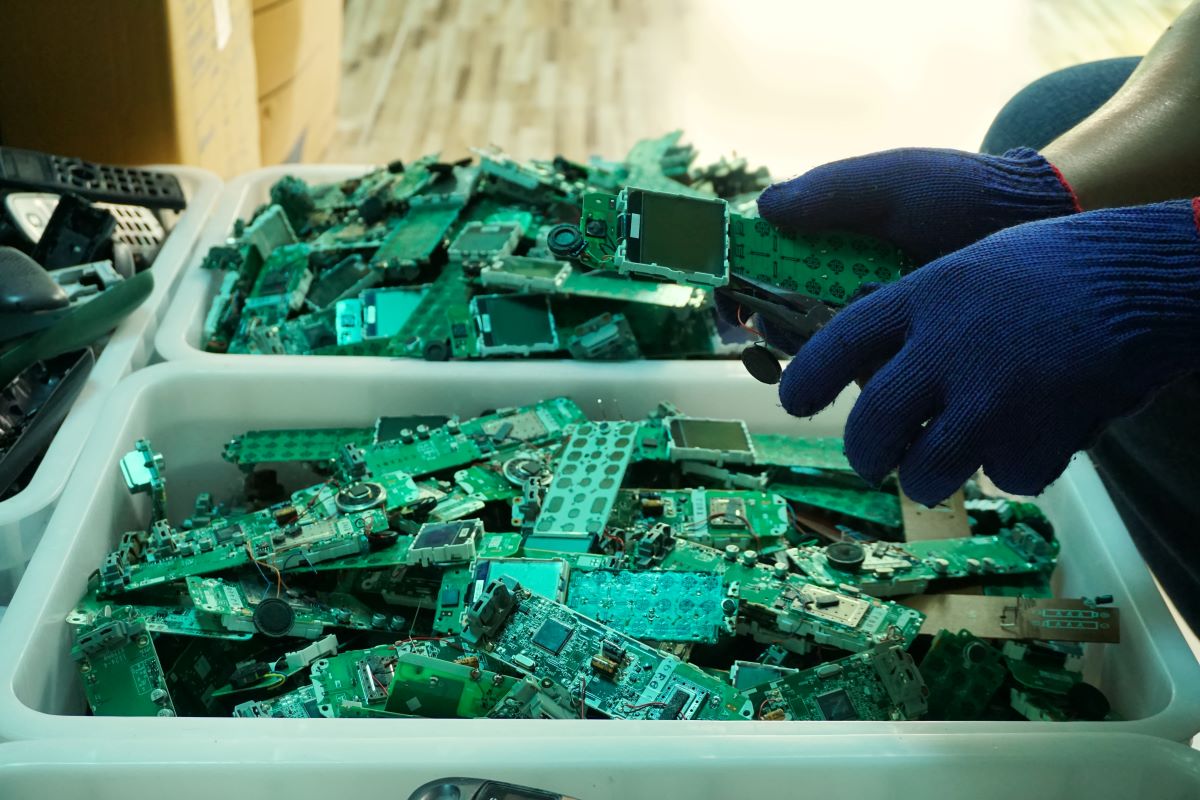
A team of Austrian researchers have developed what they describe as a “cost-effective” and non-polluting method to recover rare earth metals from electronics, and so far, they’ve achieved recovery rates of up to 85% from the e-scrap stream.

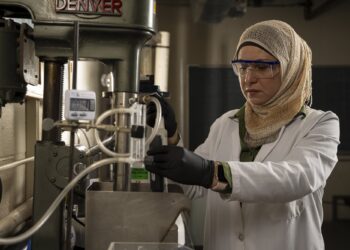
In the collaboration between multiple Austrian research universities, researchers tested a two-stage bacterial process for recovering both common metals and rare earths from the shredded e-scrap stream. 

They found that the acids produced by specific microorganisms are able to leach iron, copper, aluminum and other metals from the stream, and that with these metals leached out, separate bacteria draw in the remaining rare earth metals through a process called “bio-accumulation.” Without the first stage, the common metals interfere with this process of accumulation, so both steps are needed for rare earth recovery.

The specific bacterium used in the rare earth recovery stage may unpleasantly ring a bell: Escherichia coli, better known as e-coli, was found to be the “most successful accumulator of rare earths,” the researchers noted. E-coli is also a well-known intestinal bacterium often implicated in foodborne illness.

They suggested several benefits to their bacterial approach over the current standard practices.

“The methods currently used to extract rare earths are based on chemical processes, which are associated with the formation of environmentally harmful by-products and the creation of new problematic substances,” the university stated in summarizing the results. “A combination of biotechnological methods has clear advantages over chemical methods, as both the leaching and the accumulation in the cells of the bacteria are environmentally friendly and sustainable, and no hazardous or polluting substances are produced at any stage of the process.”

They added a caveat, that the process needs to be refined to be able to handle the typical varying concentrations of different metals in the e-scrap stream. This is the current area of research, they added, with a goal of making the process “reproducible and reliable” with any inbound ratio of metals.

The research was conducted by the University of Natural resources and Applied Life Sciences, abbreviated as BOKU in Austria, and the IMC University of Applied Sciences Krems.

The Austrian research joins a growing body of work to explore a variety of recovery processes for rare earth metals. One recent project examined a method that does not involve any acid, while another explored what the researchers described as “membrane solvent extraction.” That process involves dissolving rare earth magnets in acid and feeding the resulting liquid through a membrane that only allows the rare earth component to come through.
Tags: Research
TweetShare
Colin Staub

Colin Staub

Colin Staub was a reporter and associate editor at Resource Recycling until August 2025.

Related Posts

Chemical recycling roundup: New plant, partnerships

Polystyrene’s circular future is already taking shape

byJustin Riney, Polystyrene Recycling Alliance
May 29, 2026

Justin Riney of the Polystyrene Recycling Alliance explores a study conducted with the Resource Recycling Systems consultancy.

What Netflix’s ‘Plastic Detox’ gets wrong – and right

byKeith Loria
April 23, 2026

Advocates are excited about the attention brought on plastics by the documentary, but scientists say more nuance is needed.

Hawaii trials asphalt made with plastic debris and nets

Hawaii trials asphalt made with plastic debris and nets

byScott Snowden
April 20, 2026

Researchers at Hawaii Pacific University test asphalt made with fishing nets and plastic debris, with early results showing no increase...

Amazon, DOE partner on critical materials recovery

byScott Snowden
April 13, 2026

DOE and Amazon will study recovery of graphite from textiles and gallium from IT hardware, aiming to strengthen US supply...

Rice researchers use lemon juice to boost battery recycling

byScott Snowden
April 9, 2026

Rice researchers reported a battery recycling process that uses plasma and mild solvents to recover most metals from black mass...

Packaging sector sees shift from AI pilots to wider use

byScott Snowden
April 1, 2026

AI adoption is expanding across packaging operations as costs fall and use cases widen, though concerns around accountability, ROI and...

Load More
Next Post
In Our Opinion: Benefit from ESG’s changes to the industry

In Our Opinion: Benefit from ESG's changes to the industry

More Posts

Industry announcements for January 2026

Industry announcements for June 2026

June 1, 2026
House resolution aims to make recyclability central to product design

NY EPR bill fails to advance after third try

June 8, 2026
California extends compostable labeling law

California bills crack down on false recycling, compostable claims

May 29, 2026

Three-bill package aims to revamp Michigan’s bottle return system

June 9, 2026
How electronics legislation fared this legislative season

NY sends repairability labeling bill to governor

June 8, 2026
Illinois expands battery recycling as lithium-ion fire concerns mount

Illinois expands battery recycling as lithium-ion fire concerns mount

May 27, 2026
War, not demand driving polymer pricing

War, not demand driving polymer pricing

June 2, 2026
Packaging policy is not one-size-fits-all

Packaging policy is not one-size-fits-all

June 1, 2026

Returns are a goldmine of information

May 27, 2026
Recycling industry addresses Beyond Plastics report

Recycling industry addresses Beyond Plastics report

May 26, 2026
Load More

About & Publications

About Us

Staff

Archive

Magazine

Work With Us

Advertise
Jobs
Contact
Terms and Privacy

Newsletter

Get the latest recycling news and analysis delivered to your inbox every week. Stay ahead on industry trends, policy updates, and insights from programs, processors, and innovators.

Subscribe

Welcome Back!

Login to your account below

Forgotten Password?

Retrieve your password

Please enter your username or email address to reset your password.

Log In

Add New Playlist

No Result
View All Result
  • The Latest
  • Analysis
  • Recycling
  • E-Scrap
  • Plastics
  • Policy Now
  • Conferences
    • E-Scrap Conference
    • Plastics Recycling Conference
    • Resource Recycling Conference
    • Textiles Recovery Summit
  • Magazine
  • About Us
  • Advertise
  • Archive
  • Jobs
  • Staff
Subscribe
This website uses cookies. By continuing to use this website you are giving consent to cookies being used. Visit our Privacy and Cookie Policy.