




Resource Recycling
  • The Latest
  • Analysis
    • All
    • Certification Scorecard
    • Industry Announcements
    • Opinion

    ITAD is moving past its adolescent phase: beyond end-of-life

    Rainforest

    Inside the Circle: What the rainforest can teach us about EPR

    Closeup of a printed circuitboard

    Hardware demand puts new focus on parts harvesting

    Rare look inside the world’s largest plastics recycler

    Mass balance matters: Why different rules can lead to different outcomes 

    Certification Scorecard — Week of June 1, 2026

    IT asset disposition and electronics recycling: Now and then

    $60 billion in AI servers will create an ITAD challenge

  • Conferences
    • Resource Recycling Conference
    • Plastics Recycling Conference
    • E-Scrap: The Longevity Conference
    • Textiles Recovery Summit
  • Publications
    • E-Scrap News
    • Plastics Recycling Update
    • Policy Now
    • Resource Recycling
    • Other Topics
      • All Topics
      • Brand Owners
      • Critical Minerals
      • Glass
      • Grant Watch / RFPs
      • Markets
      • Organics
      • Packaging
      • Research
      • Technology
      • Textiles
Subscribe
No Result
View All Result
Resource Recycling
  • The Latest
  • Analysis
    • All
    • Certification Scorecard
    • Industry Announcements
    • Opinion

    ITAD is moving past its adolescent phase: beyond end-of-life

    Rainforest

    Inside the Circle: What the rainforest can teach us about EPR

    Closeup of a printed circuitboard

    Hardware demand puts new focus on parts harvesting

    Rare look inside the world’s largest plastics recycler

    Mass balance matters: Why different rules can lead to different outcomes 

    Certification Scorecard — Week of June 1, 2026

    IT asset disposition and electronics recycling: Now and then

    $60 billion in AI servers will create an ITAD challenge

  • Conferences
    • Resource Recycling Conference
    • Plastics Recycling Conference
    • E-Scrap: The Longevity Conference
    • Textiles Recovery Summit
  • Publications
    • E-Scrap News
    • Plastics Recycling Update
    • Policy Now
    • Resource Recycling
    • Other Topics
      • All Topics
      • Brand Owners
      • Critical Minerals
      • Glass
      • Grant Watch / RFPs
      • Markets
      • Organics
      • Packaging
      • Research
      • Technology
      • Textiles
Subscribe
No Result
View All Result
Resource Recycling
No Result
View All Result
Home E-Scrap

In My Opinion: From hazard to resource: Battery recycling technology

byKyle D'Silva
April 17, 2025
in E-Scrap
In My Opinion: From hazard to resource: Battery recycling technology

The global demand for lithium-ion batteries is growing exponentially, fueled by the rise of electric vehicles, consumer electronics and renewable energy storage solutions, meaning recycling systems need to employ new technologies to keep pace.

Kyle D’Silva

According to the International Energy Agency, demand for critical battery minerals like lithium, cobalt and nickel could increase by more than 40 times over the next two decades, putting immense pressure on resource availability. Recycling lithium-ion batteries has become an economic and supply chain necessity to reduce environmental impact and lessen dependence on newly mined materials, and in 2022, the U.S.collected nearly 8 million pounds of batteries for recycling, including a record three million pounds of lithium-ion batteries, yet the recycling process remains complex and inefficient.

Lithium-ion batteries are complex structures composed of multiple cathode chemistries, anodes, electrolytes, separators and metal casings, making recycling far more complicated than traditional lead-acid batteries. One of the biggest challenges in battery recycling is accurately identifying and sorting valuable materials, such as lithium and cobalt, inside the batteries. Many recycling methods fail to accurately differentiate between battery types, leading to cross-contamination and inefficient material recovery. 

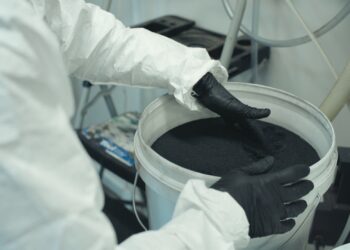
One of the biggest obstacles in lithium-ion battery recycling is the complexity of battery chemistries. Lithium-ion battery recycling involves breaking down used batteries into black mass, a mixture of valuable metals that requires precise sorting and processing to maximize recovery rates. High scrap rates highlight the need for better material identification to maximize the reuse of critical elements.
Governments and regulatory bodies, particularly in the EU and the U.S., are pushing for stricter recycling targets, with some policies requiring manufacturers to recover a certain percentage of battery materials. Without effective recycling, massive amounts of depleted batteries could end up in landfills, leading to significant environmental and economic losses.

Technology advancements for battery recycling

Handheld X-ray fluorescence (XRF) analyzers provide instant elemental analysis, allowing recyclers to sort spent battery materials more accurately and efficiently. This technology offers a non-destructive analytical technique used to determine the elemental composition of materials, preventing contamination and safety hazards that can arise from misidentifying lithium-ion chemistries during recycling. 

By detecting the precise chemical composition of black mass, XRF technology allows recyclers to select adequate recycling processes and optimize the recovery of cobalt, nickel, copper, aluminum and iron from used batteries.

In addition to battery recycling, XRF technology plays a critical role in scrap metal recycling. Scrap metal recyclers use handheld XRF analyzers to verify elements of interest in various metal alloys, ranging from trace levels to commercially pure metals. These tools can distinguish between alloy grades with similar compositions, ensuring accurate identification and efficient recycling. This level of precision helps maintain the integrity of recycled metals, supports regulatory compliance and maximizes profitability for scrap operations.

As a complementary technology, Raman spectroscopy provides detailed chemical characterization, enabling rapid, in-process monitoring that enhances the recovery of high-value metals. By analyzing the scattered light from laser-illuminated samples, it excels at identifying and quantifying materials, monitoring process dynamics – such as the removal of electrolytes and solvents – and assessing the quality of recovered elements. This technique is particularly effective at enhancing the efficiency and yield of recycling critical materials like cobalt, lithium and manganese from cathode active materials. 

Raman spectroscopy is highly effective in detecting metal oxides, sulphates, phosphates, and carbonates, providing immediate insights into reaction progress. Real-time feedback from Raman spectroscopy allows for better control over chemical reactions, leading to higher recovery rates and reduced waste.

Integrating these advanced analytical techniques into recycling workflows improves material recovery rates, improves process efficiency and supports a more sustainable and economically viable battery lifecycle.

As battery demand grows, recycling must become not just a secondary option, but a primary strategy for securing battery materials and reducing waste amid the push for electrification. XRF and Raman spectroscopy are complementary technologies addressing long-standing challenges by improving end-of-life material identification and recovery rates. 

With a continued investment in innovative recycling solutions, the industry can help secure critical resources, support circular economic initiatives and reduce the environmental impact of lithium-ion batteries.

Kyle D’Silva, director of clean energy for analytical instruments at equipment supplier Thermo Fisher Scientific, is an analytical chemist with expertise in spectroscopy, chromatography and mass. He is responsible for the strategic and market development of analytical instrument portfolios that serve battery, solar, carbon storage, biofuels and hydrogen end markets.

The views and opinions expressed are those of the author and do not imply endorsement by Resource Recycling, Inc. If you have a subject you wish to cover in an op-ed, please send a short proposal to news@dev.resource-recycling.com for consideration.

TweetShare
Kyle D'Silva

Kyle D'Silva

Related Posts

ITAD is moving past its adolescent phase: beyond end-of-life

byDavid Daoud
June 10, 2026

Some leading providers are starting to treat AI-era hardware, lifecycle data and sustainable IT strategy as part of a single,...

Three-bill package aims to revamp Michigan’s bottle return system

byStefanie Valentic
June 9, 2026

Michigan lawmakers introduced a bipartisan three-bill package aimed at strengthening consumer access to bottle deposit refunds and clarifying retailer obligations...

Battery fires still a major risk to recyclers: report

byPaul Lane
June 9, 2026

The June fire report from Ryan Fogelman shows there were 40 incidents in May at facilities in the United States...

GP Recycling offers on-ramp for smaller recyclers

GP Recycling offers on-ramp for smaller recyclers

byAntoinette Smith
June 9, 2026

The company's hubbIT platform is a way for smaller generators to sell plastic, glass and metal bottles to the brokerage,...

How electronics legislation fared this legislative season

NY sends repairability labeling bill to governor

byPaul Lane
June 8, 2026

New York would become the first state in the US with an electronic device repairability labeling requirement law.

DOE commits federal funds toward critical minerals

ABTC wins DOE appeal for Tonopah Flats lithium refinery project

byStefanie Valentic
June 8, 2026

ABTC has won back a DOE grant that was among hundreds terminated last fall.

Load More
Next Post

News from Beyond Plastics, EMR Recycling and more

More Posts

How electronics legislation fared this legislative season

NY sends repairability labeling bill to governor

June 8, 2026
House resolution aims to make recyclability central to product design

NY EPR bill fails to advance after third try

June 8, 2026
Illinois expands battery recycling as lithium-ion fire concerns mount

Illinois expands battery recycling as lithium-ion fire concerns mount

May 27, 2026
California extends compostable labeling law

California bills crack down on false recycling, compostable claims

May 29, 2026

Returns are a goldmine of information

May 27, 2026
Recycling industry addresses Beyond Plastics report

Recycling industry addresses Beyond Plastics report

May 26, 2026
Data to verify recycling for Indy 500

Data to verify recycling for Indy 500

May 22, 2026
Federal PACK Act aims to preempt ‘patchwork’ of state laws

House advances Recycling Infrastructure and Accessibility Act

May 21, 2026

WM, Circular Materials announce new Canadian facility

May 21, 2026

Battery fires still a major risk to recyclers: report

June 9, 2026
Load More

About & Publications

About Us

Staff

Archive

Magazine

Work With Us

Advertise
Jobs
Contact
Terms and Privacy

Newsletter

Get the latest recycling news and analysis delivered to your inbox every week. Stay ahead on industry trends, policy updates, and insights from programs, processors, and innovators.

Subscribe

Welcome Back!

Login to your account below

Forgotten Password?

Retrieve your password

Please enter your username or email address to reset your password.

Log In

Add New Playlist

No Result
View All Result
  • The Latest
  • Analysis
  • Recycling
  • E-Scrap
  • Plastics
  • Policy Now
  • Conferences
    • E-Scrap Conference
    • Plastics Recycling Conference
    • Resource Recycling Conference
    • Textiles Recovery Summit
  • Magazine
  • About Us
  • Advertise
  • Archive
  • Jobs
  • Staff
Subscribe
This website uses cookies. By continuing to use this website you are giving consent to cookies being used. Visit our Privacy and Cookie Policy.