






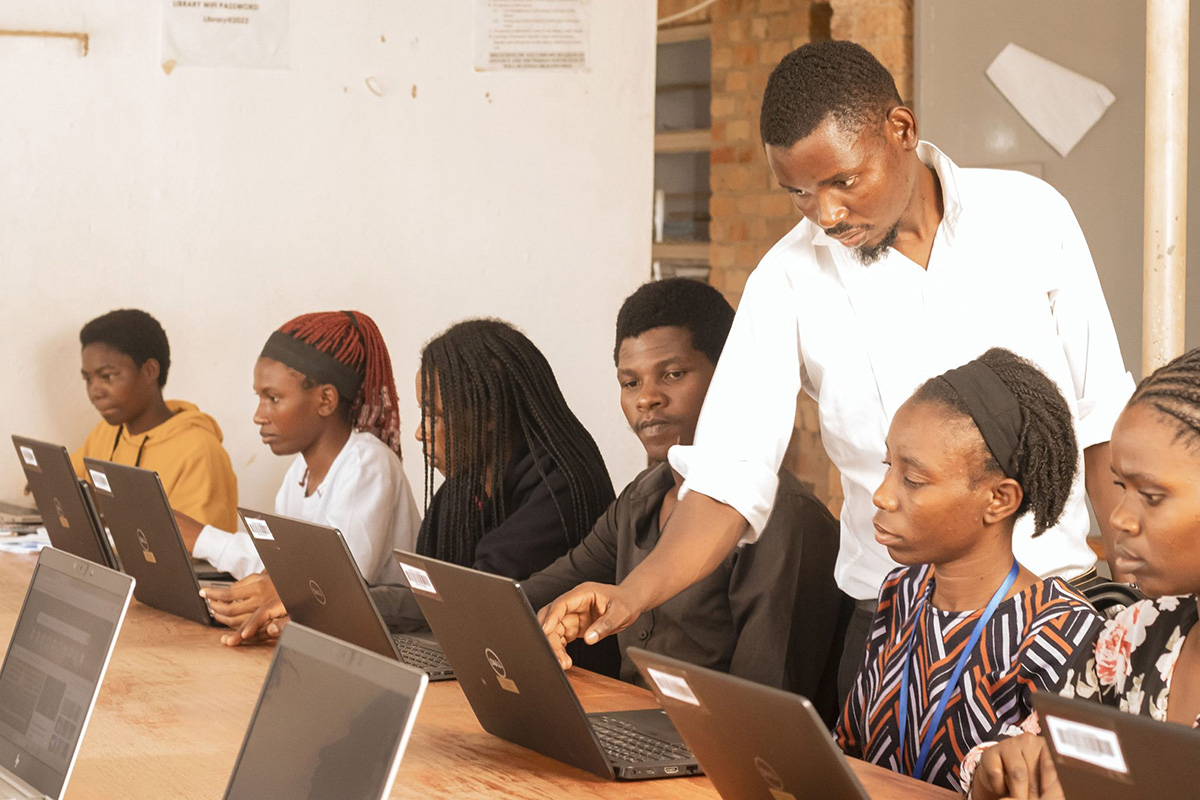
Former employees of the United States Agency for International Development (USAID) donated nearly 300 laptops and 60 smartphones through a device drive that is now supplying schools and nonprofit groups overseas.
World Computer Exchange (WCE) said the donations began after former USAID staff started asking whether they could give away government-issued devices they had been allowed to keep following layoffs at the agency. Former staff members Julie Ciccarone and Dan McDonald helped lead the effort, which relied on collection events in the Washington, D.C., area and a national mail-in program for donors elsewhere in the US.
“I think shortly after the USAID workers were fired or let go, we started getting a few inquiries about donating their laptops,” Pamela Cooney, president of World Computer Exchange, said. “I think it probably wasn’t clear to them at first what the policy was about the laptops.”
Organizing the donation effort
Collection events ran during July, August and September of 2025. According to the WCE, more than 30 collection events were held during that period.
While the in-person events worked best for former staff in the D.C. area, other donors used the nonprofit’s pre-paid mail-in program to send laptops and smartphones from elsewhere in the country. WCE said donors who mailed in devices received access to its Digital Product Passport platform, which confirms receipt, document processing and verifies that data was erased. The organization says it is the only nonprofit using that technology in its charitable computer reuse program.
“We wipe the hard drives and the donors receive a link to a micro website that shows that their laptop was received and then it was wiped,” Cooney said.
Some donors chose to wipe their own devices before sending them, she said, but many relied on the nonprofit’s process. Cooney said some former USAID employees had expected the agency to remotely wipe the laptops, but that did not occur in all cases. According to Pam, the reasons why that didn’t happen weren’t clear.
Devices shipped to partner schools
The first shipment from the drive sent 80 laptops to the University of Livingstonia in Mzuzu, Malawi, where the devices will support students and faculty. WCE said shipping costs were covered by a $2,600 donation from Brightconnect Foundation.
Cooney said the university had already worked with the nonprofit and was ready to move quickly because it had funding in place.
WCE said it received most of the donated devices, while Washington, D.C.-based nonprofit organization Wildtech received a portion of the laptops for a technology initiative in Tanzania. Additional shipments are planned for projects in Laos, Timor-Leste, Kenya and Mexico.
Cooney said the donated laptops were generally newer and in better condition than many devices the organization typically receives. “They’re about five to eight years old,” she said.
The nonprofit, founded in 2000 by Cooney and her late husband Tim, now focuses mainly on laptops rather than desktop computers because they are easier to store, ship and refurbish. Cooney said the group handles about 20 shipments a year, most of them smaller than in its earlier years.