





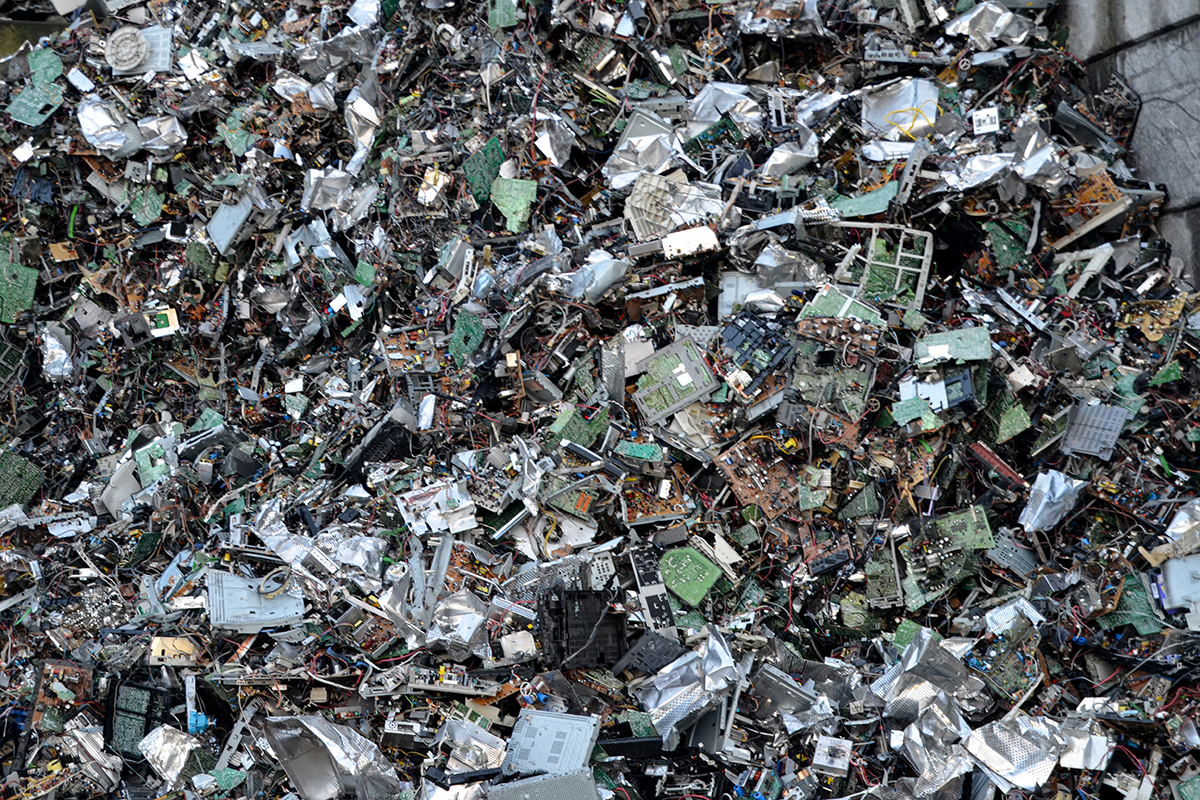
Corporate electronics disposition often ends with a single PDF labeled “certificate.” That document may be useful, but it is frequently asked to carry more weight than it was designed to support.
A pickup record can show that equipment left a site. It does not, by itself, establish continuous custody, the scope and result of media sanitization, the treatment applied to each material stream or the final downstream outcome.
The problem is not necessarily bad intent but rather evidence design. Different claims require different records, created by different parties at different moments. When those distinctions are blurred, a clean-looking closeout package can still leave procurement, security, audit and board teams unable to answer basic questions.
Start with the claims
Before a collection begins, the customer and service provider should identify the claims the completed project is expected to support. Five are common:
- The specified equipment or material left the customer’s control.
- Custody was documented through each relevant handoff.
- Data-bearing media received the agreed-upon sanitization or destruction treatment.
- Equipment and materials reached the declared reuse, recycling or other destination.
- Exceptions remain visible instead of being absorbed into a broad closure statement.
This claim-first approach changes the purpose of the closeout file. Instead of collecting documents and hoping they are sufficient, the project defines the evidence needed for each assertion before operations start.
Movement is not treatment
The first evidence layer covers physical movement. It may include a signed pickup record, transport manifest, weight record and receiving confirmation. These records should identify the parties, date, origin, destination and job or shipment reference.
Brazil’s national Manifesto de Transporte de Residuos (MTR) illustrates the distinction. Brazil’s National Solid Waste Management Information System (SINIR) describes the MTR as a self-declared document for recording waste movement and requires covered generators, transporters, temporary storage operators and destination facilities to register movements. It should not be stretched into proof of every treatment, data-security or downstream claim.
A useful rule is simple: evidence of departure supports departure; evidence of receipt supports receipt. Neither automatically proves what happened next.
Custody needs its own chronology
Chain-of-custody evidence should show who controlled the assets or material at each relevant stage. Depending on risk and contract scope, that may require timestamps, named organizations, facility locations, container or seal identifiers, receipt acknowledgments and incident records.
The goal is not paperwork for its own sake. A custody chronology allows a reviewer to connect the pickup to receiving, processing and transfer without unexplained gaps. When assets contain sensitive data, the chronology also defines the period during which physical security controls matter.
Data claims require sanitization evidence
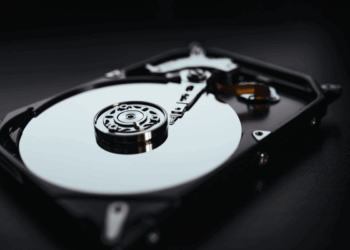
A statement that equipment was “recycled” does not establish that data was rendered inaccessible. Data claims require records designed for data assurance.
NIST Special Publication 800-88 Revision 2 defines media sanitization as making access to target data infeasible for a given level of effort. It emphasizes an organizational sanitization program, appropriate methods and controls based on information sensitivity. A buyer-readable record should therefore identify the media or defined batch, the selected method, who performed it, the result of verification or validation, and any failed or excluded items.
The level of detail should match the risk. A low-risk homogeneous batch may be documented differently from individually tracked servers or storage devices, but the scope and evidence method should be agreed in advance.
Treatment, downstream outcomes need links
Supplier qualifications matter. The US Environmental Protection Agency identifies R2 and e-Stewards as accredited certification standards that can help purchasers assess environmental, worker-health, security and downstream-management practices. Those credentials are valuable evidence about a supplier’s management system and audited scope.
They are not a substitute for records connecting a specific customer job to a specific treatment and downstream result. That layer may include receiving and processing records, reuse or recycling classifications, downstream vendor references, shipment or lot identifiers, and confirmation of the final process where the contract requires it.
This distinction protects both sides. The customer avoids treating a general credential as transaction proof, while the recycler avoids being asked to make claims broader than the records can support.
Keep exceptions visible
Every evidence package needs an exception register. Examples include unreadable identifiers, material received outside the agreed scope, media that failed validation, equipment awaiting a downstream confirmation or a discrepancy between a service record and a facility receipt.
An exception is not automatically a failure. An invisible exception is. Each item should have an owner, status, supporting record and next action. The management summary can then distinguish completed claims from open ones without overstating the result.
Build requirements into procurement
The strongest time to design the evidence file is during sourcing and contracting. A statement of work can define the claims to be supported, the unit of control, required identifiers, custody records, sanitization method and validation, downstream documentation, exception handling and retention period.
This approach travels across jurisdictions. The European Union’s WEEE framework distinguishes separate collection, proper treatment, recovery and recycling objectives. Brazil’s MTR records regulated waste movements. NIST addresses media sanitization. OECD responsible-business guidance frames due diligence as a risk-based process across operations and business relationships. These frameworks have different scopes, but together they reinforce a practical point: no single record should be asked to prove every stage.
A closeout certificate can still be useful as a summary and index. Its strongest form points to the underlying evidence for each claim, states the scope and method, and identifies unresolved exceptions. The objective is not the largest possible document package. It is a file in which every material assertion can be traced to the record created to support it.
Sources
- National Institute of Standards and Technology, NIST SP 800-88 Rev. 2: Guidelines for Media Sanitization (September 2025): https://doi.org/10.6028/NIST.SP.800-88r2
- U.S. Environmental Protection Agency, Certified Electronics Recyclers: https://www.epa.gov/electronics-batteries-management/certified-electronics-recyclers
- European Commission, Waste from Electrical and Electronic Equipment (WEEE): https://environment.ec.europa.eu/topics/waste-and-recycling/waste-electrical-and-electronic-equipment-weee_en
- Brazil, Sistema Nacional de Informacoes sobre a Gestao de Residuos Solidos, MTR: https://sinir.gov.br/sistemas/mtr
- OECD, Due diligence for responsible business conduct: https://www.oecd.org/en/topics/sub-issues/due-diligence-guidance-for-responsible-business-conduct.html