





Resource Recycling
  • The Latest
  • Analysis
    • All
    • Certification Scorecard
    • Industry Announcements
    • Opinion
    Apple Watch on product box.

    Wearables are coming and ITAD isn’t ready

    Certification Scorecard — Week of April 13, 2026

    EV Battery Pack - Sergii Chernov-Shutterstock

    Redwood, Rivian deal fuels US infrastructure plans

    Bloom ESG and e-Stewards roll out critical metals metric

    Colorado regulators suggest mid-range EPR scenario

    Why collaboration on plastic waste still matters

    Battery recycler Ascend Elements files for bankruptcy

    Battery recycler Ascend Elements files for bankruptcy

    EPR fees are a market signal. Here’s what they’re telling you.

    EPR fees are a market signal. Here’s what they’re telling you.

    Wolframite ore, the primary ore of tungsten from Altai, Russia

    Tungsten scrap export controls draw industry attention

    Certification Scorecard — Week of April 6, 2026

  • Conferences
  • Publications
    • E-Scrap News
    • Plastics Recycling Update
    • Policy Now
    • Resource Recycling
    • Other Topics
      • Brand Owners
      • Grant Watch
      • Markets
      • Organics
      • Packaging
      • Research
      • Technology
      • Textiles
      • All Topics
Subscribe
No Result
View All Result
Resource Recycling
  • The Latest
  • Analysis
    • All
    • Certification Scorecard
    • Industry Announcements
    • Opinion
    Apple Watch on product box.

    Wearables are coming and ITAD isn’t ready

    Certification Scorecard — Week of April 13, 2026

    EV Battery Pack - Sergii Chernov-Shutterstock

    Redwood, Rivian deal fuels US infrastructure plans

    Bloom ESG and e-Stewards roll out critical metals metric

    Colorado regulators suggest mid-range EPR scenario

    Why collaboration on plastic waste still matters

    Battery recycler Ascend Elements files for bankruptcy

    Battery recycler Ascend Elements files for bankruptcy

    EPR fees are a market signal. Here’s what they’re telling you.

    EPR fees are a market signal. Here’s what they’re telling you.

    Wolframite ore, the primary ore of tungsten from Altai, Russia

    Tungsten scrap export controls draw industry attention

    Certification Scorecard — Week of April 6, 2026

  • Conferences
  • Publications
    • E-Scrap News
    • Plastics Recycling Update
    • Policy Now
    • Resource Recycling
    • Other Topics
      • Brand Owners
      • Grant Watch
      • Markets
      • Organics
      • Packaging
      • Research
      • Technology
      • Textiles
      • All Topics
Subscribe
No Result
View All Result
Resource Recycling
No Result
View All Result
Home Plastics

How will 2026 unfold for plastics recycling?

bySteve Alexander
February 19, 2026
in Plastics, Plastics Recycling Update Magazine
How will 2026 unfold for plastics recycling?

Staff Photo

What I expected to be a year of opportunity for plastics recycling in 2025 did not materialize. These 5 factors will shape 2026, underpinned by recyclers’ resiliency and perseverance.

A year ago, I foresaw 2025 as a year of opportunity for plastics recycling, describing the industry as being on the brink of transformation. There was optimism that corporate sustainability commitments to increase recycled content in their packaging would be renewed, especially as customers consistently express a preference for recyclable packaging and expect brands to follow through on their environmental commitments. State extended producer responsibility (EPR) laws were coming into effect, creating a structure to provide companies an incentive to design more recyclable packaging and invest in recycling systems. 

In December 2025, however, plastics recyclers were completing what often has been described as the worst year to date, amid cheap virgin and imported resin, and renewed criticism of the industry in well-publicized reports. Why? Very simply, the issue is market demand. The closures of reclaimer rPlanet Earth in California and a PET wash line at Phoenix Technologies in Ohio were bitter pills to swallow. These companies closed because they don’t have any customers.

Despite the complex market dynamics and evolving policy landscapes, recyclers showed resilience, innovation, and determination in 2025. In 2026, that perseverance will continue. Here is what that will shape plastics recycling in the year ahead.

Five Key Factors


1. Policy Levers

To widen the market for recycled plastics, policy levers are needed to incentivize use of post-consumer recycled (PCR) content. As of August 2025, five states have passed laws requiring PCR content in plastic packaging. 

As such, the Association of Plastic Recycler’s (APR) primary focus for 2026 will be on how to incentivize the market to use domestically sourced recycled plastics.

2. Create Market Demand

The key to making plastics recycling economically viable is to create demand. Although EPR legislation helps incentivize collection of plastic packaging by way of producer funding, without a market for that material, the only thing we’re going to end up with is a lot more material with nowhere for it to go.

As one example, consumer brands have pulled back on ambitious voluntary PCR targets but still are using recycled resin. They currently depend on cheaper imports, which may not be certified as post-consumer material or may originate in countries that lack the same environmental and labor guardrails as exist in the US. 

It’s all about bringing manufacturing back to the United States, right? It’s all part and parcel of what this administration is doing. In actuality, the need to grow domestic manufacturing extends to Canada and Mexico. We all know material flows back and forth, sometimes three, four times before it ends up in a final product.

3. Yes, Recycling Works

Another issue that has frustrated plastic recyclers is public mistrust of the system, often spurred by critical and sometimes misleading reports, along with “tracker tests.” For example, a recent report somehow conflated the reduction in use of virgin plastic as something that doesn’t work. The one thing that we know which does work to create plastics being sustainable is the recycling component of it. This leaves me a little confused by the narrative of saying recycling doesn’t work.

However, consumers can still feel confident about their role in reducing their own carbon footprint – and in making recycling work – primarily by putting their plastic bottles and containers in the bins. The most iconic container that is recyclable, that consumers use, is a water bottle, and yet somehow we only collect three of 10 of them. We can’t recycle what is not collected. 

Another misconception is that North America faces a recycling capacity shortage. A report published in May 2025 indicated that North American recyclers could process 1.7 billion additional pounds/year of plastic – about one-third more than current 5 billion.

To say recycling doesn’t work is an erroneous statement. The fact of the matter is, “it works.” 

Although the concept of recycling is often treated as a monolith whose success is evaluated with a binary rating system of working versus not working, five distinct elements are required for packaging to successfully complete the full recycling process. First and foremost, a plastic product must be designed for recycling. If it’s not designed to be recycled, it doesn’t matter what else you do with it.

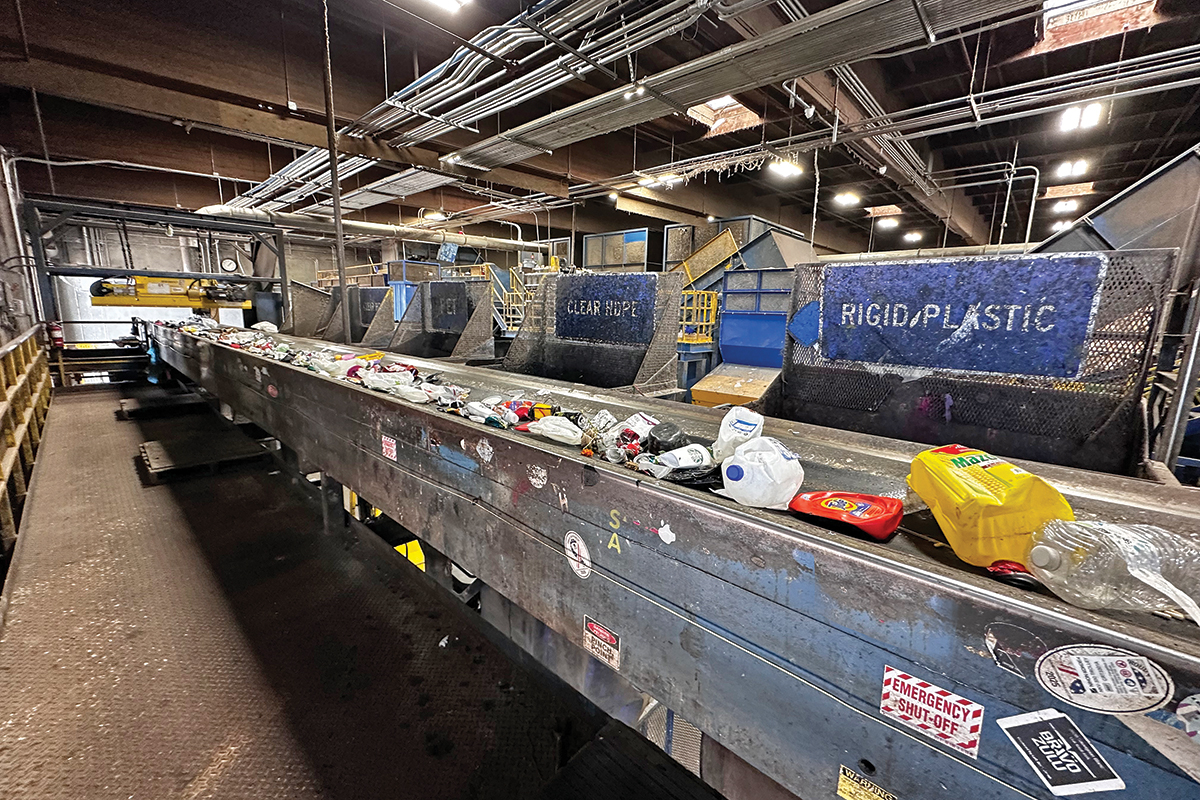
 Then it must be collected and sorted for recycling. APR has a sortation protocol to help ensure material flows into the proper bale. Following effective sortation, the material needs to be processed into resin pellets for use in new products. And all of these processes are working today.

But ultimately the existence of end markets is the glue that holds together the rest of the recycling process. The market monetizes the entire system. You don’t have customers, then you have no money to fund the system. It’s as simple as that.

4. Transparency in Recycling Rate Reporting

There’s also no shortage of plastic recycling rate estimates to choose from, which adds to consumer confusion. The numbers are frustrating, but it is important to note that very low plastic recycling numbers usually include all plastics produced, many of which were never made to be recycled. The plastic that people really talk about is plastic that’s in consumer packaging. That’s really where the issue is, and less than half of the plastics that are generated go into consumer packaging.

The reality is that at least 70% of what you put in your bin ultimately ends up getting recycled, with the rest largely having some sort of contamination – for example, a non-recyclable container mixed in with recyclable items. 

5. Consistency in Collection Programs

Regardless of the figures used, recycling rates are not great. There is work to be done, such as improving consistency among collection programs. For example, the thousands of US recycling programs vary widely in what materials they will accept. In essence, recyclers are being asked to create a business model where we’re never sure what material is being collected. 

At a minimum, APR encourages recycling programs to accept PET, HDPE and PP containers. If programs do that, at least we know we’re getting the same volume and the same consistency, and an infrastructure can be built on it. 

Steve Alexander is president and CEO of the Association of Plastic Recyclers, which owns Resource Recycling, Inc.

TweetShare
Steve Alexander

Steve Alexander

Related Posts

COM2 joins TERRA network as solar recycling expands 

byScott Snowden
April 17, 2026

TERRA has added COM2 Recycling Solutions to its certified network, widening its reach in solar panel, plastics, CRT glass and...

CPG Henkel raises PCR targets for 2030

byAntoinette Smith
April 16, 2026

Despite falling slightly short of 2025 goals, the Germany-based consumer brand aims to increase the share of recycled plastic in...

AI surge, dealmaking reshape  ITAD industry 

byScott Snowden
April 16, 2026

ITAD industry representatives spoke at the ReMA conference in Las Vegas about how AI tools, data center demand and consolidation...

Apple Watch on product box.

Wearables are coming and ITAD isn’t ready

byDavid Daoud
April 16, 2026

Wearable devices provide unique challenges at end of life.

Recycling Partnership CEO stepping down

byStefanie Valentic
April 15, 2026

Outgoing CEO Keefe Harrison will remain until August with the organization she built from the ground up.

Aduro losses nearly double on year

Aduro losses nearly double on year

byAntoinette Smith
April 15, 2026

Amid rising expenses for R&D, hiring and scaling efforts, nine-month YTD losses were CAD $14.416 million compared to a loss...

Load More
Next Post
Recycling vs. format: Policies push packaging beyond its comfort zone

Recycling vs. format: Policies push packaging beyond its comfort zone

Leading the Charge in Safe Battery Recycling
Sponsored

Leading the Charge in Safe Battery Recycling

byThe Battery Network
April 13, 2026

We’re connecting people, brands, and communities through one nationwide network built to make battery recycling safer, simpler, and more accessible...

Read moreDetails

More Posts

Solarcycle starts up Georgia recycling plant

S3399 signals a shift in how states are tackling solar panel waste

April 6, 2026
Closeup of Trex composite flooring installed in a restaurant.

Trex gears up for new plastic board plant

March 24, 2026
Machinex debuts organics co-collection system

Coastal partners with Machinex on four Florida MRF projects

March 10, 2026
Aduro losses nearly double on year

Aduro losses nearly double on year

April 15, 2026
SWANA reports increase in fatalities in 2022

Safety in focus: Reducing injury rates with technology

March 18, 2026

Royal Mint, Procurri partner for ITAD metals recovery

February 5, 2026
Flexibles players push for collaboration, balance

Flexibles players push for collaboration, balance

March 31, 2026

Quebec PRO reflects on first year of packaging EPR

March 30, 2026
ag plastics field

Ag industry holds potential for recycling feedstock

March 24, 2026
Unilever shifting focus to flexibles targets

Unilever shifting focus to flexibles targets

March 23, 2026
Load More

About & Publications

About Us

Staff

Archive

Magazine

Work With Us

Advertise
Jobs
Contact
Terms and Privacy

Newsletter

Get the latest recycling news and analysis delivered to your inbox every week. Stay ahead on industry trends, policy updates, and insights from programs, processors, and innovators.

Subscribe

Welcome Back!

Login to your account below

Forgotten Password?

Retrieve your password

Please enter your username or email address to reset your password.

Log In

Add New Playlist

No Result
View All Result
  • The Latest
  • Analysis
  • Recycling
  • E-Scrap
  • Plastics
  • Policy Now
  • Conferences
    • E-Scrap Conference
    • Plastics Recycling Conference
    • Resource Recycling Conference
    • Textiles Recovery Summit
  • Magazine
  • About Us
  • Advertise
  • Archive
  • Jobs
  • Staff
Subscribe
This website uses cookies. By continuing to use this website you are giving consent to cookies being used. Visit our Privacy and Cookie Policy.