



Resource Recycling
  • The Latest
  • Analysis
    • All
    • Certification Scorecard
    • Industry Announcements
    • Opinion

    ITAD is moving past its adolescent phase: beyond end-of-life

    Rainforest

    Inside the Circle: What the rainforest can teach us about EPR

    Closeup of a printed circuitboard

    Hardware demand puts new focus on parts harvesting

    Rare look inside the world’s largest plastics recycler

    Mass balance matters: Why different rules can lead to different outcomes 

    Certification Scorecard — Week of June 1, 2026

    IT asset disposition and electronics recycling: Now and then

    $60 billion in AI servers will create an ITAD challenge

  • Conferences
    • Resource Recycling Conference
    • Plastics Recycling Conference
    • E-Scrap: The Longevity Conference
    • Textiles Recovery Summit
  • Publications
    • E-Scrap News
    • Plastics Recycling Update
    • Policy Now
    • Resource Recycling
    • Other Topics
      • All Topics
      • Brand Owners
      • Critical Minerals
      • Glass
      • Grant Watch / RFPs
      • Markets
      • Organics
      • Packaging
      • Research
      • Technology
      • Textiles
Subscribe
No Result
View All Result
Resource Recycling
  • The Latest
  • Analysis
    • All
    • Certification Scorecard
    • Industry Announcements
    • Opinion

    ITAD is moving past its adolescent phase: beyond end-of-life

    Rainforest

    Inside the Circle: What the rainforest can teach us about EPR

    Closeup of a printed circuitboard

    Hardware demand puts new focus on parts harvesting

    Rare look inside the world’s largest plastics recycler

    Mass balance matters: Why different rules can lead to different outcomes 

    Certification Scorecard — Week of June 1, 2026

    IT asset disposition and electronics recycling: Now and then

    $60 billion in AI servers will create an ITAD challenge

  • Conferences
    • Resource Recycling Conference
    • Plastics Recycling Conference
    • E-Scrap: The Longevity Conference
    • Textiles Recovery Summit
  • Publications
    • E-Scrap News
    • Plastics Recycling Update
    • Policy Now
    • Resource Recycling
    • Other Topics
      • All Topics
      • Brand Owners
      • Critical Minerals
      • Glass
      • Grant Watch / RFPs
      • Markets
      • Organics
      • Packaging
      • Research
      • Technology
      • Textiles
Subscribe
No Result
View All Result
Resource Recycling
No Result
View All Result
Home Plastics

Testing ‘recyclability’ with an eye on sorting systems

byJared Paben
April 25, 2018
in Plastics
Testing ‘recyclability’ with an eye on sorting systems

Testing protocols developed by the Association of Plastic Recyclers give brand owners the chance to prove their plastic packaging can be correctly sorted at materials recovery facilities.

APR’s new “sorting potential protocols” aren’t specific to one packaging type; instead, they look at any type that may encounter problems at a materials recovery facility (MRF). Examples include small items that fall through screens, black plastics that are unrecognizable to near-infrared (NIR) sorters, and bottles with metal components that are grabbed by magnets or repelled by eddy current separators.

The protocols are just part of the APR Design Guide for Plastic Recyclability, which is becoming more widely recognized among brand owners, said Kara Pochiro, APR’s communications director.

“APR firmly believes that companies don’t knowingly design packaging that is not recyclable,” she said during an April 17 webinar. “They often just aren’t aware of the packaging components that can cause issues at the sorting process, at the reclaimer, or anywhere in between.”

Pochiro and Curt Cozart, president of Common Sense Solutions and a technical consultant to APR, explained the new protocols during the webinar.

Directions for testing

The protocols are relevant to packaging that, in the past, has proven difficult to assess for recyclability. The protocols give producers a chance to prove their packaging can be correctly sorted. Other criteria must still be met before APR considers the packaging “recyclable.”

In his presentation, Cozart provided an overview of how a standard MRF sorting line uses manual sorters, screens, magnets, eddy current separators and NIR sorters to get materials into the correct bale. The equipment is designed to sort based on a number of characteristics: two-dimensional versus three-dimensional, large versus small size, metallic versus non-metallic, and the chemical makeup of different polymers.

The sorting potential protocols align with those realities, Cozart said. The first protocol, released in December, tests whether a near-infrared sorter in a MRF can accurately identify and sort the package. The second, released in mid-January, looks at how compression in a collection truck affects the sorting of the item. The third, released in late-January, tests whether small items can be sorted correctly.

A fourth protocol tests whether plastic packaging with metal components can avoid being separated by magnets and eddy current separators. APR staff plan to upload that document soon.

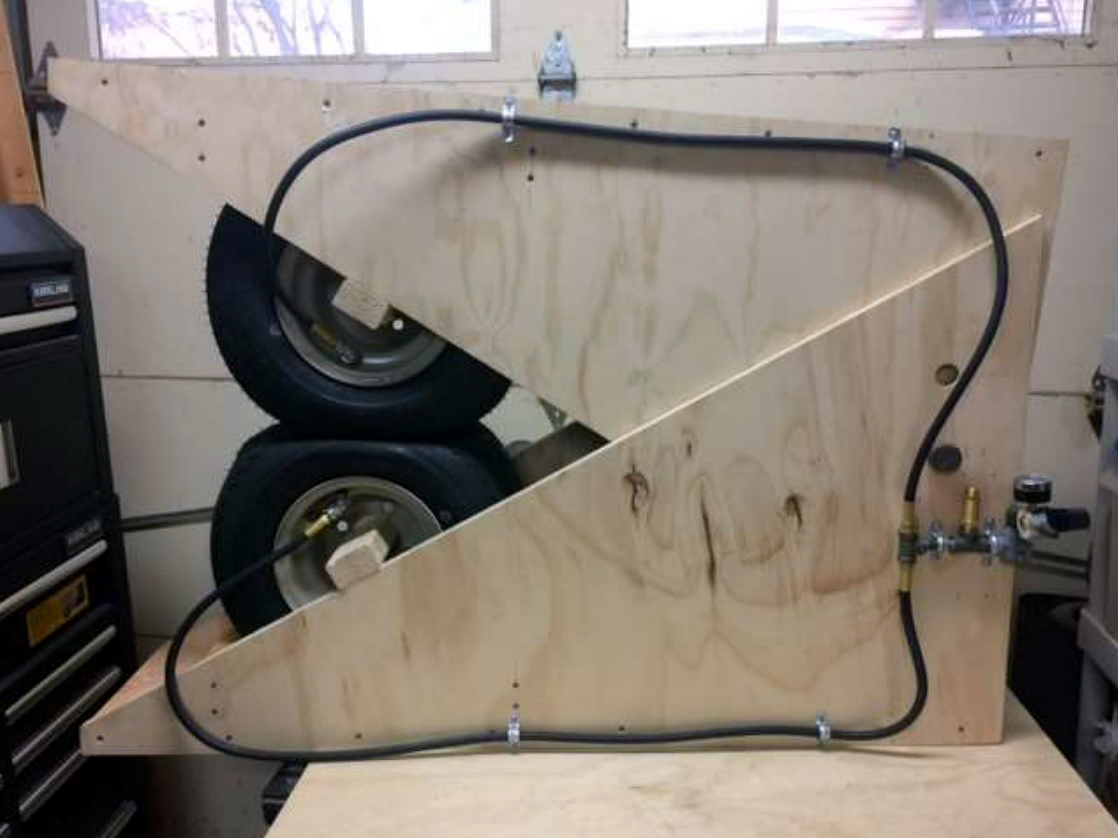
In the documents, APR provides instructions for building and using equipment for the testing. They include a machine that compresses plastic between two tires, simulating truck compaction. Other instructions explain how to build a rotating screening box testing whether small and compressed items will fall through the screens and end up in the glass or residue streams. They also set guidelines for how packaging should be sent through NIR sorters and magnets to achieve accurate results.

Cozart said a couple of labs have already built testing equipment to the specifications in the protocols. Pochiro said APR is working on compiling a list of facilities that have the ability to conduct the testing.

“There is one consumer brand company that has already created all of the machines, so they can do this within their own facility,” she said.

More coming

APR is still working to develop sorting protocols to determine whether plastic packaging can make it through a MRF’s 2-D/3-D sorting process. For example, if plastic packaging approximates the shape of paper or cardboard, or if a truck compacts it into that shape, screening equipment may sort it with fibers.

“If something looks like paper or cardboard, it doesn’t matter what that material is made out of,” Cozart said. “It’s the size and shape that’s really defining whether that material is pulled out by the paper stream or the cardboard stream.”

The 2-D/3-D protocols will be coming out later this year, he said.

Pochiro and Cozart cautioned that passing the sorting tests doesn’t make an item recyclable under APR’s definitions. For example, consumers must have a certain level of recycling access for that item. And even if packaging can be correctly sorted by a MRF, it may be detrimental to a plastics reclaimer’s process. There also has to be an end market for it.

“The sorting potential protocols are only a portion of what’s required to categorize something in the Design Guide for Plastics Recyclability,” Cozart said.
 

Tags: Hard-to-Recycle MaterialsIndustry Groups
TweetShare
Jared Paben

Jared Paben

Related Posts

House resolution aims to make recyclability central to product design

NY EPR bill fails to advance after third try

byStefanie Valentic
June 8, 2026

This marks the third session in which the bill cleared the Senate only to stall in the Assembly.

PureCycle maintains price expectations for its R-PP resin

EPR clarity is driving brand demand, says PureCycle CEO

byStefanie Valentic
June 1, 2026

With SB 54 registered and lawsuits already filed, PureCycle CEO Dustin Olsen says the fight over what counts as recycling...

Film and flexibles recycling needs collaboration

byBrian Clark Howard
May 29, 2026

Experts from the Film & Flex Recycling Alliance, US Flexible Film Initiative (USFFI), Delterra, The Recycling Partnership and Circular Action...

California extends compostable labeling law

California bills crack down on false recycling, compostable claims

byStefanie Valentic
May 29, 2026

Three bills targeting recycling and compostables labeling have cleared key hurdles as California's session deadline nears.

Chemical recycling roundup: New plant, partnerships

Polystyrene’s circular future is already taking shape

byJustin Riney, Polystyrene Recycling Alliance
May 29, 2026

Justin Riney of the Polystyrene Recycling Alliance explores a study conducted with the Resource Recycling Systems consultancy.

California provides funding to boost thermoform recycling

APR and ANIPAC promote recycling in Mexico

byBrian Clark Howard
May 27, 2026

The two organizations are working to better harmonize the handling of plastics in North America.

Load More
Next Post

EPA's former solid waste chief decries new leadership

More Posts

Recycling industry addresses Beyond Plastics report

Recycling industry addresses Beyond Plastics report

May 26, 2026
Fire at an EMR recycling facility in Camden, New Jersey May 29, 2026.

EMR faces shutdown calls after numerous fires

June 2, 2026
House resolution aims to make recyclability central to product design

NY EPR bill fails to advance after third try

June 8, 2026
IT asset disposition and electronics recycling: Now and then

$60 billion in AI servers will create an ITAD challenge

June 3, 2026
CalRecycle withdraws proposed regs for SB 54

Oceana, NRDC, CAW sue CalRecycle over SB 54 regs

June 5, 2026
The independent ITAD at a crossroads

DMD acquires ITAD firm Lifespan, outlines acquisition strategy

June 2, 2026
Our top stories from June 2021

Colorado advances EV battery EPR law

June 3, 2026
In My Opinion: Comparing the nation’s first packaging EPR laws

What Maine’s vape EPR law means for recyclers

June 4, 2026
Circular Materials to supply PlasCred chem recycling plant

Circular Materials to supply PlasCred chem recycling plant

June 4, 2026
Rare look inside the world’s largest plastics recycler

Mass balance matters: Why different rules can lead to different outcomes 

June 5, 2026
Load More

About & Publications

About Us

Staff

Archive

Magazine

Work With Us

Advertise
Jobs
Contact
Terms and Privacy

Newsletter

Get the latest recycling news and analysis delivered to your inbox every week. Stay ahead on industry trends, policy updates, and insights from programs, processors, and innovators.

Subscribe

Welcome Back!

Login to your account below

Forgotten Password?

Retrieve your password

Please enter your username or email address to reset your password.

Log In

Add New Playlist

No Result
View All Result
  • The Latest
  • Analysis
  • Recycling
  • E-Scrap
  • Plastics
  • Policy Now
  • Conferences
    • E-Scrap Conference
    • Plastics Recycling Conference
    • Resource Recycling Conference
    • Textiles Recovery Summit
  • Magazine
  • About Us
  • Advertise
  • Archive
  • Jobs
  • Staff
Subscribe
This website uses cookies. By continuing to use this website you are giving consent to cookies being used. Visit our Privacy and Cookie Policy.