




Resource Recycling
  • The Latest
  • Analysis
    • All
    • Certification Scorecard
    • Industry Announcements
    • Opinion

    Certification Scorecard — Week of April 6, 2026

    Closed Loop Partners acquires Sutter Metals, connecting electronics disposition to metals recovery

    Certification Scorecard — Week of March 30, 2026

    Industry announcements for January 2026

    Industry announcements for April 2026

    Certification scorecard – Week of March 23, 2026

    Certification Scorecard – Week of March 16, 2026

    Groups identify recovered plastics users in the Northeast

    Bale pricing for recycled plastics diverges

    Why global ITAD is stranded in the Gulf

    Why global ITAD is stranded in the Gulf

    Certification scorecard for the week of March 9, 2026

  • Conferences
  • Publications

    Other Topics

    Textiles
    Organics
    Packaging
    Glass
    Brand Owners

    Metals
    Technology
    Research
    Markets
    Grant Watch

    All Topics

Subscribe
No Result
View All Result
Resource Recycling
  • The Latest
  • Analysis
    • All
    • Certification Scorecard
    • Industry Announcements
    • Opinion

    Certification Scorecard — Week of April 6, 2026

    Closed Loop Partners acquires Sutter Metals, connecting electronics disposition to metals recovery

    Certification Scorecard — Week of March 30, 2026

    Industry announcements for January 2026

    Industry announcements for April 2026

    Certification scorecard – Week of March 23, 2026

    Certification Scorecard – Week of March 16, 2026

    Groups identify recovered plastics users in the Northeast

    Bale pricing for recycled plastics diverges

    Why global ITAD is stranded in the Gulf

    Why global ITAD is stranded in the Gulf

    Certification scorecard for the week of March 9, 2026

  • Conferences
  • Publications

    Other Topics

    Textiles
    Organics
    Packaging
    Glass
    Brand Owners

    Metals
    Technology
    Research
    Markets
    Grant Watch

    All Topics

Subscribe
No Result
View All Result
Resource Recycling
No Result
View All Result
Home Plastics

Factors behind a painful year for plastics recycling

Colin StaubbyColin Staub
May 31, 2018
in Plastics

An Ontario group recently looked at market factors shaping the domestic plastics recycling industry in 2017, and it offered predictions about where things are headed.

According to research commissioned by the Continuous Improvement Fund (CIF), major market trends that shaped the year included rising virgin material costs, evaporating export markets, ballooning transportation costs, and diminishing supply and demand. CIF is a joint industry-government initiative funded by brand owners as part of Ontario’s extended producer responsibility program for residential recycling.

It was a challenging year for the recycling industry, and although some of the struggles have been framed as opportunities for investment, the report offers a less-than-rosy outlook.

“Given the above forecasts, combined with a downturn in U.S. recyclate markets, it would be a stretch to believe that any significant investment in traditional technologies will be made to address this market shortfall,” the report states.

The factors that contributed are as follows:

  • Low energy costs have spurred a flood of new investment in virgin plastics production. Plastics Recycling Update previously reported on several of the U.S. expansion projects that are underway. “There will likely be a dramatic increase in the production of virgin resins during the next three years, leading to lower, possibly much lower, prices,” according to the report. It adds that PE will likely feel the biggest impact, followed by PET and PP. “The full impact of shale energy investments are expected to start to bite in 2018 and carry forward past 2020,” the report notes.
  • China’s import restrictions shaped the export market during the past year. The report notes this has “effectively eliminated access to the Chinese recycled plastics markets,” and that so far, there doesn’t appear to be an end date for the restrictions. The paper cites a growing trend of Chinese companies investing in the U.S. to process material here and ship it to China as pellet; however, the report says “the economics for these types of ventures have always been questionable.”
  • Supply and demand on a wider level are a problem as well. On the supply side, collection volumes have fallen for PET and HDPE bottles. And contamination in plastic bales has increased, according to the report. Meanwhile, falling virgin prices and tough-to-find end markets are straining demand for some low-value recycled plastics. Clean film will likely continue to find use in the bag-to-bag and composite lumber sectors, the report predicts, although prices could tumble. But highly contaminated film is a different story, particularly in the face of Chinese buyers “exiting the market,” the report states. “Film bales generated by MRFs will have great difficulty finding markets, and those markets that might emerge will most likely have no value especially as virgin prices continue to slip,” according to CIF. As for harder-to-recycle materials, which sometimes cause bale contamination, CIF offered a stark opinion on the place of those materials in the stream. “Eliminating PVC, PS, PLA and PETG from the plastic packaging stream would significantly improve the economics and quality of PET, PE and PP downstream recyclate,” the group wrote. “There is no application that currently uses these resins that could not be replaced by a recyclable or recycling friendly alternative.”
  • It was a year marked by rising transportation costs, and in some cases, industry insiders have told Plastics Recycling Update the freight costs have been more damaging than the loss of China as an export market. The CIF study cites a shortage of drivers, compensation increasing in order to attract new hires, additional electronic logging device requirements and other factors pushing costs higher. Trucking realities for the plastics recycling industry, according to the report, are “changing rapidly.” The plastics recycling sector will be more affected than virgin material producers, according to the report, because the virgin material sector more frequently relies on rail.

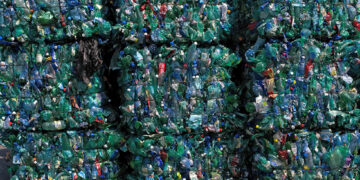
Photo credit: Phongphan/Shutterstock
 

Tags: MarketsResearch
TweetShare
Colin Staub

Colin Staub

Colin Staub was a reporter and associate editor at Resource Recycling until August 2025.

Related Posts

Rice researchers use lemon juice to boost battery recycling

byScott Snowden
April 9, 2026

Rice researchers reported a battery recycling process that uses plasma and mild solvents to recover most metals from black mass...

Trafigura signs $1.1b deal for recycled battery metals

byScott Snowden
April 8, 2026

Trafigura signs a $1.1b deal with Nth Cycle for recycled nickel and lithium, as refining gaps and feedstock limits shape...

Recycled copper output climbs as market shows surplus

byScott Snowden
April 6, 2026

Recycled copper output rose about 11.5% in January as exchange inventories hit their highest level since 2003 and ICSG data...

With RPET in crisis, focus turns to solutions

With RPET in crisis, focus turns to solutions

byAntoinette Smith
April 2, 2026

Stakeholders from across the RPET value chain share concrete solutions for the short term to help prevent further loss of...

Packaging sector sees shift from AI pilots to wider use

byScott Snowden
April 1, 2026

AI adoption is expanding across packaging operations as costs fall and use cases widen, though concerns around accountability, ROI and...

Report pegs fire losses at $2.5b in US and Canada recycling industry

byScott Snowden
March 27, 2026

A new fire report estimates $2.5b in damage across US and Canadian recycling facilities in 2025, with lithium-ion batteries still...

Load More
Next Post
Why Vietnam is shutting out scrap plastic

Why Vietnam is shutting out scrap plastic

More Posts

PCA closing Richmond plant

PCA closing Richmond plant

April 2, 2026
With RPET in crisis, focus turns to solutions

With RPET in crisis, focus turns to solutions

April 2, 2026
Wineries help create model for film recycling

Wineries help create model for film recycling

April 7, 2026
Oregon’s Recycling Modernization Act faces injunction

Why EPR’s biggest obstacle might not be legislation

April 6, 2026

Apparel retailer organization challenges SB 707 textile PRO selection

April 2, 2026
WM rolling out curbside acceptance of PP cups 

APR releases first semiannual Design Guide update

April 3, 2026
End markets, policy key to RPET viability

End markets, policy key to RPET viability

April 8, 2026

Independents complement primary PRO in state EPR

April 6, 2026
Minnesota State Capitol

Minnesota watches Oregon as EPR implementation advances

April 6, 2026
Waste Connection recycling cart in The Dalles, Oregon

First Oregon community expands curbside recycling with EPR funding

April 1, 2026
Load More

About & Publications

About Us

Staff

Archive

Magazine

Work With Us

Advertise
Jobs
Contact
Terms and Privacy

Newsletter

Get the latest recycling news and analysis delivered to your inbox every week. Stay ahead on industry trends, policy updates, and insights from programs, processors, and innovators.

Subscribe

Welcome Back!

Login to your account below

Forgotten Password?

Retrieve your password

Please enter your username or email address to reset your password.

Log In

Add New Playlist

No Result
View All Result
  • The Latest
  • Analysis
  • Recycling
  • E-Scrap
  • Plastics
  • Policy Now
  • Conferences
    • E-Scrap Conference
    • Plastics Recycling Conference
    • Resource Recycling Conference
    • Textiles Recovery Summit
  • Magazine
  • About Us
  • Advertise
  • Archive
  • Jobs
  • Staff
Subscribe
This website uses cookies. By continuing to use this website you are giving consent to cookies being used. Visit our Privacy and Cookie Policy.