



Resource Recycling
  • The Latest
  • Analysis
    • All
    • Certification Scorecard
    • Industry Announcements
    • Opinion

    ITAD is moving past its adolescent phase: beyond end-of-life

    Rainforest

    Inside the Circle: What the rainforest can teach us about EPR

    Closeup of a printed circuitboard

    Hardware demand puts new focus on parts harvesting

    Rare look inside the world’s largest plastics recycler

    Mass balance matters: Why different rules can lead to different outcomes 

    Certification Scorecard — Week of June 1, 2026

    IT asset disposition and electronics recycling: Now and then

    $60 billion in AI servers will create an ITAD challenge

  • Conferences
    • Resource Recycling Conference
    • Plastics Recycling Conference
    • E-Scrap: The Longevity Conference
    • Textiles Recovery Summit
  • Publications
    • E-Scrap News
    • Plastics Recycling Update
    • Policy Now
    • Resource Recycling
    • Other Topics
      • All Topics
      • Brand Owners
      • Critical Minerals
      • Glass
      • Grant Watch / RFPs
      • Markets
      • Organics
      • Packaging
      • Research
      • Technology
      • Textiles
Subscribe
No Result
View All Result
Resource Recycling
  • The Latest
  • Analysis
    • All
    • Certification Scorecard
    • Industry Announcements
    • Opinion

    ITAD is moving past its adolescent phase: beyond end-of-life

    Rainforest

    Inside the Circle: What the rainforest can teach us about EPR

    Closeup of a printed circuitboard

    Hardware demand puts new focus on parts harvesting

    Rare look inside the world’s largest plastics recycler

    Mass balance matters: Why different rules can lead to different outcomes 

    Certification Scorecard — Week of June 1, 2026

    IT asset disposition and electronics recycling: Now and then

    $60 billion in AI servers will create an ITAD challenge

  • Conferences
    • Resource Recycling Conference
    • Plastics Recycling Conference
    • E-Scrap: The Longevity Conference
    • Textiles Recovery Summit
  • Publications
    • E-Scrap News
    • Plastics Recycling Update
    • Policy Now
    • Resource Recycling
    • Other Topics
      • All Topics
      • Brand Owners
      • Critical Minerals
      • Glass
      • Grant Watch / RFPs
      • Markets
      • Organics
      • Packaging
      • Research
      • Technology
      • Textiles
Subscribe
No Result
View All Result
Resource Recycling
No Result
View All Result
Home Plastics

PET recycling technologies get EU nod

byJared Paben
June 1, 2020
in Plastics
PET recycling technologies get EU nod
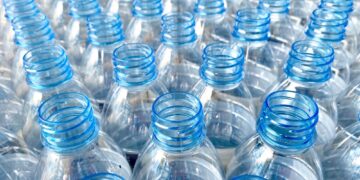
A group of companies recently received approval to use their recycling technologies to create recycled plastic for use in food packaging.| Dolores M. Harvey/Shutterstock

The European Food Safety Authority gave four companies approval to recycle PET into food packaging using Erema and Starlinger technologies. Meanwhile, an application from Veolia was rejected.

The Panel on Food Contact Materials, Enzymes and Processing Aids (CEP), which is part of the European Food Safety Authority (EFSA), issued five opinions on PET recycling processes in recent months.

In the European Union, recycled plastics and additives can only be used in food and beverage packaging if they’re first reviewed by EFSA for safety. Recycling companies submit applications to individual countries, which apply to the EFSA on their behalf. In all cases below, the German Federal Office for Consumer Protection and Food Safety submitted the applications on behalf of the companies.

The following is a semi-annual roundup of recent opinions from CEP. Plastics Recycling Update published its previous EFSA roundup in December.

Approval given for Starlinger technology

On Feb. 4, the CEP issued an opinion allowing Russian company PolyER to use Starlinger deCON technology to recycle post-consumer PET into flakes for use in bottles or thermoforms.

In the first step, scrap containers are processed into hot caustic washed and dried flakes, which are then pre-heated in batch reactors by a flow of hot gas. After that, the flakes are introduced into a solid-state polycondensation (SSP) continuous reactor, where they’re exposed to high temperature and a combination of vacuum and gas flow. That decontaminates them and boosts their intrinsic viscosity.

The resulting flakes can be converted into 100% RPET thermoforms or bottles for any type of food or drink, although trays are not intended to be heated in a microwave.

Erema basic technology gets nod

On Feb. 5, the CEP approved three companies to use versions of the Erema basic technology to recycle post-consumer PET for food-contact applications. It published approvals for three Germany companies: RE-PET, Buergofol and STF Recycling.

In each case, the input material is hot caustic washed and dried PET flakes from post-consumer containers. The flakes are continuously fed into a reactor equipped with a bottom-mounted rotating mixing device. They’re crystallized and decontaminated under high temperature and vacuum. Then, the flakes are fed into the extruder, where they’re melted under atmospheric pressure and solid contaminants are filtered. In the case of RE-PET and STF Recycling, the plastic will then be pelletized; in the case of Buergofol, it will be extruded into sheets.

The panel determined RE-PET’s recycled pellets can be used at up to 70% content in water bottles and up to 100% content in other product packaging, Buergofol’s sheets can be used to make 100% RPET thermoforms to hold food and drink (except drinking water) and STF Recycling’s pellets can be used in 100% RPET food and drink packaging.

Panel declines to OK Veolia application

On April 29, CEP published an opinion concluding that Veolia PET Germany had not submitted enough detailed information about its Veolia URRC process to demonstrate it produces PET flakes that are safe for food and drink packaging.

“Based on the information submitted to EFSA, the applicant has not demonstrated in an adequately performed challenge test or by other appropriate evidence that the recycling process is able to reduce contamination of the PET flake input to a concentration that does not pose a risk to human health,” the CEP wrote.

Veolia PET Germany applied to use its Veolia URRC process to recycle post-consumer food-grade PET containers into flakes. The technology was formerly known as “modified hybrid URRC UnPET,” according to the opinion, and the panel previously evaluated the technology, but the latest application includes modified operating parameters.

In the URCC process, scrap PET containers, mainly bottles, are processed into hot caustic washed and dried flakes, which are fed into the URRC technology. The process involves three main steps. First, the flakes are coated with a sodium hydroxide or potassium hydroxide solution and heated in a continuous mixing screw. Then, they are pre-dried in a continuous reactor and heated to a higher temperature than during the first step. Finally, the flakes are treated in a continuous rotary oven under high temperature and a dry air counterflow.

The applicant stated that “decontamination occurs by saponification/depolymerisation of a surface layer of the flakes and by diffusion of contaminants towards the surface followed by removal by air flow,” according to the publication.

But CEP said it wasn’t able to get detailed enough descriptions of all of the steps involved, it lacked information about the decontamination through depolymerization, and it questioned whether the tests conducted at lab scale were representative of industrial-scale recycling.

To receive the latest news and analysis about plastics recycling technologies, sign up now for our free monthly Plastics Recycling Update: Technology Edition e-newsletter.

 

Tags: EuropePETTechnology
TweetShare
Jared Paben

Jared Paben

Related Posts

GP Recycling offers on-ramp for smaller recyclers

GP Recycling offers on-ramp for smaller recyclers

byAntoinette Smith
June 9, 2026

The company's hubbIT platform is a way for smaller generators to sell plastic, glass and metal bottles to the brokerage,...

DOE commits federal funds toward critical minerals

ABTC wins DOE appeal for Tonopah Flats lithium refinery project

byStefanie Valentic
June 8, 2026

ABTC has won back a DOE grant that was among hundreds terminated last fall.

Closeup of a printed circuitboard

Hardware demand puts new focus on parts harvesting

byDavid Daoud
June 5, 2026

Several key electronics parts are seeing tight supplies, potentially making for opportunities for the ITAD sector.

IT asset disposition and electronics recycling: Now and then

$60 billion in AI servers will create an ITAD challenge

byDavid Daoud
June 3, 2026

An AI growth boom suggests that a large number of devices will reach end-of-life around 2029-2031.

The independent ITAD at a crossroads

DMD acquires ITAD firm Lifespan, outlines acquisition strategy

byDavid Daoud
June 2, 2026

DMD Systems Recovery is expanding through acquisitions, starting with a business bought from Bluum Technology.

War, not demand driving polymer pricing

War, not demand driving polymer pricing

byAntoinette Smith
June 2, 2026

While prices for recycled commodities are tracking rises in virgin markets, few transactions are occurring, said an ICIS analyst.

Load More
Next Post

City finds alternative outlet for EnergyBag plastics

More Posts

Industry announcements for January 2026

Industry announcements for June 2026

June 1, 2026
California extends compostable labeling law

California bills crack down on false recycling, compostable claims

May 29, 2026

Three-bill package aims to revamp Michigan’s bottle return system

June 9, 2026
House resolution aims to make recyclability central to product design

NY EPR bill fails to advance after third try

June 8, 2026
Illinois expands battery recycling as lithium-ion fire concerns mount

Illinois expands battery recycling as lithium-ion fire concerns mount

May 27, 2026
How electronics legislation fared this legislative season

NY sends repairability labeling bill to governor

June 8, 2026
War, not demand driving polymer pricing

War, not demand driving polymer pricing

June 2, 2026
Packaging policy is not one-size-fits-all

Packaging policy is not one-size-fits-all

June 1, 2026

Returns are a goldmine of information

May 27, 2026
Recycling industry addresses Beyond Plastics report

Recycling industry addresses Beyond Plastics report

May 26, 2026
Load More

About & Publications

About Us

Staff

Archive

Magazine

Work With Us

Advertise
Jobs
Contact
Terms and Privacy

Newsletter

Get the latest recycling news and analysis delivered to your inbox every week. Stay ahead on industry trends, policy updates, and insights from programs, processors, and innovators.

Subscribe

Welcome Back!

Login to your account below

Forgotten Password?

Retrieve your password

Please enter your username or email address to reset your password.

Log In

Add New Playlist

No Result
View All Result
  • The Latest
  • Analysis
  • Recycling
  • E-Scrap
  • Plastics
  • Policy Now
  • Conferences
    • E-Scrap Conference
    • Plastics Recycling Conference
    • Resource Recycling Conference
    • Textiles Recovery Summit
  • Magazine
  • About Us
  • Advertise
  • Archive
  • Jobs
  • Staff
Subscribe
This website uses cookies. By continuing to use this website you are giving consent to cookies being used. Visit our Privacy and Cookie Policy.