



Resource Recycling
  • The Latest
  • Analysis
    • All
    • Certification Scorecard
    • Industry Announcements
    • Opinion
    SERI works to restore faith in certifications

    Building a defensible E-scrap evidence file

    tires

    The most important decision in tire recycling happens before the shredder

    Intel sign outside of company building.

    Intel’s CapEx tops $20B on server demand while PC volume shrinks

    Google sign on company building with blue sky and clouds above.

    Inside Alphabet’s Q2 results: More capital spending and cloud backlog

    Alpek closing Pennsylvania RPET plant

    Alpek seizing on war-related opportunity 

    Our top stories from March 2023

    Iron Mountain’s data center report: Strong on power, quiet on hardware

  • Conferences
    • Resource Recycling Conference
    • Plastics Recycling Conference
    • E-Scrap: The Longevity Conference
    • Textiles Recovery Summit
  • Publications
    • E-Scrap News
    • Plastics Recycling Update
    • Policy Now
    • Resource Recycling
    • Other Topics
      • All Topics
      • Brand Owners
      • Critical Minerals
      • Glass
      • Grant Watch / RFPs
      • Markets
      • Organics
      • Packaging
      • Research
      • Technology
      • Textiles
Subscribe
No Result
View All Result
Resource Recycling
  • The Latest
  • Analysis
    • All
    • Certification Scorecard
    • Industry Announcements
    • Opinion
    SERI works to restore faith in certifications

    Building a defensible E-scrap evidence file

    tires

    The most important decision in tire recycling happens before the shredder

    Intel sign outside of company building.

    Intel’s CapEx tops $20B on server demand while PC volume shrinks

    Google sign on company building with blue sky and clouds above.

    Inside Alphabet’s Q2 results: More capital spending and cloud backlog

    Alpek closing Pennsylvania RPET plant

    Alpek seizing on war-related opportunity 

    Our top stories from March 2023

    Iron Mountain’s data center report: Strong on power, quiet on hardware

  • Conferences
    • Resource Recycling Conference
    • Plastics Recycling Conference
    • E-Scrap: The Longevity Conference
    • Textiles Recovery Summit
  • Publications
    • E-Scrap News
    • Plastics Recycling Update
    • Policy Now
    • Resource Recycling
    • Other Topics
      • All Topics
      • Brand Owners
      • Critical Minerals
      • Glass
      • Grant Watch / RFPs
      • Markets
      • Organics
      • Packaging
      • Research
      • Technology
      • Textiles
Subscribe
No Result
View All Result
Resource Recycling
No Result
View All Result
Home Plastics

AI helps US compounder detect recycled resin odors

byJared Paben
December 15, 2021
in Plastics
AI helps US compounder detect recycled resin odors
Digital nose technology developed by French company Aryballe provides consistent, AI-powered analysis while different humans experience smells differently. | Courtesy of Aryballe

Artificial intelligence is already used to recognize how different scrap plastics look. Now, a Michigan compounder is testing AI to evaluate how recycled resins smell.

Using a digital nose technology developed by French company Aryballe, Asahi Kasei Plastics North America (APNA) is evaluating whether different recycled resins have odors. The work at a  APNA facility in Fowlerville, Mich. serves the company’s effort to use recycled resin in vehicle components.

“With the OEM odor standards, we want to make sure we are easily able to use recycled products,” said Samantha Cronin, marketing communications manager for APNA. “This could potentially be a way to identify material that can go in our products while meeting the automotive emission requirements.”

AI is already used in materials recovery facilities (MRFs) and plastics recycling plants to sort scrap plastics. In those cases, cameras are used to record images of items on a conveyor belt, and AI software compares their visual characteristics to images in a massive database to quickly categorize them so they can be properly sorted by a robot or optical sorter.

But instead of eyes, the technology from Aryballe, which was founded by biochemists in 2014, replaces the human nose. In an interview with Plastics Recycling Update, Fanny Turlure, global product manager at the Grenoble, France-based company, noted that different humans experience smells differently, and sense of smell can be impacted by sickness and runny noses.

Aryballe’s technology uses a small device to capture smells, generally over a period of 5 to 10 seconds. The readings are converted into a unique signature, and AI-powered software then matches the signature with odor signatures in a database, she explained.

The goal is to track odors in a traceable and transparent way, Turlure explained.

“There’s already a number of use cases where you can use this type of technology,” she said, especially evaluating using recovered materials to create desired scents in fragrance products. The technology can be used by the fragrance industry to replace panels of human testers, she said.

For the automotive industry, odors are a big part of the experience for the consumer. Hyundai Motor America faced a class-action lawsuit earlier this year because of four odors in its Palisade SEL and Limited trim models. The odor, compared to garlic and rotten eggs, was ultimately traced to the headrest. The lawsuit has since been dismissed.

Hyundai, incidentally, was one of the companies that invested in Aryballe over the past few years. Business Korea reported the company put 1.16 million euros into Aryballe.

Turlure noted that using recycled plastic is huge in the automotive industry, and Asahi Kasei Plastics has goals for producing recycled resin for use in auto components. Part of Japanese chemical conglomerate Asahi Kasei, APNA produces compounds for use in a variety of durable goods.

Cronin said APNA is “evaluating it as a screening tool to get more information on the recycled material when it arrives.”

She noted that as demand for recycled plastic grows, APNA is less likely to have consistent streams.

“Supply will be sparse and when there are recyclers competing for the same feed stream, we may not always get recyclables from the same sources,” she said. “The recyclers themselves may have trouble securing supply.”

 

Tags: ProcessorsTechnology
TweetShare
Jared Paben

Jared Paben

Related Posts

Intel sign outside of company building.

Intel’s CapEx tops $20B on server demand while PC volume shrinks

byDavid Daoud
July 29, 2026

As a result ITAD firms should plan for two separate asset cycles.

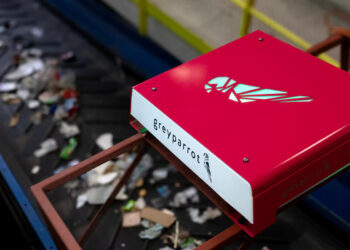
Greyparrot positions waste intel as key to effective EPR

Greyparrot secures $27m for growing AI waste data

byAntoinette Smith
July 28, 2026

The AI waste intelligence firm has now raised a total of $60 million to help expand its Analyzer network and...

Google sign on company building with blue sky and clouds above.

Inside Alphabet’s Q2 results: More capital spending and cloud backlog

byDavid Daoud
July 28, 2026

The tech giant spent $44.9 billion in a single quarter building AI infrastructure, with major implications for the ITAD space.

Our top stories from March 2023

Iron Mountain’s data center report: Strong on power, quiet on hardware

byDavid Daoud
July 24, 2026

The company’s 2025 Sustainability Overview tells a story both in the data it presents and in the data it omits.

Rare earth processor lands $5.1M in Defense funds

ERI, Cyclic Materials team up on e-scrap

byDavid Daoud
July 21, 2026

Partnership pairs one of the country's largest electronics recyclers with a rare earth recovery specialist, aiming to build a domestic...

What the NAND flash crunch means for remarketing, refurbishment and residual values

Telamon acquires ITAD consultancy Retire-IT

byDavid Daoud
July 9, 2026

Telamon will be retaining Retire-IT founder Kyle Marks, who built that business over 21 years.

Load More
Next Post

Curbside HDPE prices continue steep declines

2026 Buyers’ Guide

Equipment, services and technology suppliers serving the recycling industry.

Browse the Guide

More Posts

State policy is redefining plastics recycling in the US

State policy is redefining plastics recycling in the US

February 19, 2026
California bill would set up EPR for batteries

California bill would set up EPR for batteries

May 12, 2022
Closeup of a printed circuitboard

Hardware demand puts new focus on parts harvesting

June 5, 2026
Apple store

Apple leads on inputs, faces questions on ITAD

May 1, 2026
Analysis: circular design still elusive in laptops

PC shipments grew in Q1, but questions remain

April 23, 2026

In other news: May 2, 2016

May 2, 2016

Recycled copper output climbs as market shows surplus

April 6, 2026

ITAD is moving past its adolescent phase: beyond end-of-life

June 10, 2026
Server resale values surge in AI-driven markets

Server resale values surge in AI-driven markets

January 22, 2026
TÜV rolls out traceability audits for recycled inputs

TÜV rolls out traceability audits for recycled inputs

January 14, 2026
Load More

About & Publications

About Us

Staff

Archive

Magazine

Work With Us

Advertise
Jobs
Contact
Terms and Privacy

Newsletter

Get the latest recycling news and analysis delivered to your inbox every week. Stay ahead on industry trends, policy updates, and insights from programs, processors, and innovators.

Subscribe

Welcome Back!

Login to your account below

Forgotten Password?

Retrieve your password

Please enter your username or email address to reset your password.

Log In

Add New Playlist

No Result
View All Result
  • The Latest
  • Analysis
  • Recycling
  • E-Scrap
  • Plastics
  • Policy Now
  • Conferences
    • E-Scrap Conference
    • Plastics Recycling Conference
    • Resource Recycling Conference
    • Textiles Recovery Summit
  • Magazine
  • About Us
  • Advertise
  • Archive
  • Jobs
  • Staff
Subscribe
This website uses cookies. By continuing to use this website you are giving consent to cookies being used. Visit our Privacy and Cookie Policy.