




Resource Recycling
  • The Latest
  • Analysis
    • All
    • Certification Scorecard
    • Industry Announcements
    • Opinion
    SERI works to restore faith in certifications

    Building a defensible E-scrap evidence file

    tires

    The most important decision in tire recycling happens before the shredder

    Intel sign outside of company building.

    Intel’s CapEx tops $20B on server demand while PC volume shrinks

    Google sign on company building with blue sky and clouds above.

    Inside Alphabet’s Q2 results: More capital spending and cloud backlog

    Alpek closing Pennsylvania RPET plant

    Alpek seizing on war-related opportunity 

    Our top stories from March 2023

    Iron Mountain’s data center report: Strong on power, quiet on hardware

  • Conferences
    • Resource Recycling Conference
    • Plastics Recycling Conference
    • E-Scrap: The Longevity Conference
    • Textiles Recovery Summit
  • Publications
    • E-Scrap News
    • Plastics Recycling Update
    • Policy Now
    • Resource Recycling
    • Other Topics
      • All Topics
      • Brand Owners
      • Critical Minerals
      • Glass
      • Grant Watch / RFPs
      • Markets
      • Organics
      • Packaging
      • Research
      • Technology
      • Textiles
Subscribe
No Result
View All Result
Resource Recycling
  • The Latest
  • Analysis
    • All
    • Certification Scorecard
    • Industry Announcements
    • Opinion
    SERI works to restore faith in certifications

    Building a defensible E-scrap evidence file

    tires

    The most important decision in tire recycling happens before the shredder

    Intel sign outside of company building.

    Intel’s CapEx tops $20B on server demand while PC volume shrinks

    Google sign on company building with blue sky and clouds above.

    Inside Alphabet’s Q2 results: More capital spending and cloud backlog

    Alpek closing Pennsylvania RPET plant

    Alpek seizing on war-related opportunity 

    Our top stories from March 2023

    Iron Mountain’s data center report: Strong on power, quiet on hardware

  • Conferences
    • Resource Recycling Conference
    • Plastics Recycling Conference
    • E-Scrap: The Longevity Conference
    • Textiles Recovery Summit
  • Publications
    • E-Scrap News
    • Plastics Recycling Update
    • Policy Now
    • Resource Recycling
    • Other Topics
      • All Topics
      • Brand Owners
      • Critical Minerals
      • Glass
      • Grant Watch / RFPs
      • Markets
      • Organics
      • Packaging
      • Research
      • Technology
      • Textiles
Subscribe
No Result
View All Result
Resource Recycling
No Result
View All Result
Home Plastics

Closed Loop study breaks down chemical recycling terms

Marissa HeffernanbyMarissa Heffernan
September 26, 2023
in Plastics
Encina chemical recycling project moves ahead
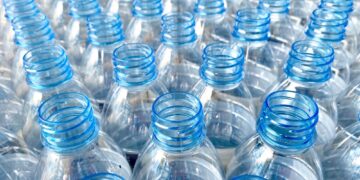
Study authors evaluated three categories of chemical recycling technology and found that the “purification” category yielded the highest PCR return. | Vitte Yevhen/Shutterstock

As with many emerging technologies, chemical recycling goes by a variety of names, including “advanced” and “molecular” recycling. A study from Closed Loop Partners dug into the differences. 

The study, titled “What Is Chemical Recycling, Why Does It Have So Many Different Names, And Why Does It Matter?” is the result of 18 months of study into the environmental impacts and financial viability of several types of chemical recycling technologies, a press release noted, undertaken with the goal of understanding “how and if these diverse technologies can fit into a circular future for plastics.” 

The overarching finding was that chemical recycling technologies can be sorted into three distinct categories: purification, depolymerization and conversion.

“Molecular recycling is a broad umbrella term – also referred to as chemical recycling or advanced recycling – that encompasses dozens of technologies that use solvents, heat, enzymes and even sound waves to purify or break down a wide range of plastic feedstocks to create polymers, monomers, oligomers or hydrocarbon products so that they can re-enter manufacturing supply chains, instead of going to landfill,” the report noted. 

It added that the technologies should only be considered circular when the supply chains produce a final product, which excludes fuels. 

“Molecular recycling is a group of technologies that can complement mechanical recycling and help widen the aperture of plastic waste that we can recycle today,” the report concluded, adding that it is “not a silver bullet but plays an important role in creating a waste-free future for our hardest-to-recycle plastics,” especially non-single-use and non-packaging plastics. 

However, more upstream and downstream solutions are needed, according to the report, including design, reuse and better policies. 

Crunching the numbers

The study evaluated nine technological processes. In terms of total packaging volumes accepted across the United States and Canada, the study found that conversion technologies could accept 82% of all plastic packaging produced – more than mechanical, purification or depolymerization technologies could alone. 

“These types of technologies also can process mixed plastic waste, while purification and depolymerization requires a sorted and single-resin feedstock,” the report added. “Because feedstock can be mixed, conversion technology companies are often paid to take feedstock rather than paying for feedstock.”

However, the researchers noted that when looking at the amount of PCR each category can yield, conversion technologies “have the longest route back to becoming plastic.” 

The study authors estimated that If 1,000 kilograms of plastic feedstock went into each of the three technologies, purification would yield the highest volume of PCR, showing an 88% material processing efficiency. Conversion technologies yielded the lowest amount, showing a 42% processing efficiency. 

“The capacity to move away from virgin plastics requires the recycling sector to be as efficient as possible,” the report stated.  

Through an environmental lens, purification and depolymerization technologies had smaller environmental footprints on average, the report found, taking into account energy use, greenhouse gas emissions and water impacts. 

Looking at the economic viability of the technologies, based on cost and accessibility of feedstocks and the market demand for the products, the study found that of nine technology companies, seven had a positive internal rate of return in the 2021 base case. That’s noteworthy “given that our base case assumes that these technologies are expected to sell their outputs at market commodity prices without a premium,” the study noted. 

The study concluded that the chemical recycling sector is “incredibly nuanced and diverse” and due diligence before investing is critical. 

“The opportunity for consumer brands, policymakers, and investors is to collaborate to develop a vision of success for this sector,” the study stated. 

Tags: Chemical RecyclingIndustry GroupsResearch
TweetShare
Marissa Heffernan

Marissa Heffernan

Marissa Heffernan worked at Resource Recycling from January 2022 through June 2025, first as staff reporter and then as associate editor. Marissa Heffernan started working for Resource Recycling in January 2022 after spending several years as a reporter at a daily newspaper in Southwest Washington. After developing a special focus on recycling policy, they were also the editor of the monthly newsletter Policy Now.

Related Posts

Penn State professor Maryam Shahri speaks at the PROP conference in Lancaster, Pennsylvania July 23, 2026.

How to get more people to recycle

byBrian Clark Howard
July 24, 2026

Harness the power of behavioral marketing, panelists said at the PROP conference in Pennsylvania.

Amazon plastic use flat despite shift to paper

Amazon plastic use flat despite shift to paper

byAntoinette Smith
July 22, 2026

In its latest sustainability report, the e-commerce giant noted a decrease of less than 1% for volumes of single-use plastic...

RecyClass hits 500 EU recyclability evals

RecyClass hits 500 EU recyclability evals

byAntoinette Smith
July 21, 2026

The most recent evaluations include Avery Dennison's RFID tag for PET bottles, ahead of the first PPWR enforcement in mid-August.

Surveys examine gaps in consumer recycling education

Interest up, volume down for battery recycling

byPaul Lane
July 21, 2026

Online engagement spurred a spike in battery collection sites, according to The Battery Network, although total participation fell slightly on...

Former president of CRT processor sentenced to prison

Groups say injunction doesn’t settle labeling issues

byStefanie Valentic
July 17, 2026

Californians Against Waste and the National Stewardship Action Council say a federal injunction blocking SB 343 pauses enforcement but still...

US recycling rates rise despite drop in bottles

byAntoinette Smith
July 16, 2026

Although rates saw slight gains over two years, the data highlight the need for policy solutions to unlock growth in...

Load More
Next Post

HDPE toothpaste tube recyclability claim questioned

2026 Buyers’ Guide

Equipment, services and technology suppliers serving the recycling industry.

Browse the Guide

More Posts

Innovation. Partnership. Circular value.

Innovation. Partnership. Circular value.

August 1, 2026
Apple accused of hampering battery replacement

Apple’s MacBook Neo: iFixit’s best MacBook score in 14 years, but the residual value ceiling is real

March 17, 2026

News in Brief: July 28, 2026

July 28, 2026
Our top stories from March 2023

Iron Mountain’s data center report: Strong on power, quiet on hardware

July 24, 2026
Cascade Asset Management sees higher sales volumes

Sorted: Restoring mineral supplies, one junk drawer at a time

July 20, 2026
Plastics ease as paper, cans steady

Mars increases use of recycled content

July 14, 2026
What the NAND flash crunch means for remarketing, refurbishment and residual values

Telamon acquires ITAD consultancy Retire-IT

July 9, 2026
Tech giant pens detailed ‘plastic-free packaging’ guide

What Google’s latest report means for ITAD

July 8, 2026
Two recycled-content bills gain approval in California

California agriculture seeks SB 54 repeal

July 7, 2026
Amazon cutting out more flexible packaging

Amazon’s AWS hardware reuse is measured

July 7, 2026
Load More

About & Publications

About Us

Staff

Archive

Magazine

Work With Us

Advertise
Jobs
Contact
Terms and Privacy

Newsletter

Get the latest recycling news and analysis delivered to your inbox every week. Stay ahead on industry trends, policy updates, and insights from programs, processors, and innovators.

Subscribe

Welcome Back!

Login to your account below

Forgotten Password?

Retrieve your password

Please enter your username or email address to reset your password.

Log In

Add New Playlist

No Result
View All Result
  • The Latest
  • Analysis
  • Recycling
  • E-Scrap
  • Plastics
  • Policy Now
  • Conferences
    • E-Scrap Conference
    • Plastics Recycling Conference
    • Resource Recycling Conference
    • Textiles Recovery Summit
  • Magazine
  • About Us
  • Advertise
  • Archive
  • Jobs
  • Staff
Subscribe
This website uses cookies. By continuing to use this website you are giving consent to cookies being used. Visit our Privacy and Cookie Policy.