



Resource Recycling
  • The Latest
  • Analysis
    • All
    • Certification Scorecard
    • Industry Announcements
    • Opinion
    SERI works to restore faith in certifications

    Building a defensible E-scrap evidence file

    tires

    The most important decision in tire recycling happens before the shredder

    Intel sign outside of company building.

    Intel’s CapEx tops $20B on server demand while PC volume shrinks

    Google sign on company building with blue sky and clouds above.

    Inside Alphabet’s Q2 results: More capital spending and cloud backlog

    Alpek closing Pennsylvania RPET plant

    Alpek seizing on war-related opportunity 

    Our top stories from March 2023

    Iron Mountain’s data center report: Strong on power, quiet on hardware

  • Conferences
    • Resource Recycling Conference
    • Plastics Recycling Conference
    • E-Scrap: The Longevity Conference
    • Textiles Recovery Summit
  • Publications
    • E-Scrap News
    • Plastics Recycling Update
    • Policy Now
    • Resource Recycling
    • Other Topics
      • All Topics
      • Brand Owners
      • Critical Minerals
      • Glass
      • Grant Watch / RFPs
      • Markets
      • Organics
      • Packaging
      • Research
      • Technology
      • Textiles
Subscribe
No Result
View All Result
Resource Recycling
  • The Latest
  • Analysis
    • All
    • Certification Scorecard
    • Industry Announcements
    • Opinion
    SERI works to restore faith in certifications

    Building a defensible E-scrap evidence file

    tires

    The most important decision in tire recycling happens before the shredder

    Intel sign outside of company building.

    Intel’s CapEx tops $20B on server demand while PC volume shrinks

    Google sign on company building with blue sky and clouds above.

    Inside Alphabet’s Q2 results: More capital spending and cloud backlog

    Alpek closing Pennsylvania RPET plant

    Alpek seizing on war-related opportunity 

    Our top stories from March 2023

    Iron Mountain’s data center report: Strong on power, quiet on hardware

  • Conferences
    • Resource Recycling Conference
    • Plastics Recycling Conference
    • E-Scrap: The Longevity Conference
    • Textiles Recovery Summit
  • Publications
    • E-Scrap News
    • Plastics Recycling Update
    • Policy Now
    • Resource Recycling
    • Other Topics
      • All Topics
      • Brand Owners
      • Critical Minerals
      • Glass
      • Grant Watch / RFPs
      • Markets
      • Organics
      • Packaging
      • Research
      • Technology
      • Textiles
Subscribe
No Result
View All Result
Resource Recycling
No Result
View All Result
Home Recycling

Study sheds light on needlestick injuries at MRFs

byJared Paben
September 5, 2018
in Recycling

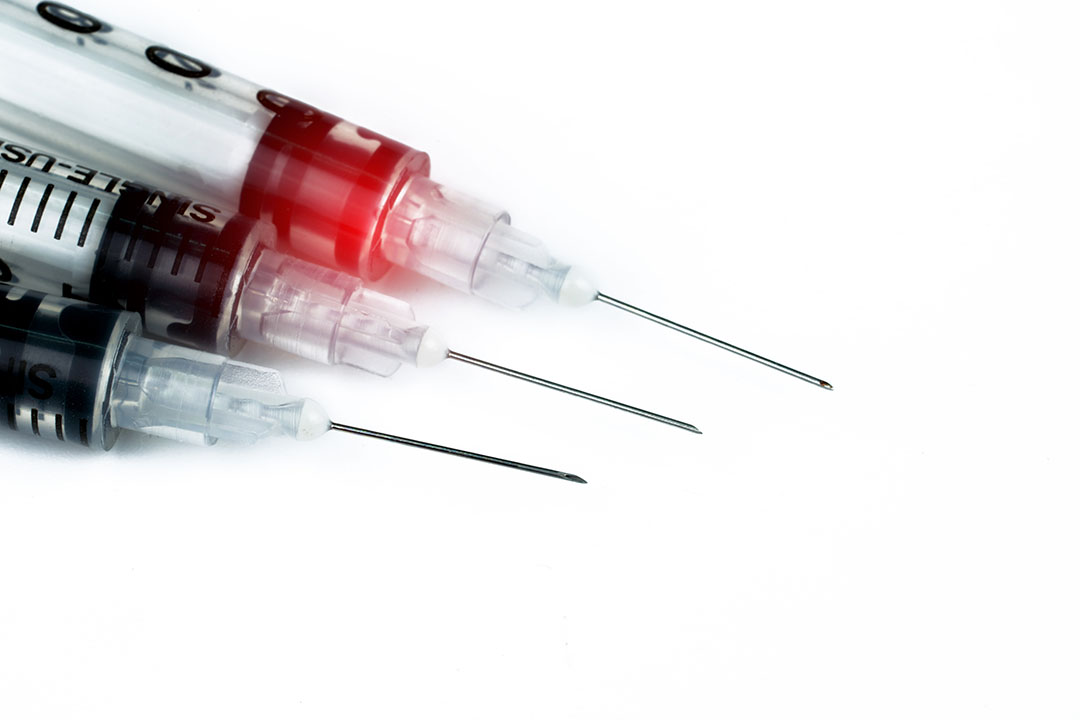
The hazards of needles to MRF sorters are well recognized, but new research puts an estimate to just how many workers are injured by them each year.

In a survey, more than half of MRF operators said they had employees injured by needles in a given year, according to a study by the Environmental Research & Education Foundation (EREF). Extrapolating survey results, researchers estimated that hundreds, if not well over a thousand, MRF workers are injured by needles annually.

“MRFs across the U.S. are working to decrease contamination in order to meet China’s new standards, putting more pressure on picking line workers to remove contamination and increasing the possibility of injury,” Bryan Staley, EREF CEO and president, stated in a press release. “Given the limited data available on needlesticks, this study aims to inform discussions and decision making related to worker safety.”

For the study, EREF collaborated with the Solid Waste Association of North America (SWANA). In the press release, David Biderman, SWANA’s CEO and executive director, noted that needlesticks are a growing occupational hazard at MRFs and other solid waste facilities.

Who participated in the survey?

The survey was conducted online, with follow-up emails and phone calls to clarify reported information. A total of 28 MRFs and seven combined MRF/transfer stations participated in the survey (no responses were received from mixed-waste processing facilities). Most were in the U.S., with a smaller number from Canada.

The respondents included a range of facility sizes, from small ones with limited operating hours  to large, highly automated MRFs working 20-plus hours a day. Nearly all accepted both residential and commercial material, although, on average, the majority of recyclables came from households.

The needlestick injury information, specifically, was provided by 32 MRFs. It was specific to incidents in 2016.

How common are needles in recyclables?

Almost all facility operators reported seeing needles or syringes at least once a year, and more than half of them reported seeing them daily or a few times a week. The two more common places for them to be seen and reported were the plastics line and with the fines/residue. Nearly three-quarters of the facility operators said their staff pull them off the line as contamination.

“Given the frequency with which needles are observed on sort lines, and the common practice of removing needles as contamination, it is unsurprising that 97 percent of MRFs indicated [needlestick injuries] were a ‘very important’ or ‘important’ concern relative to other incidences at their facility,” according to the report.

The number of household needles in the garbage tripled from 2001 to 2011, according to the Coalition for Safe Community Needle Disposal. And they may become more common in garbage and recycling bins in the future.

“There are concerns that [needlestick injuries] will increase in the coming years due to factors such as an aging population, home management of increasingly prevalent medical conditions (e.g. diabetes, migraine), confusion surrounding proper disposal, and lack of access to take-back programs,” the document notes.

How many people were hurt?

In all, facilities reported a total of 57 needlestick injuries in 2016, according to the report. In a survey, 56 percent of MRF operators said one or more workers had been poked in the hands with needles in 2016. Not surprisingly, picking line workers accounted for nearly all incidents, with a much smaller number of maintenance workers reporting injuries.

Researchers went on to calculate a needlestick injury rate among sorting line workers: 3.9 injuries per 100 full-time equivalent (FTE) employees. When looking at the rate among all MRF workers, the rate drops to 2.7 injuries per 100 FTE.

The researchers then extrapolated the numbers to come up with a rough estimate of how many MRF workers are injured by needles across the U.S. each year: between 781 and 1,484.

The report noted the actual number of injuries is probably higher than the study’s estimates. That’s because other research show most needlestick injuries are never reported to management.

How much does this cost facilities?

After an employee is poked with a needle, costs are incurred for initial testing and treatment, pharmaceuticals to prevent virus transmission, and follow-up testing for viruses and drug side effects.

The available data shows a wide range of direct treatment costs per needlestick incident. The median in the literature was $173 per injury, but the average was three times that dollar amount. One reported cost was as high as $1,516.

And those dollar figures don’t include other costs related to treatment of any infections that are contracted, employee turnover and lost productivity, damage to equipment or revenue loss associated with downtime, according to the report.

One piece of good news for facility productivity is most needlestick injuries don’t translate to days away from work. Of the 57 injuries, only four resulted in the employee taking one or more days away from work. That comes out to a nationwide estimate of 0.18 days away per 10,000 FTE because of needle injuries.  

How can injuries be reduced?

The researchers suggested multiple strategies for reducing the number of needles that arrive at MRFs. They recommended communities increase drop-off, mail-back, syringe exchange and special waste pick-up programs.

They also touched on how needles with retractable and self-blunting designs can help prevent injuries, as can the use of needle destruction devices.

In addition to having workers wear gloves and other personal protective equipment, most MRFs reported in the survey that they’re taking other steps to reduce injuries. They’ve established protocols for needles seen on the line (“stop, call, wait” procedures), increased staff safety training and education, changed operations (added pre-sorting inspections or equipment, such as a bag breaker), reinforced to employees the importance of reporting injuries, and collaborated with outside groups to provide disposal options for sharps.

Photo credit: Fahroni/Shutterstock

Tags: Industry GroupsResearch
TweetShare
Jared Paben

Jared Paben

Related Posts

Penn State professor Maryam Shahri speaks at the PROP conference in Lancaster, Pennsylvania July 23, 2026.

How to get more people to recycle

byBrian Clark Howard
July 24, 2026

Harness the power of behavioral marketing, panelists said at the PROP conference in Pennsylvania.

Amazon plastic use flat despite shift to paper

Amazon plastic use flat despite shift to paper

byAntoinette Smith
July 22, 2026

In its latest sustainability report, the e-commerce giant noted a decrease of less than 1% for volumes of single-use plastic...

RecyClass hits 500 EU recyclability evals

RecyClass hits 500 EU recyclability evals

byAntoinette Smith
July 21, 2026

The most recent evaluations include Avery Dennison's RFID tag for PET bottles, ahead of the first PPWR enforcement in mid-August.

Surveys examine gaps in consumer recycling education

Interest up, volume down for battery recycling

byPaul Lane
July 21, 2026

Online engagement spurred a spike in battery collection sites, according to The Battery Network, although total participation fell slightly on...

Former president of CRT processor sentenced to prison

Groups say injunction doesn’t settle labeling issues

byStefanie Valentic
July 17, 2026

Californians Against Waste and the National Stewardship Action Council say a federal injunction blocking SB 343 pauses enforcement but still...

US recycling rates rise despite drop in bottles

byAntoinette Smith
July 16, 2026

Although rates saw slight gains over two years, the data highlight the need for policy solutions to unlock growth in...

Load More
Next Post

Our top stories from August 2018

2026 Buyers’ Guide

Equipment, services and technology suppliers serving the recycling industry.

Browse the Guide

More Posts

Innovation. Partnership. Circular value.

Innovation. Partnership. Circular value.

August 1, 2026
SERI works to restore faith in certifications

Building a defensible E-scrap evidence file

August 6, 2026
Copper prices fall to lowest point since spring

EMR recycling plant to reopen in NJ after fire, legal battle

July 21, 2026
RecyClass hits 500 EU recyclability evals

RecyClass hits 500 EU recyclability evals

July 21, 2026
Cascade Asset Management sees higher sales volumes

Sorted: Restoring mineral supplies, one junk drawer at a time

July 20, 2026
What the NAND flash crunch means for remarketing, refurbishment and residual values

Telamon acquires ITAD consultancy Retire-IT

July 9, 2026
Tech giant pens detailed ‘plastic-free packaging’ guide

What Google’s latest report means for ITAD

July 8, 2026
Canada EV battery reuse pilot to start

Canada EV battery reuse pilot to start

July 8, 2026
Battery fire risk isn’t going away. Insurance is responding

Battery fire risk isn’t going away. Insurance is responding

February 24, 2026

Our top stories from October 2021

November 3, 2021
Load More

About & Publications

About Us

Staff

Archive

Magazine

Work With Us

Advertise
Jobs
Contact
Terms and Privacy

Newsletter

Get the latest recycling news and analysis delivered to your inbox every week. Stay ahead on industry trends, policy updates, and insights from programs, processors, and innovators.

Subscribe

Welcome Back!

Login to your account below

Forgotten Password?

Retrieve your password

Please enter your username or email address to reset your password.

Log In

Add New Playlist

No Result
View All Result
  • The Latest
  • Analysis
  • Recycling
  • E-Scrap
  • Plastics
  • Policy Now
  • Conferences
    • E-Scrap Conference
    • Plastics Recycling Conference
    • Resource Recycling Conference
    • Textiles Recovery Summit
  • Magazine
  • About Us
  • Advertise
  • Archive
  • Jobs
  • Staff
Subscribe
This website uses cookies. By continuing to use this website you are giving consent to cookies being used. Visit our Privacy and Cookie Policy.