



Resource Recycling
  • The Latest
  • Analysis
    • All
    • Certification Scorecard
    • Industry Announcements
    • Opinion

    ITAD is moving past its adolescent phase: beyond end-of-life

    Rainforest

    Inside the Circle: What the rainforest can teach us about EPR

    Closeup of a printed circuitboard

    Hardware demand puts new focus on parts harvesting

    Rare look inside the world’s largest plastics recycler

    Mass balance matters: Why different rules can lead to different outcomes 

    Certification Scorecard — Week of June 1, 2026

    IT asset disposition and electronics recycling: Now and then

    $60 billion in AI servers will create an ITAD challenge

  • Conferences
    • Resource Recycling Conference
    • Plastics Recycling Conference
    • E-Scrap: The Longevity Conference
    • Textiles Recovery Summit
  • Publications
    • E-Scrap News
    • Plastics Recycling Update
    • Policy Now
    • Resource Recycling
    • Other Topics
      • All Topics
      • Brand Owners
      • Critical Minerals
      • Glass
      • Grant Watch / RFPs
      • Markets
      • Organics
      • Packaging
      • Research
      • Technology
      • Textiles
Subscribe
No Result
View All Result
Resource Recycling
  • The Latest
  • Analysis
    • All
    • Certification Scorecard
    • Industry Announcements
    • Opinion

    ITAD is moving past its adolescent phase: beyond end-of-life

    Rainforest

    Inside the Circle: What the rainforest can teach us about EPR

    Closeup of a printed circuitboard

    Hardware demand puts new focus on parts harvesting

    Rare look inside the world’s largest plastics recycler

    Mass balance matters: Why different rules can lead to different outcomes 

    Certification Scorecard — Week of June 1, 2026

    IT asset disposition and electronics recycling: Now and then

    $60 billion in AI servers will create an ITAD challenge

  • Conferences
    • Resource Recycling Conference
    • Plastics Recycling Conference
    • E-Scrap: The Longevity Conference
    • Textiles Recovery Summit
  • Publications
    • E-Scrap News
    • Plastics Recycling Update
    • Policy Now
    • Resource Recycling
    • Other Topics
      • All Topics
      • Brand Owners
      • Critical Minerals
      • Glass
      • Grant Watch / RFPs
      • Markets
      • Organics
      • Packaging
      • Research
      • Technology
      • Textiles
Subscribe
No Result
View All Result
Resource Recycling
No Result
View All Result
Home Recycling

British Columbia EPR program hits 85% recovery rate

byJared Paben
July 20, 2021
in Recycling
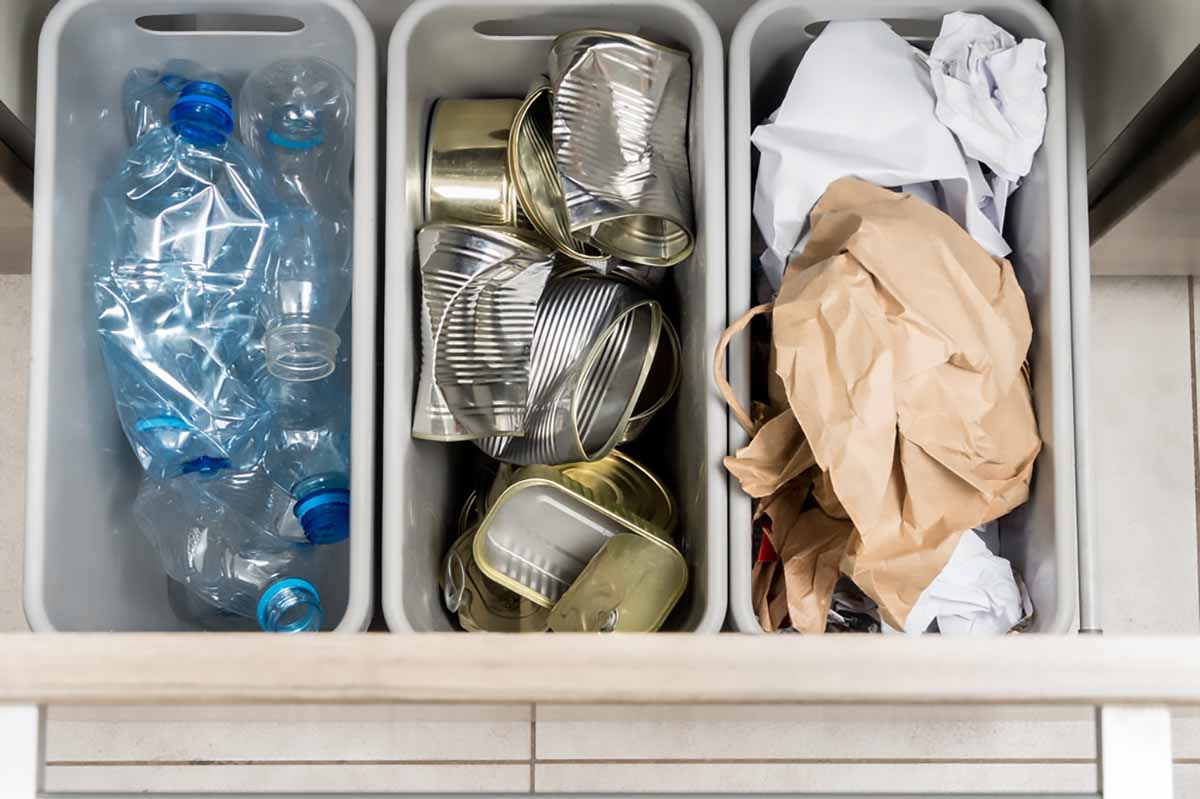
Recycle BC’s recent annual report noted a 90% recovery rate for paper, 52% for plastic, and 85% for metal. | pryzmat / Shutterstock

In 2020, a producer-funded system for paper and packaging recycling achieved a significantly higher recovery rate – and spent more money – than the year prior.

Recycle BC, a stewardship group responsible for the printed paper and packaging (PPP) recycling system, reported an 85.8% recovery rate in 2020. That was up from 77.4% the year before. For 2020, the target was 77%.

British Columbia has a full extended producer responsibility (EPR) system in which PPP producers fully finance and manage residential curbside and drop-off recycling programs for 4.6 million people. In 2020, a year dominated by COVID-19 impacts, the program reported collecting 203,213 metric tons of PPP, up 11% from 2019.

“Spending more time at home in 2020, residents placed a greater volume of material in recycling bins, bags and depots resulting in a significant increase in the tonnes of material collected and an increased recovery rate from the previous year,” according to a Recycle BC post.

Recycle BC’s recent annual report also broke down recovery rates by material. The organization reported a 90% recovery rate for paper (up from 83% in 2019), 52% for plastic (up from 46%), 85% for metal (up from 73%), and 97% for glass (up from 87%). The plastic data was also broken down by rigid and flexible packaging. For 2020, the rigid plastic recovery rate was 64% (up from 56%) and the flexibles recovery rate was 24% (up from 22%).

Recycle BC separately noted it is now working with the University of Victoria to research using flexible plastic packaging collected by the EPR program in reinforced concrete.

By and large, Recycle BC hit its recovery target for different materials, in some cases far exceeding rates that don’t need to be achieved for years. For example, the program already exceeded the target of 60% by 2025 for rigid plastics, as well as the overall plastics target of 50% by 2025.

Recycle BC also reported collecting and spending more money on material management last year. Producers paid 121.8 million Canadian dollars (about $95.5 million U.S.; all dollars below converted to U.S. dollars on July 19, 2021) in fees in 2020, up 24% from 2019. The program’s expenses totaled $99 million last year, up 25% from the year prior.

The total program cost per metric ton handled also increased to $488, up from $427 in 2019 (or up 14%). The total program cost per household was $53 in 2020, up from $43 in 2010 (or up 24%).

In its annual report, Recycle BC also noted a significant program management shift last year: in May 2020, the stewardship organization began contracting with publicly traded waste management company GFL Environmental to handle the post-collection shipping, sorting and marketing of recyclables. Before, a company called Green by Nature provided those management services.

“As part of the new agreement, GFL is making significant investments in recycling infrastructure in the province, including new technology, facilities, and processing capabilities,” the report stated. “Increasing the ability to sort materials into multiple grades and reduce contamination provides access to more domestic and North American markets.”

GFL’s investments will particularly improve paper recycling, according to the annual report. The services agreement required construction of a dedicated fiber recovery facility. Between that and the addition of a new single-stream MRF to sort fiber from containers, the quality of paper bales has increased significantly, according to Recycle BC.
 

Tags: CanadaDataEPR
TweetShare
Jared Paben

Jared Paben

Related Posts

House resolution aims to make recyclability central to product design

NY EPR bill fails to advance after third try

byStefanie Valentic
June 8, 2026

This marks the third session in which the bill cleared the Senate only to stall in the Assembly.

Rainforest

Inside the Circle: What the rainforest can teach us about EPR

byBill Shireman
June 8, 2026

We have a lot to learn from jungles, particularly as we fight the thorny problem of plastic pollution.

CalRecycle withdraws proposed regs for SB 54

Oceana, NRDC, CAW sue CalRecycle over SB 54 regs

byStefanie Valentic
June 5, 2026

The groups allege that the new regulations have too many loopholes for packaging producers.

Rare look inside the world’s largest plastics recycler

Mass balance matters: Why different rules can lead to different outcomes 

bySarah Edwards, Eunomia
June 5, 2026

Mass balance is a critical piece of the recycling puzzle—and one that's important to get right.

Circular Materials to supply PlasCred chem recycling plant

Circular Materials to supply PlasCred chem recycling plant

byAntoinette Smith
June 4, 2026

The planned chemical recycling plant in Alberta, Canada, also has a five-year, fixed price offtake contract, ahead of reaching a...

In My Opinion: Comparing the nation’s first packaging EPR laws

What Maine’s vape EPR law means for recyclers

byStefanie Valentic
June 4, 2026

Maine is the first state to require vape manufacturers to fund end-of-life management for their products. Vape recycler Michael Duckworth...

Load More
Next Post

US generated 20% of world's recovered paper in 2019

More Posts

Industry announcements for January 2026

Industry announcements for June 2026

June 1, 2026
California extends compostable labeling law

California bills crack down on false recycling, compostable claims

May 29, 2026

Three-bill package aims to revamp Michigan’s bottle return system

June 9, 2026
House resolution aims to make recyclability central to product design

NY EPR bill fails to advance after third try

June 8, 2026
Illinois expands battery recycling as lithium-ion fire concerns mount

Illinois expands battery recycling as lithium-ion fire concerns mount

May 27, 2026
How electronics legislation fared this legislative season

NY sends repairability labeling bill to governor

June 8, 2026
War, not demand driving polymer pricing

War, not demand driving polymer pricing

June 2, 2026
Packaging policy is not one-size-fits-all

Packaging policy is not one-size-fits-all

June 1, 2026
Recycling industry addresses Beyond Plastics report

Recycling industry addresses Beyond Plastics report

May 26, 2026
Data to verify recycling for Indy 500

Data to verify recycling for Indy 500

May 22, 2026
Load More

About & Publications

About Us

Staff

Archive

Magazine

Work With Us

Advertise
Jobs
Contact
Terms and Privacy

Newsletter

Get the latest recycling news and analysis delivered to your inbox every week. Stay ahead on industry trends, policy updates, and insights from programs, processors, and innovators.

Subscribe

Welcome Back!

Login to your account below

Forgotten Password?

Retrieve your password

Please enter your username or email address to reset your password.

Log In

Add New Playlist

No Result
View All Result
  • The Latest
  • Analysis
  • Recycling
  • E-Scrap
  • Plastics
  • Policy Now
  • Conferences
    • E-Scrap Conference
    • Plastics Recycling Conference
    • Resource Recycling Conference
    • Textiles Recovery Summit
  • Magazine
  • About Us
  • Advertise
  • Archive
  • Jobs
  • Staff
Subscribe
This website uses cookies. By continuing to use this website you are giving consent to cookies being used. Visit our Privacy and Cookie Policy.