




Resource Recycling
  • The Latest
  • Analysis
    • All
    • Certification Scorecard
    • Industry Announcements
    • Opinion
    SERI works to restore faith in certifications

    Building a defensible E-scrap evidence file

    tires

    The most important decision in tire recycling happens before the shredder

    Intel sign outside of company building.

    Intel’s CapEx tops $20B on server demand while PC volume shrinks

    Google sign on company building with blue sky and clouds above.

    Inside Alphabet’s Q2 results: More capital spending and cloud backlog

    Alpek closing Pennsylvania RPET plant

    Alpek seizing on war-related opportunity 

    Our top stories from March 2023

    Iron Mountain’s data center report: Strong on power, quiet on hardware

  • Conferences
    • Resource Recycling Conference
    • Plastics Recycling Conference
    • E-Scrap: The Longevity Conference
    • Textiles Recovery Summit
  • Publications
    • E-Scrap News
    • Plastics Recycling Update
    • Policy Now
    • Resource Recycling
    • Other Topics
      • All Topics
      • Brand Owners
      • Critical Minerals
      • Glass
      • Grant Watch / RFPs
      • Markets
      • Organics
      • Packaging
      • Research
      • Technology
      • Textiles
Subscribe
No Result
View All Result
Resource Recycling
  • The Latest
  • Analysis
    • All
    • Certification Scorecard
    • Industry Announcements
    • Opinion
    SERI works to restore faith in certifications

    Building a defensible E-scrap evidence file

    tires

    The most important decision in tire recycling happens before the shredder

    Intel sign outside of company building.

    Intel’s CapEx tops $20B on server demand while PC volume shrinks

    Google sign on company building with blue sky and clouds above.

    Inside Alphabet’s Q2 results: More capital spending and cloud backlog

    Alpek closing Pennsylvania RPET plant

    Alpek seizing on war-related opportunity 

    Our top stories from March 2023

    Iron Mountain’s data center report: Strong on power, quiet on hardware

  • Conferences
    • Resource Recycling Conference
    • Plastics Recycling Conference
    • E-Scrap: The Longevity Conference
    • Textiles Recovery Summit
  • Publications
    • E-Scrap News
    • Plastics Recycling Update
    • Policy Now
    • Resource Recycling
    • Other Topics
      • All Topics
      • Brand Owners
      • Critical Minerals
      • Glass
      • Grant Watch / RFPs
      • Markets
      • Organics
      • Packaging
      • Research
      • Technology
      • Textiles
Subscribe
No Result
View All Result
Resource Recycling
No Result
View All Result
Home Recycling

Stakeholders talk recycling fixes before Congress

Colin StaubbyColin Staub
September 28, 2021
in Recycling
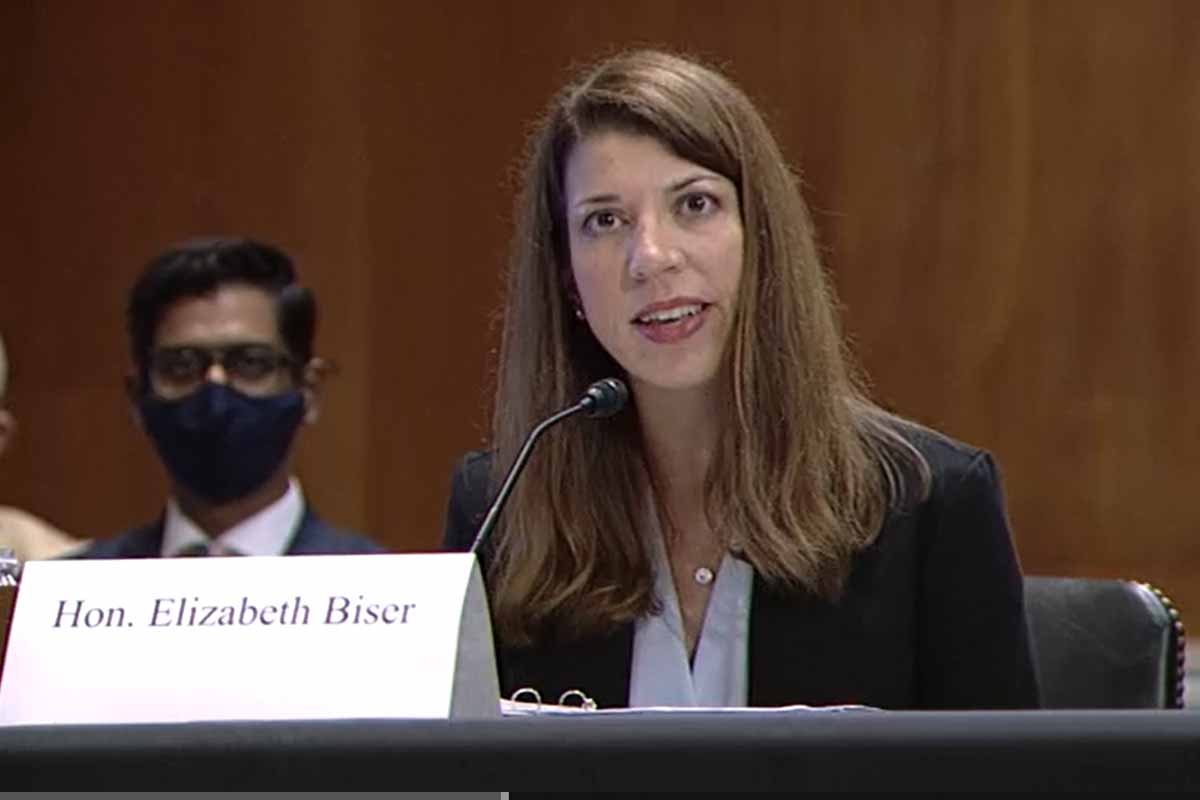
Elizabeth Biser of the North Carolina Department of Environmental Quality described the importance of strong state support for materials recovery during a hearing last week.

U.S. senators last week heard about how stronger end-market demand, state support for materials recovery, technology advancements and more can strengthen the U.S. recycling system.

Legislators on the Senate Committee on Environment and Public Works convened the hearing in light of the high-profile challenges facing recycling over the past few years and the growing focus on creating a “circular economy” for the future.

“The issues with China taking – or more recently, not taking – our recycling materials and the issues with supply lines laid bare by the pandemic made clear we need to do more of the material processing and manufacturing right here in America,” said Sen. Shelley Capito, R-W.Va., the ranking member on the committee.

The hearing, titled “The Circular Economy as a Concept for Creating a More Sustainable Future,” was led by Capito and Sen. Tom Carper, D-Del., both members of the Senate Recycling Caucus.

Four ‘pressure points’ in recycling system

Capito described how some municipalities have elected to store recyclables during periods of market strife until conditions improve.

“This is all due to a lack of domestic demand for our recycled materials,” Capito said. “Market demand for these materials can create the incentives to invest in the recycling system and expand access to recycling across the country, especially in rural areas like my state of West Virginia.”

Billy Johnson, chief lobbyist for the Institute of Scrap Recycling Industries (ISRI), echoed the need to focus on market demand.

“If there is no end market to utilize recyclable materials that are collected, they will not be recycled and used again in manufacturing, regardless of the volume of material collected,” Johnson said. “Collection without market consumption is just not recycling.”

But he added that demand is one of four “major pressure points in the current residential recycling infrastructure.” The others include public education, well-crafted contracts between MRFs and municipalities, and processing facility investments.

Elizabeth Biser, secretary of the North Carolina Department of Environmental Quality, described how strong government support for recycling can help in all of those areas. North Carolina has a particularly robust state recycling office that supports the sector in numerous ways.

Biser laid out some of the factors that helped North Carolina develop strong state support for recycling. She pointed to a disposal surcharge that generated funding for recycling infrastructure grants, landfill bans on readily recyclable materials, and a concerted effort to bring end users to the state and strengthen market demand.

“Recycling alone isn’t a circular economy, but a circular economy can’t exist without recycling,” Biser said. “Having a strong state recycling program, one that supports local recycling programs and coordinates regional and statewide solutions, is a key component for success.”

Interests support consistency across country

Roberta Elias, director of policy and government affairs at the World Wildlife Fund (WWF), told lawmakers the current framework of thousands of different recycling systems creates too much uncertainty for industry stakeholders.

WWF has been engaged in many recycling industry collaborative projects in recent years, including co-leading the U.S. Plastics Pact and a project to track corporate sustainability commitments and progress toward those goals.

“The number one thing we have heard in conversations with industry is they want clear and consistent rules of the road,” Elias said. “They also want assurances that there will be sufficient high-quality recycled content to deliver on promises already made to consumers.”

She described the projected growth in plastic production in the decades to come, estimating that current infrastructure won’t be able to keep up.

“The current recycling system, which is, again, disjointed across 20,000 municipalities, functions without clear goalposts at an economic disadvantage to landfills,” Elias said. “It simply cannot process the sheer volume of stuff.”

Elias described the Break Free From Plastic Pollution Act as the “high-water mark” for a well-crafted extended producer responsibility (EPR) program, and she noted that industry groups including the American Beverage Association support the EPR component of the act.

“We hope that standalone EPR legislation will ultimately pass,” Elias said.

The wide-reaching federal bill also includes a national container deposit, temporary ban on chemical recycling facility development, limits on scrap plastic exports and more. It was introduced in 2020 and re-introduced this year. It has not received a Senate committee hearing.

Biser highlighted one piece of federal legislation that has advanced: the RECYCLE Act. It was first introduced in 2019 and was recently written into the federal infrastructure package lawmakers are considering. The RECYCLE Act creates grants for recycling projects, and Biser tied it to the ability of local governments to implement outreach projects, among other efforts.

“That is an important source of funding for states like mine to carry that message to our residents, who, poll after poll shows, are confused about how to recycle right,” she said, citing cart-tagging as one effective program these grants can facilitate.

Technology can expand the pool of available materials

Brian Hawkinson, executive director of recovered fiber for the American Forest & Paper Association (AF&PA), focused on the potential for technology advancements to recover a greater amount of recyclables that are currently going to waste.

Hawkinson shared details about the Juno project being carried out by Georgia-Pacific in Oregon. Through that initiative, the company is processing highly contaminated waste paper from foodservice settings, and it is recovering the fiber for use in new products.

Currently, the fiber recovered through this process in Oregon is going into corrugated boxes produced at the company’s Toledo, Ore. containerboard mill, Hawkinson said.

Hawkinson offered the technology as an example of something that does not draw away from current recovery efforts – the Juno process is bringing in fiber that would otherwise be disposed of – and has the potential to expand the number of sources from which mills can recover fiber.
Harris Equipment

Tags: Industry GroupsLegislation & Enforcement
TweetShare
Colin Staub

Colin Staub

Colin Staub was a reporter and associate editor at Resource Recycling until August 2025.

Related Posts

Spin-off lets Linca focus on battery mineral recovery

GAO: Policy, tech updates needed to bolster domestic mineral supply

byPaul Lane
July 30, 2026

Federal investigators say short- and long-term solutions are needed to decrease the nation’s reliance upon foreign-based minerals.

The State of Oregon seal at a park in Salem, Ore.

MRM bids to run Oregon EPR for second year 

byPaul Lane
July 28, 2026

The company won the competitive process for 2026, but was the only company to apply for the 2027 PRO post.

California releases deposit system update draft rules

Groups move to intervene in SB 343 lawsuit

byStefanie Valentic
July 27, 2026

Earth Island Institute and Californians Against Waste have filed to intervene in the federal lawsuit that halted enforcement of California's...

U.S. Capitol building in Washington, D.C.

House committees advance critical mineral bills

byPaul Lane
July 27, 2026

Congressional votes earlier this month advanced three bills that would expand the nation’s critical mineral recycling capabilities. A subcommittee within...

Amazon plastic use flat despite shift to paper

Amazon plastic use flat despite shift to paper

byAntoinette Smith
July 22, 2026

In its latest sustainability report, the e-commerce giant noted a decrease of less than 1% for volumes of single-use plastic...

RecyClass hits 500 EU recyclability evals

RecyClass hits 500 EU recyclability evals

byAntoinette Smith
July 21, 2026

The most recent evaluations include Avery Dennison's RFID tag for PET bottles, ahead of the first PPWR enforcement in mid-August.

Load More
Next Post

Judge ends Greenpeace’s labeling suit against Walmart

2026 Buyers’ Guide

Equipment, services and technology suppliers serving the recycling industry.

Browse the Guide

More Posts

Innovation. Partnership. Circular value.

Innovation. Partnership. Circular value.

August 1, 2026
SERI works to restore faith in certifications

Building a defensible E-scrap evidence file

August 6, 2026
Copper prices fall to lowest point since spring

EMR recycling plant to reopen in NJ after fire, legal battle

July 21, 2026
RecyClass hits 500 EU recyclability evals

RecyClass hits 500 EU recyclability evals

July 21, 2026
What the NAND flash crunch means for remarketing, refurbishment and residual values

Telamon acquires ITAD consultancy Retire-IT

July 9, 2026
Tech giant pens detailed ‘plastic-free packaging’ guide

What Google’s latest report means for ITAD

July 8, 2026
Canada EV battery reuse pilot to start

Canada EV battery reuse pilot to start

July 8, 2026
Battery fire risk isn’t going away. Insurance is responding

Battery fire risk isn’t going away. Insurance is responding

February 24, 2026

Our top stories from October 2021

November 3, 2021
Spin-off lets Linca focus on battery mineral recovery

GAO: Policy, tech updates needed to bolster domestic mineral supply

July 30, 2026
Load More

About & Publications

About Us

Staff

Archive

Magazine

Work With Us

Advertise
Jobs
Contact
Terms and Privacy

Newsletter

Get the latest recycling news and analysis delivered to your inbox every week. Stay ahead on industry trends, policy updates, and insights from programs, processors, and innovators.

Subscribe

Welcome Back!

Login to your account below

Forgotten Password?

Retrieve your password

Please enter your username or email address to reset your password.

Log In

Add New Playlist

No Result
View All Result
  • The Latest
  • Analysis
  • Recycling
  • E-Scrap
  • Plastics
  • Policy Now
  • Conferences
    • E-Scrap Conference
    • Plastics Recycling Conference
    • Resource Recycling Conference
    • Textiles Recovery Summit
  • Magazine
  • About Us
  • Advertise
  • Archive
  • Jobs
  • Staff
Subscribe
This website uses cookies. By continuing to use this website you are giving consent to cookies being used. Visit our Privacy and Cookie Policy.