






Resource Recycling
  • The Latest
  • Analysis
    • All
    • Certification Scorecard
    • Industry Announcements
    • Opinion
    SERI works to restore faith in certifications

    Building a defensible E-scrap evidence file

    tires

    The most important decision in tire recycling happens before the shredder

    Intel sign outside of company building.

    Intel’s CapEx tops $20B on server demand while PC volume shrinks

    Google sign on company building with blue sky and clouds above.

    Inside Alphabet’s Q2 results: More capital spending and cloud backlog

    Alpek closing Pennsylvania RPET plant

    Alpek seizing on war-related opportunity 

    Our top stories from March 2023

    Iron Mountain’s data center report: Strong on power, quiet on hardware

  • Conferences
    • Resource Recycling Conference
    • Plastics Recycling Conference
    • E-Scrap: The Longevity Conference
    • Textiles Recovery Summit
  • Publications
    • E-Scrap News
    • Plastics Recycling Update
    • Policy Now
    • Resource Recycling
    • Other Topics
      • All Topics
      • Brand Owners
      • Critical Minerals
      • Glass
      • Grant Watch / RFPs
      • Markets
      • Organics
      • Packaging
      • Research
      • Technology
      • Textiles
Subscribe
No Result
View All Result
Resource Recycling
  • The Latest
  • Analysis
    • All
    • Certification Scorecard
    • Industry Announcements
    • Opinion
    SERI works to restore faith in certifications

    Building a defensible E-scrap evidence file

    tires

    The most important decision in tire recycling happens before the shredder

    Intel sign outside of company building.

    Intel’s CapEx tops $20B on server demand while PC volume shrinks

    Google sign on company building with blue sky and clouds above.

    Inside Alphabet’s Q2 results: More capital spending and cloud backlog

    Alpek closing Pennsylvania RPET plant

    Alpek seizing on war-related opportunity 

    Our top stories from March 2023

    Iron Mountain’s data center report: Strong on power, quiet on hardware

  • Conferences
    • Resource Recycling Conference
    • Plastics Recycling Conference
    • E-Scrap: The Longevity Conference
    • Textiles Recovery Summit
  • Publications
    • E-Scrap News
    • Plastics Recycling Update
    • Policy Now
    • Resource Recycling
    • Other Topics
      • All Topics
      • Brand Owners
      • Critical Minerals
      • Glass
      • Grant Watch / RFPs
      • Markets
      • Organics
      • Packaging
      • Research
      • Technology
      • Textiles
Subscribe
No Result
View All Result
Resource Recycling
No Result
View All Result
Home Recycling

Transitioning small communities to EPR

Marissa HeffernanbyMarissa Heffernan
May 3, 2023
in Recycling
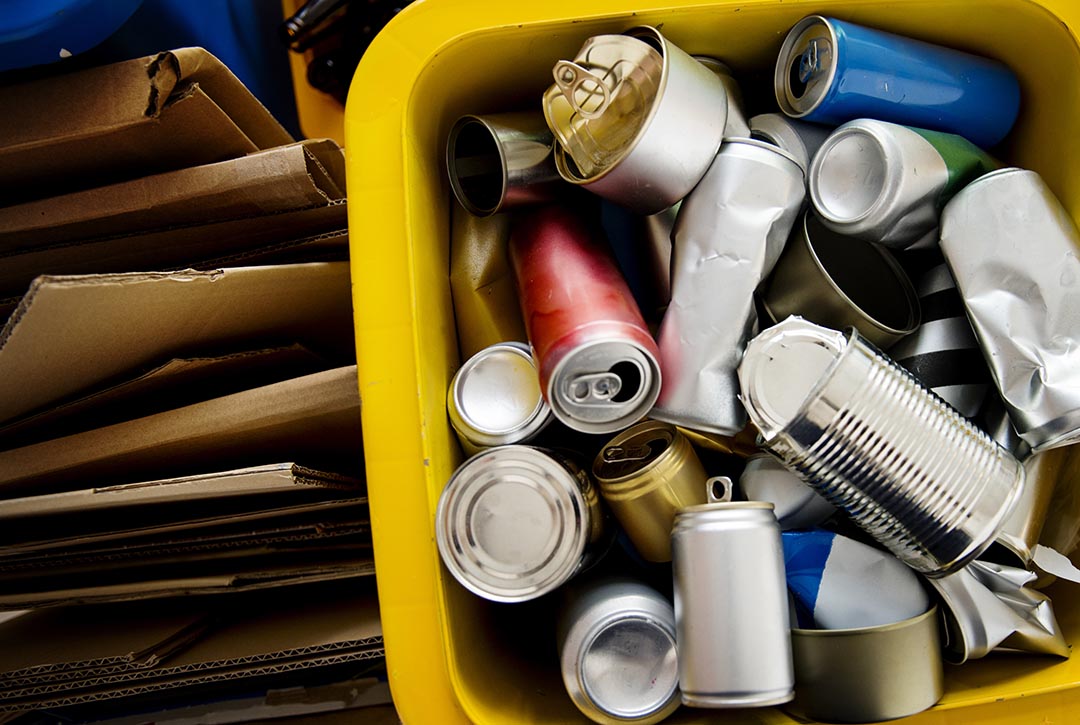
Speakers from across Canada faced a variety of EPR-related challenges, but all agreed on one thing: Good EPR implementation requires strict cost management. | Rawpixel.com/Shutterstock

Representatives from five small Canadian municipalities shared the challenges and benefits of extended producer responsibility, advising anyone in a similar situation to be very familiar with costs and contamination. 

The panelists spoke during “Alberta’s EPR Transition – Advice from Small Municipalities Across Canada,” an April 24 webinar hosted by the Recycling Council of Alberta. About 150 people attended to hear lessons learned from the extended producer responsibility (EPR) regulations implemented in Alberta on Nov. 30, 2022. 

Moderated by Leah Seabrook of Strathcona County, Alberta, speakers were Ben Van Nostrand of Columbia Shuswap Regional District, British Columbia, Laura Zapotichny of the Regional District of Fraser-Fort George, British Columbia, John Watson of Dysart and surrounding areas in Saskatchewan, Laura Barrett of Simcoe County, Ontario and Melissa Kovacs Reid of Dufferin County, Ontario. 

Challenges of density 

Serving smaller towns and communities efficiently, especially rural ones, is one of the challenges of EPR, Van Nostrand said. 

He said prior to the packaging and stewardship program coming into place, Columbia Shuswap Regional District operated 18 single-stream recycling depots and had “extremely high levels of contamination.” 

“It was extremely expensive to operate,” he added, costing about 1.3 million Canadian dollars (about $960,000) annually to manage 1,500 tons. 

Zapotichny echoed that sentiment, noting the Regional District of Fraser-Fort George has a low population density and decided to continue running its own drop-off program independently from Recycle BC, one of the producer responsibility organizations (PROs) operating in Canada. 

“When it was first presented to us, we were concerned about the capital investments needed to join the program, the fines and the true cost of the program,” she said, adding that “many of our rural communities did not qualify under the program for curbside.” 

While there are risks inherent to meeting EPR requirements, and the district is left dealing with market fluctuations, Zapotichny said maintaining control was a huge benefit. 

“We continue to monitor both our program and theirs and make decisions that are best for our residents,” she said. 

Barrett explained that Simcoe County is mostly rural, with some urban pockets and a seasonal population. The recycling program consists mainly of curbside collection with a few depots for drop-off. 

“Our experience with EPR has been good but also very challenging as well,” she said, noting that what seems to work best during the transition period is when there’s competition among the PROs. 

When there’s less competition, municipalities have less negotiating power and tend to get lower compensation, Barrett said. For example, hazardous waste has been a difficult stream to transition due to low competition, whereas tires and other programs were easier “and we feel we are adequately compensated there,” she said. 

Now, the county is faced with a choice: keep running their hazardous waste drop-off centers supplemented with tax dollars, since program costs are not fully covered under the current EPR system, or end the program.

Controlling costs

Kovacs Reid said Dufferin County also decided to opt out of letting the PRO run county programs, which are fully single-stream with no depots. The decision was based on contamination reduction requirements and costs. 

She said the PRO offered the county compensation at a 2020 level of costs and “that would not have been enough.” 

However, the county is still working with PRO Circular Materials on education campaigns and Circular Materials is running a blue box collection system in the county. 

Van Nostrand said his area has seen a huge cost savings and reduction in contamination, though Recycle BC is not fully funding all the costs for Columbia Shuswap Regional District, either. The PRO covers the cost of hauling and sorting. 

The district has been able to create jobs staffing the depots in rural areas and partnered with other stewardship programs to offer pathways for more materials, he said. 

“It was the right move,” Van Nostrand said, adding that “it’s been extremely successful and I would recommend it,” though he continues to push for full funding.  

Sharing advice 

The tips panelists gave to attendees who are also facing EPR transitions had a common theme: Know your program inside and out before entering a contract with a PRO. 

John Watson said Dysart, along with a coalition of several surrounding municipalities, will transition its services on July 1. He said in the area, 55 communities were depot-only just like Dysart, so they have banded together.  

“I recommend that other small communities build that network up,” he said, noting that his coalition used to meet once per week. 

He also recommended knowing exactly how much the recycling program costs, from staffing all the way to how much propane is used to heat the landfill office. 

“This is a marathon, not a sprint, so brace yourself,” he said, adding that things are still “changing week by week.” 

Keep a close eye on your contracts in preparation to transition to PRO-run EPR, Kovacs Reid said, and make sure you have extension terms to get to the transition date or build in termination or transfer clauses. 

Zapotichny said clear guiding principles for decision-makers are key, because “EPR is complex, it is not easy to understand and not easy to explain to residents.” 

She also recommended being prepared to continually advocate for rural areas to get the proper funding and full cost recovery. 

Barrett recommended knowing all the nuances of the regulations and running “all the scenarios of what might happen and how it might all connect.” 

She also advocated for a detailed breakdown of recycling costs and warned that “PROs are very last minute.” 

“Really know the costs, not just hard contract costs but staff time, buildings, trucks, equipment,” she said. “Whatever you use, you want to show it to the PRO.” 

Working closely with other municipalities is key, she emphasized, because “it’s better to go to the ministry with a united front than to go individually.” 
 

Tags: CanadaEPRPolicy Now
TweetShare
Marissa Heffernan

Marissa Heffernan

Marissa Heffernan worked at Resource Recycling from January 2022 through June 2025, first as staff reporter and then as associate editor. Marissa Heffernan started working for Resource Recycling in January 2022 after spending several years as a reporter at a daily newspaper in Southwest Washington. After developing a special focus on recycling policy, they were also the editor of the monthly newsletter Policy Now.

Related Posts

Facility fires on pace to match 2025

byPaul Lane
July 29, 2026

The mid-year report from Fire Rover found the number of fire incidents remains elevated compared to historical averages.

The State of Oregon seal at a park in Salem, Ore.

MRM bids to run Oregon EPR for second year 

byPaul Lane
July 28, 2026

The company won the competitive process for 2026, but was the only company to apply for the 2027 PRO post.

California releases deposit system update draft rules

Groups move to intervene in SB 343 lawsuit

byStefanie Valentic
July 27, 2026

Earth Island Institute and Californians Against Waste have filed to intervene in the federal lawsuit that halted enforcement of California's...

A call to action: End markets and EPR

EPR faces several key questions

byBrian Clark Howard
July 23, 2026

Panelists discuss the promise and perils of EPR nationwide at the PROP conference in Pennsylvania.

RecyClass hits 500 EU recyclability evals

RecyClass hits 500 EU recyclability evals

byAntoinette Smith
July 21, 2026

The most recent evaluations include Avery Dennison's RFID tag for PET bottles, ahead of the first PPWR enforcement in mid-August.

Former president of CRT processor sentenced to prison

Groups say injunction doesn’t settle labeling issues

byStefanie Valentic
July 17, 2026

Californians Against Waste and the National Stewardship Action Council say a federal injunction blocking SB 343 pauses enforcement but still...

Load More
Next Post

Panelists: Bottle bills, EPR can coexist

2026 Buyers’ Guide

Equipment, services and technology suppliers serving the recycling industry.

Browse the Guide

More Posts

Innovation. Partnership. Circular value.

Innovation. Partnership. Circular value.

August 1, 2026
Apple accused of hampering battery replacement

Apple’s MacBook Neo: iFixit’s best MacBook score in 14 years, but the residual value ceiling is real

March 17, 2026
Tech giant pens detailed ‘plastic-free packaging’ guide

What Google’s latest report means for ITAD

July 8, 2026
Amazon cutting out more flexible packaging

Amazon’s AWS hardware reuse is measured

July 7, 2026
Tiger Group offers OCC pulp mill equipment sale

Tiger Group offers OCC pulp mill equipment sale

July 1, 2026
Battery fire risk isn’t going away. Insurance is responding

Battery fire risk isn’t going away. Insurance is responding

February 24, 2026
Smelters provide insight into e-scrap use

Smelters provide insight into e-scrap use

February 22, 2023

EPR reporting deadlines are coming fast

January 3, 2024

Our top stories from October 2021

November 3, 2021
SERI works to restore faith in certifications

Building a defensible E-scrap evidence file

August 6, 2026
Load More

About & Publications

About Us

Staff

Archive

Magazine

Work With Us

Advertise
Jobs
Contact
Terms and Privacy

Newsletter

Get the latest recycling news and analysis delivered to your inbox every week. Stay ahead on industry trends, policy updates, and insights from programs, processors, and innovators.

Subscribe

Welcome Back!

Login to your account below

Forgotten Password?

Retrieve your password

Please enter your username or email address to reset your password.

Log In

Add New Playlist

No Result
View All Result
  • The Latest
  • Analysis
  • Recycling
  • E-Scrap
  • Plastics
  • Policy Now
  • Conferences
    • E-Scrap Conference
    • Plastics Recycling Conference
    • Resource Recycling Conference
    • Textiles Recovery Summit
  • Magazine
  • About Us
  • Advertise
  • Archive
  • Jobs
  • Staff
Subscribe
This website uses cookies. By continuing to use this website you are giving consent to cookies being used. Visit our Privacy and Cookie Policy.