




Resource Recycling
  • The Latest
  • Analysis
    • All
    • Certification Scorecard
    • Industry Announcements
    • Opinion
    NJ’s PCR delay risks making its own excuse permanently true

    NJ’s PCR delay risks making its own excuse permanently true

    E-scrap magnet recycling company scales up

    Why only some rare-earth sources are economically viable

    e-Stewards to develop an ITAD-specific standard

    Certification scorecard — week of Sept. 21

    Who should pay for lithium-ion battery fire damage?

    America’s critical-materials buildout has a feedstock problem

    Certification scorecard – week of Sept. 14

  • Conferences
    • Resource Recycling Conference
    • Plastics Recycling Conference
    • E-Scrap: The Longevity Conference
    • Textiles Recovery Summit
  • Publications
    • E-Scrap News
    • Plastics Recycling Update
    • Policy Now
    • Resource Recycling
    • Other Topics
      • All Topics
      • Brand Owners
      • Critical Minerals
      • Glass
      • Grant Watch / RFPs
      • Markets
      • Organics
      • Packaging
      • Research
      • Technology
      • Textiles
Subscribe
No Result
View All Result
Resource Recycling
  • The Latest
  • Analysis
    • All
    • Certification Scorecard
    • Industry Announcements
    • Opinion
    NJ’s PCR delay risks making its own excuse permanently true

    NJ’s PCR delay risks making its own excuse permanently true

    E-scrap magnet recycling company scales up

    Why only some rare-earth sources are economically viable

    e-Stewards to develop an ITAD-specific standard

    Certification scorecard — week of Sept. 21

    Who should pay for lithium-ion battery fire damage?

    America’s critical-materials buildout has a feedstock problem

    Certification scorecard – week of Sept. 14

  • Conferences
    • Resource Recycling Conference
    • Plastics Recycling Conference
    • E-Scrap: The Longevity Conference
    • Textiles Recovery Summit
  • Publications
    • E-Scrap News
    • Plastics Recycling Update
    • Policy Now
    • Resource Recycling
    • Other Topics
      • All Topics
      • Brand Owners
      • Critical Minerals
      • Glass
      • Grant Watch / RFPs
      • Markets
      • Organics
      • Packaging
      • Research
      • Technology
      • Textiles
Subscribe
No Result
View All Result
Resource Recycling
No Result
View All Result
Home Recycling

Iowa firm recycles wind turbine blades into concrete

byScott Snowden
September 23, 2025
in Recycling
Renewablade in Iowa is turning old wind turbine blades into precast concrete blocks, barriers and bunkers after years of trial and development. | Ultramansk / Shutterstock

After years of research and trial runs, an Iowa recycling company has begun turning retired wind turbine blades into precast concrete products.

Renewablade, a Bondurant-based business founded by longtime recycler Brian Meng, is taking on a problem that has dogged the wind energy sector for years. Blades can stretch about 200 feet and do not fit landfills or standard waste streams with ease.

The company this year began full production at a facility in Earlham, where it processes the massive fiberglass blades into concrete retaining wall blocks, highway barriers and large agricultural bunkers. Meng said the effort is the result of several years of experimentation with grinding methods and concrete mixtures.

“There’s a lot of people that have said they were going to be able to do that,” Meng said. “We’re one of the rare companies that actually recycles them into a product.”

Meng, who has been in the industry since 1980, said he first became aware of the challenge several years ago. His background was in paper, plastic, aluminum and scrap metal. He was introduced to people in the concrete industry and began to consider whether blades could be processed into usable aggregate.

“Over probably a couple of years, we figured out, yes, you could,” he said. “Now we figured it out. What we have this year was our first year of production in Iowa.”

Fiberglass makes up most of a turbine blade, with resin and internal supports inside. Once cut down and ground, the material can be added to concrete in large amounts. Meng said the recycled mix is not meant for high-strength applications, but works well for the products the company is making.

“We’re not going to be building any superhighways with it,” he said. “We’re not going to be building skyscrapers with it. But certainly non-structural, precast concrete, I think it’s a great situation.”

The issue of abandoned blades has become contentious in recent years. Lawsuits in Iowa and other states followed incidents where companies accepted money to recycle blades but left them piled in fields or warehouses. A notorious site in Sweetwater, Texas drew scrutiny after thousands of blades sat in storage. Meng said such failures damaged public trust.

“They were good at collecting money, and then they just kind of packed up and went away,” he said. “That really got a lot of bad press.”

Transporting blades is another hurdle. A blade can be as long as the wingspan of a jumbo jet, which makes moves difficult and expensive. Renewablade has processed blades from as far away as Washington and Maine, but Meng said the economics work best when projects are closer to home. The company handled blades damaged in the 2024 tornado that struck Greenfield, Iowa.

Concrete production is a major source of global carbon emissions. Independent estimates put cement’s share at about 7% to 8% of global carbon dioxide. Meng said adding blade material into concrete at scale offers one way to reduce reliance on virgin resources while avoiding landfilling or burning blades in cement kilns.

“What we’re doing is much better than that program,” he said, referring to waste-to-energy methods that are sometimes promoted as recycling.

For now, Renewablade’s output is in the hundreds of blades each year, with ambitions to scale into the thousands. Meng said the challenge is not only sourcing the blades but also ensuring demand for the resulting concrete products. Concrete does not travel well, so production must align with local markets.

“We need to have somebody in that region that also wants the concrete products,” he said.

The company is in talks with partners in Texas and the UK. In Britain, interest centers on offshore wind farms, where blades move by ship and return to ports for decommissioning. Meng said port-based processing could allow recycled-blade concrete to be used nearby, including for coastal defense projects.

“We’re talking to a number of ports about being able to set up there and do that, and maybe even use the concrete for coastal defense type of things even around the port,” he said.

Renewablade does not hold a patent on its process, and Meng said it may not be possible to secure one. He likened the approach to a recipe that can be copied but requires expertise to scale.

“You know, anybody could say, well, I’ll throw some blade material in a bucket and see if it works,” he said. “But it totally took us a while to figure out.”

Despite early skepticism in Earlham, where some residents resisted the facility, Meng said the operation is now running and permitted for air and water controls. The company produces during warmer months, since Iowa winters are unsuitable for pouring concrete.

As renewable energy grows, end-of-life management for its infrastructure will take on more urgency. Meng said Renewablade is positioning itself as one of the few companies able to manage blades at scale.

“When you’re talking about that kind of scale, you can’t be building bike enclosures with them,” he said. “We can make an awful lot of concrete. There’s a lot of blades out there.”

Tags: Hard-to-Recycle MaterialsLocal Programs
TweetShare
Scott Snowden

Scott Snowden

Scott has been a reporter for over 25 years, covering a diverse range of subjects from sub-atomic cold fusion physics to scuba diving off the Great Barrier Reef. He's now deeply invested in the world of recycling, green tech and environmental preservation.

Related Posts

Bin to Better gets students involved in reuse, recycling

Bin to Better gets students involved in reuse, recycling

byPaul Lane
September 24, 2026

E-scrap among three focus areas for student-run, California-based environmental advocacy group.

APR reports success for 2026 recycling tours 

APR reports success for 2026 recycling tours 

byAntoinette Smith
September 23, 2026

In May, more than 2,500 visitors toured 41 facilities in the US and Mexico, during APR's second annual Recycling in...

Leadership at a pivotal moment

Leadership at a pivotal moment

byBrian Clark Howard
September 10, 2026

CalRecycle Director Zoe Heller is heading up an agency tasked with ambitious recycling and sustainability goals. Can she pull it...

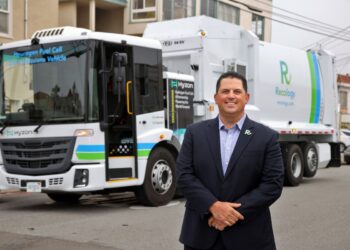
Recology CEO Sal Coniglio in front of one of the hauler's trucks

Recology’s Sal Coniglio on business and policy working together

byBrian Clark Howard
August 31, 2026

The CEO of the West Coast hauler and recycler shares his thoughts on EPR, organics and what keeps him up...

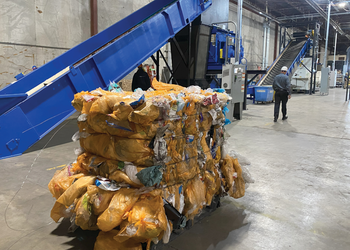
Hefty ending Orange Bag program

Hefty ending Orange Bag program

byAntoinette Smith
August 25, 2026

Although the Hefty ReNew program is ending, an Omaha recycler will continue accepting the bags as feedstock for plastic lumber.

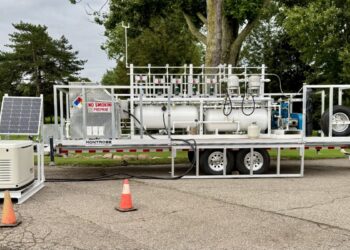
Propane and steel recycling unit

Pennsylvania pilot tackles propane cylinder recycling challenges

byIsabella Burke
August 24, 2026

A Pennsylvania pilot project is testing a new way to safely recover propane and steel from disposable propane cylinders, a...

Load More
Next Post

Triple-digit revenue gains propel ABTC’s expansion

2026 Buyers’ Guide

Equipment, services and technology suppliers serving the recycling industry.

Browse the Guide

More Posts

Oregon state capitol building with state flag and blue sky.

NAW appeals Oregon EPR ruling

September 25, 2026
Bin to Better gets students involved in reuse, recycling

Bin to Better gets students involved in reuse, recycling

September 24, 2026
Analysis: Undersupply of PCR is ‘stifling’ brand goals

US lawmakers urge protection of domestic RPET

September 25, 2026
Bipartisan reps introduce bill on recycling claims

House passes bill to ease lithium-ion battery storage rules

September 24, 2026
Calif. Governor Gavin Newsom at podium.

Newsom signs battery EPR expansion, vetoes SB 54 fund bill

September 24, 2026
Recyclers reeling from NJ PCR extension

Recyclers reeling from NJ PCR extension

September 23, 2026
Cutting healthcare plastics could save $18B

Report provides path to reduce medical e-scrap

September 25, 2026
Alpek closing Pennsylvania RPET plant

Alpek seizing on war-related opportunity 

July 27, 2026
E-scrap magnet recycling company scales up

Why only some rare-earth sources are economically viable

September 24, 2026
Jeff Fielkow and the startup that’s building the US packaging EPR system

Jeff Fielkow and the startup that’s building the US packaging EPR system

September 10, 2026
Load More

About & Publications

About Us

Staff

Archive

Magazines

Work With Us

Advertise
Jobs
Contact
Terms and Privacy

Newsletters

Get the latest recycling news and analysis delivered to your inbox every week. Stay ahead on industry trends, policy updates, and insights from programs, processors, and innovators.

Subscribe

Welcome Back!

Login to your account below

Forgotten Password?

Retrieve your password

Please enter your username or email address to reset your password.

Log In

Add New Playlist

No Result
View All Result
  • The Latest
  • Analysis
  • Recycling
  • E-Scrap
  • Plastics
  • Policy Now
  • Conferences
    • E-Scrap Conference
    • Plastics Recycling Conference
    • Resource Recycling Conference
    • Textiles Recovery Summit
  • Magazines
  • About Us
  • Advertise
  • Archive
  • Jobs
  • Staff
Subscribe
This website uses cookies. By continuing to use this website you are giving consent to cookies being used. Visit our Privacy and Cookie Policy.