




Resource Recycling
  • The Latest
  • Analysis
    • All
    • Certification Scorecard
    • Industry Announcements
    • Opinion

    Certification scorecard for the week of March 9, 2026

    Diversion Dynamics: Secondhand exports slow down fast fashion

    Certification scorecard for the week of March 2, 2026

    Industry announcements for January 2026

    Industry Announcements for March 2026

    HP receives ocean plastics certification

    HP Inc. earnings point to memory inflation challenge

    Certification scorecard for the week of Feb. 23, 2026

    Umicore highlights strength in recycling, catalysis

    Apto, Tusaar partner on rare earths recovery

    Apto, Tusaar partner on rare earths recovery

    Certification scorecard for the week of Feb. 16, 2026

  • Conferences
  • Publications

    Other Topics

    Textiles
    Organics
    Packaging
    Glass
    Brand Owners

    Metals
    Technology
    Research
    Markets
    Grant Watch

    All Topics

Subscribe
No Result
View All Result
Resource Recycling
  • The Latest
  • Analysis
    • All
    • Certification Scorecard
    • Industry Announcements
    • Opinion

    Certification scorecard for the week of March 9, 2026

    Diversion Dynamics: Secondhand exports slow down fast fashion

    Certification scorecard for the week of March 2, 2026

    Industry announcements for January 2026

    Industry Announcements for March 2026

    HP receives ocean plastics certification

    HP Inc. earnings point to memory inflation challenge

    Certification scorecard for the week of Feb. 23, 2026

    Umicore highlights strength in recycling, catalysis

    Apto, Tusaar partner on rare earths recovery

    Apto, Tusaar partner on rare earths recovery

    Certification scorecard for the week of Feb. 16, 2026

  • Conferences
  • Publications

    Other Topics

    Textiles
    Organics
    Packaging
    Glass
    Brand Owners

    Metals
    Technology
    Research
    Markets
    Grant Watch

    All Topics

Subscribe
No Result
View All Result
Resource Recycling
No Result
View All Result
Home Recycling

Report: Value of curbside materials drops 66% in two years

byJared Paben
February 12, 2020
in Recycling
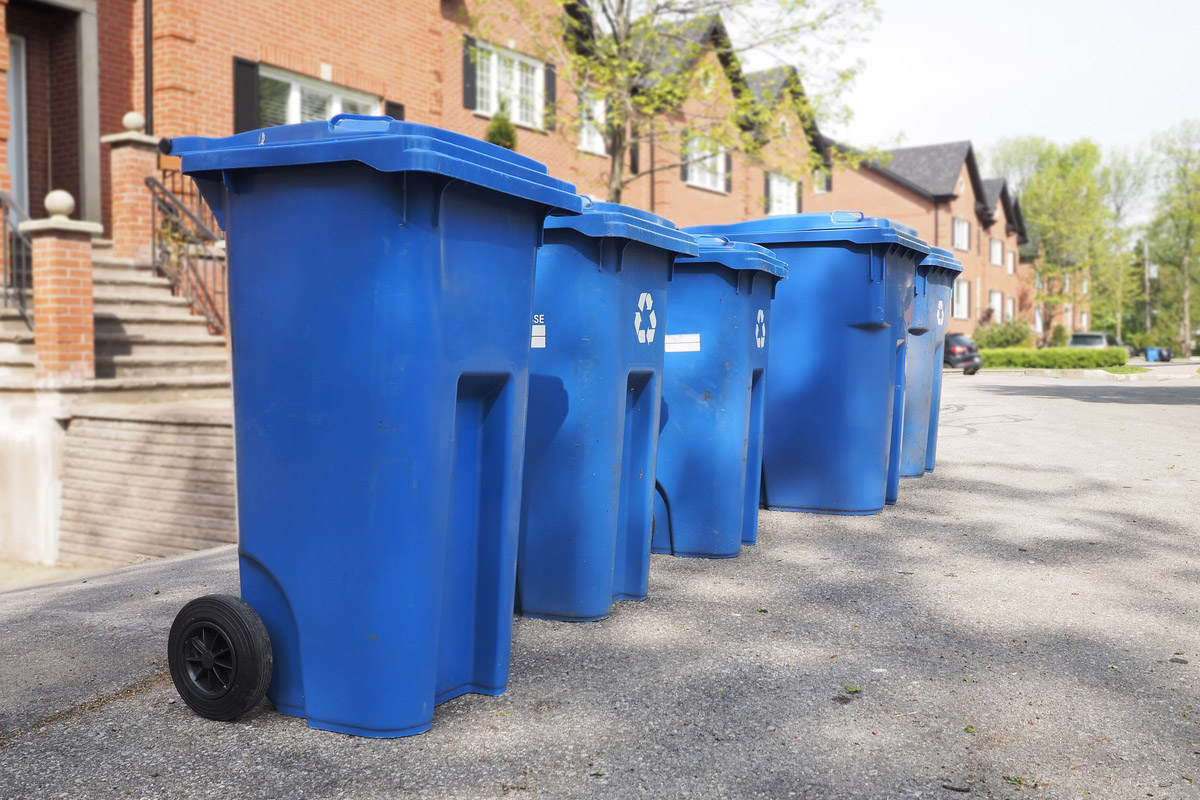
The Recycling Partnership’s “2020 State of Curbside” report delves into updated data on recycling in the U.S. | stephen rudolph/Shutterstock

To quickly grasp the struggles facing American curbside recycling programs, one can follow the money – or lack thereof. In July 2017, a ton of recyclables was worth over $90. In October 2019, it was worth $30. That’s according to new research from The Recycling Partnership.

The impact of that pricing plunge on municipal recycling programs is among the topics explored in The Recycling Partnership’s “2020 State of Curbside” report, which was released today.

The national nonprofit group’s 76-page analysis also provides updated data on curbside access, resident participation, contamination, markets, investment opportunities and more.

Changing economics of sorting and selling

It’s been a little more than three years since The Recycling Partnership, which is funded by large packaging stakeholders and works to boost U.S. recycling programs, last provided a detailed look at curbside recycling realities across the country.

Much has happened in recycling since then, most notably China’s National Sword campaign constricting the world’s largest export market for recyclables. And the repercussions of the market turbulence are a central theme of the latest “State of Curbside” document.

The report quantifies falling values for a blended ton of recyclables. It notes that as of October 2019 aluminum cans were the single largest commodity sales revenue generator, even though they represent a tiny fraction of the weight passing through MRFs. Values for cardboard and mixed-paper bales, which together make up over half the weight at a typical facility, have fallen to painfully low levels. (The report takes into account the effects of MRF residue on these material values.)

At the same time, The Recycling Partnership estimates the average MRF’s processing costs are about $80 per ton. To close the gap between material value and operating costs, MRF operators are now often charging processing fees to material suppliers. Using information from a 2019 survey of local recycling programs, The Recycling Partnership determines the average processing fee is nearly $64 per ton. Those fees have gone up over the past year by nearly $29 per ton, on average.

“As a possible sign of an ongoing trend, eight communities indicated that they did not have a tip fee [from their recycling processor] until 2018-19 and five communities previously received a rebate or reimbursement for recyclables, but do not any longer,” the “State of Curbside” report notes.

The data “points to the singular fact that curbside programs can now expect MRF processing charges to be a normal and expected cost in providing curbside services, placing a further cost burden on local communities,” the document notes.

How local programs are responding

Some mainstream media outlets have broadcast broad – and often dramatic – generalizations about the impacts of painful recovered commodities markets, in some cases suggesting the situation spells the “end of recycling.”

“The State of Curbside” report uses data to dampen that narrative. It estimates that as of late November 2019, 54 communities ceased curbside recycling service, with the average community that’s cut recycling having fewer than 9,000 households (most affected towns were under 5,000 households). That’s 0.5% of all single-family homes in the U.S., or 0.7% of U.S. households with curbside service.

“As of November 2019, it appears that the vast majority of programs are finding ways to sustain curbside collection, with very few eliminating curbside services,” according to the report. “This trend will have to be watched closely as hundreds of previously favorable MRF contracts will be reset in the next few years. Some communities are also adjusting materials collected for recycling, raising customer fees, and more positively, also taking steps to address contamination.”

The report acknowledges programs have sometimes slimmed down, however. The Recycling Partnership’s 2019 survey found about 29% of responding programs removed items from “accepted materials” lists over the past two years. Among the common materials targeted for axing were plastics Nos. 3-7, cartons/aseptic containers and films/plastic bags.

Some local governments have passed on the higher costs of recycling to their ratepayers. Since summer 2018, The Recycling Partnership has tracked media stories about fee increases. In 24 stories in which specific fee increases were reported, local governments hiked fees an average of $17.52 per customer per year, the report notes. But The Recycling Partnership’s survey had a surprisingly low number of respondents – 8% – indicate they had increased fees. Those that did said the average increase was $10.12 per household per year.

The report notes the fee hikes seemed to be modest and in line with MRF processing fee increases. It estimates that if a household is now paying $15 more annually for curbside recycling service, the additional revenue raised approximates $75 per ton.

“In the disaggregated nature of the U.S. curbside recycling services, the effect of large processing charges and weak markets have forced individual communities around the country to debate the value of recycling, all while dramatic media narratives report a recycling crisis,” the document concludes. “Under those conditions, it is a positive sign that communities are working hard to sustain or expand their curbside services.”
2020 Resource Recycling Conference

Tags: DataIndustry GroupsLocal ProgramsMRFsResearch
TweetShare
Jared Paben

Jared Paben

Related Posts

EPS foam recycling grants open for applications

byAntoinette Smith
March 11, 2026

The Foodservice Packaging Institute’s Foam Recycling Coalition will award grants of up to $50,000 to expand US recycling access for...

Trade flow shifts, volatility require varied responses

Trade flow shifts, volatility require varied responses

byAntoinette Smith
March 9, 2026

Both long- and short-term solutions including policy, localization can help support the industry, panelists said during the 2026 Plastics Recycling...

Common goal of responsible end markets: transparency 

Common goal of responsible end markets: transparency 

byAntoinette Smith
March 5, 2026

Panelists from state government, Circular Action Alliance and a reclaimer explored the particulars of REMs at the 2026 Plastics Recycling...

Fireside Chat at PRC features CAA chief

Fireside Chat at PRC features CAA chief

byAntoinette Smith
March 4, 2026

The CEOs of the Association of Plastic Recyclers and Circular Action Alliance held a candid, spirited discussion at the 2026...

Panelists: Textile recycling requires more automation

Panelists: Textile recycling requires more automation

byEditorial Staff
March 3, 2026

A workshop at the Textile Recycling Summit in San Diego explored how much automation could be deployed in sorting and...

California selects Landbell USA as PRO for textile EPR

byStefanie Valentic
March 2, 2026

CalRecycle has tapped European recycling veteran Landbell USA to lead the nation's first textile EPR program.

Load More
Next Post

Report: Value of curbside materials drops 66% in two years

More Posts

Five years of Women in Circularity: Reflections, connections and what’s next

March 16, 2026
How rising fuel and memory prices are impacting ITAD’s margins

How rising fuel and memory prices are impacting ITAD’s margins

March 10, 2026
ERI sues Revivn alleging raid on staff and trade secrets

ERI sues Revivn alleging raid on staff and trade secrets

March 10, 2026
RecycleDat! collects nearly 197,000 cans at Mardi Gras

RecycleDat! collects nearly 197,000 cans at Mardi Gras

March 9, 2026
Northeast recycled commodity values hit 5-year lows

Northeast recycled commodity values hit 5-year lows

March 6, 2026

Mint, HP close loop on recycled copper

March 3, 2026
Panelists: Textile recycling requires more automation

Panelists: Textile recycling requires more automation

March 3, 2026
K-Cup recycling comes to Ontario Blue Boxes

K-Cup recycling comes to Ontario Blue Boxes

March 2, 2026

Borealis, Borouge aim to bolster PE, PP recycling in Indonesia

February 27, 2026
PET bales stacked for recycling.

Evergreen closing RPET plants in Ohio, New York

February 24, 2026
Load More

About & Publications

About Us

Staff

Archive

Magazine

Work With Us

Advertise
Jobs
Contact
Terms and Privacy

Newsletter

Get the latest recycling news and analysis delivered to your inbox every week. Stay ahead on industry trends, policy updates, and insights from programs, processors, and innovators.

Subscribe

Welcome Back!

Login to your account below

Forgotten Password?

Retrieve your password

Please enter your username or email address to reset your password.

Log In

Add New Playlist

No Result
View All Result
  • The Latest
  • Analysis
  • Recycling
  • E-Scrap
  • Plastics
  • Policy Now
  • Conferences
    • E-Scrap Conference
    • Plastics Recycling Conference
    • Resource Recycling Conference
    • Textiles Recovery Summit
  • Magazine
  • About Us
  • Advertise
  • Archive
  • Jobs
  • Staff
Subscribe
This website uses cookies. By continuing to use this website you are giving consent to cookies being used. Visit our Privacy and Cookie Policy.