




Resource Recycling
  • The Latest
  • Analysis
    • All
    • Certification Scorecard
    • Industry Announcements
    • Opinion
    NJ’s PCR delay risks making its own excuse permanently true

    NJ’s PCR delay risks making its own excuse permanently true

    E-scrap magnet recycling company scales up

    Why only some rare-earth sources are economically viable

    e-Stewards to develop an ITAD-specific standard

    Certification scorecard — week of Sept. 21

    Who should pay for lithium-ion battery fire damage?

    America’s critical-materials buildout has a feedstock problem

    Certification scorecard – week of Sept. 14

  • Conferences
    • Resource Recycling Conference
    • Plastics Recycling Conference
    • E-Scrap: The Longevity Conference
    • Textiles Recovery Summit
  • Publications
    • E-Scrap News
    • Plastics Recycling Update
    • Policy Now
    • Resource Recycling
    • Other Topics
      • All Topics
      • Brand Owners
      • Critical Minerals
      • Glass
      • Grant Watch / RFPs
      • Markets
      • Organics
      • Packaging
      • Research
      • Technology
      • Textiles
Subscribe
No Result
View All Result
Resource Recycling
No Result
View All Result
Home Recycling

Report: Value of curbside materials drops 66% in two years

byJared Paben
February 12, 2020
in Recycling
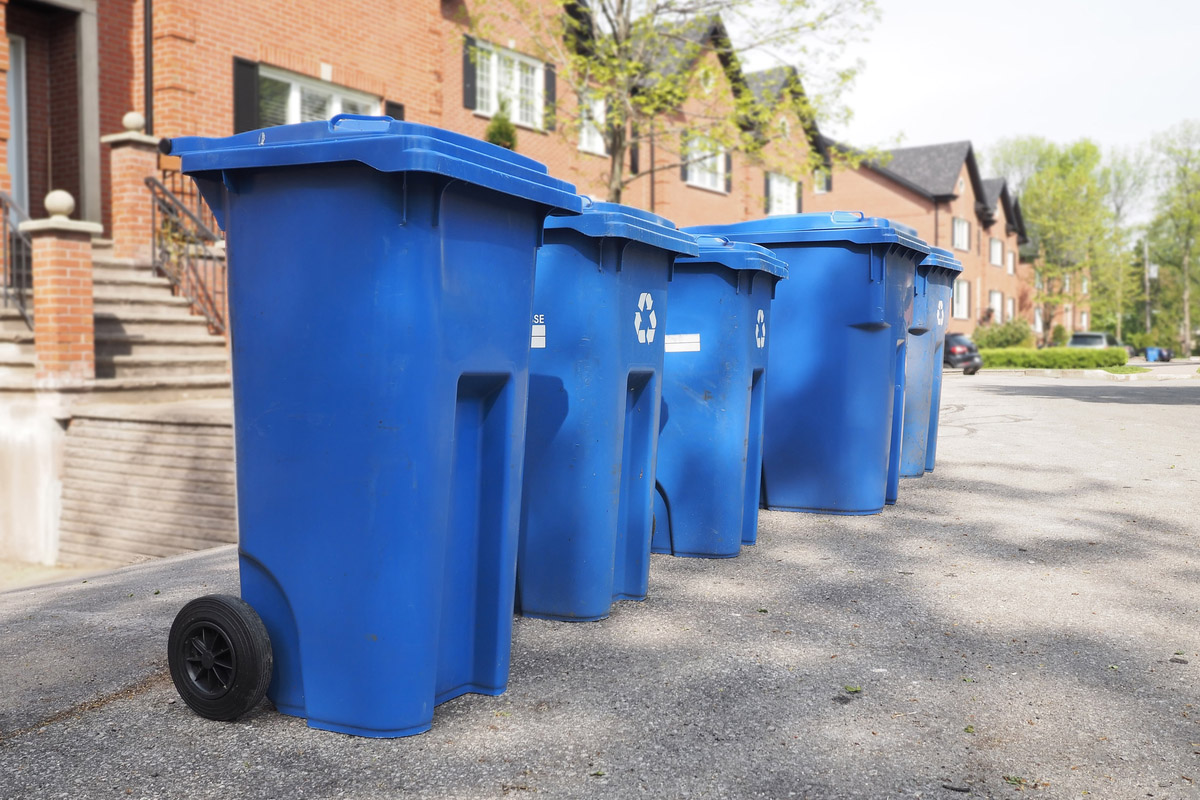
The Recycling Partnership’s “2020 State of Curbside” report delves into updated data on recycling in the U.S. | stephen rudolph/Shutterstock

To quickly grasp the struggles facing American curbside recycling programs, one can follow the money – or lack thereof. In July 2017, a ton of recyclables was worth over $90. In October 2019, it was worth $30. That’s according to new research from The Recycling Partnership.

The impact of that pricing plunge on municipal recycling programs is among the topics explored in The Recycling Partnership’s “2020 State of Curbside” report, which was released today.

The national nonprofit group’s 76-page analysis also provides updated data on curbside access, resident participation, contamination, markets, investment opportunities and more.

Changing economics of sorting and selling

It’s been a little more than three years since The Recycling Partnership, which is funded by large packaging stakeholders and works to boost U.S. recycling programs, last provided a detailed look at curbside recycling realities across the country.

Much has happened in recycling since then, most notably China’s National Sword campaign constricting the world’s largest export market for recyclables. And the repercussions of the market turbulence are a central theme of the latest “State of Curbside” document.

The report quantifies falling values for a blended ton of recyclables. It notes that as of October 2019 aluminum cans were the single largest commodity sales revenue generator, even though they represent a tiny fraction of the weight passing through MRFs. Values for cardboard and mixed-paper bales, which together make up over half the weight at a typical facility, have fallen to painfully low levels. (The report takes into account the effects of MRF residue on these material values.)

At the same time, The Recycling Partnership estimates the average MRF’s processing costs are about $80 per ton. To close the gap between material value and operating costs, MRF operators are now often charging processing fees to material suppliers. Using information from a 2019 survey of local recycling programs, The Recycling Partnership determines the average processing fee is nearly $64 per ton. Those fees have gone up over the past year by nearly $29 per ton, on average.

“As a possible sign of an ongoing trend, eight communities indicated that they did not have a tip fee [from their recycling processor] until 2018-19 and five communities previously received a rebate or reimbursement for recyclables, but do not any longer,” the “State of Curbside” report notes.

The data “points to the singular fact that curbside programs can now expect MRF processing charges to be a normal and expected cost in providing curbside services, placing a further cost burden on local communities,” the document notes.

How local programs are responding

Some mainstream media outlets have broadcast broad – and often dramatic – generalizations about the impacts of painful recovered commodities markets, in some cases suggesting the situation spells the “end of recycling.”

“The State of Curbside” report uses data to dampen that narrative. It estimates that as of late November 2019, 54 communities ceased curbside recycling service, with the average community that’s cut recycling having fewer than 9,000 households (most affected towns were under 5,000 households). That’s 0.5% of all single-family homes in the U.S., or 0.7% of U.S. households with curbside service.

“As of November 2019, it appears that the vast majority of programs are finding ways to sustain curbside collection, with very few eliminating curbside services,” according to the report. “This trend will have to be watched closely as hundreds of previously favorable MRF contracts will be reset in the next few years. Some communities are also adjusting materials collected for recycling, raising customer fees, and more positively, also taking steps to address contamination.”

The report acknowledges programs have sometimes slimmed down, however. The Recycling Partnership’s 2019 survey found about 29% of responding programs removed items from “accepted materials” lists over the past two years. Among the common materials targeted for axing were plastics Nos. 3-7, cartons/aseptic containers and films/plastic bags.

Some local governments have passed on the higher costs of recycling to their ratepayers. Since summer 2018, The Recycling Partnership has tracked media stories about fee increases. In 24 stories in which specific fee increases were reported, local governments hiked fees an average of $17.52 per customer per year, the report notes. But The Recycling Partnership’s survey had a surprisingly low number of respondents – 8% – indicate they had increased fees. Those that did said the average increase was $10.12 per household per year.

The report notes the fee hikes seemed to be modest and in line with MRF processing fee increases. It estimates that if a household is now paying $15 more annually for curbside recycling service, the additional revenue raised approximates $75 per ton.

“In the disaggregated nature of the U.S. curbside recycling services, the effect of large processing charges and weak markets have forced individual communities around the country to debate the value of recycling, all while dramatic media narratives report a recycling crisis,” the document concludes. “Under those conditions, it is a positive sign that communities are working hard to sustain or expand their curbside services.”
2020 Resource Recycling Conference

Tags: DataIndustry GroupsLocal ProgramsMRFsResearch
TweetShare
Jared Paben

Jared Paben

Related Posts

Analysis: Undersupply of PCR is ‘stifling’ brand goals

US lawmakers urge protection of domestic RPET

byAntoinette Smith
September 25, 2026

In a letter to the US Trade Representative, five representatives asked the USTR to consider trade remedies and support verification...

Oregon state capitol building with state flag and blue sky.

NAW appeals Oregon EPR ruling

byStefanie Valentic
September 25, 2026

NAW is challenging an Oregon judge's ruling in favor of the state's extended producer responsibility law.

Bin to Better gets students involved in reuse, recycling

Bin to Better gets students involved in reuse, recycling

byPaul Lane
September 24, 2026

E-scrap among three focus areas for student-run, California-based environmental advocacy group.

APR reports success for 2026 recycling tours 

APR reports success for 2026 recycling tours 

byAntoinette Smith
September 23, 2026

In May, more than 2,500 visitors toured 41 facilities in the US and Mexico, during APR's second annual Recycling in...

Recyclers reeling from NJ PCR extension

Recyclers reeling from NJ PCR extension

byAntoinette Smith
September 23, 2026

The recent three-year extension for exemptions to the state's PCR mandates elicited frustration and confusion among recyclers.

Textile EPR and the definition of recycling

Textile Exchange reports progress in production

byPaul Lane
September 22, 2026

The organization said the industry has made some sustainability progress, but there’s much room for improvement.

Load More
Next Post

Report: Value of curbside materials drops 66% in two years

2026 Buyers’ Guide

Equipment, services and technology suppliers serving the recycling industry.

Browse the Guide

More Posts

Textile EPR and the definition of recycling

Textile Exchange reports progress in production

September 22, 2026

In other news: May 2, 2016

May 2, 2016

America’s critical-materials buildout has a feedstock problem

September 18, 2026
Intel sign outside of company building.

Intel’s CapEx tops $20B on server demand while PC volume shrinks

July 29, 2026
E-scrap magnet recycling company scales up

Why only some rare-earth sources are economically viable

September 24, 2026
Ten e-scrap projects receive federal prize funds

Recycling rates for rare earths could double by 2040

July 17, 2026
NJ’s PCR delay risks making its own excuse permanently true

NJ’s PCR delay risks making its own excuse permanently true

September 28, 2026
Closeup of a printed circuitboard

Hardware demand puts new focus on parts harvesting

June 5, 2026

Who should pay for lithium-ion battery fire damage?

September 21, 2026

Microsoft confirms PC sales slump

August 4, 2026
Load More

About & Publications

About Us

Staff

Archive

Magazines

Work With Us

Advertise
Jobs
Contact
Terms and Privacy

Newsletters

Get the latest recycling news and analysis delivered to your inbox every week. Stay ahead on industry trends, policy updates, and insights from programs, processors, and innovators.

Subscribe

Welcome Back!

Login to your account below

Forgotten Password?

Retrieve your password

Please enter your username or email address to reset your password.

Log In

Add New Playlist

No Result
View All Result
  • The Latest
  • Analysis
  • Recycling
  • E-Scrap
  • Plastics
  • Policy Now
  • Conferences
    • E-Scrap Conference
    • Plastics Recycling Conference
    • Resource Recycling Conference
    • Textiles Recovery Summit
  • Magazines
  • About Us
  • Advertise
  • Archive
  • Jobs
  • Staff
Subscribe
This website uses cookies. By continuing to use this website you are giving consent to cookies being used. Visit our Privacy and Cookie Policy.
-
00:00
00:00

Queue

Update Required Flash plugin
-
00:00
00:00