Resource Recycling
  • The Latest
  • Analysis
    • All
    • Certification Scorecard
    • Industry Announcements
    • Opinion
    NJ’s PCR delay risks making its own excuse permanently true

    NJ’s PCR delay risks making its own excuse permanently true

    E-scrap magnet recycling company scales up

    Why only some rare-earth sources are economically viable

    e-Stewards to develop an ITAD-specific standard

    Certification scorecard — week of Sept. 21

    Who should pay for lithium-ion battery fire damage?

    America’s critical-materials buildout has a feedstock problem

    Certification scorecard – week of Sept. 14

  • Conferences
    • Resource Recycling Conference
    • Plastics Recycling Conference
    • E-Scrap: The Longevity Conference
    • Textiles Recovery Summit
  • Publications
    • E-Scrap News
    • Plastics Recycling Update
    • Policy Now
    • Resource Recycling
    • Other Topics
      • All Topics
      • Brand Owners
      • Critical Minerals
      • Glass
      • Grant Watch / RFPs
      • Markets
      • Organics
      • Packaging
      • Research
      • Technology
      • Textiles
Subscribe
No Result
View All Result
Resource Recycling
No Result
View All Result
Home Recycling

Study explores what works — and what doesn’t do much — in curbside recycling

byJared Paben
December 12, 2016
in Recycling

A report from The Recycling Partnership and U.S. EPA lays bare the reality there is no silver bullet for creating a stellar curbside recycling program. That being said, researchers did paint a detailed portrait of what successful programs look like.

“There was not one individual attribute that indicates success, but several that affect performance and trends became evident,” according to the report. “The majority of the highest-performing programs collect material single-stream, collect curbside recycling automatically, use an automated cart-based system, and have public engagement that influences curbside recycling to occur in their community.”

The 2016 State of Curbside Report, released Tuesday, Dec. 13, was written by the nonprofit group The Recycling Partnership with grant funding from the U.S. EPA. The project’s lead researcher was Cody Marshall of The Recycling Partnership (see the related question-and-answer piece with Marshall). He and other experts gathered data on recycling programs in 465 cities across the U.S., making sure to include the 250 most-populous cities and each state capital. In all, the communities represent 29 percent of the homes in the U.S. that could potentially receive curbside recycling service.

Their report points to steps communities can take that are likely to significantly increase recycling weights. But the report also demonstrates that other oft-discussed strategies, such as collecting recycling on a weekly basis, may not boost recycling weights all that much.

Factors driving diversion

The research found the 465 incorporated communities collected an average of 357 pounds per household per year (note: This refers to all households in the studied jurisdictions, not just the households that actively recycle).

More than 8 in 10 of the communities utilized single-stream collection, and more than half of them collected material every week.

To find factors potentially driving higher recycling weights, researchers examined 20 percent of the top-performing communities, or those collecting at least 400 pounds per household per year.

More details on what they found:

One bigger stream: Among top performers studied, 96 percent utilized single-stream collection. Across the country, single-stream programs collected an average of 364 pounds per household annually. In contrast, communities that collect fibers and containers separate in dual streams averaged 277 pounds per households.

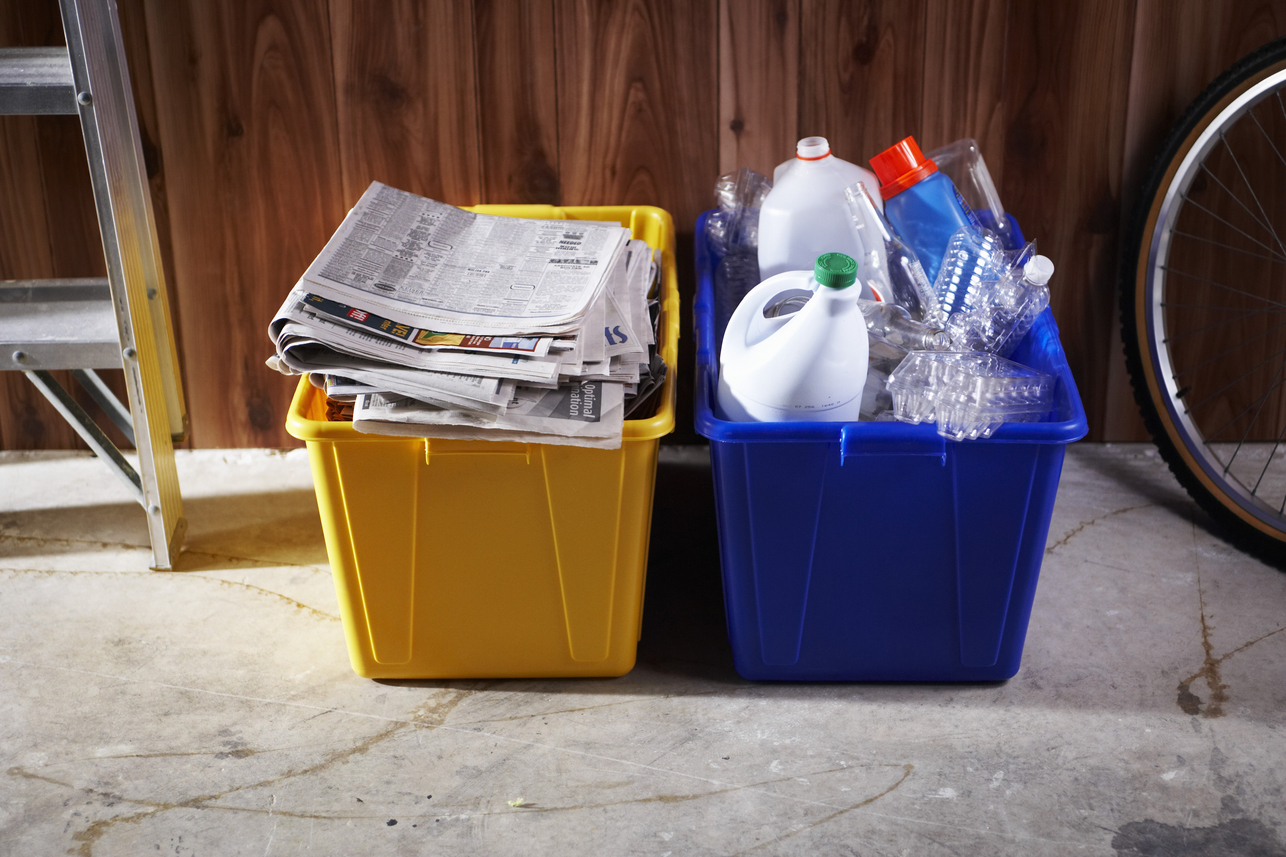
Cart before the bin: Among the top-performers, 83 percent use carts instead of bins. Nationwide, carts collected an average of 389 pounds per household, compared to 271 pounds for bins.

If you provide it, they will come: Among the top-performers, 93 percent provide recycling containers and service to residents automatically, without requiring the household to take any action. Across the country, communities that did this collected 374 pounds per household, compared to 264 pounds per household for those requiring residents to opt-in to service.

Key role of government: Among the top-performers, 100 percent took some action to incentivize recycling. One example is creating licensing agreements or franchises that bundle garbage and recycling service together, regardless of whether residents have to opt-in to garbage service. Across the country, programs taking “public actions” to incentivize recycling collected 359 pounds per household, compared to 247 pounds for those that didn’t.

Less important factors

The report found other attributes that may not have as significant of an impact as some may guess.

For example, researchers found that jurisdictions with high landfill tip fees tended to collect more recyclable materials than those with lower fees, but it wasn’t as big of a spread as they expected. Jurisdictions with tip fees in excess of $40 a ton collected about 380 pounds of per household per year. Those with tip fees less than $40 collected 340 pounds per household.

“This was largely due to a number of municipalities in high-tip fee environments with low recovery rates, as well as municipalities in low tip fee environments having high recovery rates,” according to the report. “More detailed research on this specific topic is needed to draw further conclusions.”

Additionally, picking up recycling weekly, as opposed to once every other week, resulted in only a slight increase in collection weights. Communities collecting weekly brought in 366 pounds per household, and those collecting every other week brought in 362 pounds.

Lastly, who does the collecting doesn’t seem to matter too much: Researchers didn’t find a major weight difference between communities where private workers collect recyclable materials and those where municipal workers collect them, they wrote. Communities with private haulers averaged 371 pounds per household, while those with public haulers averaged 345 pounds per household.

“There appears to be no correlation to effective collection of recyclables and whether the material was collected by private or public entities,” according to the report.


SSI

Tags: CollectionIndustry Groups
TweetShare
Jared Paben

Jared Paben

Related Posts

Analysis: Undersupply of PCR is ‘stifling’ brand goals

US lawmakers urge protection of domestic RPET

byAntoinette Smith
September 25, 2026

In a letter to the US Trade Representative, five representatives asked the USTR to consider trade remedies and support verification...

Oregon state capitol building with state flag and blue sky.

NAW appeals Oregon EPR ruling

byStefanie Valentic
September 25, 2026

NAW is challenging an Oregon judge's ruling in favor of the state's extended producer responsibility law.

Bipartisan reps introduce bill on recycling claims

House passes bill to ease lithium-ion battery storage rules

byStefanie Valentic
September 24, 2026

The BRACE Act would let lithium-ion battery recyclers store batteries on site under universal waste rules and give EPA 18...

APR reports success for 2026 recycling tours 

APR reports success for 2026 recycling tours 

byAntoinette Smith
September 23, 2026

In May, more than 2,500 visitors toured 41 facilities in the US and Mexico, during APR's second annual Recycling in...

Recyclers reeling from NJ PCR extension

Recyclers reeling from NJ PCR extension

byAntoinette Smith
September 23, 2026

The recent three-year extension for exemptions to the state's PCR mandates elicited frustration and confusion among recyclers.

Textile EPR and the definition of recycling

Textile Exchange reports progress in production

byPaul Lane
September 22, 2026

The organization said the industry has made some sustainability progress, but there’s much room for improvement.

Load More
Next Post

Bag ban basics

2026 Buyers’ Guide

Equipment, services and technology suppliers serving the recycling industry.

Browse the Guide

More Posts

Ten e-scrap projects receive federal prize funds

Recycling rates for rare earths could double by 2040

July 17, 2026
Intel sign outside of company building.

Intel’s CapEx tops $20B on server demand while PC volume shrinks

July 29, 2026
Feds to develop repairable computer donation program

The whitebox blind spot in PC recycling

April 24, 2026
Textile EPR and the definition of recycling

Textile Exchange reports progress in production

September 22, 2026

America’s critical-materials buildout has a feedstock problem

September 18, 2026

Microsoft confirms PC sales slump

August 4, 2026
Data erasure firm expands wearable device capabilities

Apple hits 30% recycled content, debuts new recovery tech

April 17, 2026

In other news: May 2, 2016

May 2, 2016
Closeup of a printed circuitboard

Hardware demand puts new focus on parts harvesting

June 5, 2026
The electronics recycling industry is undergoing a transformation from labor-intensive manual operations to highly automated, AI-driven facilities that use advanced robotics, cleaner chemistry and digital tracking systems to extract critical materials.

The cyber-physical MRF: AI and robotics reshape e-waste recovery

February 12, 2026
Load More

About & Publications

About Us

Staff

Archive

Magazines

Work With Us

Advertise
Jobs
Contact
Terms and Privacy

Newsletters

Get the latest recycling news and analysis delivered to your inbox every week. Stay ahead on industry trends, policy updates, and insights from programs, processors, and innovators.

Subscribe

Welcome Back!

Login to your account below

Forgotten Password?

Retrieve your password

Please enter your username or email address to reset your password.

Log In

Add New Playlist

No Result
View All Result
  • The Latest
  • Analysis
  • Recycling
  • E-Scrap
  • Plastics
  • Policy Now
  • Conferences
    • E-Scrap Conference
    • Plastics Recycling Conference
    • Resource Recycling Conference
    • Textiles Recovery Summit
  • Magazines
  • About Us
  • Advertise
  • Archive
  • Jobs
  • Staff
Subscribe
This website uses cookies. By continuing to use this website you are giving consent to cookies being used. Visit our Privacy and Cookie Policy.
-
00:00
00:00

Queue

Update Required Flash plugin
-
00:00
00:00