




Resource Recycling
  • The Latest
  • Analysis
    • All
    • Certification Scorecard
    • Industry Announcements
    • Opinion
    SERI works to restore faith in certifications

    Building a defensible E-scrap evidence file

    tires

    The most important decision in tire recycling happens before the shredder

    Intel sign outside of company building.

    Intel’s CapEx tops $20B on server demand while PC volume shrinks

    Google sign on company building with blue sky and clouds above.

    Inside Alphabet’s Q2 results: More capital spending and cloud backlog

    Alpek closing Pennsylvania RPET plant

    Alpek seizing on war-related opportunity 

    Our top stories from March 2023

    Iron Mountain’s data center report: Strong on power, quiet on hardware

  • Conferences
    • Resource Recycling Conference
    • Plastics Recycling Conference
    • E-Scrap: The Longevity Conference
    • Textiles Recovery Summit
  • Publications
    • E-Scrap News
    • Plastics Recycling Update
    • Policy Now
    • Resource Recycling
    • Other Topics
      • All Topics
      • Brand Owners
      • Critical Minerals
      • Glass
      • Grant Watch / RFPs
      • Markets
      • Organics
      • Packaging
      • Research
      • Technology
      • Textiles
Subscribe
No Result
View All Result
Resource Recycling
  • The Latest
  • Analysis
    • All
    • Certification Scorecard
    • Industry Announcements
    • Opinion
    SERI works to restore faith in certifications

    Building a defensible E-scrap evidence file

    tires

    The most important decision in tire recycling happens before the shredder

    Intel sign outside of company building.

    Intel’s CapEx tops $20B on server demand while PC volume shrinks

    Google sign on company building with blue sky and clouds above.

    Inside Alphabet’s Q2 results: More capital spending and cloud backlog

    Alpek closing Pennsylvania RPET plant

    Alpek seizing on war-related opportunity 

    Our top stories from March 2023

    Iron Mountain’s data center report: Strong on power, quiet on hardware

  • Conferences
    • Resource Recycling Conference
    • Plastics Recycling Conference
    • E-Scrap: The Longevity Conference
    • Textiles Recovery Summit
  • Publications
    • E-Scrap News
    • Plastics Recycling Update
    • Policy Now
    • Resource Recycling
    • Other Topics
      • All Topics
      • Brand Owners
      • Critical Minerals
      • Glass
      • Grant Watch / RFPs
      • Markets
      • Organics
      • Packaging
      • Research
      • Technology
      • Textiles
Subscribe
No Result
View All Result
Resource Recycling
No Result
View All Result
Home Recycling

New possible role for MRF robots: hazard detection

byJared Paben
February 8, 2022
in Recycling
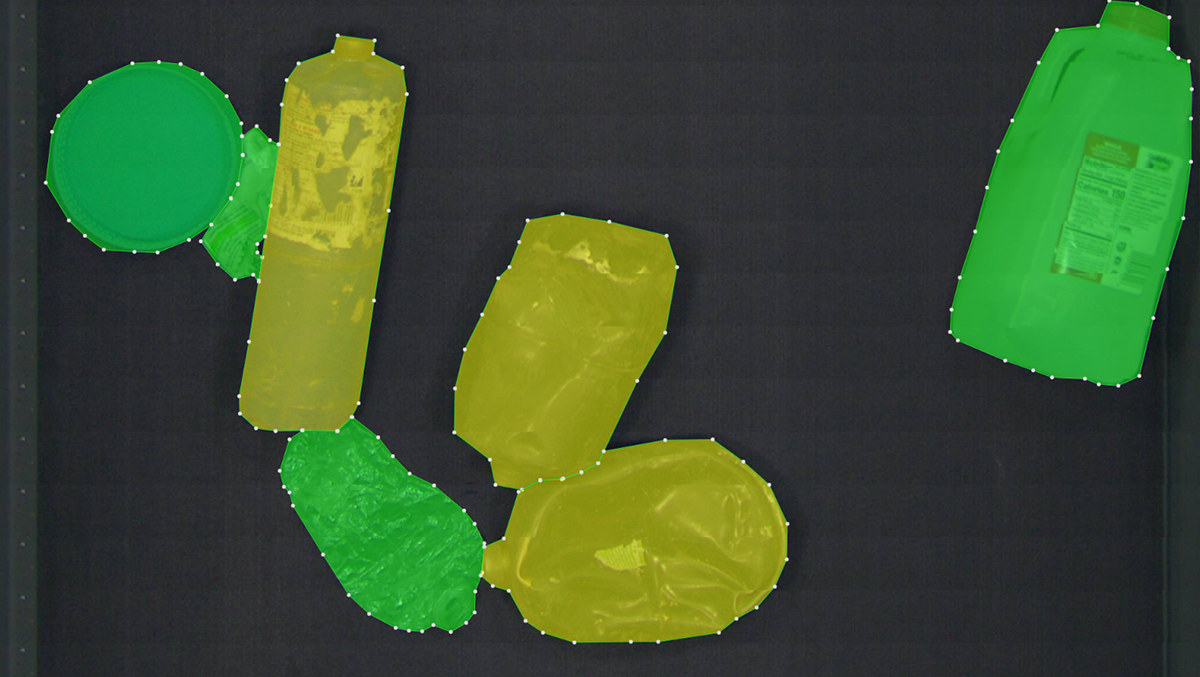
AMP Robotics is training its AI-powered visioning system to identify hazards such as fuel tanks and batteries so MRFs can safely remove them. | Courtesy of AMP Robotics

AMP Robotics is training its AI-powered camera system to identify fuel tanks and batteries on conveyor belts, so the system can alert MRF staff to the hazards.

“Health and safety risks have been a longstanding challenge for the industry, and our commitment to modernizing recycling involves mitigating these issues,” Amanda Marrs, senior director of product for AMP Robotics, stated in a press release.

The Denver-based company supplies AI-powered visioning systems and sorting robots to recycling facilities around the world, including MRFs throughout the U.S.

In an interview with Resource Recycling, Marrs explained that the company is running batches of batteries and fuel tanks in varying conditions and positions under its visioning system cameras so the software can begin to recognize them based on appearance.

The materials are being supplied by The Happy Beetle, a Denver-based, door-to-door recycling subscription service for materials not otherwise accepted in curbside containers. Marrs said AMP first reached out to The Happy Beetle in October 2021, and within a month the company provided the first batch of materials for feeding through the visioning system. AMP plans to continue evaluating hazardous items until the visioning system hits AMP Robotics’ metrics that demonstrate its recognition abilities have reached a high level, she said.

AMP plans to train its system to see a variety of hazardous items, but the company decided to start with batteries, particularly lithium-ion batteries, and fuel tanks because of the substantial fire and explosion risks they present to MRFs, Marrs said.

Starting with batteries and fuel tanks

Fires have become a regular occurrence at MRFs because of the increasing prevalence of energy-packed lithium-ion batteries in a plethora of consumer products. Curbside collection trucks, front end loaders working on tipping floors and shredding and sorting equipment can all damage those items and cause fires or explosions, injuring employees and destroying equipment or entire buildings.

Just recently, on Jan. 14, a Balcones Resources MRF near Austin, Texas experienced a significant fire caused by a damaged lithium-ion battery that was tucked in an incoming load of material. It was the second fire at one of its facilities in a week.

A U.S EPA report last year noted that battery-sparked fires occur throughout the recycling industry, but MRFs “have faced the brunt of the negative impact.” The epidemic of fires is making it hard for some MRFs to find insurance, and it’s raising insurance premiums.

Fuel tanks are another ever-present hazard. For example, a year ago, a fuel tank that was hidden under other material exploded in a shredder at a Sun Services C&D debris plant in Maryland, blowing off the sides of the building and sending workers running in fear. Surveillance cameras captured the explosion on video.

AMP sees value in detecting hazards both in the pre-sort line and further back in the system. Marrs noted that the danger goes beyond the front end of a sorting system.

“As things go through the line, there’s still an opportunity to detect these hazards and pull them out as soon as possible,” she said. AMP’s visioning system and robots are often deployed on fiber and container QC lines, as well as last-chance lines, she said.

In terms of what happens when a hazardous item is detected, that’ll be up to the MRF operator, she said. The system could trigger an audio alarm or light to alert workers. The robotic arms AMP uses, provided by Omron, could pick smaller hazards off the line but not large gas grill propane tanks, for example. And the robot would still need a place to safely drop and store the items.

Marrs said AMP anticipates that customers will initially use the hazard recognition abilities to capture data on the prevalence of hazards in their streams; after that, they’ll look at ways to remove them, she said.

After AMP has fully trained its artificial neural network to identify a wide variety of batteries and fuel tanks, the company will upload that knowledge to AMP systems deployed at recycling facilities. AMP said the release would be “in the near future.”

The company’s robotic and standalone visioning systems are deployed at recycling facilities around the world sorting MSW, plastics, electronics and C&D debris (Marrs noted that not all facilities will likely need the capabilities to recognize batteries and fuel tanks, including secondary plastics reclaimers).

In the future, AMP plans to train its system to identify other hazards to MRFs, including electronics, sharps, bio-hazards and chemicals. She noted the company has already built a foundation of data recognizing needles, which pose substantial risks to manual sorters.

 

Tags: MRFsTechnology
TweetShare
Jared Paben

Jared Paben

Related Posts

Intel sign outside of company building.

Intel’s CapEx tops $20B on server demand while PC volume shrinks

byDavid Daoud
July 29, 2026

As a result ITAD firms should plan for two separate asset cycles.

Facility fires on pace to match 2025

byPaul Lane
July 29, 2026

The mid-year report from Fire Rover found the number of fire incidents remains elevated compared to historical averages.

Greyparrot positions waste intel as key to effective EPR

Greyparrot secures $27m for growing AI waste data

byAntoinette Smith
July 28, 2026

The AI waste intelligence firm has now raised a total of $60 million to help expand its Analyzer network and...

Google sign on company building with blue sky and clouds above.

Inside Alphabet’s Q2 results: More capital spending and cloud backlog

byDavid Daoud
July 28, 2026

The tech giant spent $44.9 billion in a single quarter building AI infrastructure, with major implications for the ITAD space.

Our top stories from March 2023

Iron Mountain’s data center report: Strong on power, quiet on hardware

byDavid Daoud
July 24, 2026

The company’s 2025 Sustainability Overview tells a story both in the data it presents and in the data it omits.

Rare earth processor lands $5.1M in Defense funds

ERI, Cyclic Materials team up on e-scrap

byDavid Daoud
July 21, 2026

Partnership pairs one of the country's largest electronics recyclers with a rare earth recovery specialist, aiming to build a domestic...

Load More
Next Post

National bottle bill likely to land in Congress soon

2026 Buyers’ Guide

Equipment, services and technology suppliers serving the recycling industry.

Browse the Guide

More Posts

California provides funding to boost thermoform recycling

APR and ANIPAC promote recycling in Mexico

May 27, 2026
Analysis: circular design still elusive in laptops

PC shipments grew in Q1, but questions remain

April 23, 2026

PP cups now ‘widely recyclable’ with increased acceptance

February 3, 2026
LG collection volume increased notably in 2024

LG collection volume increased notably in 2024

July 17, 2025
Texas processor preparing to open new facility

Sumitomo bets on AI, data centers with GreenTek deal

July 14, 2026
In Our Opinion: Coalitions: The EPR Differentiator

Inside NAW’s constitutional case against packaging EPR

July 6, 2026
Boliden kept recycled material use steady

Boliden kept recycled material use steady

March 14, 2024
Closeup of a lithium-ion battery.

Here are the rules on handling lithium-ion batteries

February 13, 2020
Innovation. Partnership. Circular value.

Innovation. Partnership. Circular value.

August 1, 2026
SERI works to restore faith in certifications

Building a defensible E-scrap evidence file

August 6, 2026
Load More

About & Publications

About Us

Staff

Archive

Magazine

Work With Us

Advertise
Jobs
Contact
Terms and Privacy

Newsletter

Get the latest recycling news and analysis delivered to your inbox every week. Stay ahead on industry trends, policy updates, and insights from programs, processors, and innovators.

Subscribe

Welcome Back!

Login to your account below

Forgotten Password?

Retrieve your password

Please enter your username or email address to reset your password.

Log In

Add New Playlist

No Result
View All Result
  • The Latest
  • Analysis
  • Recycling
  • E-Scrap
  • Plastics
  • Policy Now
  • Conferences
    • E-Scrap Conference
    • Plastics Recycling Conference
    • Resource Recycling Conference
    • Textiles Recovery Summit
  • Magazine
  • About Us
  • Advertise
  • Archive
  • Jobs
  • Staff
Subscribe
This website uses cookies. By continuing to use this website you are giving consent to cookies being used. Visit our Privacy and Cookie Policy.