
Resource Recycling
  • The Latest
  • Analysis
    • All
    • Certification Scorecard
    • Industry Announcements
    • Opinion
    NJ’s PCR delay risks making its own excuse permanently true

    NJ’s PCR delay risks making its own excuse permanently true

    E-scrap magnet recycling company scales up

    Why only some rare-earth sources are economically viable

    e-Stewards to develop an ITAD-specific standard

    Certification scorecard — week of Sept. 21

    Who should pay for lithium-ion battery fire damage?

    America’s critical-materials buildout has a feedstock problem

    Certification scorecard – week of Sept. 14

  • Conferences
    • Resource Recycling Conference
    • Plastics Recycling Conference
    • E-Scrap: The Longevity Conference
    • Textiles Recovery Summit
  • Publications
    • E-Scrap News
    • Plastics Recycling Update
    • Policy Now
    • Resource Recycling
    • Other Topics
      • All Topics
      • Brand Owners
      • Critical Minerals
      • Glass
      • Grant Watch / RFPs
      • Markets
      • Organics
      • Packaging
      • Research
      • Technology
      • Textiles
Subscribe
No Result
View All Result
Resource Recycling
No Result
View All Result
Home Recycling

In nationwide first, California passes EPR for textiles

Marissa HeffernanbyMarissa Heffernan
October 8, 2024
in Recycling

Chatham172 / Shutterstock

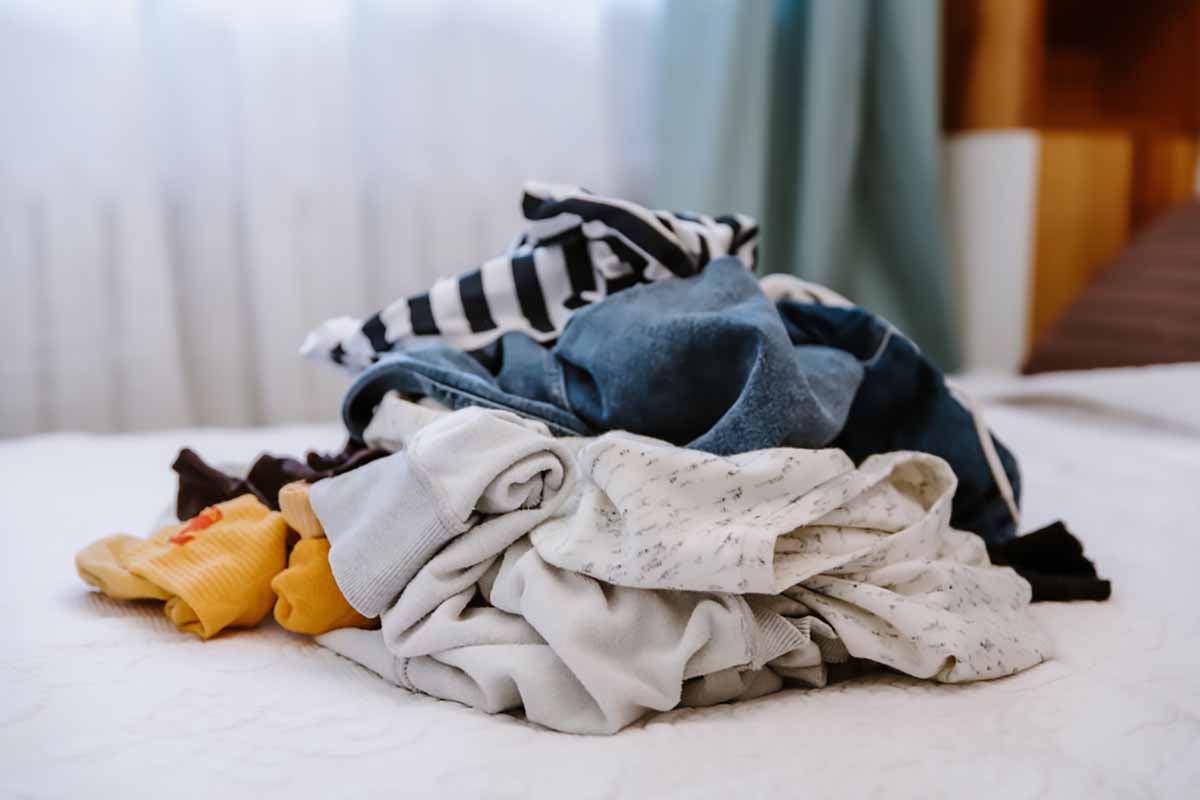
The law covers a wide range of clothing but excludes carpet and mattresses, which are covered by other EPR programs in California. | Chatham172/Shutterstock

California has become the first state to approve extended producer responsibility for textiles, after Gov. Gavin Newsom signed legislation enacting the program. 

According to the U.N., about 60% of clothing produced globally is made from plastic, including polyester, acrylic and nylon textiles.

Like most EPR programs, SB 707, or the Responsible Textile Recovery Act of 2024, requires producers of apparel or textile articles to form a producer responsibility organization to carry out the requirements of the law. Those include a needs assessment, setting and collecting eco-modulated fees from producers – which are meant to incentivize easily recyclable or repairable design choices – and setting and meeting target metrics. 

“The bill would require the PRO to submit to the department, for approval or disapproval, a complete plan for the collection, transportation, repair, sorting and recycling, and the safe and proper management, of apparel and textile articles in the state,” according to the bill text. 

Covered apparel includes “clothing and accessory items intended for regular wear or formal occasions and outdoor activities,” the law states, such as undergarments, everyday clothing, athletic clothing, business suits, formalwear, handbags, backpacks, outerwear, knitted and woven accessories and work uniforms.

It excludes personal protective equipment; clothing and PPE made for use by the U.S. military; some reusable products, such as cloth diapers and cloth menstrual pads; products covered by the state’s mattress and carpet EPR programs; and window coverings.

In addition, sellers who only handle covered products secondhand are not considered producers under the law. 

The Product Stewardship Institute, which supported the law’s passage, noted in a press release that “although textile recycling is new to the U.S., programs have been operating worldwide for years.” 

“The fashion industry is one of the world’s worst polluting industries, accounting for 10% of global carbon dioxide emissions, according to the European Environment Agency,” the press release stated. “Textiles decomposing in landfills emit high levels of methane gas, a potent greenhouse gas that contributes to global warming. Additionally, dyes and other chemical additives from textiles can leach into the soil and contaminate groundwater.” 

The trade group Secondary Materials and Recycled Textiles estimates that 95% of textiles today are either reusable or recyclable, PSI noted, but only about 15% are actually reused or recycled, according to the U.S. Environmental Protection Agency. 

As far as online retailers, the law requires online marketplaces – for example, Amazon – to notify the state and PRO of all third-party sellers on their platforms that make more than $1 million in apparel or textile sales per year in California. 

“Due to distinct market elements associated with the textile and apparel industry that can utilize direct-to-consumer transactions from an overseas manufacturer to a consumer, the provisions of this chapter associated with online marketplaces are intended to be unique to this sector,” the law text added. 

Prospective PROs must apply to the Department of Resources Recycling and Recovery, known as CalRecycle, by Jan. 1, 2026, with CalRecycle choosing a PRO by March 1 of that year and all covered producers required to join the PRO by July 1. CalRecycle must adopt regulations for SB 707 with an effective date no earlier than July 1, 2028. The program is expected to be running in 2030, after Newsom signed it into law on Sept. 28. 

Starting in 2035, CalRecycle can approve additional PROs, if deemed “beneficial in satisfying the requirements of this chapter.” 

Tags: CaliforniaEPRRepair & Reuse
TweetShare
Marissa Heffernan

Marissa Heffernan

Marissa Heffernan worked at Resource Recycling from January 2022 through June 2025, first as staff reporter and then as associate editor. Marissa Heffernan started working for Resource Recycling in January 2022 after spending several years as a reporter at a daily newspaper in Southwest Washington. After developing a special focus on recycling policy, they were also the editor of the monthly newsletter Policy Now.

Related Posts

Newsom nixes recycled content claims bill

Newsom nixes recycled content claims bill

byAntoinette Smith
September 28, 2026

Supporters of AB 2253 said the bill would address greenwashing, while opponents said it demonized mass-balance accounting and didn't reflect...

Oregon state capitol building with state flag and blue sky.

NAW appeals Oregon EPR ruling

byStefanie Valentic
September 25, 2026

NAW is challenging an Oregon judge's ruling in favor of the state's extended producer responsibility law.

Cutting healthcare plastics could save $18B

Report provides path to reduce medical e-scrap

byPaul Lane
September 25, 2026

The European report found that circularity in medical devices is possible through several potential initiatives.

Calif. Governor Gavin Newsom at podium.

Newsom signs battery EPR expansion, vetoes SB 54 fund bill

byStefanie Valentic
September 24, 2026

Newsom signed a battery EPR expansion and a nitrous oxide sales ban but vetoed a bill setting spending rules for...

Bin to Better gets students involved in reuse, recycling

Bin to Better gets students involved in reuse, recycling

byPaul Lane
September 24, 2026

E-scrap among three focus areas for student-run, California-based environmental advocacy group.

Colorado’s EPR programs move from planning to practice

Colorado’s EPR programs move from planning to practice

byStefanie Valentic
September 17, 2026

Colorado's producer responsibility organizations move to implement the state's extended producer responsibility law.

Load More
Next Post

News from Circulate Initiative, Crocs and more

2026 Buyers’ Guide

Equipment, services and technology suppliers serving the recycling industry.

Browse the Guide

More Posts

Ten e-scrap projects receive federal prize funds

Recycling rates for rare earths could double by 2040

July 17, 2026
Closeup of a printed circuitboard

Hardware demand puts new focus on parts harvesting

June 5, 2026
Data erasure firm expands wearable device capabilities

Apple hits 30% recycled content, debuts new recovery tech

April 17, 2026

In other news: May 2, 2016

May 2, 2016

AI and the changing economics of retired hardware

June 12, 2026
Apple store

Apple leads on inputs, faces questions on ITAD

May 1, 2026
Intel sign outside of company building.

Intel’s CapEx tops $20B on server demand while PC volume shrinks

July 29, 2026
Textile EPR and the definition of recycling

Textile Exchange reports progress in production

September 22, 2026

America’s critical-materials buildout has a feedstock problem

September 18, 2026
E-scrap magnet recycling company scales up

Why only some rare-earth sources are economically viable

September 24, 2026
Load More

About & Publications

About Us

Staff

Archive

Magazines

Work With Us

Advertise
Jobs
Contact
Terms and Privacy

Newsletters

Get the latest recycling news and analysis delivered to your inbox every week. Stay ahead on industry trends, policy updates, and insights from programs, processors, and innovators.

Subscribe

Welcome Back!

Login to your account below

Forgotten Password?

Retrieve your password

Please enter your username or email address to reset your password.

Log In

Add New Playlist

No Result
View All Result
  • The Latest
  • Analysis
  • Recycling
  • E-Scrap
  • Plastics
  • Policy Now
  • Conferences
    • E-Scrap Conference
    • Plastics Recycling Conference
    • Resource Recycling Conference
    • Textiles Recovery Summit
  • Magazines
  • About Us
  • Advertise
  • Archive
  • Jobs
  • Staff
Subscribe
This website uses cookies. By continuing to use this website you are giving consent to cookies being used. Visit our Privacy and Cookie Policy.