Resource Recycling
  • The Latest
  • Analysis
    • All
    • Certification Scorecard
    • Industry Announcements
    • Opinion
    NJ’s PCR delay risks making its own excuse permanently true

    NJ’s PCR delay risks making its own excuse permanently true

    E-scrap magnet recycling company scales up

    Why only some rare-earth sources are economically viable

    e-Stewards to develop an ITAD-specific standard

    Certification scorecard — week of Sept. 21

    Who should pay for lithium-ion battery fire damage?

    America’s critical-materials buildout has a feedstock problem

    Certification scorecard – week of Sept. 14

  • Conferences
    • Resource Recycling Conference
    • Plastics Recycling Conference
    • E-Scrap: The Longevity Conference
    • Textiles Recovery Summit
  • Publications
    • E-Scrap News
    • Plastics Recycling Update
    • Policy Now
    • Resource Recycling
    • Other Topics
      • All Topics
      • Brand Owners
      • Critical Minerals
      • Glass
      • Grant Watch / RFPs
      • Markets
      • Organics
      • Packaging
      • Research
      • Technology
      • Textiles
Subscribe
No Result
View All Result
Resource Recycling
No Result
View All Result
Home Recycling

How a national deposit could drive can recovery

Marissa HeffernanbyMarissa Heffernan
February 4, 2025
in Recycling
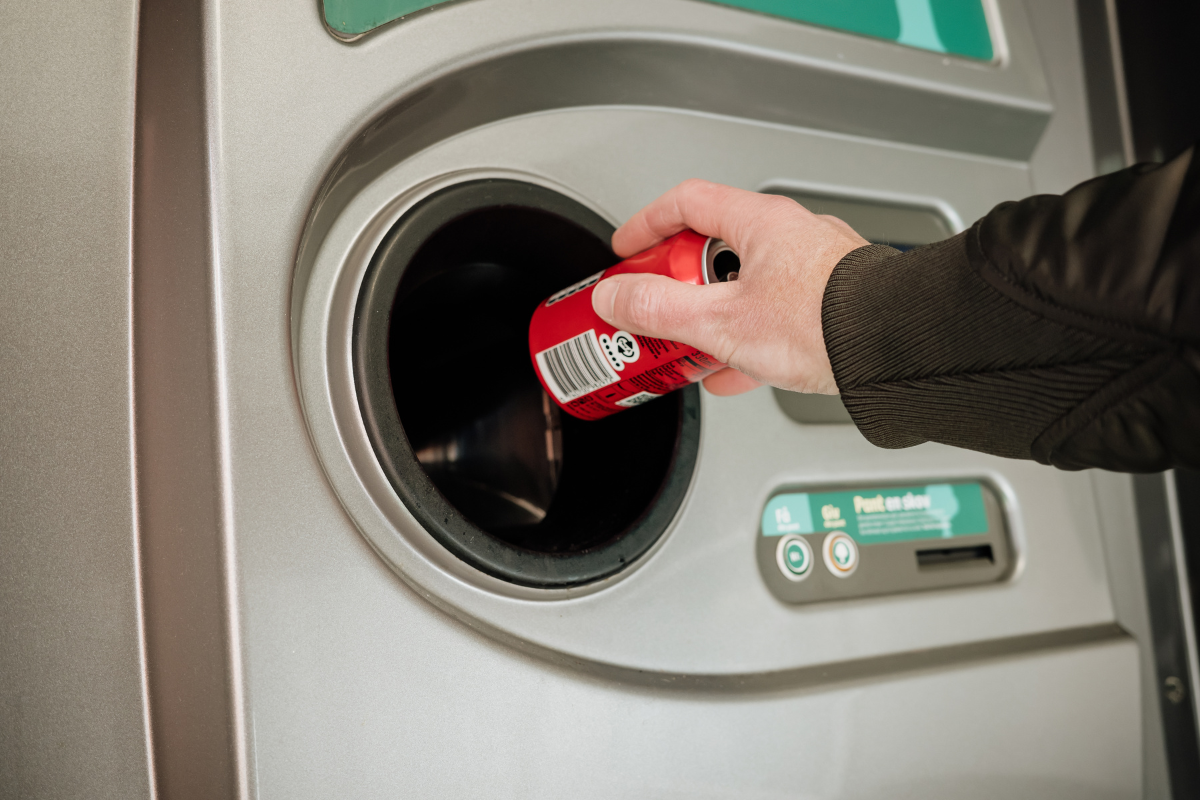
A report from the Container Recycling Institute explored deposit return systems at various levels, aluminum can design and markets and material loss over the recycling process. | Mikkel H. Petersen/Shutterstock

A national deposit return system would raise the U.S. UBC recycling rate to 85%, an analysis from the Container Recycling Institute found.

The report estimated a 2021 national UBC recycling rate of 37.2%, “dramatically lower than that in many other industrialized countries,” due to a lack of recycling access and participation as well as losses at the curb, MRFs and secondary smelters.

CRI’s recycling rate is slightly lower than the 41.6% rate reported by the Aluminum Association and Can Manufacturers Institute, because CRI didn’t include food cans and included imported full goods. The Aluminum Association only includes imported empty cans. 

UBC recycling rates have been declining even in states with a DRS. Other reports, such as those from Eunomia and Reloop, have also suggested that deposit return systems are a highly effective way to recover UBCs. 

A national DRS would recover 815,000 additional tons of UBCs per year, CRI found. Even modernizing the existing systems in the 10 states that have passed bottle bills would raise the national UBC recycling rate by 3.2 percentage points, the report added, and passing DRS laws in all the states that have introduced DRS legislation since 2021 would raise the national rate by 20 percentage points. 

Modernization typically includes raising deposits from 5 cents to 10 cents and sometimes adding more beverage types to the program. 

The report, called “Improving Efficiency and Sustainability in Aluminum Beverage Can Recycling,” also addresses how aluminum beverage cans could be designed and manufactured with recycling in mind.

“The 2020 COVID-related ‘candemic’ aluminum can shortage indicated the importance of improving the way materials and resources in aluminum used beverage cans (UBCs) are reused, recycled, or kept in circulation in the economy and ensuring the can recycling process is as lossless as possible,” the institute wrote. 

In a press release, CRI President Susan Collins said it’s “imperative that the domestic aluminum can industry improve its recycled content status, because the global aluminum can industry simply cannot meet its sustainability goals without such improvement.”

A higher volume of material is necessary to support two multi-billion-dollar secondary smelters being built in the U.S., she added, which will bring the total number of secondary smelters in the country to nine. 

Arconic has a smelter in Alcoa, Tennessee. Novelis has smelters in Greensboro, Georgia; Berea, Kentucky; Oswego, New York; and is building another in Bay Minette, Alabama. The other smelters are Constellium’s in Muscle Shoals, Alabama, Kaiser Aluminum Warrick’s in Newburgh, Indiana, and Logan’s in Russellville, Kentucky. Aluminum Dynamics is currently constructing a smelter in Columbus, Mississippi.

The new facilities will each have about 600,000 tons of capacity, both recycled and virgin. 

For perspective, almost 700,000 tons of UBCs were recycled in 2020, according to the CRI report. 

“Any further declines in the U.S. aluminum UBC recycling rate, or any legislative repeals of state DRS programs, would threaten UBC supply levels for the melters, putting a financial strain on their businesses,” Collins added. 

Where cans slip through the cracks

The report sought to quantify UBC losses at all points of the recycling process, starting with lack of collection. About 55% of UBCs in the U.S. are recycled via DRS or curbside bins, the report found, leaving 45% landfilled or littered. 

“If the country had only curbside recycling and no DRS programs, the theoretical maximum recycling rate would be 45% due to losses at MRFs and melters, as well as the fact that about 24% of beverages in aluminum cans are consumed away from home,” the authors wrote. 

Once UBCs make it to the MRF, between 25% and 33% are missorted, the report said, based on other reports and studies. One study estimated the number could be as high as 53%. CRI noted that “additional comprehensive studies are needed to analyze the sorting and recovery accuracy of MRFs.” 

Past the MRF, about 11% of the total weight of UBC bales that are sent to secondary aluminum smelters is contamination, the report continued. 

“Contaminants include those that are unavoidable – inherent parts of the can and baling wire – and those that are avoidable – including PET and rigid plastics, dirt and debris, fiber and other materials,” the report noted. 

Ways to improve rates 

Simply increasing access to recycling would help raise rates, the report noted, as could increased collaboration among curbside, DRS and away-from-home recycling programs. 

However, the report found that DRS made the largest impact. The report used 2021 industry data to calculate that UBCs in deposit programs have a 74% recycling rate versus 26% for non-deposit UBCs. 

In line with that finding, the 10 U.S. states with DRS programs account for almost half of the total tons of aluminum UBCs recycled in the U.S., the report noted: 300,716 of the 633,500 tons total. 

“DRS programs recycle greater numbers of UBCs because beverage cans on deposit are handled and sorted differently than those in curbside systems,” the report said. “Cans are kept as separate commodities throughout the DRS process, meaning they are not mixed with other materials, resulting in clean, high-quality UBCs more likely to be made into new containers.”

Given the report analyses and data, CRI suggested four ways to improve the U.S. UBC recycling rate: modernizing existing DRS, passing DRS in all states that have introduced legislation since 2021 (Texas, Florida, Pennsylvania, Illinois, North Carolina, New Jersey, Washington, Maryland, New Hampshire and Rhode Island), implementing DRS laws in the 10 non-deposit states with the highest populations (Texas, Florida, Pennsylvania, Illinois, Ohio, Georgia, North Carolina, New Jersey, Virginia and Washington), and implementing a national DRS. 

A national deposit would have to be rolled out in stages, Collins said in the press release, but the “data conclusively demonstrate that DRS programs are the most impactful way to increase UBC recycling rates.” 

“We believe that a potential 85% national recovery rate is achievable with a high performing, transparent recycling system,” she added. 

Tags: CollectionContainer DepositsCritical Minerals
TweetShare
Marissa Heffernan

Marissa Heffernan

Marissa Heffernan worked at Resource Recycling from January 2022 through June 2025, first as staff reporter and then as associate editor. Marissa Heffernan started working for Resource Recycling in January 2022 after spending several years as a reporter at a daily newspaper in Southwest Washington. After developing a special focus on recycling policy, they were also the editor of the monthly newsletter Policy Now.

Related Posts

Bipartisan reps introduce bill on recycling claims

House passes bill to ease lithium-ion battery storage rules

byStefanie Valentic
September 24, 2026

The BRACE Act would let lithium-ion battery recyclers store batteries on site under universal waste rules and give EPA 18...

E-scrap magnet recycling company scales up

Why only some rare-earth sources are economically viable

byDavid Daoud
September 24, 2026

Rare-earth recycling economics depend on several factors, and there is no single price or date that makes the process pencil...

Bridge Green, Hartree partner on mineral processing deal

Bridge Green, Hartree partner on mineral processing deal

byPaul Lane
September 21, 2026

The agreement will see Bridge Green’s lithium carbonate sold to and marketed by Hartree.

America’s critical-materials buildout has a feedstock problem

byDavid Daoud
September 18, 2026

As the US invests in critical-minerals capacity will facilities have enough material to process?

Van filled with rolled carpeting for recycling or disposal.

California carpet recycling rate reaches 37%

byBrian Clark Howard
September 17, 2026

The state’s recycling rate rose for the sixth year in a row, despite challenging market conditions.

Canada Plastics Pact reports 2024 progress

Trade tensions shift global mineral partnerships 

byPaul Lane
September 15, 2026

Canada is seeking new trade partners amid worsening US relations, while South Korea is trying to tap into deep Asian...

Load More
Next Post

Greif closures affect recycled fiber consumption

2026 Buyers’ Guide

Equipment, services and technology suppliers serving the recycling industry.

Browse the Guide

More Posts

Ten e-scrap projects receive federal prize funds

Recycling rates for rare earths could double by 2040

July 17, 2026

In other news: May 2, 2016

May 2, 2016

Microsoft confirms PC sales slump

August 4, 2026
Intel sign outside of company building.

Intel’s CapEx tops $20B on server demand while PC volume shrinks

July 29, 2026
Feds to develop repairable computer donation program

The whitebox blind spot in PC recycling

April 24, 2026
Data erasure firm expands wearable device capabilities

Apple hits 30% recycled content, debuts new recovery tech

April 17, 2026
Textile EPR and the definition of recycling

Textile Exchange reports progress in production

September 22, 2026

America’s critical-materials buildout has a feedstock problem

September 18, 2026

AI and the changing economics of retired hardware

June 12, 2026
Closeup of a printed circuitboard

Hardware demand puts new focus on parts harvesting

June 5, 2026
Load More

About & Publications

About Us

Staff

Archive

Magazines

Work With Us

Advertise
Jobs
Contact
Terms and Privacy

Newsletters

Get the latest recycling news and analysis delivered to your inbox every week. Stay ahead on industry trends, policy updates, and insights from programs, processors, and innovators.

Subscribe

Welcome Back!

Login to your account below

Forgotten Password?

Retrieve your password

Please enter your username or email address to reset your password.

Log In

Add New Playlist

No Result
View All Result
  • The Latest
  • Analysis
  • Recycling
  • E-Scrap
  • Plastics
  • Policy Now
  • Conferences
    • E-Scrap Conference
    • Plastics Recycling Conference
    • Resource Recycling Conference
    • Textiles Recovery Summit
  • Magazines
  • About Us
  • Advertise
  • Archive
  • Jobs
  • Staff
Subscribe
This website uses cookies. By continuing to use this website you are giving consent to cookies being used. Visit our Privacy and Cookie Policy.
-
00:00
00:00

Queue

Update Required Flash plugin
-
00:00
00:00