Resource Recycling
  • The Latest
  • Analysis
    • All
    • Certification Scorecard
    • Industry Announcements
    • Opinion
    NJ’s PCR delay risks making its own excuse permanently true

    NJ’s PCR delay risks making its own excuse permanently true

    E-scrap magnet recycling company scales up

    Why only some rare-earth sources are economically viable

    e-Stewards to develop an ITAD-specific standard

    Certification scorecard — week of Sept. 21

    Who should pay for lithium-ion battery fire damage?

    America’s critical-materials buildout has a feedstock problem

    Certification scorecard – week of Sept. 14

  • Conferences
    • Resource Recycling Conference
    • Plastics Recycling Conference
    • E-Scrap: The Longevity Conference
    • Textiles Recovery Summit
  • Publications
    • E-Scrap News
    • Plastics Recycling Update
    • Policy Now
    • Resource Recycling
    • Other Topics
      • All Topics
      • Brand Owners
      • Critical Minerals
      • Glass
      • Grant Watch / RFPs
      • Markets
      • Organics
      • Packaging
      • Research
      • Technology
      • Textiles
Subscribe
No Result
View All Result
Resource Recycling
No Result
View All Result
Home Recycling

Visia X-ray tech helps prevent MRF battery fires

byScott Snowden
August 26, 2025
in Recycling
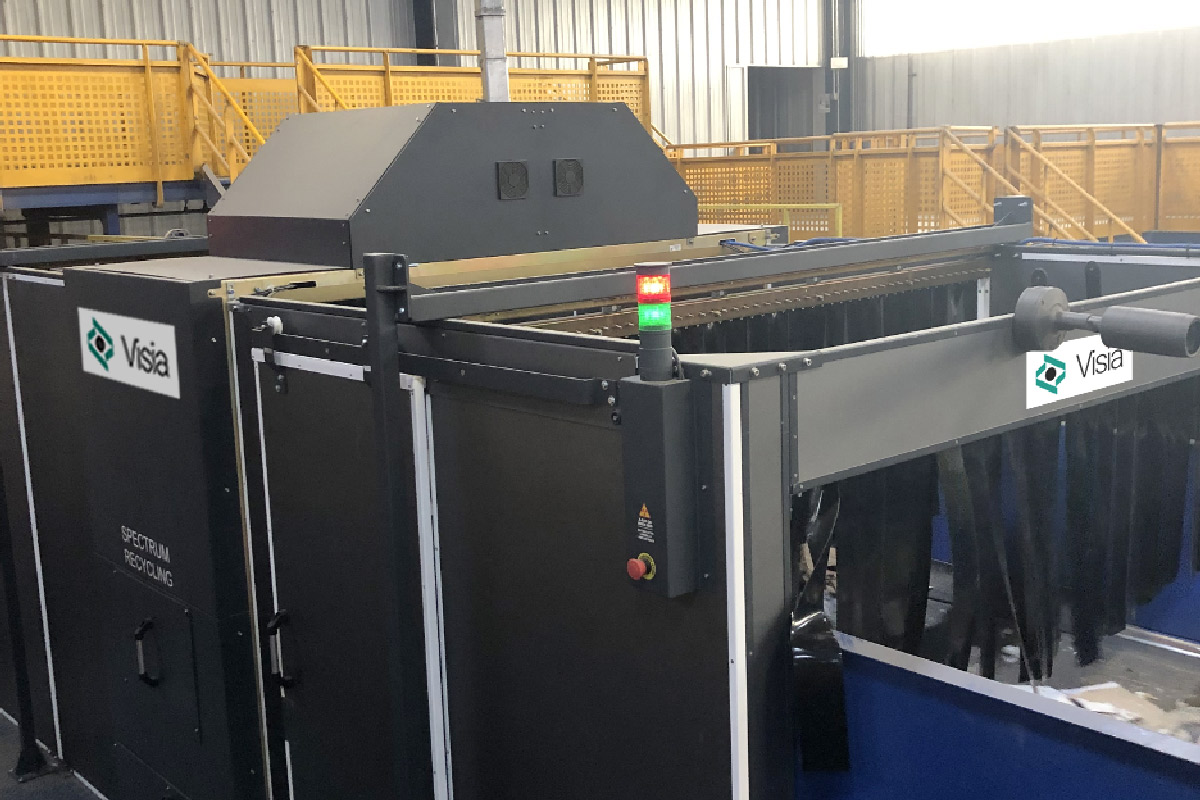
Visia’s internal analysis shows facilities that adopt the technology often record a 30% to 50% reduction in thermal events. | Photo courtesy of Visia

Visia’s effort to curb battery-related fires in recycling facilities is beginning to show measurable results, according to new data from the company’s first wave of commercial installations.

The startup, which raised $6.4 million in equity financing last year, has expanded to 25 operating sites, from about 10 in mid-2024, with five more facilities signed up. Founder and CEO Raghav Mecheri said the technology is now producing a dataset that sheds light on the scale of lithium-ion batteries moving through the recycling stream.

With pressure mounting across the recycling sector after a rise in facility fires and worker fatalities, Visia is betting that its technology will move from early adopters to a standard line of defense.

Visia describes itself as a “physical intelligence” company. Its systems combine conveyor X-rays, cameras and, in some cases, truck scanners to detect hazards buried in loads of material. The goal is to autonomously flag and divert items such as lithium-ion batteries, propane and acetylene tanks, toner cartridges and other dense objects that threaten to cause downtime or fires.

Mecheri said MRF operators typically respond to an average of eight to 10 batteries per hour, though spikes can reach 25 or more when clusters of devices arrive together. In e-scrap facilities, where material is measured by bulk boxes or bins rather than by the hour, operators see a different but equally persistent flow of batteries.

“What we are showing people is that a nontrivial number of batteries are moving through every facility, every day,” Mecheri told E-Scrap News. “It is not unusual to see 10 or 12 an hour and people have found that to be eye opening.”

The company runs controlled tests at each new site by seeding known hazards into the system and recording alert rates. Mecheri said Visia systems typically perform with 94% to 98% accuracy, a rate that surpasses manual sorting or camera-based surface inspections. Because lithium-ion batteries are heavy, he noted, they often sink beneath cardboard, metals or plastics and are missed by visual checks.

Visia’s internal analysis shows facilities that adopt the technology often record a 30% to 50% reduction in thermal events, although the company avoids releasing site-specific figures. Instead, it aggregates data from across its customer base to identify patterns by region, time of year and even battery chemistry.

According to Visia, early installations have intercepted a significant volume of hazardous items, including tens of thousands of batteries. The company said operators are reporting not only fewer thermal incidents but also operational benefits such as smoother insurance negotiations and greater confidence in meeting fire safety requirements.

For Mecheri, the appeal goes beyond technology. He said growth has been driven less by venture financing than by word-of-mouth from operators who have piloted the system and documented results.

“The reality is that our customers recognize the problem and they are the ones evangelizing solutions inside their own companies,” he said, adding, “That’s why adoption has accelerated.”

A version of this story appeared in E-Scrap News on Aug. 25.

Tags: BatteriesCollection
TweetShare
Scott Snowden

Scott Snowden

Scott has been a reporter for over 25 years, covering a diverse range of subjects from sub-atomic cold fusion physics to scuba diving off the Great Barrier Reef. He's now deeply invested in the world of recycling, green tech and environmental preservation.

Related Posts

Bipartisan reps introduce bill on recycling claims

House passes bill to ease lithium-ion battery storage rules

byStefanie Valentic
September 24, 2026

The BRACE Act would let lithium-ion battery recyclers store batteries on site under universal waste rules and give EPA 18...

Facility fires remain high across US, Canada in August

byPaul Lane
September 23, 2026

Despite high August numbers, the latest Fire Rover report indicated there may be overall progress in slowing the number of...

Bridge Green, Hartree partner on mineral processing deal

Bridge Green, Hartree partner on mineral processing deal

byPaul Lane
September 21, 2026

The agreement will see Bridge Green’s lithium carbonate sold to and marketed by Hartree.

Who should pay for lithium-ion battery fire damage?

byDavid Daoud
September 21, 2026

Fires continue to be a major threat to the recycling industry, even as states explore new policy solutions.

America’s critical-materials buildout has a feedstock problem

byDavid Daoud
September 18, 2026

As the US invests in critical-minerals capacity will facilities have enough material to process?

Van filled with rolled carpeting for recycling or disposal.

California carpet recycling rate reaches 37%

byBrian Clark Howard
September 17, 2026

The state’s recycling rate rose for the sixth year in a row, despite challenging market conditions.

Load More
Next Post

Women in Circularity: Dr. Jess Watson

2026 Buyers’ Guide

Equipment, services and technology suppliers serving the recycling industry.

Browse the Guide

More Posts

Ten e-scrap projects receive federal prize funds

Recycling rates for rare earths could double by 2040

July 17, 2026
Intel sign outside of company building.

Intel’s CapEx tops $20B on server demand while PC volume shrinks

July 29, 2026
Feds to develop repairable computer donation program

The whitebox blind spot in PC recycling

April 24, 2026
Textile EPR and the definition of recycling

Textile Exchange reports progress in production

September 22, 2026

America’s critical-materials buildout has a feedstock problem

September 18, 2026

Microsoft confirms PC sales slump

August 4, 2026
Data erasure firm expands wearable device capabilities

Apple hits 30% recycled content, debuts new recovery tech

April 17, 2026

In other news: May 2, 2016

May 2, 2016
Closeup of a printed circuitboard

Hardware demand puts new focus on parts harvesting

June 5, 2026
The electronics recycling industry is undergoing a transformation from labor-intensive manual operations to highly automated, AI-driven facilities that use advanced robotics, cleaner chemistry and digital tracking systems to extract critical materials.

The cyber-physical MRF: AI and robotics reshape e-waste recovery

February 12, 2026
Load More

About & Publications

About Us

Staff

Archive

Magazines

Work With Us

Advertise
Jobs
Contact
Terms and Privacy

Newsletters

Get the latest recycling news and analysis delivered to your inbox every week. Stay ahead on industry trends, policy updates, and insights from programs, processors, and innovators.

Subscribe

Welcome Back!

Login to your account below

Forgotten Password?

Retrieve your password

Please enter your username or email address to reset your password.

Log In

Add New Playlist

No Result
View All Result
  • The Latest
  • Analysis
  • Recycling
  • E-Scrap
  • Plastics
  • Policy Now
  • Conferences
    • E-Scrap Conference
    • Plastics Recycling Conference
    • Resource Recycling Conference
    • Textiles Recovery Summit
  • Magazines
  • About Us
  • Advertise
  • Archive
  • Jobs
  • Staff
Subscribe
This website uses cookies. By continuing to use this website you are giving consent to cookies being used. Visit our Privacy and Cookie Policy.
-
00:00
00:00

Queue

Update Required Flash plugin
-
00:00
00:00