





Resource Recycling
  • The Latest
  • Analysis
    • All
    • Certification Scorecard
    • Industry Announcements
    • Opinion
    NJ’s PCR delay risks making its own excuse permanently true

    NJ’s PCR delay risks making its own excuse permanently true

    E-scrap magnet recycling company scales up

    Why only some rare-earth sources are economically viable

    e-Stewards to develop an ITAD-specific standard

    Certification scorecard — week of Sept. 21

    Who should pay for lithium-ion battery fire damage?

    America’s critical-materials buildout has a feedstock problem

    Certification scorecard – week of Sept. 14

  • Conferences
    • Resource Recycling Conference
    • Plastics Recycling Conference
    • E-Scrap: The Longevity Conference
    • Textiles Recovery Summit
  • Publications
    • E-Scrap News
    • Plastics Recycling Update
    • Policy Now
    • Resource Recycling
    • Other Topics
      • All Topics
      • Brand Owners
      • Critical Minerals
      • Glass
      • Grant Watch / RFPs
      • Markets
      • Organics
      • Packaging
      • Research
      • Technology
      • Textiles
Subscribe
No Result
View All Result
Resource Recycling
No Result
View All Result
Home Recycling

Study links tagging tactics to lower contamination rates

Stefanie ValenticbyStefanie Valentic
October 14, 2025
in Recycling
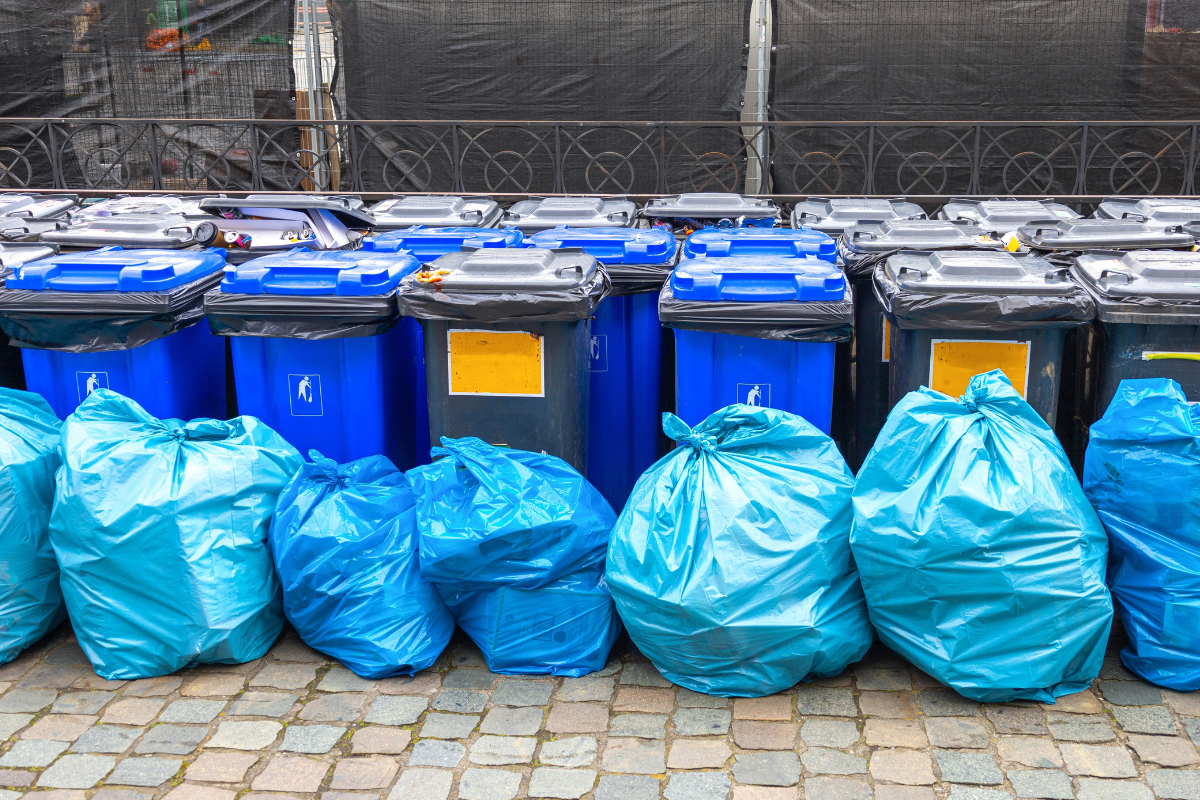
To tag or not to tag: A new report from SWANA analyzes the delicate approach municipalities take when enacting fines for curbside recycling. | ADragan/Shutterstock

A new report from the Solid Waste Association of North America (SWANA) examines the role penalties and education play in reducing curbside contamination, enhancing bale quality and increasing the effectiveness of curbside programs. 

“Contamination can present a major safety concern when materials such as lithium-ion batteries, full aerosol cans and sharp items are placed in the recycling, making it imperative that we prompt recyclers to use their recycling bins only for accepted recyclable materials,” said SWANA CEO Amy Lestition Burke.

Cart tagging, education and similar interventions help discourage residents from contaminating recycling bins, but the associated overhead and administrative costs can impede program progress.

Specialized feedback generates insight

While education campaigns play a part in reducing curbside contamination, behavior change begins with more specialized touchpoints or communication with residents and business owners. The report showed that tagging contaminated carts while also reusing services can lower contamination by as much as 59%.

“The idea of tagging a cart with the specific recyclables that they want or specific contaminants, seems to really be a good approach. Just going out and tagging carts for the sake of tagging them doesn’t seem to have that much of an impact,” said Jeremy O’Brien, SWANA director of applied research.

O’Brien said municipalities need to be specific about the types of contaminants in bins and educate residents once the problem materials are narrowed down, as “they may not know what they’re doing wrong.” 

The report further demonstrated that residents interested in recycling tended to learn more and increased their performance with the use of cart tagging. 

Intentional noncompliance

Despite consistent education and outreach efforts, the report found that 25-50% of the participants of the communities studied accounted for 50% of the contamination on a consistent basis. 

“There were learners that also increased their performance, but then there was a third group called the underperformers and they found for this group, they actually increased their contamination rates after the education programs were implemented,” O’Brien said. 

These “underperformers” intentionally use the cart destined for landfill with no aspirations of improving behaviors. As for this segment, “they don’t deserve to be served with weekly curbside recycling collection,” said O’Brien.

“We basically said there seems to be a group in many communities that really don’t want to participate correctly in curbside recycling and they’re using the recycling cart as a second garbage bin, if you will.”

Pay-as-you-throw policies also have a significant impact on contamination rates, he added. “What we found in some cases is that’ll actually increase the incentive to contaminate your recycling bin. Because if you contract for a smaller disposal bin, and you have extra waste you need to dispose of, it’s just as easy to put that in your recycling bin.”

Cost savings 

While municipalities can expect extra costs when bolstering a municipal workforce to inspect and tag bins, investment in enforcement roles can be financially justified through contamination reduction savings.

O’Brien pointed to Fort Worth, Texas, where reduction in contamination was equated to about the same cost as hiring inspectors at about $500,000 yearly. The city found its contamination rate was reduced through inspection methods, justifying the cost.

“The reduction in contamination from 28% to 21% amounted to about 5,000 tons a year, and based on the cost of hauling those contaminants to a landfill and disposing of them in a landfill, in addition to processing them through the recycling facility, they saved about $474,000,” about the same price as to hire six so-called Blue Crew inspectors, O’Brien said.

These decisions often face political opposition, making data crucial to demonstrating their value to taxpayers.

“Elected officials don’t like getting calls from constituents that they got cited or got their part taken away,” said Kristyn Oldendorf, SWANA senior director of public policy and communications. “So if you have the [data] to show how effective it can actually be and the cost savings associated with it, that can help support making some of these difficult decisions.

Tags: ContaminationLocal Programs
TweetShare
Stefanie Valentic

Stefanie Valentic

Stefanie Valentic is an award-winning journalist who has covered the waste and recycling industry for more than five years. Throughout her career, she has led editorial teams and served as a keynote speaker, moderator and panelist at numerous trade shows and conferences.

Related Posts

Bin to Better gets students involved in reuse, recycling

Bin to Better gets students involved in reuse, recycling

byPaul Lane
September 24, 2026

E-scrap among three focus areas for student-run, California-based environmental advocacy group.

APR reports success for 2026 recycling tours 

APR reports success for 2026 recycling tours 

byAntoinette Smith
September 23, 2026

In May, more than 2,500 visitors toured 41 facilities in the US and Mexico, during APR's second annual Recycling in...

CommanderAI launches searchable hauler database

Inside the Circle: Put AI to work for the people who do the work

byBill Shireman
September 14, 2026

There is more than one way to use AI, and some ways are more valuable than others.

Leadership at a pivotal moment

Leadership at a pivotal moment

byBrian Clark Howard
September 10, 2026

CalRecycle Director Zoe Heller is heading up an agency tasked with ambitious recycling and sustainability goals. Can she pull it...

Recology CEO Sal Coniglio in front of one of the hauler's trucks

Recology’s Sal Coniglio on business and policy working together

byBrian Clark Howard
August 31, 2026

The CEO of the West Coast hauler and recycler shares his thoughts on EPR, organics and what keeps him up...

New Compudopt CEO hopes to nurture agency’s growth

byPaul Lane
August 14, 2026

Allison Kotarski assumed the organization’s top spot after several years as COO.

Load More
Next Post

Fiber plummets, cans and plastics flatten

2026 Buyers’ Guide

Equipment, services and technology suppliers serving the recycling industry.

Browse the Guide

More Posts

Intel sign outside of company building.

Intel’s CapEx tops $20B on server demand while PC volume shrinks

July 29, 2026
Textile EPR and the definition of recycling

Textile Exchange reports progress in production

September 22, 2026

In other news: May 2, 2016

May 2, 2016

America’s critical-materials buildout has a feedstock problem

September 18, 2026
Feds to develop repairable computer donation program

The whitebox blind spot in PC recycling

April 24, 2026
NJ’s PCR delay risks making its own excuse permanently true

NJ’s PCR delay risks making its own excuse permanently true

September 28, 2026
E-scrap magnet recycling company scales up

Why only some rare-earth sources are economically viable

September 24, 2026

AI and the changing economics of retired hardware

June 12, 2026
Closeup of a printed circuitboard

Hardware demand puts new focus on parts harvesting

June 5, 2026
WM rolling out curbside acceptance of PP cups 

WM rolling out curbside acceptance of PP cups 

November 25, 2025
Load More

About & Publications

About Us

Staff

Archive

Magazines

Work With Us

Advertise
Jobs
Contact
Terms and Privacy

Newsletters

Get the latest recycling news and analysis delivered to your inbox every week. Stay ahead on industry trends, policy updates, and insights from programs, processors, and innovators.

Subscribe

Welcome Back!

Login to your account below

Forgotten Password?

Retrieve your password

Please enter your username or email address to reset your password.

Log In

Add New Playlist

No Result
View All Result
  • The Latest
  • Analysis
  • Recycling
  • E-Scrap
  • Plastics
  • Policy Now
  • Conferences
    • E-Scrap Conference
    • Plastics Recycling Conference
    • Resource Recycling Conference
    • Textiles Recovery Summit
  • Magazines
  • About Us
  • Advertise
  • Archive
  • Jobs
  • Staff
Subscribe
This website uses cookies. By continuing to use this website you are giving consent to cookies being used. Visit our Privacy and Cookie Policy.
-
00:00
00:00

Queue

Update Required Flash plugin
-
00:00
00:00