Resource Recycling
  • The Latest
  • Analysis
    • All
    • Certification Scorecard
    • Industry Announcements
    • Opinion
    NJ’s PCR delay risks making its own excuse permanently true

    NJ’s PCR delay risks making its own excuse permanently true

    E-scrap magnet recycling company scales up

    Why only some rare-earth sources are economically viable

    e-Stewards to develop an ITAD-specific standard

    Certification scorecard — week of Sept. 21

    Who should pay for lithium-ion battery fire damage?

    America’s critical-materials buildout has a feedstock problem

    Certification scorecard – week of Sept. 14

  • Conferences
    • Resource Recycling Conference
    • Plastics Recycling Conference
    • E-Scrap: The Longevity Conference
    • Textiles Recovery Summit
  • Publications
    • E-Scrap News
    • Plastics Recycling Update
    • Policy Now
    • Resource Recycling
    • Other Topics
      • All Topics
      • Brand Owners
      • Critical Minerals
      • Glass
      • Grant Watch / RFPs
      • Markets
      • Organics
      • Packaging
      • Research
      • Technology
      • Textiles
Subscribe
No Result
View All Result
Resource Recycling
No Result
View All Result
Home Plastics

Study compares PET recycling methods

Marissa HeffernanbyMarissa Heffernan
January 18, 2023
in Plastics
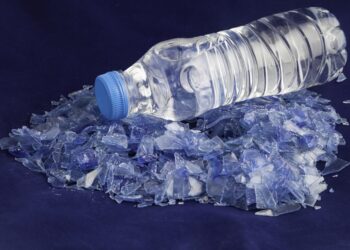
The study looked at mechanical recycling and solvent-based dissolution of PE, PET and PP, as well as enzymatic hydrolysis, glycolysis and vapor methanolysis of PET. | tezzstock/Shutterstock

A study conducted by the National Renewable Energy Laboratory evaluated various PET recycling methods from technical, economic and environmental standpoints to provide a big-picture overview of today’s options.

The research, published by the American Chemical Society, found that mechanical recycling outperformed all other technologies as well as virgin plastic production across economic and environmental considerations, but it ranked lower in technical metrics.

Of several available chemical recycling methods for PET, glycolysis “offered the best economic and environmental performances,” the study found, with areas for future improvement including process yields, consumable reduction or replacement, utility decarbonization and closed-loop recycling for polyolefins.

“Chemical recycling” generally refers to a wide array of processes that use heat, pressure and solvents to break down the molecular chains of polymers into liquids or gasses that can then be processed into fuels, oils, waxes, new plastics or other chemical products.

“This work quantitatively characterized the performances of plastic recycling technologies and established a robust methodology for comparing new recycling processes as they emerge in the future,” the report noted, as well as providing a decision tree to help reclaimers choose the best method for each material.

The study looked at mechanical recycling and solvent-based dissolution of PE, PET and PP, as well as enzymatic hydrolysis, glycolysis and vapor methanolysis of PET, using virgin production as a baseline.

Enzymatic hydrolysis uses hydrolase enzymes to depolymerize PET, glycolysis uses ethylene glycol and methanolysis uses vaporized methanol.

The evaluated metrics were material quality, material retention, circularity, contamination tolerance, minimum selling price, greenhouse gas emissions, energy use, land use, toxicity, waste generation and water use.

Overall, PET mechanical recycling and glycolysis outperformed virgin PET in all metrics, and methanolysis and dissolution scored above virgin levels in the economic and technical sections but scored lower in the environmental and resources sections due to high GHG emissions, toxicity, land use and water use.

Enzymatic PET hydrolysis did not exceed the virgin baseline under any modeled scenario, the study noted.

As for other materials, mechanical recycling of HDPE outperformed virgin production in the environmental and resources sections but had a low technical and economic score.

Dissolution of HDPE did not reach the virgin threshold for any sections, nor did dissolution of LDPE or PP, though mechanical recycling of LDPE and PP performed better in economic and technical sections due to lower bale prices, the study reported.

However, lower scores should not mean that technologies are abandoned, the study noted, because “these techniques may not be advantageous across all metrics but could provide benefits in specific priority areas, especially with continued improvements as the technologies mature.”

The study also highlighted improvements for the different methods. Mechanical recycling could benefit from increased bale quality and polymer yield, as well as the addition of advanced sorting technologies such as fluorescent markers or robotic sorting coupled with artificial intelligence, the study noted.

For dissolution, switching to bio-based solvents could improve its environmental score. Enzymatic PET hydrolysis needs increased monomer yields and to use less water to become viable, the study stated.

Glycolysis could also benefit from improved monomer yields as well as new catalysts. PET methanolysis also needs new catalysts, the study stated, and to use less water.


Tags: Chemical RecyclingFilm & FlexiblesHDPEPETPPResearch
TweetShare
Marissa Heffernan

Marissa Heffernan

Marissa Heffernan worked at Resource Recycling from January 2022 through June 2025, first as staff reporter and then as associate editor. Marissa Heffernan started working for Resource Recycling in January 2022 after spending several years as a reporter at a daily newspaper in Southwest Washington. After developing a special focus on recycling policy, they were also the editor of the monthly newsletter Policy Now.

Related Posts

NJ’s PCR delay risks making its own excuse permanently true

NJ’s PCR delay risks making its own excuse permanently true

byEdward Kosior
September 28, 2026

In this editorial, Prof. Edward Kosior explores how policy uncertainty discourages investment and risks destroying existing recycling capacity.

trash bags

Sorted: Should we use recycled trash bags?

byBrian Clark Howard
September 28, 2026

Manufacturers’ resistance is rooted in performance and cost, but the products may have an important role to play.

Analysis: Undersupply of PCR is ‘stifling’ brand goals

US lawmakers urge protection of domestic RPET

byAntoinette Smith
September 25, 2026

In a letter to the US Trade Representative, five representatives asked the USTR to consider trade remedies and support verification...

Recyclers reeling from NJ PCR extension

Recyclers reeling from NJ PCR extension

byAntoinette Smith
September 23, 2026

The recent three-year extension for exemptions to the state's PCR mandates elicited frustration and confusion among recyclers.

Textile EPR and the definition of recycling

Textile Exchange reports progress in production

byPaul Lane
September 22, 2026

The organization said the industry has made some sustainability progress, but there’s much room for improvement.

ALPLA’s holistic approach to packaging design

ALPLA’s holistic approach to packaging design

byAntoinette Smith
September 18, 2026

The packaging and recycling company's North American design lead explains why recyclability goals can't exist in isolation.

Load More
Next Post
Industry Announcements

News from iFixit, Nth Cycle and more

2026 Buyers’ Guide

Equipment, services and technology suppliers serving the recycling industry.

Browse the Guide

More Posts

Textile EPR and the definition of recycling

Textile Exchange reports progress in production

September 22, 2026
Intel sign outside of company building.

Intel’s CapEx tops $20B on server demand while PC volume shrinks

July 29, 2026

In other news: May 2, 2016

May 2, 2016
E-scrap magnet recycling company scales up

Why only some rare-earth sources are economically viable

September 24, 2026

America’s critical-materials buildout has a feedstock problem

September 18, 2026
Closeup of a printed circuitboard

Hardware demand puts new focus on parts harvesting

June 5, 2026
NJ’s PCR delay risks making its own excuse permanently true

NJ’s PCR delay risks making its own excuse permanently true

September 28, 2026
Ten e-scrap projects receive federal prize funds

Recycling rates for rare earths could double by 2040

July 17, 2026
Apple store

Apple leads on inputs, faces questions on ITAD

May 1, 2026

Microsoft confirms PC sales slump

August 4, 2026
Load More

About & Publications

About Us

Staff

Archive

Magazines

Work With Us

Advertise
Jobs
Contact
Terms and Privacy

Newsletters

Get the latest recycling news and analysis delivered to your inbox every week. Stay ahead on industry trends, policy updates, and insights from programs, processors, and innovators.

Subscribe

Welcome Back!

Login to your account below

Forgotten Password?

Retrieve your password

Please enter your username or email address to reset your password.

Log In

Add New Playlist

No Result
View All Result
  • The Latest
  • Analysis
  • Recycling
  • E-Scrap
  • Plastics
  • Policy Now
  • Conferences
    • E-Scrap Conference
    • Plastics Recycling Conference
    • Resource Recycling Conference
    • Textiles Recovery Summit
  • Magazines
  • About Us
  • Advertise
  • Archive
  • Jobs
  • Staff
Subscribe
This website uses cookies. By continuing to use this website you are giving consent to cookies being used. Visit our Privacy and Cookie Policy.
-
00:00
00:00

Queue

Update Required Flash plugin
-
00:00
00:00