





Resource Recycling
  • The Latest
  • Analysis
    • All
    • Certification Scorecard
    • Industry Announcements
    • Opinion
    NJ’s PCR delay risks making its own excuse permanently true

    NJ’s PCR delay risks making its own excuse permanently true

    E-scrap magnet recycling company scales up

    Why only some rare-earth sources are economically viable

    e-Stewards to develop an ITAD-specific standard

    Certification scorecard — week of Sept. 21

    Who should pay for lithium-ion battery fire damage?

    America’s critical-materials buildout has a feedstock problem

    Certification scorecard – week of Sept. 14

  • Conferences
    • Resource Recycling Conference
    • Plastics Recycling Conference
    • E-Scrap: The Longevity Conference
    • Textiles Recovery Summit
  • Publications
    • E-Scrap News
    • Plastics Recycling Update
    • Policy Now
    • Resource Recycling
    • Other Topics
      • All Topics
      • Brand Owners
      • Critical Minerals
      • Glass
      • Grant Watch / RFPs
      • Markets
      • Organics
      • Packaging
      • Research
      • Technology
      • Textiles
Subscribe
No Result
View All Result
Resource Recycling
No Result
View All Result
Home Plastics

EU recyclers urge understanding of solvent-based methods

Antoinette SmithbyAntoinette Smith
October 22, 2025
in Plastics
Eastman, LyondellBasell provide plant updates
Dissolution recycling processes leave a polymer structure intact, and belong in the physical recycling category along with mechanical recycling, Plastics Recyclers Europe said. | Rene Notenbomer/Shutterstock

Industry association Plastics Recyclers Europe is looking to raise the profile of dissolution recycling, an often-overlooked process that doesn’t quite fit into common recycling categories.

“As the European Union intensifies its push toward a circular economy, dissolution recycling emerges as a promising solution that bridges the gap between mechanical and chemical recycling,” according to a new white paper from Brussels-based PRE, which comprises more than 200 EU companies. 

Dissolution uses a solvent to dissolve an intended polymer, most commonly PE and PP but also polystyrene, nylon, PET, PVC, polycarbonate and ABS. Other substances, such as inks, additives and barrier layers, do not dissolve and then can be removed, leaving the purified polymer to be collected from the solvent and processed into virgin-quality resin. 

The process keeps a polymer’s chemical structure intact, while chemical recycling techniques such as pyrolysis and gasification break down a polymer’s complex chemical structure into new, smaller compounds. As such, dissolution recycling processes belong in the physical recycling category, along with mechanical recycling, PRE asserts. 

Along these lines, the Association of Plastic Recyclers in the US says physical recycling is also known as dissolution, and is a “process in which a plastic is subjected to a series of purification steps to separate the target polymer/polymers from other polymers, additives and other added materials such as fibers, fillers, colorants and contaminants, resulting in recovered polymers, which remain largely unaffected by the process and can be reformulated into plastics.”

APR owns Resource Recycling, Inc., publisher of Plastics Recycling Update.

Christian Bruey, director of communications and government relations at US-based PureCycle, told Plastics Recycling Update that the concerns the EU white paper raises are also evident in the US, particularly the lack of regulatory consistency. “There needs to be harmonization. We see New Jersey’s got this rule for recycled content, we see Oregon lumping dissolution with mechanical, we see Washington differentiating chemical and physical and mechanical. So I think the key takeaway from the white paper is harmonization.”

He added that dissolution and mechanical recycling processes also provide traceability of a polymer, whereas chemical recycling does not. “So lumping them together makes more sense than putting dissolution with chemical processes.”

Another advantage of dissolution recycling PRE highlighted is its compatibility with existing supply chains, polymer processing facilities and waste collection systems, as it is a polymer-to-polymer recycling method.

However, the group emphasized that “as the EU moves towards more sustainable waste management, all recycling technologies, mechanical, dissolution, and chemical, will play complementary roles in addressing different types of plastic waste and achieving different quality standards of recycled materials.”

In April, PRE set up the Dissolution Taskforce to complement its collaboration with the Dissolution Recycling of Plastics Initiative (DROP-IN). At least 40 stakeholders in the EU have joined DROP-IN, including US-based PureCycle and LyondellBasell, which acquired German solvent-based recycler APK last fall. 

“Currently, dissolution recycling operates within a regulatory and definitional grey zone, both in the European Union and globally,” according to a recent DROP-IN post on LinkedIn. The group also describes the process as “the overlooked third option between mechanical and chemical recycling.”

Dissolution technologies produce a high-yield resin of quality that is suitable for demanding applications such as food-contact packaging, automotive and electronics. 

Solvent-based techniques also could enable reuse of hard-to-recycle materials, PRE added. For example, plastics used in electronics have posed challenges when discarded, due to such substances as flame retardants or metals, commonly present in plastics from end-of-life electronics. 

PRE also urged the EU to harmonize standards throughout its member countries, adding that the lack of regulatory clarity and consistency are hindering adoption of dissolution technologies as well as investment in infrastructure. 

However, PRE noted that an International Standards Organization technical committee “is effectively reviewing ISO 15270, with a new focus group ISO 15270 3a, Physical Recycling. This group of experts aims to formally define all known physical polymer recycling processes additional to mechanical recycling, including dissolution recycling (based on the well-known ‘extraction’ separation method, also called dissolution purification).” 

Tags: Chemical RecyclingHard-to-Recycle Materials
TweetShare
Antoinette Smith

Antoinette Smith

Antoinette Smith has covered commodity plastics and supply chains for more than a decade, with a special focus on economic impacts and consumer behavior. She brings a balanced, thoughtful view to recycling stories, and isn't afraid to ask "why?" Contact Antoinette at antoinette@dev.resource-recycling.com.

Related Posts

Textile EPR and the definition of recycling

Textile EPR and the definition of recycling

byMarisa Adler
September 10, 2026

The debate over chemical recycling in the textile space is heating up, even as it presents many nuances.

Hefty ending Orange Bag program

Hefty ending Orange Bag program

byAntoinette Smith
August 25, 2026

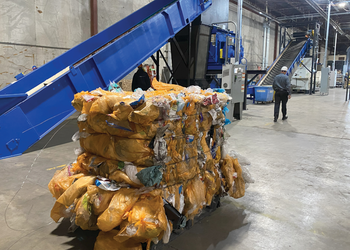
Although the Hefty ReNew program is ending, an Omaha recycler will continue accepting the bags as feedstock for plastic lumber.

Propane and steel recycling unit

Pennsylvania pilot tackles propane cylinder recycling challenges

byIsabella Burke
August 24, 2026

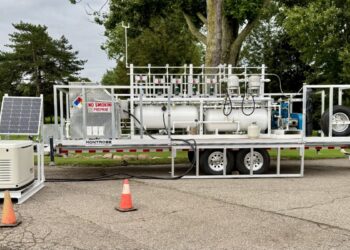
A Pennsylvania pilot project is testing a new way to safely recover propane and steel from disposable propane cylinders, a...

PureCycle sees easing headwinds to R-PP adoption

PureCycle says H2 outlook already playing out 

byAntoinette Smith
August 13, 2026

The company said momentum is accelerating amid regulatory developments and the promise of a consistent, streamlined supply chain.

Utah highway project to reuse pavement

Utah highway project to reuse pavement

byAntoinette Smith
July 2, 2026

The state Department of Transportation is using cold in-place recycling to repurpose existing roadway, save millions and reduce emissions.

SCS launches chem recycling standard

SCS launches chem recycling standard

byAntoinette Smith
July 1, 2026

SCS Global Services now provides third-party verification of responsible non-mechanical recycling processes, in line with a new global standard.

Load More
Next Post
EPR rules take shape in Oregon, as first test

EPR rules take shape in Oregon, as first test

2026 Buyers’ Guide

Equipment, services and technology suppliers serving the recycling industry.

Browse the Guide

More Posts

Textile EPR and the definition of recycling

Textile Exchange reports progress in production

September 22, 2026
Intel sign outside of company building.

Intel’s CapEx tops $20B on server demand while PC volume shrinks

July 29, 2026

In other news: May 2, 2016

May 2, 2016
E-scrap magnet recycling company scales up

Why only some rare-earth sources are economically viable

September 24, 2026
Ten e-scrap projects receive federal prize funds

Recycling rates for rare earths could double by 2040

July 17, 2026

America’s critical-materials buildout has a feedstock problem

September 18, 2026
Closeup of a printed circuitboard

Hardware demand puts new focus on parts harvesting

June 5, 2026
NJ’s PCR delay risks making its own excuse permanently true

NJ’s PCR delay risks making its own excuse permanently true

September 28, 2026
Apple store

Apple leads on inputs, faces questions on ITAD

May 1, 2026

Microsoft confirms PC sales slump

August 4, 2026
Load More

About & Publications

About Us

Staff

Archive

Magazines

Work With Us

Advertise
Jobs
Contact
Terms and Privacy

Newsletters

Get the latest recycling news and analysis delivered to your inbox every week. Stay ahead on industry trends, policy updates, and insights from programs, processors, and innovators.

Subscribe

Welcome Back!

Login to your account below

Forgotten Password?

Retrieve your password

Please enter your username or email address to reset your password.

Log In

Add New Playlist

No Result
View All Result
  • The Latest
  • Analysis
  • Recycling
  • E-Scrap
  • Plastics
  • Policy Now
  • Conferences
    • E-Scrap Conference
    • Plastics Recycling Conference
    • Resource Recycling Conference
    • Textiles Recovery Summit
  • Magazines
  • About Us
  • Advertise
  • Archive
  • Jobs
  • Staff
Subscribe
This website uses cookies. By continuing to use this website you are giving consent to cookies being used. Visit our Privacy and Cookie Policy.
-
00:00
00:00

Queue

Update Required Flash plugin
-
00:00
00:00