





Resource Recycling
  • The Latest
  • Analysis
    • All
    • Certification Scorecard
    • Industry Announcements
    • Opinion
    NJ’s PCR delay risks making its own excuse permanently true

    NJ’s PCR delay risks making its own excuse permanently true

    E-scrap magnet recycling company scales up

    Why only some rare-earth sources are economically viable

    e-Stewards to develop an ITAD-specific standard

    Certification scorecard — week of Sept. 21

    Who should pay for lithium-ion battery fire damage?

    America’s critical-materials buildout has a feedstock problem

    Certification scorecard – week of Sept. 14

  • Conferences
    • Resource Recycling Conference
    • Plastics Recycling Conference
    • E-Scrap: The Longevity Conference
    • Textiles Recovery Summit
  • Publications
    • E-Scrap News
    • Plastics Recycling Update
    • Policy Now
    • Resource Recycling
    • Other Topics
      • All Topics
      • Brand Owners
      • Critical Minerals
      • Glass
      • Grant Watch / RFPs
      • Markets
      • Organics
      • Packaging
      • Research
      • Technology
      • Textiles
Subscribe
No Result
View All Result
Resource Recycling
  • The Latest
  • Analysis
    • All
    • Certification Scorecard
    • Industry Announcements
    • Opinion
    NJ’s PCR delay risks making its own excuse permanently true

    NJ’s PCR delay risks making its own excuse permanently true

    E-scrap magnet recycling company scales up

    Why only some rare-earth sources are economically viable

    e-Stewards to develop an ITAD-specific standard

    Certification scorecard — week of Sept. 21

    Who should pay for lithium-ion battery fire damage?

    America’s critical-materials buildout has a feedstock problem

    Certification scorecard – week of Sept. 14

  • Conferences
    • Resource Recycling Conference
    • Plastics Recycling Conference
    • E-Scrap: The Longevity Conference
    • Textiles Recovery Summit
  • Publications
    • E-Scrap News
    • Plastics Recycling Update
    • Policy Now
    • Resource Recycling
    • Other Topics
      • All Topics
      • Brand Owners
      • Critical Minerals
      • Glass
      • Grant Watch / RFPs
      • Markets
      • Organics
      • Packaging
      • Research
      • Technology
      • Textiles
Subscribe
No Result
View All Result
Resource Recycling
No Result
View All Result
Home Recycling

Textile EPR and the definition of recycling

byMarisa Adler
September 10, 2026
in Recycling, Resource Recycling Magazine
Textile EPR and the definition of recycling

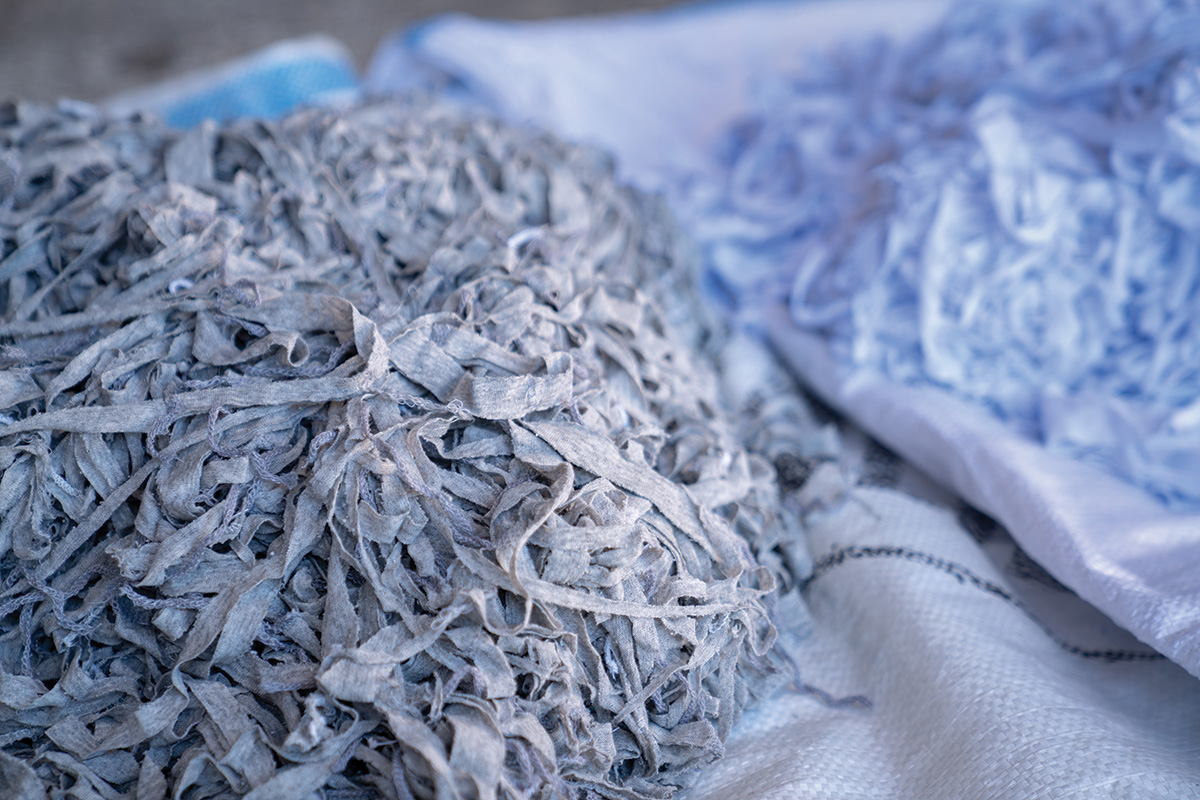
Sondem / Shutterstock

Chemical recycling has become one of the more debated topics in textile circularity. For those of you in the plastics recycling industry, the story may be familiar: new technologies, questions around environmental performance, disagreements over the definition of recycling, and broad regulatory uncertainty.

Chemical recycling processes like pyrolysis and gasification have been around since the 1970’s as a solution for hard-to-recycle plastics, converting it into new plastics, fuels and chemical feedstocks. However, decades later, chemical recycling still accounts for a small portion of US plastics recycling and few facilities produce chemically recycled plastics at scale.

Environmental and public health orgs have also raised concerns about energy demand, hazardous byproducts, local impacts, and whether fuel and chemical outputs should count as recycling. Since fuel production has historically been one of the main outputs, pyrolysis and gasification has become associated with energy recovery and incineration.

From plastics to textiles

This backdrop now influences textile circularity. Supporters of chemical recycling see it as one of the only ways to recover fiber from complex textiles. But critics question whether the technologies can consistently produce recycled fiber at scale and have concerns over energy intensity, transparency, end-markets and continued reliance on synthetic fibers.

With textile EPR advancing in California and legislation introduced in New York, Washington and Minnesota, policymakers are faced with deciding how to classify these technologies and whether they count as recycling.

Not all recycling is created equal

Over the past decade, a growing number of companies have developed technologies to recycle postconsumer textiles. These are not pyrolysis or gasification, but dissolution, depolymerization, solvolysis and enzymatic recycling — and each is genuinely distinct. Even within a single category like solvolysis, no two companies’ processes are the same; they vary in reagents, feedstock requirements, operating conditions, energy demands, outputs and byproducts.

That complexity is exactly what makes policymaking so hard. Technologies can’t simply be lumped under the singular “chemical recycling” term, because the differences between them are legitimate and material.

The regulatory challenge is compounded by the fact that many companies do not release technoeconomic, environmental or lifecycle data in order to protect process details. And, in fact, performance claims are often based on pilot or demonstration-scale operations that may change as facilities scale up, improve efficiency or expand feedstock acceptance.

Legislative approaches in CA and NY

Despite this complexity, lawmakers still have to make decisions, and California and New York have thus far taken different approaches.

California’s SB 707 (Newman, 2024), borrows the definition of “recycling” from SB 54’s packaging EPR law. The definition does not explicitly prohibit chemical recycling but does not grant blanket approval either. To count as recycling, a process must convert covered products into recovered material for use in new, reused or reconstituted products that are sent to a responsible end market, and the definition explicitly excludes combustion, incineration, energy generation and fuel production.

CalRecycle’s regulations go even further, requiring technologies to demonstrate that they do not generate significant hazardous waste and align with ISO 59014:2024’s sustainability and traceability requirements — with compliance responsibility falling to recyclers and PROs, meaning these technologies aren’t prohibited but must be evaluated individually.

In New York, the conversation is highly polarized. Rather than evaluating technologies case by case, one of the proposed textile EPR laws pairs ambitious recycled content requirements with an explicit prohibition on chemical recycling, which is a position that reflects the plastics recycling legacy. Groups like Beyond Plastics and NRDC support that approach, arguing that some chemical processes function as energy recovery or fuel production rather than true recycling. They also warn that carving out exceptions for chemical processing could divert attention and investment away from prevention, reuse, repair and mechanical recycling, while extending the industry’s reliance on virgin plastics.

Supporters of emerging technologies see it differently. They argue this framing oversimplifies a rapidly evolving field, and that newer, textile-to-textile approaches merit individual evaluation based on inputs, outputs, environmental performance and end markets rather than a blanket label and a blanket ban.

Education and transparency are key

The debate is leading to a need for industry to align on a path forward and that requires closing the information gap.

Earlier this year, CPSC convened legislators, regulators and stakeholders in Sacramento to discuss chemical processing and textile recovery pathways, noting classification depends on evidence about inputs, outputs, environmental performance and end uses. It was a successful gathering.

Building on that, NYSAR3 is organizing a similar discussion in New York, with NYS legislators and regulators invited to learn alongside recyclers, operators, academics and NGOs.

Where does that leave us? As textile EPR policy develops, decisions about recycling will depend less on broad technology categories and more on demonstrated outcomes and alignment with policy objectives.

This story first appeared in the August 2026 issue of Resource Recycling Magazine.

Tags: Chemical RecyclingEPRLegislation & EnforcementTextiles
TweetShare
Marisa Adler

Marisa Adler

MKA Consulting, LLC & Clear Strategy

Related Posts

Newsom nixes recycled content claims bill

Newsom nixes recycled content claims bill

byAntoinette Smith
September 28, 2026

Supporters of AB 2253 said the bill would address greenwashing, while opponents said it demonized mass-balance accounting and didn't reflect...

NJ’s PCR delay risks making its own excuse permanently true

NJ’s PCR delay risks making its own excuse permanently true

byEdward Kosior
September 28, 2026

In this editorial, Prof. Edward Kosior explores how policy uncertainty discourages investment and risks destroying existing recycling capacity.

Analysis: Undersupply of PCR is ‘stifling’ brand goals

US lawmakers urge protection of domestic RPET

byAntoinette Smith
September 25, 2026

In a letter to the US Trade Representative, five representatives asked the USTR to consider trade remedies and support verification...

Oregon state capitol building with state flag and blue sky.

NAW appeals Oregon EPR ruling

byStefanie Valentic
September 25, 2026

NAW is challenging an Oregon judge's ruling in favor of the state's extended producer responsibility law.

Bipartisan reps introduce bill on recycling claims

House passes bill to ease lithium-ion battery storage rules

byStefanie Valentic
September 24, 2026

The BRACE Act would let lithium-ion battery recyclers store batteries on site under universal waste rules and give EPA 18...

Calif. Governor Gavin Newsom at podium.

Newsom signs battery EPR expansion, vetoes SB 54 fund bill

byStefanie Valentic
September 24, 2026

Newsom signed a battery EPR expansion and a nitrous oxide sales ban but vetoed a bill setting spending rules for...

Load More
Next Post
Report shows $5B in materials saved from landfills

Reinvigorating reuse

2026 Buyers’ Guide

Equipment, services and technology suppliers serving the recycling industry.

Browse the Guide

More Posts

Recyclers reeling from NJ PCR extension

Recyclers reeling from NJ PCR extension

September 23, 2026
Oregon state capitol building with state flag and blue sky.

NAW appeals Oregon EPR ruling

September 25, 2026
Bin to Better gets students involved in reuse, recycling

Bin to Better gets students involved in reuse, recycling

September 24, 2026
Calif. Governor Gavin Newsom at podium.

Newsom signs battery EPR expansion, vetoes SB 54 fund bill

September 24, 2026

Who should pay for lithium-ion battery fire damage?

September 21, 2026
Bipartisan reps introduce bill on recycling claims

House passes bill to ease lithium-ion battery storage rules

September 24, 2026
Analysis: Undersupply of PCR is ‘stifling’ brand goals

US lawmakers urge protection of domestic RPET

September 25, 2026
US packaging is evolving. The recycling system isn’t ready

US packaging is evolving. The recycling system isn’t ready

September 16, 2026
Industry announcements for January 2026

Industry announcements for September 2026

August 31, 2026
Bridge Green, Hartree partner on mineral processing deal

Bridge Green, Hartree partner on mineral processing deal

September 21, 2026
Load More

About & Publications

About Us

Staff

Archive

Magazines

Work With Us

Advertise
Jobs
Contact
Terms and Privacy

Newsletters

Get the latest recycling news and analysis delivered to your inbox every week. Stay ahead on industry trends, policy updates, and insights from programs, processors, and innovators.

Subscribe

Welcome Back!

Login to your account below

Forgotten Password?

Retrieve your password

Please enter your username or email address to reset your password.

Log In

Add New Playlist

No Result
View All Result
  • The Latest
  • Analysis
  • Recycling
  • E-Scrap
  • Plastics
  • Policy Now
  • Conferences
    • E-Scrap Conference
    • Plastics Recycling Conference
    • Resource Recycling Conference
    • Textiles Recovery Summit
  • Magazines
  • About Us
  • Advertise
  • Archive
  • Jobs
  • Staff
Subscribe
This website uses cookies. By continuing to use this website you are giving consent to cookies being used. Visit our Privacy and Cookie Policy.