




Resource Recycling
  • The Latest
  • Analysis
    • All
    • Certification Scorecard
    • Industry Announcements
    • Opinion
    NJ’s PCR delay risks making its own excuse permanently true

    NJ’s PCR delay risks making its own excuse permanently true

    E-scrap magnet recycling company scales up

    Why only some rare-earth sources are economically viable

    e-Stewards to develop an ITAD-specific standard

    Certification scorecard — week of Sept. 21

    Who should pay for lithium-ion battery fire damage?

    America’s critical-materials buildout has a feedstock problem

    Certification scorecard – week of Sept. 14

  • Conferences
    • Resource Recycling Conference
    • Plastics Recycling Conference
    • E-Scrap: The Longevity Conference
    • Textiles Recovery Summit
  • Publications
    • E-Scrap News
    • Plastics Recycling Update
    • Policy Now
    • Resource Recycling
    • Other Topics
      • All Topics
      • Brand Owners
      • Critical Minerals
      • Glass
      • Grant Watch / RFPs
      • Markets
      • Organics
      • Packaging
      • Research
      • Technology
      • Textiles
Subscribe
No Result
View All Result
Resource Recycling
No Result
View All Result
Home E-Scrap

EU to enact chemical threshold for recycled plastic

byJared Paben
May 16, 2019
in E-Scrap
Row of E.U. flags outside the European Commission building.

European Union leaders appear to have settled on a limit for trace amounts of flame retardants in recycled plastics. A reclaimer called the limit “workable,” but activists say it’s not nearly restrictive enough.

The European Commission seems set to agree that recycled plastics can contain decabromodiphenyl ether (decaBDE) at a level no higher than 500 parts per million, according to a press release from UK plastics reclaimer Axion Polymers. Last year, the European Union was considering a much stricter limit, 10 parts per million, which industry groups said would have effectively ended the recycling of plastics from electronics and electrical appliances.

Although decaBDE’s use has now been restricted to a limited number of applications, the chemical has been used as a flame retardant in electronics, automobiles and other durable goods. It’s one of a class of brominated flame retardants called polybrominated diphenyl ethers (PBDEs).

In September, E-Scrap News reported on the law that would have limited decaBDE to 10 parts per million in products, including ones made with recycled plastic. The limit was included in an overall proposed update to the EU’s persistent organic pollutants (POPs) laws.

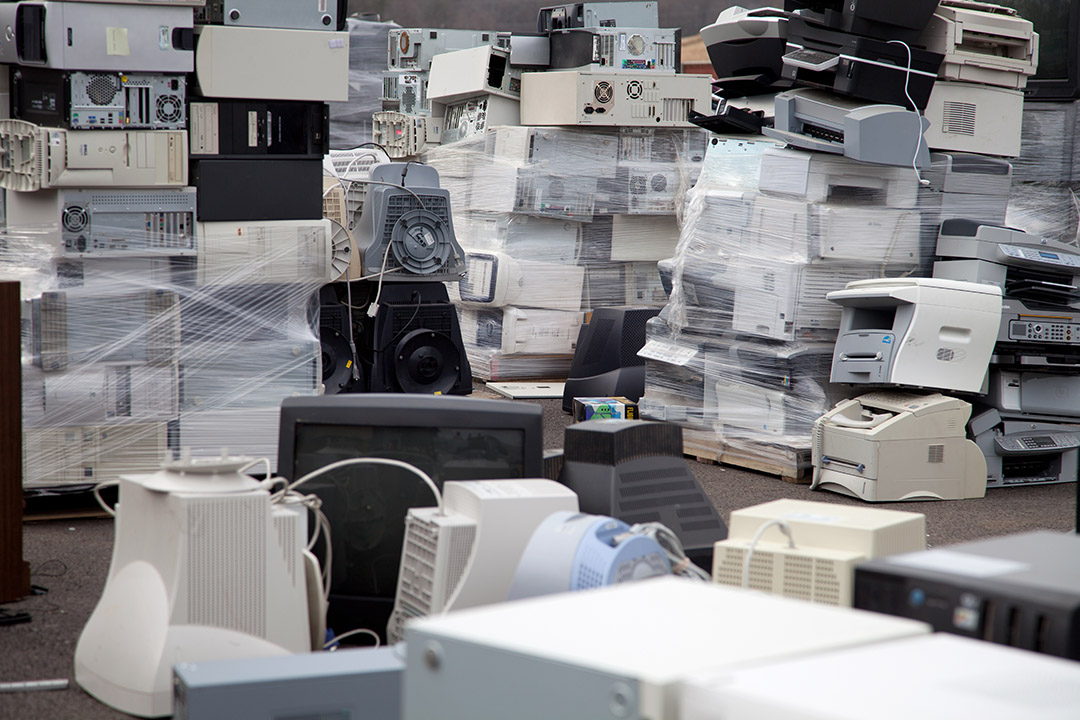
At the time, the European Recycling Industries’ Confederation (EuRIC) and the European Electronics Recyclers Association (EERA) both said plastics reclaimers simply couldn’t achieve that number. EERA noted that housings of old computer monitors can contain brominated flame retardants at levels up to 150,000 parts per million. EERA asked elected leaders to impose a limit of 1,000 parts per million for recycled plastic.

The European Union has three law-making branches: the European Commission, European Parliament and the Council of the European Union. In February, the parliament and council reached a deal to limit the sum of all BDEs, including decaBDE, to no more than 500 parts per million in recycled-content products. Now, the commission appears to have concurred.

Industry and activist reactions

Axion Polymers, which is based in Manchester, England, noted the limit of 500 parts per million would be tougher to achieve than the threshold recycling stakeholders had asked for, but facilities with advanced sorting and processing technologies such as Axion’s could still achieve it.

“Professional companies that have spent time trying to inform and address the EU Parliament in the management of decaBDEs in recycled plastics will welcome the recast of the EU directive as a sensible way forward,” Keith Freegard, Axion’s associate consultant, said in the statement.

Advocates for eliminating PBDEs and other toxic chemicals criticized the EU’s direction.

“The proposed 500-ppm limit paves the way for a massive inflow of decaBDE from discarded electronics into recycled plastic products, including children’s products,” according to a March letter from seven different groups to EU leaders.

Last month, one of the groups, the Center for International Environmental Law (CIEL), issued a statement saying the proposed limit will allow the world’s worst chemicals to re-enter the market in concentrations far above safe levels.

“While we welcome efforts to move to a circular economy, a toxic chemical does not become less toxic when it is recycled,” stated Giulia Carlini, staff attorney at CIEL. “For the circular economy to be a success, extreme caution must be taken to ensure it does not come at the expense of human health and the environment.”

Photo credit: Ugis Riba/Shutterstock

A version of this story appeared in Plastics Recycling Update on May 15.
 

Tags: Europe
TweetShare
Jared Paben

Jared Paben

Related Posts

Cutting healthcare plastics could save $18B

Report provides path to reduce medical e-scrap

byPaul Lane
September 25, 2026

The European report found that circularity in medical devices is possible through several potential initiatives.

E-scrap magnet recycling company scales up

Why only some rare-earth sources are economically viable

byDavid Daoud
September 24, 2026

Rare-earth recycling economics depend on several factors, and there is no single price or date that makes the process pencil...

Canada Plastics Pact reports 2024 progress

Trade tensions shift global mineral partnerships 

byPaul Lane
September 15, 2026

Canada is seeking new trade partners amid worsening US relations, while South Korea is trying to tap into deep Asian...

Inside the sneaker recycling boom

Report: AI opportunity robust in footwear recycling

byPaul Lane
September 8, 2026

BCC Research found AI’s usage in the footwear recycling space is growing but remains in the early stages, holding the...

R3 Lithium launches pioneering mineral processing facility

byPaul Lane
September 4, 2026

The Georgia site, formerly belonging to Ascend Elements, will be the first to recover lithium carbonate at a commercial scale...

ERI’s Asian expansion continues with move into India

ERI’s Asian expansion continues with move into India

byPaul Lane
August 31, 2026

The jointly owned facility in India will be ERI’s third such partnership in the region this year.

Load More
Next Post
Repair rift continues among Basel stakeholders

Repair rift continues among Basel stakeholders

2026 Buyers’ Guide

Equipment, services and technology suppliers serving the recycling industry.

Browse the Guide

More Posts

Ten e-scrap projects receive federal prize funds

Recycling rates for rare earths could double by 2040

July 17, 2026
Closeup of a printed circuitboard

Hardware demand puts new focus on parts harvesting

June 5, 2026
Data erasure firm expands wearable device capabilities

Apple hits 30% recycled content, debuts new recovery tech

April 17, 2026
Apple store

Apple leads on inputs, faces questions on ITAD

May 1, 2026

In other news: May 2, 2016

May 2, 2016

Microsoft confirms PC sales slump

August 4, 2026

America’s critical-materials buildout has a feedstock problem

September 18, 2026
Intel sign outside of company building.

Intel’s CapEx tops $20B on server demand while PC volume shrinks

July 29, 2026

AI and the changing economics of retired hardware

June 12, 2026
Textile EPR and the definition of recycling

Textile Exchange reports progress in production

September 22, 2026
Load More

About & Publications

About Us

Staff

Archive

Magazines

Work With Us

Advertise
Jobs
Contact
Terms and Privacy

Newsletters

Get the latest recycling news and analysis delivered to your inbox every week. Stay ahead on industry trends, policy updates, and insights from programs, processors, and innovators.

Subscribe

Welcome Back!

Login to your account below

Forgotten Password?

Retrieve your password

Please enter your username or email address to reset your password.

Log In

Add New Playlist

No Result
View All Result
  • The Latest
  • Analysis
  • Recycling
  • E-Scrap
  • Plastics
  • Policy Now
  • Conferences
    • E-Scrap Conference
    • Plastics Recycling Conference
    • Resource Recycling Conference
    • Textiles Recovery Summit
  • Magazines
  • About Us
  • Advertise
  • Archive
  • Jobs
  • Staff
Subscribe
This website uses cookies. By continuing to use this website you are giving consent to cookies being used. Visit our Privacy and Cookie Policy.