




Resource Recycling
  • The Latest
  • Analysis
    • All
    • Certification Scorecard
    • Industry Announcements
    • Opinion
    SERI works to restore faith in certifications

    Building a defensible E-scrap evidence file

    tires

    The most important decision in tire recycling happens before the shredder

    Intel sign outside of company building.

    Intel’s CapEx tops $20B on server demand while PC volume shrinks

    Google sign on company building with blue sky and clouds above.

    Inside Alphabet’s Q2 results: More capital spending and cloud backlog

    Alpek closing Pennsylvania RPET plant

    Alpek seizing on war-related opportunity 

    Our top stories from March 2023

    Iron Mountain’s data center report: Strong on power, quiet on hardware

  • Conferences
    • Resource Recycling Conference
    • Plastics Recycling Conference
    • E-Scrap: The Longevity Conference
    • Textiles Recovery Summit
  • Publications
    • E-Scrap News
    • Plastics Recycling Update
    • Policy Now
    • Resource Recycling
    • Other Topics
      • All Topics
      • Brand Owners
      • Critical Minerals
      • Glass
      • Grant Watch / RFPs
      • Markets
      • Organics
      • Packaging
      • Research
      • Technology
      • Textiles
Subscribe
No Result
View All Result
Resource Recycling
  • The Latest
  • Analysis
    • All
    • Certification Scorecard
    • Industry Announcements
    • Opinion
    SERI works to restore faith in certifications

    Building a defensible E-scrap evidence file

    tires

    The most important decision in tire recycling happens before the shredder

    Intel sign outside of company building.

    Intel’s CapEx tops $20B on server demand while PC volume shrinks

    Google sign on company building with blue sky and clouds above.

    Inside Alphabet’s Q2 results: More capital spending and cloud backlog

    Alpek closing Pennsylvania RPET plant

    Alpek seizing on war-related opportunity 

    Our top stories from March 2023

    Iron Mountain’s data center report: Strong on power, quiet on hardware

  • Conferences
    • Resource Recycling Conference
    • Plastics Recycling Conference
    • E-Scrap: The Longevity Conference
    • Textiles Recovery Summit
  • Publications
    • E-Scrap News
    • Plastics Recycling Update
    • Policy Now
    • Resource Recycling
    • Other Topics
      • All Topics
      • Brand Owners
      • Critical Minerals
      • Glass
      • Grant Watch / RFPs
      • Markets
      • Organics
      • Packaging
      • Research
      • Technology
      • Textiles
Subscribe
No Result
View All Result
Resource Recycling
No Result
View All Result
Home E-Scrap

GAO: Policy, tech updates needed to bolster domestic mineral supply

byPaul Lane
July 30, 2026
in E-Scrap
Spin-off lets Linca focus on battery mineral recovery

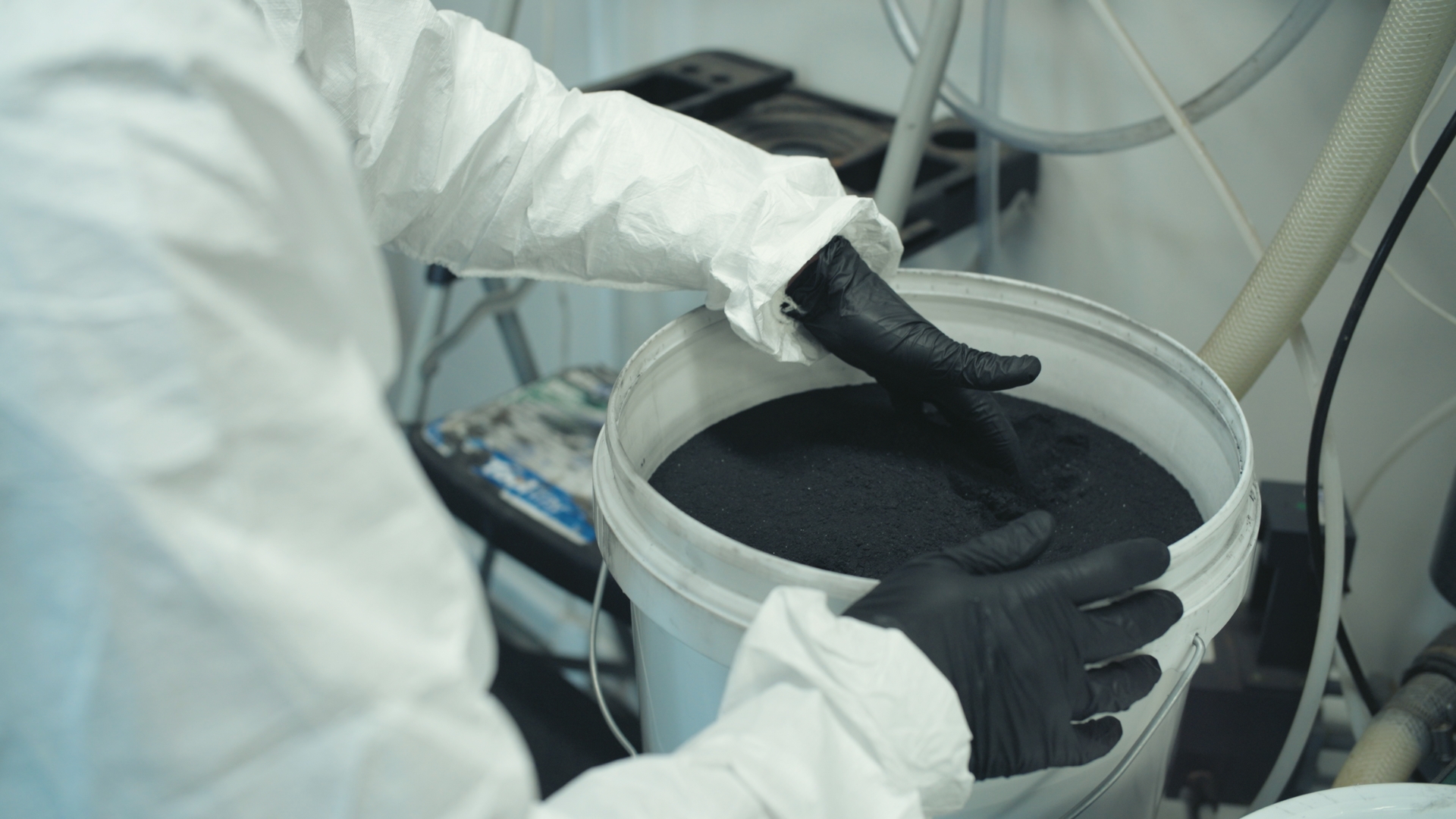
Linca's hydrometallurgical process can remove minerals from black mass without solvents. | Photo courtesy Linca

A federal report found several ways to help the US satisfy more of its critical mineral needs domestically, but policy and technology changes could take years to have a meaningful impact.

The recently released Critical Minerals Technology Assessment from the Government Accountability Office (GAO) looked at ways to substitute and recycle products containing minerals considered vital to the nation’s economy and security. This comes as Congress considers several bills relating to critical mineral supply chains.

The report identified 60 such minerals but focused on 11 minerals used in batteries and semiconductors. It found the US is at least 41% reliant (nickel) upon imports of each of these minerals, and in five cases (arsenic, gallium, graphite, indium and manganese) the nation’s entire supply comes from overseas. The authors also found that the US has only decreased its reliance upon imports since 2021 for one of these minerals, aluminum (the import percentage dropped from 61% in 2021 to 60% in 2025).

“Dependence on imports poses a risk of serious, sustained and long-term supply chain disruptions that could impact the nation’s security, defense readiness and economy,” the authors wrote. 

The authors laid out changes that could decrease reliance upon foreign-sourced minerals, but each has its limitations.

  • Increasing LFP and sodium-ion battery use could create less need for cobalt, graphite and other minerals present in lithium-ion batteries within three years. But the current crop of lithium-ion batteries has a high energy density that can’t be matched by the current generation of alternatives, resulting in shorter driving ranges for EVs.
  • Recycling more batteries could also create less of a need for lithium, nickel and copper within three years. But a lack of adequate domestic facilities leads to much of the country’s black mass, manufacturing scrap and other potential feedstock going overseas for processing.
  • The mineral combination in semiconductors makes them good at managing large amounts of power and rapidly processing data. Developing substitute technologies that replicate these capabilities could create less need for gallium, germanium and indium. But this research is in the early stages, the authors said, meaning a potential substitute is at least a decade away.
  • Building an effective recycling infrastructure for manufacturing scrap and end-of-life semiconductors could make recycling the primary source of these semiconductor  minerals within the next 10 years, the authors said. Before that, enough of these minerals exist in manufacturing scrap to make that at least a secondary supply source within about three years. But the low yield of these minerals in end-of-life devices and an underdeveloped recycling market would require innovation on both fronts to maximize effectiveness.

The authors suggest four policy options legislators could pursue to decrease import reliance.

  • Building or repurposing existing manufacturing capacity to produce substitute technologies would bolster those efforts. Legislators could provide support for private investment and establish partnerships to ramp up testing of semiconductor substitutes. The authors cautioned to keep an eye on emerging technologies so as not to overinvest in something that’s becoming obsolete (like if sodium-ion batteries were ever to surpass LFP batteries).
  • Enhancing the domestic recycling capacity would keep more minerals on shore, the authors said. Guaranteed recycling prices, direct public investment and streamlining the permitting process would all help recyclers scale up more quickly, although they said this process would take considerable time to fully mature.
  • National e-scrap collection programs could help secure more recycling feedstock, ensuring enough material to make recycling feasible and financially viable. So would financial incentives for collection and storage. But safety issues with battery storage and insufficient demand would have to be overcome.
  • Funding research and development would grow both substitution and recycling technologies. This would improve product performance and maximize commercialization potential, although the progress would likely be gradual.

The report was submitted to the House Committee on Energy and Commerce for review.
Tags: Critical MineralsElectronicsLegislation & Enforcement
TweetShare
Paul Lane

Paul Lane

Paul Lane is an award-winning journalist who joined Resource Recycling in June 2026 after working for several years in corporate communications and at various local news outlets. He can be reached at paul.lane@dev.resource-recycling.com.

Related Posts

SERI works to restore faith in certifications

Building a defensible E-scrap evidence file

byMarcio Villanova
August 6, 2026

A pickup record confirms movement, but buyers need distinct evidence for custody, media sanitization, treatment, downstream disposition and unresolved exceptions.

Innovation. Partnership. Circular value.

Innovation. Partnership. Circular value.

bySibanye-Stillwater
August 1, 2026

As industries around the world accelerate their transition towards a circular economy, precious metals recycling is evolving from a necessary...

Intel sign outside of company building.

Intel’s CapEx tops $20B on server demand while PC volume shrinks

byDavid Daoud
July 29, 2026

As a result ITAD firms should plan for two separate asset cycles.

The State of Oregon seal at a park in Salem, Ore.

MRM bids to run Oregon EPR for second year 

byPaul Lane
July 28, 2026

The company won the competitive process for 2026, but was the only company to apply for the 2027 PRO post.

Wisconsin opens e-recycling grant process

byPaul Lane
July 28, 2026

Funds are available for collection programs as the state touts growth in electronic recycling in its latest annual report.

Google sign on company building with blue sky and clouds above.

Inside Alphabet’s Q2 results: More capital spending and cloud backlog

byDavid Daoud
July 28, 2026

The tech giant spent $44.9 billion in a single quarter building AI infrastructure, with major implications for the ITAD space.

Load More
Next Post

GFL raises 2026 guidance as Q2 revenue climbs 16.3%

2026 Buyers’ Guide

Equipment, services and technology suppliers serving the recycling industry.

Browse the Guide

More Posts

State policy is redefining plastics recycling in the US

State policy is redefining plastics recycling in the US

February 19, 2026
California bill would set up EPR for batteries

California bill would set up EPR for batteries

May 12, 2022

In other news: May 2, 2016

May 2, 2016
Closeup of a printed circuitboard

Hardware demand puts new focus on parts harvesting

June 5, 2026

Recycled copper output climbs as market shows surplus

April 6, 2026

Umicore highlights strength in recycling, catalysis

February 20, 2026

Alpla decries ‘painful impact’ of recycling market pressures

January 19, 2026
Top stories from August 2024

Top stories from August 2024

September 6, 2024

‘Sword’ takes another big swipe at U.S. scrap exports

May 10, 2018
US PET bottle recovery rate increases 1.5 percentage points

US PET bottle recovery rate increases 1.5 percentage points

December 14, 2022
Load More

About & Publications

About Us

Staff

Archive

Magazine

Work With Us

Advertise
Jobs
Contact
Terms and Privacy

Newsletter

Get the latest recycling news and analysis delivered to your inbox every week. Stay ahead on industry trends, policy updates, and insights from programs, processors, and innovators.

Subscribe

Welcome Back!

Login to your account below

Forgotten Password?

Retrieve your password

Please enter your username or email address to reset your password.

Log In

Add New Playlist

No Result
View All Result
  • The Latest
  • Analysis
  • Recycling
  • E-Scrap
  • Plastics
  • Policy Now
  • Conferences
    • E-Scrap Conference
    • Plastics Recycling Conference
    • Resource Recycling Conference
    • Textiles Recovery Summit
  • Magazine
  • About Us
  • Advertise
  • Archive
  • Jobs
  • Staff
Subscribe
This website uses cookies. By continuing to use this website you are giving consent to cookies being used. Visit our Privacy and Cookie Policy.