



Resource Recycling
  • The Latest
  • Analysis
    • All
    • Certification Scorecard
    • Industry Announcements
    • Opinion
    SERI works to restore faith in certifications

    Building a defensible E-scrap evidence file

    tires

    The most important decision in tire recycling happens before the shredder

    Intel sign outside of company building.

    Intel’s CapEx tops $20B on server demand while PC volume shrinks

    Google sign on company building with blue sky and clouds above.

    Inside Alphabet’s Q2 results: More capital spending and cloud backlog

    Alpek closing Pennsylvania RPET plant

    Alpek seizing on war-related opportunity 

    Our top stories from March 2023

    Iron Mountain’s data center report: Strong on power, quiet on hardware

  • Conferences
    • Resource Recycling Conference
    • Plastics Recycling Conference
    • E-Scrap: The Longevity Conference
    • Textiles Recovery Summit
  • Publications
    • E-Scrap News
    • Plastics Recycling Update
    • Policy Now
    • Resource Recycling
    • Other Topics
      • All Topics
      • Brand Owners
      • Critical Minerals
      • Glass
      • Grant Watch / RFPs
      • Markets
      • Organics
      • Packaging
      • Research
      • Technology
      • Textiles
Subscribe
No Result
View All Result
Resource Recycling
  • The Latest
  • Analysis
    • All
    • Certification Scorecard
    • Industry Announcements
    • Opinion
    SERI works to restore faith in certifications

    Building a defensible E-scrap evidence file

    tires

    The most important decision in tire recycling happens before the shredder

    Intel sign outside of company building.

    Intel’s CapEx tops $20B on server demand while PC volume shrinks

    Google sign on company building with blue sky and clouds above.

    Inside Alphabet’s Q2 results: More capital spending and cloud backlog

    Alpek closing Pennsylvania RPET plant

    Alpek seizing on war-related opportunity 

    Our top stories from March 2023

    Iron Mountain’s data center report: Strong on power, quiet on hardware

  • Conferences
    • Resource Recycling Conference
    • Plastics Recycling Conference
    • E-Scrap: The Longevity Conference
    • Textiles Recovery Summit
  • Publications
    • E-Scrap News
    • Plastics Recycling Update
    • Policy Now
    • Resource Recycling
    • Other Topics
      • All Topics
      • Brand Owners
      • Critical Minerals
      • Glass
      • Grant Watch / RFPs
      • Markets
      • Organics
      • Packaging
      • Research
      • Technology
      • Textiles
Subscribe
No Result
View All Result
Resource Recycling
No Result
View All Result
Home E-Scrap

UN research digs into e-scrap impacts of COVID-19

byJared Paben
June 24, 2021
in E-Scrap
UN research digs into e-scrap impacts of COVID-19

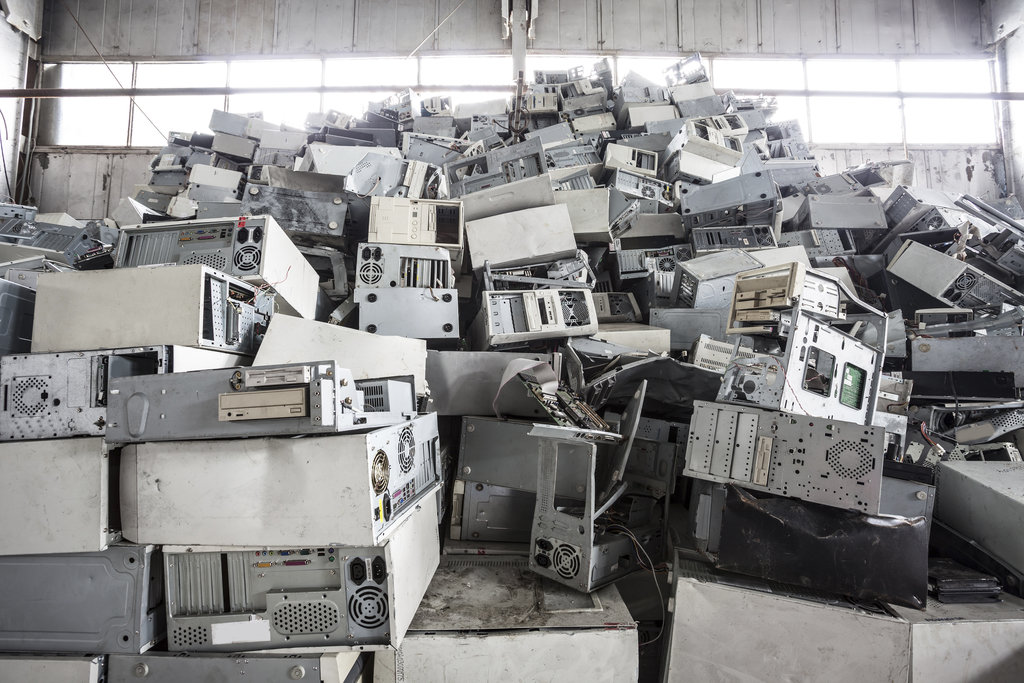
COVID-19 caused global consumption of electronics and electrical appliances to fall by about 6.4%, which likely means the planet will witness a dip in e-scrap generation, according to new report estimates.

The United Nations University (UNU) Sustainable Cycles programme (SCYCLE) and United Nations Institute for Training and Research (UNITAR) earlier this month released the results of its research on the effects of the pandemic on electronics and appliance purchases during the first three quarters of 2020.

Examining global trade data, researchers estimated that worldwide consumption fell by about 4.9 million metric tons, compared with a theoretical “business-as-usual” scenario in which the pandemic never happened. That’s a drop of about 6.4%.

But the decrease varied drastically in different regions. The report’s authors, Kees Baldé of UNU and Ruediger Kuehr of UNU SCYCLE and UNITAR, noted the implications for global disparities in access to technology.

“The so-called digital divide is increasing,” Kuehr stated in a press release. “The ability to adapt to digitisation and earn a living or simply to own and benefit from electronics is decreasing in some parts of the world. COVID-19 also revealed a digital divide in high-income countries, where many poor are left behind.”

Buying decreased in low- and middle-income countries

The report noted that low- and middle-income regions of the world saw huge drops in consumption, with declines of around 30% reported in Africa, parts of the Middle East/Western Asia and Central Asia.

“Those are the regions with typically no (or inadequate) e-waste management infrastructure in place,” the report stated. “So, in one respect, this can be interpreted as positive, as less e-waste is likely to be mismanaged, causing environmental and health effects. However, it should be noted that this effect is expected to be only temporary, and e-waste is still generated in the region and is still expected to grow in the coming years.”

Additionally, electronics enable development, meaning citizens of those countries will have less access to the ability to earn a living or otherwise benefit from the latest technologies, the report stated.

Higher-income countries, such as those in Europe, North America, East and Southeast Asia, saw much smaller decreases – in the single digits – in electronics consumption. And Australia and New Zealand actually purchased about 4% more weight of electronics and appliances.

The authors pointed to government economic stimulus efforts trickling down to consumers, allowing them to afford to buy electronics and appliances.

“The reason is understood as being that the wealthy G20 countries have injected USD $10.325 billion into their economies, including significant measures to support workers and the general population,” the report notes. “By contrast, the majority of low- and middle-income countries have not been able to deploy measures to protect their people and economies. These measures in high-income countries, or the lack of measures in low- and middle-income countries, trickle down to the consumption and e-waste generation.”

The analysis of month-by-month import-export data also showed that consumption rebounded in the third quarter in high-income countries but not in low- and middle-income ones, the press release states.

High-income countries bought more small electronic devices

The researchers also noted a disparity in purchases of different types of electronics.

The biggest drop, percentage-wise, was in screens and monitors (including laptops), at around 8%, followed by large appliances, lamps and small appliances, temperature-exchange equipment (refrigerators, air conditioning units, etc.) and small IT and telecommunications equipment.

Globally, small IT and telecommunications equipment, which includes game consoles, cell phones, desktop computers and printers, decreased only 1.4%. But there were also notable exceptions within that category. High-income countries bought more game consoles, cell phones, electrical ovens and laptops during the height of COVID-19; low- and middle-income countries bought less of those devices, too.

 

Tags: Research
TweetShare
Jared Paben

Jared Paben

Related Posts

Penn State professor Maryam Shahri speaks at the PROP conference in Lancaster, Pennsylvania July 23, 2026.

How to get more people to recycle

byBrian Clark Howard
July 24, 2026

Harness the power of behavioral marketing, panelists said at the PROP conference in Pennsylvania.

Federal funds boost critical mineral research efforts

Federal funds boost critical mineral research efforts

byPaul Lane
July 16, 2026

A Midwest consortium plans to use the money to build up domestic mineral recovery and processing efforts.

Recycling council emphasizes importance of supply

Sorted: Why recycling isn’t a ‘scam’

byBrian Clark Howard
June 15, 2026

The sector has taken a beating in the press and in public perception, but recycling has many benefits.

Chemical recycling roundup: New plant, partnerships

Polystyrene’s circular future is already taking shape

byJustin Riney, Polystyrene Recycling Alliance
May 29, 2026

Justin Riney of the Polystyrene Recycling Alliance explores a study conducted with the Resource Recycling Systems consultancy.

What Netflix’s ‘Plastic Detox’ gets wrong – and right

byKeith Loria
April 23, 2026

Advocates are excited about the attention brought on plastics by the documentary, but scientists say more nuance is needed.

Hawaii trials asphalt made with plastic debris and nets

Hawaii trials asphalt made with plastic debris and nets

byScott Snowden
April 20, 2026

Researchers at Hawaii Pacific University test asphalt made with fishing nets and plastic debris, with early results showing no increase...

Load More
Next Post
Logistics Recycling Inc.

Processor expands with Twin Cities-area plant

2026 Buyers’ Guide

Equipment, services and technology suppliers serving the recycling industry.

Browse the Guide

More Posts

State policy is redefining plastics recycling in the US

State policy is redefining plastics recycling in the US

February 19, 2026
California bill would set up EPR for batteries

California bill would set up EPR for batteries

May 12, 2022
Unilever shifting focus to flexibles targets

Unilever shifting focus to flexibles targets

March 23, 2026

Umicore highlights strength in recycling, catalysis

February 20, 2026

In other news: May 2, 2016

May 2, 2016
Apple store

Apple leads on inputs, faces questions on ITAD

May 1, 2026

Nationwide hauler fatality rate worsens in 2014

April 26, 2016

US plastic recycling numbers continue to fall

April 26, 2022
Top stories from March 2025

3 factors force e-scrap processing onshore

June 19, 2026
Closeup of a printed circuitboard

Hardware demand puts new focus on parts harvesting

June 5, 2026
Load More

About & Publications

About Us

Staff

Archive

Magazine

Work With Us

Advertise
Jobs
Contact
Terms and Privacy

Newsletter

Get the latest recycling news and analysis delivered to your inbox every week. Stay ahead on industry trends, policy updates, and insights from programs, processors, and innovators.

Subscribe

Welcome Back!

Login to your account below

Forgotten Password?

Retrieve your password

Please enter your username or email address to reset your password.

Log In

Add New Playlist

No Result
View All Result
  • The Latest
  • Analysis
  • Recycling
  • E-Scrap
  • Plastics
  • Policy Now
  • Conferences
    • E-Scrap Conference
    • Plastics Recycling Conference
    • Resource Recycling Conference
    • Textiles Recovery Summit
  • Magazine
  • About Us
  • Advertise
  • Archive
  • Jobs
  • Staff
Subscribe
This website uses cookies. By continuing to use this website you are giving consent to cookies being used. Visit our Privacy and Cookie Policy.