





Resource Recycling
  • The Latest
  • Analysis
    • All
    • Certification Scorecard
    • Industry Announcements
    • Opinion
    SERI works to restore faith in certifications

    Building a defensible E-scrap evidence file

    tires

    The most important decision in tire recycling happens before the shredder

    Intel sign outside of company building.

    Intel’s CapEx tops $20B on server demand while PC volume shrinks

    Google sign on company building with blue sky and clouds above.

    Inside Alphabet’s Q2 results: More capital spending and cloud backlog

    Alpek closing Pennsylvania RPET plant

    Alpek seizing on war-related opportunity 

    Our top stories from March 2023

    Iron Mountain’s data center report: Strong on power, quiet on hardware

  • Conferences
    • Resource Recycling Conference
    • Plastics Recycling Conference
    • E-Scrap: The Longevity Conference
    • Textiles Recovery Summit
  • Publications
    • E-Scrap News
    • Plastics Recycling Update
    • Policy Now
    • Resource Recycling
    • Other Topics
      • All Topics
      • Brand Owners
      • Critical Minerals
      • Glass
      • Grant Watch / RFPs
      • Markets
      • Organics
      • Packaging
      • Research
      • Technology
      • Textiles
Subscribe
No Result
View All Result
Resource Recycling
  • The Latest
  • Analysis
    • All
    • Certification Scorecard
    • Industry Announcements
    • Opinion
    SERI works to restore faith in certifications

    Building a defensible E-scrap evidence file

    tires

    The most important decision in tire recycling happens before the shredder

    Intel sign outside of company building.

    Intel’s CapEx tops $20B on server demand while PC volume shrinks

    Google sign on company building with blue sky and clouds above.

    Inside Alphabet’s Q2 results: More capital spending and cloud backlog

    Alpek closing Pennsylvania RPET plant

    Alpek seizing on war-related opportunity 

    Our top stories from March 2023

    Iron Mountain’s data center report: Strong on power, quiet on hardware

  • Conferences
    • Resource Recycling Conference
    • Plastics Recycling Conference
    • E-Scrap: The Longevity Conference
    • Textiles Recovery Summit
  • Publications
    • E-Scrap News
    • Plastics Recycling Update
    • Policy Now
    • Resource Recycling
    • Other Topics
      • All Topics
      • Brand Owners
      • Critical Minerals
      • Glass
      • Grant Watch / RFPs
      • Markets
      • Organics
      • Packaging
      • Research
      • Technology
      • Textiles
Subscribe
No Result
View All Result
Resource Recycling
No Result
View All Result
Home E-Scrap

Experts explore the evolution of state programs

Marissa HeffernanbyMarissa Heffernan
October 4, 2023
in E-Scrap
Experts explore the evolution of state programs

The number of states with e-scrap recycling programs has not changed much in the past decade, but there have been some notable updates and overhauls in recent years. Industry experts dissected those changes in a recent workshop. 

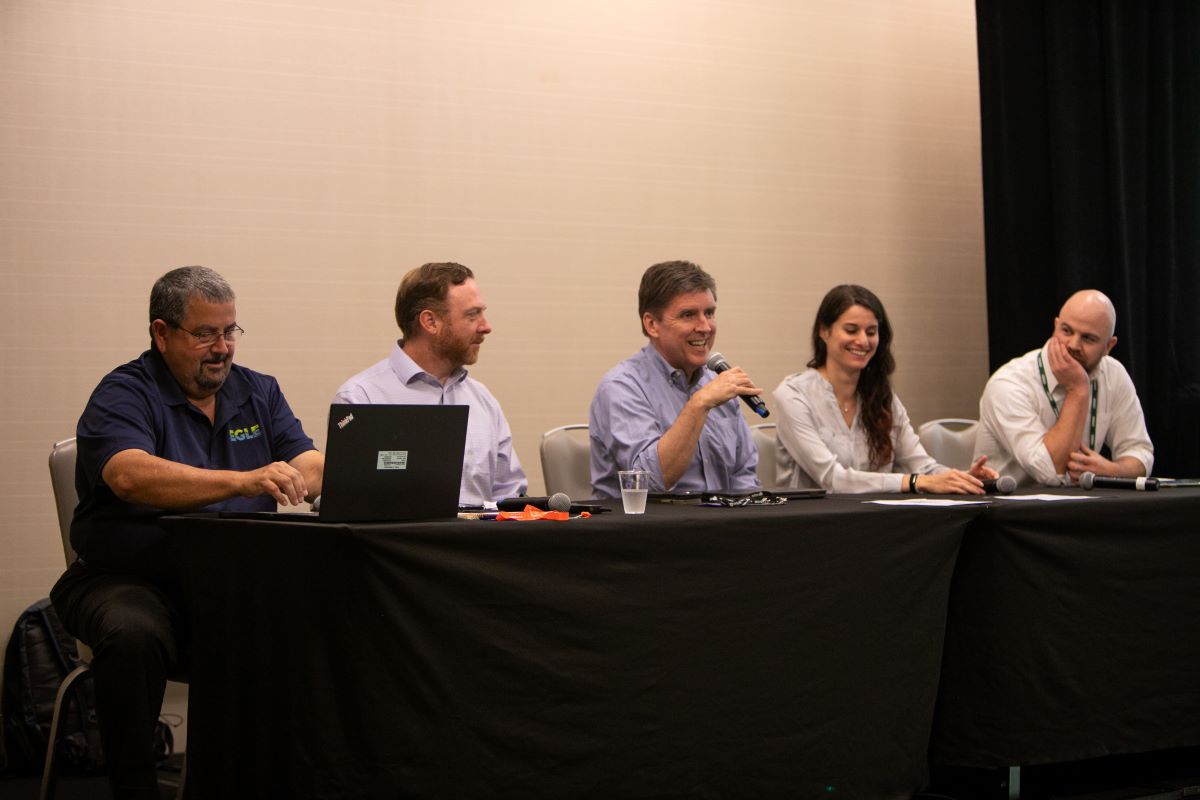
The workshop, “Key Challenges Under State Electronics Recycling Laws,” was presented by the National Center for Electronics Recycling (NCER) at the 2023 E-Scrap Conference and E-Reuse Conference, held in New Orleans Sept. 18-20. 

Currently, 25 states and the District of Columbia have e-scrap laws on their books. That number has been relatively consistent since about 2014, but there have been updates and changes made in recent years. 

South Carolina, Hawaii and Oregon have all made major changes to their programs, said workshop moderator Jason Linnell, who is executive director of NCER. Meanwhile, Wisconsin, Washington, D.C., and New York all made administrative and regulatory changes of late. 

South Carolina switched to a clearinghouse model, also called a convenience model, which removes collection targets and instead focuses on consumer access to recycling opportunities. 

A clearinghouse is “just an entity that allows the manufacturers to sort of divide up the responsibility of covering all the collection locations in the state and do that in a fair way so that everyone is paying their fair share,” Linnell explained. 

Hawaii modified collection targets to be based on sales weights and also expanded the scope of covered products with targets. Oregon also expanded the scope of covered devices, ended the state contractor program in favor of a default producer responsibility organization and made changes to the convenience requirements. 

In New York, recent regulations expanded outreach requirements and required recyclers to have closure plans in place. Wisconsin changed its deadlines, made more devices eligible to meet manufacturer targets and added collection, collector and recycler permitting requirements. 

Finally, Washington, D.C., altered its registration deadline, required more education and outreach, and allowed both R2- and e-Stewards-certified recyclers to service the programs for manufacturers, instead of just e-Stewards. 

“We’re all trying to deal with the changing mix of devices that are coming back into our programs and what is the right balance between what the manufacturers have to do, how they comply and making sure that collectors and consumers have options,” Linnell said. 

Panelist Walter Alcorn, vice president of environmental affairs and industry sustainability with the Consumer Technology Association (CTA), said his organization has been very active in those state laws over the past decade. 

“We’re all trying to deal with the changing mix of devices that are coming back into our programs.”
–Jason Linnel, executive director of NCER

He said linking targets recycled to the pounds of electronics sold each year is a challenge for manufacturers as the two don’t truly correlate. Three states so far have moved away from those pounds-sold targets –  Minnesota, Illinois and South Carolina. 

“I think what we’re seeing is that realization, and it is being incorporated into changes to these recycling laws as they come around or as various folks in the different states push changes to the laws,” he said. “That’s something that we at CTA support. We actually like targets that are rational and predictable.”

Alcorn said CTA is looking at reforms that would remove requirements that are either impossible to reach or that are so high they alter the market and drive prices. 

“We do see some value in moving away from these sales-based targets and the devil is always in the details,” he said. “And that’s something that we look forward to continuing the discussions with the state stakeholders and states that still have these types of laws.” 

Steve Noble, an environmental quality specialist with the Michigan Department of Environment, Great Lakes and Energy, said that targets are needed, because they create pressure for collection. 

“If you go to the convenience model and there’s no targets, it’s an issue,” he said. “In Michigan, if there’s no goals, how do you get everybody to step up and do the right thing and especially service rural areas of the state?”

“We do see some value in moving away from these sales-based targets and the devil is always in the details.”
–Walter Alcorn, vice president of environmental affairs and industry sustainability with the Consumer Technology Association (CTA)

While convenience models do have requirements, Noble said he’s also seeing a lot of convenience model states allow counties to opt in or opt out. 

Melanie Weitzel, senior business development and account manager for returns provider and compliance manager Reverse Logistics Group, cautioned that the South Carolina and Illinois clearing house model is still relatively new. 

“I think time will tell,” she said. “We’re seeing with convenience, the amount of pounds collected drops. But you’re also seeing that there’s more availability for consumers to return and usually there’s less charging and things like that involved because it’s more fair, but I think we’re going to see how that shakes out in the next few years and how that compares to those collection targets.” 

Alcorn said another challenge with many current laws is that it’s difficult for small collectors to become part of the larger programs. 

“If there’s no goals, how do you get everybody to step up and do the right thing and especially service rural areas of the state?”
–Steve Noble, environmental quality specialist with the Michigan Department of Environment, Great Lakes and Energy

“There are a handful of recycling firms that can do this nationally, and they get most of the work,” he said. “It’s not a conspiracy. Every manufacturer makes their own decision who they work with. It’s just sort of the nature of the beast and it does sometimes create challenges for collectors.” 

Most states do have some kind of required education and outreach as part of the program, but panelists agreed that there is room for improvement. Dave Hirschler, senior director of sustainability and legislative compliance for e-scrap recycling company ERI, said “everybody wants more education and more advertising, and it’s just a matter of deciding whether or not that should be a regulatory thing.” 

Another challenge is to provide recycling opportunities to underserved communities. Hirschler noted that such service is typically more expensive, as those areas tend to be rural and transportation costs are higher. 

“On our end, it’s a challenge because we want to be able to collect the most volume in the most efficient way,” he said. “And so when your target is recycling as much as possible, sometimes those areas do lose focus.” 

Legislation can help correct that problem by providing incentives for certain parts of the state, which is what Minnesota, Wisconsin and Indiana do, Hirschler said. In New Jersey, the regulation requires service to a certain amount of underserved areas. 

“There is a place for regulation to help make it easier for us to make that investment,” he added. 

Tags: EPR
TweetShare
Marissa Heffernan

Marissa Heffernan

Marissa Heffernan worked at Resource Recycling from January 2022 through June 2025, first as staff reporter and then as associate editor. Marissa Heffernan started working for Resource Recycling in January 2022 after spending several years as a reporter at a daily newspaper in Southwest Washington. After developing a special focus on recycling policy, they were also the editor of the monthly newsletter Policy Now.

Related Posts

The State of Oregon seal at a park in Salem, Ore.

MRM bids to run Oregon EPR for second year 

byPaul Lane
July 28, 2026

The company won the competitive process for 2026, but was the only company to apply for the 2027 PRO post.

A call to action: End markets and EPR

EPR faces several key questions

byBrian Clark Howard
July 23, 2026

Panelists discuss the promise and perils of EPR nationwide at the PROP conference in Pennsylvania.

RecyClass hits 500 EU recyclability evals

RecyClass hits 500 EU recyclability evals

byAntoinette Smith
July 21, 2026

The most recent evaluations include Avery Dennison's RFID tag for PET bottles, ahead of the first PPWR enforcement in mid-August.

CarbonLite to open $60 million Pennsylvania plant

Federal judge blocks CA ‘Truth in Recycling’ (SB 343) law

byStefanie Valentic
July 15, 2026

A federal judge has blocked California from enforcing SB 343's recyclability labeling restrictions, ruling the "Truth in Recycling" law is...

Two recycled-content bills gain approval in California

California agriculture seeks SB 54 repeal

byStefanie Valentic
July 7, 2026

A coalition of state agriculture stakeholders says the packaging law could add nearly $1,400 a year to household grocery costs...

In Our Opinion: Coalitions: The EPR Differentiator

Inside NAW’s constitutional case against packaging EPR

byStefanie Valentic
July 6, 2026

The National Association of Wholesaler-Distributors is fighting EPR in Oregon, and now in California too.

Load More
Next Post
N.Y. recyclers sentenced for improper e-scrap processing

N.Y. recyclers sentenced for improper e-scrap processing

2026 Buyers’ Guide

Equipment, services and technology suppliers serving the recycling industry.

Browse the Guide

More Posts

Innovation. Partnership. Circular value.

Innovation. Partnership. Circular value.

August 1, 2026
SERI works to restore faith in certifications

Building a defensible E-scrap evidence file

August 6, 2026
Copper prices fall to lowest point since spring

EMR recycling plant to reopen in NJ after fire, legal battle

July 21, 2026
RecyClass hits 500 EU recyclability evals

RecyClass hits 500 EU recyclability evals

July 21, 2026
Cascade Asset Management sees higher sales volumes

Sorted: Restoring mineral supplies, one junk drawer at a time

July 20, 2026
What the NAND flash crunch means for remarketing, refurbishment and residual values

Telamon acquires ITAD consultancy Retire-IT

July 9, 2026
Tech giant pens detailed ‘plastic-free packaging’ guide

What Google’s latest report means for ITAD

July 8, 2026
Canada EV battery reuse pilot to start

Canada EV battery reuse pilot to start

July 8, 2026
Battery fire risk isn’t going away. Insurance is responding

Battery fire risk isn’t going away. Insurance is responding

February 24, 2026

Our top stories from October 2021

November 3, 2021
Load More

About & Publications

About Us

Staff

Archive

Magazine

Work With Us

Advertise
Jobs
Contact
Terms and Privacy

Newsletter

Get the latest recycling news and analysis delivered to your inbox every week. Stay ahead on industry trends, policy updates, and insights from programs, processors, and innovators.

Subscribe

Welcome Back!

Login to your account below

Forgotten Password?

Retrieve your password

Please enter your username or email address to reset your password.

Log In

Add New Playlist

No Result
View All Result
  • The Latest
  • Analysis
  • Recycling
  • E-Scrap
  • Plastics
  • Policy Now
  • Conferences
    • E-Scrap Conference
    • Plastics Recycling Conference
    • Resource Recycling Conference
    • Textiles Recovery Summit
  • Magazine
  • About Us
  • Advertise
  • Archive
  • Jobs
  • Staff
Subscribe
This website uses cookies. By continuing to use this website you are giving consent to cookies being used. Visit our Privacy and Cookie Policy.