Resource Recycling
  • The Latest
  • Analysis
    • All
    • Certification Scorecard
    • Industry Announcements
    • Opinion
    NJ’s PCR delay risks making its own excuse permanently true

    NJ’s PCR delay risks making its own excuse permanently true

    E-scrap magnet recycling company scales up

    Why only some rare-earth sources are economically viable

    e-Stewards to develop an ITAD-specific standard

    Certification scorecard — week of Sept. 21

    Who should pay for lithium-ion battery fire damage?

    America’s critical-materials buildout has a feedstock problem

    Certification scorecard – week of Sept. 14

  • Conferences
    • Resource Recycling Conference
    • Plastics Recycling Conference
    • E-Scrap: The Longevity Conference
    • Textiles Recovery Summit
  • Publications
    • E-Scrap News
    • Plastics Recycling Update
    • Policy Now
    • Resource Recycling
    • Other Topics
      • All Topics
      • Brand Owners
      • Critical Minerals
      • Glass
      • Grant Watch / RFPs
      • Markets
      • Organics
      • Packaging
      • Research
      • Technology
      • Textiles
Subscribe
No Result
View All Result
Resource Recycling
No Result
View All Result
Home E-Scrap

Cirba offers compliance advice as battery EPR laws expand

byScott Snowden
August 28, 2025
in E-Scrap
Cirba offers compliance advice as battery EPR laws expand

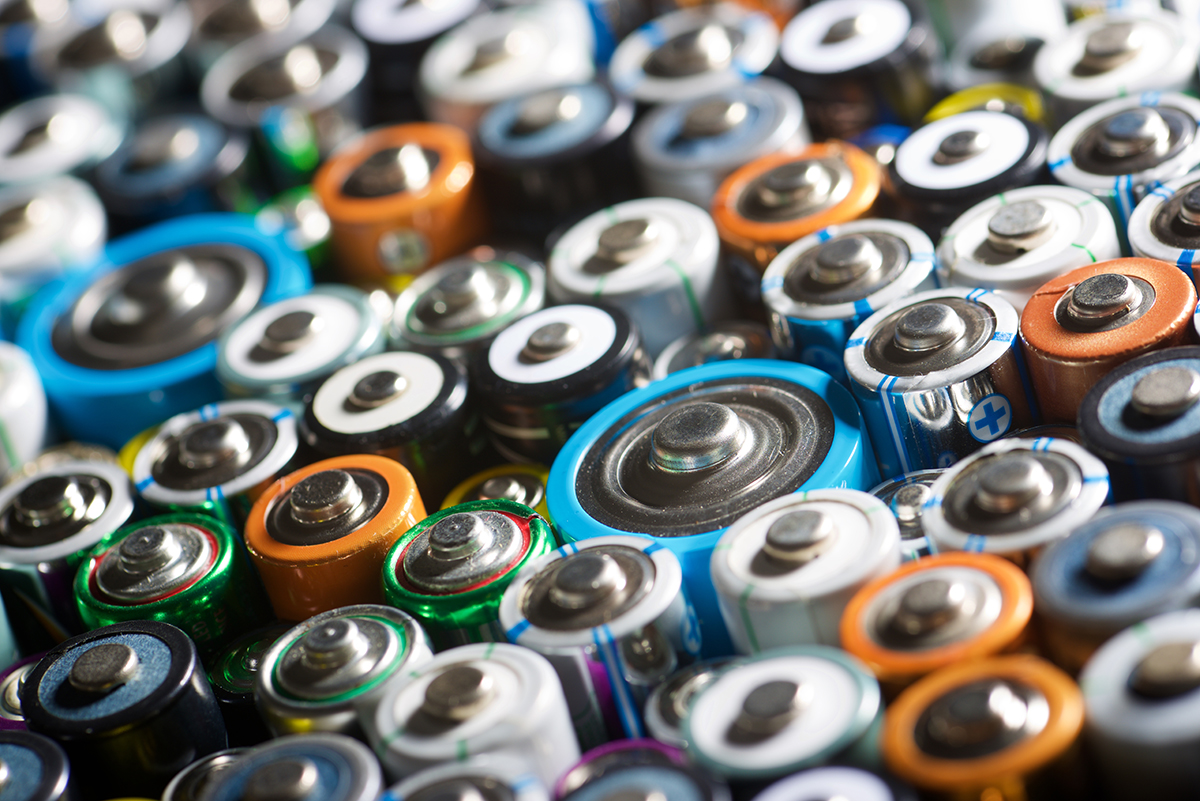
Close up of a large group of used batteries for recycling process

Battery recycling company Cirba Solutions is positioning itself as a compliance partner for producers as state-level extended producer responsibility (EPR) rules bring new obligations across the United States.

Since 2020, eight states including California, Colorado, Connecticut, Illinois, Nebraska, New Jersey and Washington as well as the District of Columbia have enacted battery EPR measures. Vermont pioneered the approach in 2014 and expanded its program in 2024. Several other states are currently advancing bills through their respective legislatures.

Program scopes differ by size, chemistry and whether batteries are sold loose or embedded in devices. California’s law covers most consumer batteries and sets separate provisions for battery-embedded products. Washington and Illinois pair portable coverage with medium-format devices such as e-bikes and power tools. New Jersey limits its law to electric and hybrid vehicle propulsion batteries, while the District of Columbia regulates primary and rechargeable cells under its stewardship rules.

Charlotte-based Cirba operates six facilities in North America and has more than 30 years of experience with stewardship programs. The company now sees opportunity in helping producers navigate what has quickly become a patchwork of requirements.

Safety and minerals at the core

Danielle Spalding, a senior executive at Cirba, told E-Scrap News that battery EPR serves two critical functions: reducing fire risks and ensuring valuable materials are recovered.

Discarded lithium-ion cells frequently cause fires in curbside bins, trucks and material recovery facilities, due to compression that can ignite a battery and cause a thermal event, she said. 

At the same time, she said, recycling batteries offers a domestic source of nickel, cobalt and lithium. 

“Batteries themselves have this amazing capability to unlock access to critical minerals that we would not typically have if we only looked at our geographic makeup,” she said.

Steps for producers

Cirba is urging manufacturers to prepare now for battery EPR by securing experienced partners and educating themselves on reporting obligations.

“The first thing they have to do is work with an experienced team,” Spalding said. “Producers do not want to have five different activations creating more complications. They need trusted resources first and foremost.”

Producers also should build collection networks tied to sales channels and understand the different reporting requirements in each jurisdiction, she said. 

“We tend to be the team that also reports for producers, because we know exactly what is being collected,” Spalding said. “A trusted partner has to provide transparency overall and have existing options available to execute.”

Spalding also pointed to the importance of clarity in state definitions. “Who is a producer, who is a recycler and who is truly responsible for executing these programs all matter, because it dictates who is covered,” she said.

Understanding the scope

Spalding explained that EPR requirements can apply to four categories: small household batteries, medium-format units such as power tool packs or e-bike batteries, large traction batteries in electric vehicles and embedded cells in toys, clothing and other consumer goods.

She pointed to the diversity of state approaches to address the issue, including California’s reintroduced SB 615, Hawaii’s several measures focused on lithium-ion batteries and the difficulty of transporting batteries off island, and Washington’s rule-making committee, in which Cirba participated.

“Each state has its own unique approach and we need to be thoughtful and respectful of that,” Spalding said. “California’s bill is much more prescriptive while New Jersey’s program provides more flexibility.”

“The embedded battery is a really important one,” she said. “Producers outside of this industry often do not understand how many embedded batteries there are. We are talking about toothbrushes, pregnancy devices and toys. You tell me a toy right now that doesn’t light up.”

Persistent challenges

Despite Cirba’s long track record, the company still sees hurdles. “The challenges are inconsistency from state to state, not just reporting standards but what batteries are covered,” Spalding said.

She highlighted embedded products and vaping devices as two areas of particular difficulty. 

“E-cigarettes are a unique area,” she said. “Once a battery is used it becomes hazardous waste, so you have to package and transport it differently. We are working proactively on that issue.”

Ultimately, Spalding said battery EPR can succeed if stakeholders collaborate. 

“EPR is meant to be a supportive tool to help execute life cycle programming, but we have to balance that with making sure we are not over-regulating,” she said, adding, “This is a complex challenge, but there are a lot of teams that want to come together to figure it out.”


Tags: BatteriesPolicy Now
TweetShare
Scott Snowden

Scott Snowden

Scott has been a reporter for over 25 years, covering a diverse range of subjects from sub-atomic cold fusion physics to scuba diving off the Great Barrier Reef. He's now deeply invested in the world of recycling, green tech and environmental preservation.

Related Posts

Oregon state capitol building with state flag and blue sky.

NAW appeals Oregon EPR ruling

byStefanie Valentic
September 25, 2026

NAW is challenging an Oregon judge's ruling in favor of the state's extended producer responsibility law.

Bipartisan reps introduce bill on recycling claims

House passes bill to ease lithium-ion battery storage rules

byStefanie Valentic
September 24, 2026

The BRACE Act would let lithium-ion battery recyclers store batteries on site under universal waste rules and give EPA 18...

Calif. Governor Gavin Newsom at podium.

Newsom signs battery EPR expansion, vetoes SB 54 fund bill

byStefanie Valentic
September 24, 2026

Newsom signed a battery EPR expansion and a nitrous oxide sales ban but vetoed a bill setting spending rules for...

Facility fires remain high across US, Canada in August

byPaul Lane
September 23, 2026

Despite high August numbers, the latest Fire Rover report indicated there may be overall progress in slowing the number of...

Bridge Green, Hartree partner on mineral processing deal

Bridge Green, Hartree partner on mineral processing deal

byPaul Lane
September 21, 2026

The agreement will see Bridge Green’s lithium carbonate sold to and marketed by Hartree.

Who should pay for lithium-ion battery fire damage?

byDavid Daoud
September 21, 2026

Fires continue to be a major threat to the recycling industry, even as states explore new policy solutions.

Load More
Next Post
DOE commits federal funds toward critical minerals

DOE commits federal funds toward critical minerals

2026 Buyers’ Guide

Equipment, services and technology suppliers serving the recycling industry.

Browse the Guide

More Posts

Textile EPR and the definition of recycling

Textile Exchange reports progress in production

September 22, 2026
E-scrap magnet recycling company scales up

Why only some rare-earth sources are economically viable

September 24, 2026

America’s critical-materials buildout has a feedstock problem

September 18, 2026

Who should pay for lithium-ion battery fire damage?

September 21, 2026
Ten e-scrap projects receive federal prize funds

Recycling rates for rare earths could double by 2040

July 17, 2026
NJ’s PCR delay risks making its own excuse permanently true

NJ’s PCR delay risks making its own excuse permanently true

September 28, 2026
Intel sign outside of company building.

Intel’s CapEx tops $20B on server demand while PC volume shrinks

July 29, 2026

In other news: May 2, 2016

May 2, 2016
Feds to develop repairable computer donation program

The whitebox blind spot in PC recycling

April 24, 2026

Microsoft confirms PC sales slump

August 4, 2026
Load More

About & Publications

About Us

Staff

Archive

Magazines

Work With Us

Advertise
Jobs
Contact
Terms and Privacy

Newsletters

Get the latest recycling news and analysis delivered to your inbox every week. Stay ahead on industry trends, policy updates, and insights from programs, processors, and innovators.

Subscribe

Welcome Back!

Login to your account below

Forgotten Password?

Retrieve your password

Please enter your username or email address to reset your password.

Log In

Add New Playlist

No Result
View All Result
  • The Latest
  • Analysis
  • Recycling
  • E-Scrap
  • Plastics
  • Policy Now
  • Conferences
    • E-Scrap Conference
    • Plastics Recycling Conference
    • Resource Recycling Conference
    • Textiles Recovery Summit
  • Magazines
  • About Us
  • Advertise
  • Archive
  • Jobs
  • Staff
Subscribe
This website uses cookies. By continuing to use this website you are giving consent to cookies being used. Visit our Privacy and Cookie Policy.
-
00:00
00:00

Queue

Update Required Flash plugin
-
00:00
00:00